
TL;DR:
- Renting a storage container involves careful site preparation, size selection, and understanding logistics to avoid costly mistakes.
- Clearance, ground firmness, and permit requirements significantly impact successful delivery and overall costs.
- Proactive communication and aligning rental timing with your project milestones maximize savings and prevent unnecessary fees.
Most people researching how storage container rentals work assume the process is as simple as calling a company and having a box dropped in their driveway. The reality involves more moving parts. From site preparation to delivery logistics to understanding what you’re actually paying for, there’s a lot that can go sideways without the right information. This guide walks you through every stage of the storage container rental process, from what to prepare before you call to how to avoid the fees that catch most renters off guard.
Table of Contents
- Key takeaways
- How storage container rentals work: what to know first
- The rental process from inquiry to delivery
- Understanding the cost of storage container rental
- Common challenges during your rental period
- What I’ve learned from years of watching rentals go wrong
- Ready to rent a container in Massachusetts?
- FAQ
Key takeaways
| Point | Details |
|---|---|
| Size and site prep matter first | Choosing the right container size and preparing your site prevents costly failed deliveries. |
| Costs vary by logistics, not just size | Quotes often vary 20–30% for the same container in the same market due to access differences. |
| Rental period affects your rate | Committing to a longer term can cut monthly costs by 15–30% compared to month-to-month pricing. |
| Failed deliveries are expensive | A failed delivery attempt can cost you $100–$300 or more before your container ever gets used. |
| Plan pickup timing carefully | Scheduling pickup at natural project milestones reduces extra rental days and repeat transport fees. |
How storage container rentals work: what to know first
Before you request a quote, you need to make two decisions: what size container you need and whether your site can actually receive one.
Choosing the right container size
Storage containers come in a handful of standard sizes. The most common rental options are 20-foot and 40-foot containers. A 20-foot container gives you roughly 1,160 cubic feet of space, which works well for a bedroom cleanout, a small renovation project, or short-term business inventory overflow. A 40-foot container nearly doubles that capacity and suits full home moves, major construction staging, or commercial storage needs. Some providers also offer 10-foot units for tighter spaces or smaller jobs.
Here’s what most guides won’t tell you: the size you pick affects more than just how much fits inside. It directly impacts your delivery options, because larger containers require more clearance and specific truck configurations to place.
Site readiness: the detail most renters skip
Site preparation requirements are the most overlooked part of the rental process. A 20-foot container needs at minimum 70 feet of straight clearance, 10 feet of width, and 16 feet of vertical clearance for tilt-bed delivery. The ground needs to be firm and level. Soft soil, steep inclines, or overhanging trees can all cause a failed delivery.

You also need to check local rules. Urban and suburban permit requirements vary widely. If you’re placing a container on a public street rather than private property, many municipalities require a permit. Skipping this step can get your container towed or your project delayed.
Pro Tip: Walk your delivery path before your scheduled date. Measure the narrowest points, note any overhead obstacles, and confirm the ground is solid where the container will sit. Send photos to your provider. This one step prevents most failed delivery situations.
Many suppliers require a minimum rental period of at least one month, with some construction-focused rentals requiring three months minimum. Know your actual timeline before committing so you don’t overpay or get locked into terms that don’t fit.
The rental process from inquiry to delivery
Understanding the full storage container rental process removes the anxiety from what can otherwise feel like a complicated transaction. Here is exactly what happens from your first call to the day the container lands on your property.
Request quotes from multiple providers. Get at least two or three quotes. Describe your site access accurately, including driveway length, surface type, and any overhead clearances. Logistics and site accessibility are the primary factors behind why quotes vary so widely for the same container size.
Confirm what the quote includes. Ask specifically whether delivery and pickup fees are bundled or billed separately. Ask about the minimum rental period and what the monthly rate looks like after that. Get this in writing.
Schedule your delivery date. Coordinate delivery to align closely with when you actually start loading. Timing delivery close to your loading start reduces idle rental days. Your provider will confirm a delivery window, typically a half-day range rather than an exact hour.
Receive and inspect the container. When the container arrives, inspect it before the driver leaves. Document any existing damage with photos. Note the condition of the door seals and locking hardware. If you’re renting from a reputable provider, the container should arrive clean, dry, and structurally sound.
Load your container. Place heavier items on the floor and toward the front (away from the doors), distribute weight evenly, and use tie-down points if available. For moves, consider proper packing materials to protect items during any repositioning.
Arrange pickup when you’re done. Call your provider before your rental period ends to schedule pickup. Coordinate this with your project timeline, because pickup timing at project turnover avoids extra rental charges.
Here’s a quick reference for the typical delivery timeline:
| Step | Typical timeframe |
|---|---|
| Quote to confirmation | 1–3 business days |
| Confirmation to delivery | 2–7 business days |
| Minimum rental period | 1–3 months (varies by provider) |
| Pickup scheduling notice | 3–7 days in advance |
Pro Tip: Ask your provider how many “transportation legs” are included in your quote. Bringing a container back for re-delivery after a failed attempt is usually a separate billing event, not a courtesy.
Understanding the cost of storage container rental
The cost of storage container rental is rarely a flat number, and that surprises most first-time renters. You’re paying for the container itself, the logistics of moving it, and potentially several add-on fees depending on what happens during your rental.
Monthly rental rates
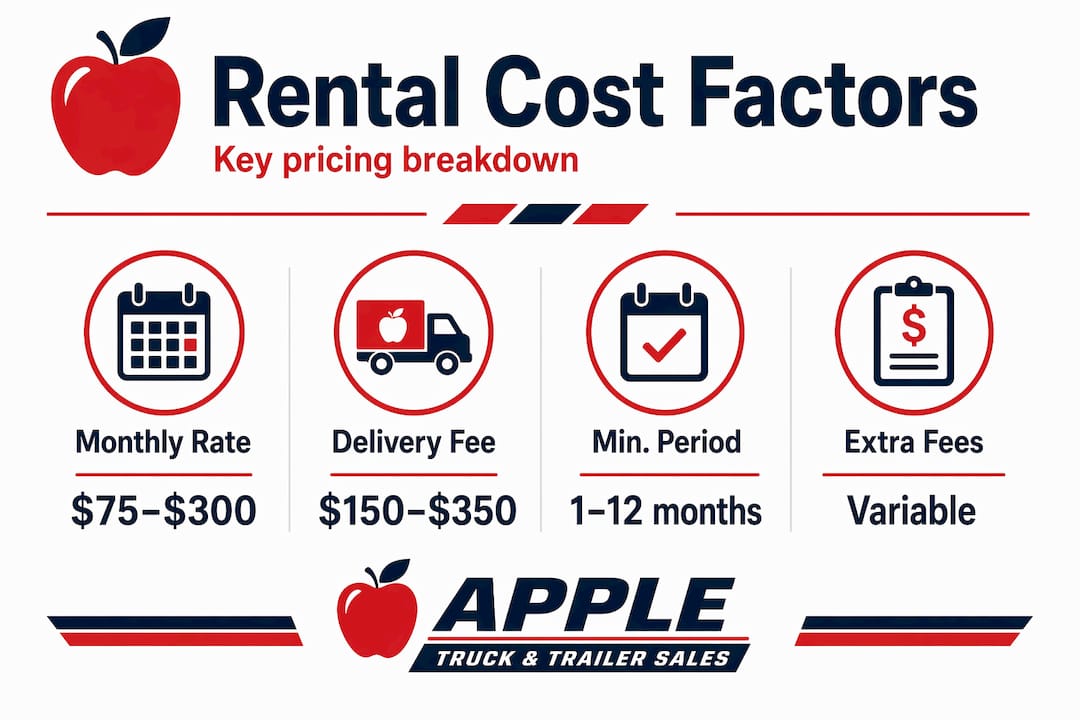
A 20-foot container typically runs $75–$200 per month, while a 40-foot container usually falls in the $100–$300 per month range. These figures shift based on your region, local demand, and provider. Rates in dense metro areas like Boston tend to run higher than rural or suburban markets.
| Container size | Monthly rental range | Delivery fee range (within 30 miles) |
|---|---|---|
| 20-foot | $75–$200/month | $150–$350 |
| 40-foot | $100–$300/month | $200–$400+ |
Delivery, pickup, and extra fees
Delivery and pickup fees are separate line items with most providers. Expect to pay $150–$350 for delivery within 30 miles, with costs rising as distance increases. Pickup fees usually mirror delivery costs.
What you really need to watch for are the fees nobody mentions upfront:
- Failed delivery charges: If the driver arrives and cannot place the container due to site conditions or access issues, you’re typically billed $100–$300 for the failed attempt.
- Repositioning fees: Moving the container after it’s been placed on your property is a new billing event.
- After-hours and rush delivery fees: Scheduling outside standard business hours often adds a premium.
- Permit acquisition fees: Some providers offer to pull permits for you, at an additional cost.
How to reduce your total cost
One of the most practical money-saving moves is committing to a longer term before you start. A 12-month commitment typically reduces monthly rates by 15–30% compared to rolling month-to-month pricing. If you know your project has a long horizon, lock in that rate upfront.
You can also negotiate delivery fees, particularly if you’re renting multiple containers or if your site is easy to access and close to the provider’s location. Providers price based on logistics difficulty, so an easy delivery is a reasonable point of negotiation.
One thing worth noting: rent-to-own programs cost 50–140% more than buying a used container outright. If your storage need is genuinely long-term, buying often makes more financial sense than renting indefinitely.
Common challenges during your rental period
Even with solid preparation, things come up. Here’s how to handle the most frequent issues.
- Access problems on delivery day. If a vehicle is blocking your driveway or a neighbor’s gate is locked, call your provider immediately. Rescheduling costs money. Have your site cleared and confirmed accessible the morning of delivery.
- Needing to extend your rental. Call your provider before your rental period ends, not after. Last-minute extensions at the end of a rental cycle can trigger higher month-to-month rates.
- Damage claims. Document everything at delivery and at pickup. Photograph the interior and exterior. Disputes over existing damage versus damage that occurred during your rental are far easier to resolve with photo evidence from both ends.
- Overage charges on weight or content restrictions. Most rental containers have weight limits. Know your provider’s policies on hazardous materials, flammables, and prohibited contents before you load.
Pro Tip: Ask your provider for a checklist of site requirements and prohibited items before your delivery date. Getting this in writing protects you from disputed charges at pickup.
Proper site preparation details like clearances and ground firmness are the single biggest source of preventable fees in the container rental process. Address them before the truck shows up.
What I’ve learned from years of watching rentals go wrong
I’ve seen a lot of storage container rentals go smoothly. I’ve also seen plenty that turned into expensive headaches, and the pattern is almost always the same.
The renters who struggle are the ones who treated the process as transactional. They got a price, gave a delivery address, and assumed the rest would handle itself. What I’ve found, consistently, is that upfront communication with your provider is worth more than any amount of comparison shopping. Tell them exactly what your site looks like. Tell them your real timeline. Ask about the fees that aren’t in the quote.
The renters who get the most out of the process are the ones who treat the provider like a partner in a logistics problem. They share site photos before delivery. They ask about permit requirements proactively. They schedule pickup around actual project milestones rather than guessing. Integrating rental timing tightly into your project schedule is the single most effective way to control total cost.
My honest take: the biggest waste I see is people paying for rental days they don’t need because they didn’t plan the pickup date with the same intention they gave to the delivery date. The container sitting empty at the end of a project is money draining out of your budget for no reason.
— Andrew
Ready to rent a container in Massachusetts?
If you’re in Massachusetts or the surrounding region and want to skip the guesswork, Appletruckandtrailer has been handling storage container rentals for residential customers and commercial operations since 1986. The team knows the local permitting landscape, has the equipment to handle challenging site conditions, and is straightforward about pricing before you commit.
Whether you’re clearing out a home, managing a construction project, or need temporary overflow storage for your business, Appletruckandtrailer can match you with the right container size and walk you through every step of the process. You can also learn more about secure storage containers to understand what makes a quality rental unit. Get in touch for a quote and tell them exactly what your site looks like. That conversation is where the process starts going right.
FAQ
What is a storage container rental period?
A storage container rental period is the agreed duration you keep the container, typically billed monthly. Most providers require a minimum of one month, while construction projects may face a three-month minimum.
How much does a storage container rental cost?
Monthly rates run $75–$200 for a 20-foot container and $100–$300 for a 40-foot unit, with delivery fees adding $150–$350 or more depending on distance and site access.
What happens if the delivery driver can’t place my container?
A failed delivery attempt typically costs you $100–$300 in additional fees. The driver will leave without placing the container, and rescheduling counts as a new delivery event.
Can I save money by renting longer?
Yes. A 12-month rental commitment typically lowers your monthly rate by 15–30% compared to month-to-month pricing, making longer commitments significantly more cost-effective when your timeline allows.
Do I need a permit to rent a storage container?
It depends on where the container will be placed. Containers on private property typically don’t require permits, but street-parked containers often require a municipal permit. Check with your local municipality before delivery.