
Renting a moving storage container in Massachusetts can save you up to 40% compared to full-service movers. These portable containers offer flexible solutions for residential moves, business relocations, clean-outs, and temporary storage needs across Massachusetts and nearby states. This guide covers container types, costs, permits, security, and practical steps to select the right rental for your situation.
Table of Contents
- Introduction To Moving Storage Containers
- Container Types And Sizes
- Cost Structure And Pricing In Massachusetts
- Delivery, Placement, And Regulatory Considerations
- Security And Insurance Considerations
- Rental Advantages And Alternatives Comparison
- Common Misconceptions About Moving Storage Containers
- How To Choose And Use A Moving Storage Container Rental
- Discover Moving And Storage Solutions At Apple Truck & Trailer
- Frequently Asked Questions
Key takeaways
| Point | Details |
|---|---|
| Cost savings | Container rentals cost 25-40% less than full-service movers, with monthly fees ranging $150-$400 depending on size. |
| Container selection | Sizes include 8ft, 16ft, and 20ft options with varying security features and weatherproofing affecting price and utility. |
| Delivery and permits | Expect 2-5 business day delivery times; local permits required for public space placement in many Massachusetts municipalities. |
| Security essentials | Heavy-duty locks and seals come standard; insurance coverage protects against theft and damage during rental periods. |
| Selection process | Assess volume needs, request detailed quotes, verify permit requirements, and prepare delivery sites to avoid extra charges. |
Introduction to moving storage containers
Moving storage containers are weatherproof steel boxes delivered to your property, allowing you to pack at your own pace before transport or on-site storage. They serve multiple purposes across Massachusetts and neighboring states.
Common use cases include:
- Residential moves: Pack household items over several days or weeks without time pressure from moving trucks
- Business relocations: Store office equipment, inventory, and furniture during transitions between commercial spaces
- Home clean-outs: Manage renovation projects, estate sales, or decluttering efforts with temporary on-site storage
- Seasonal storage: Keep recreational equipment, holiday items, or business inventory secure during off-seasons
Massachusetts’ urban density and limited parking make containers particularly valuable. Unlike traditional storage units requiring multiple trips, containers come to you and stay as long as needed. This matters in cities like Boston, Cambridge, and Worcester where parking restrictions complicate moving logistics. The flexibility to load gradually reduces stress and eliminates rushed packing that often leads to damaged belongings.
Container types and sizes
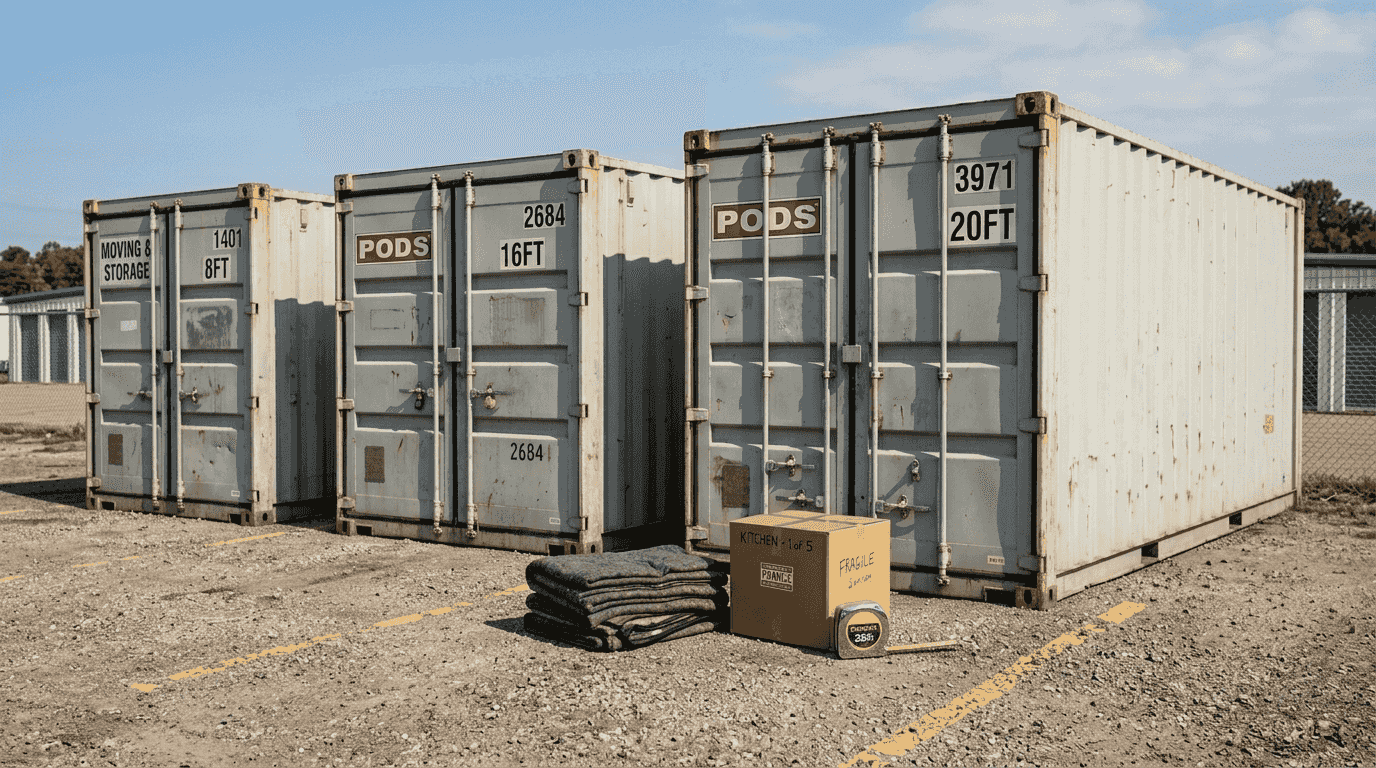
Common container sizes include 8ft, 16ft, and 20ft options with features affecting rental cost and utility. Understanding these differences helps you select appropriate capacity without overpaying.
| Container size | Interior volume | Best for | Typical monthly cost |
|---|---|---|---|
| 8ft | 400 cubic feet | Studio apartments, small clean-outs, temporary tool storage | $150-$200 |
| 16ft | 850 cubic feet | 1-2 bedroom homes, small business inventory, renovation projects | $200-$300 |
| 20ft | 1,100 cubic feet | 3+ bedroom homes, full business relocations, large construction sites | $300-$400 |
Feature variations impact both price and security:
- Weatherproofing: Standard containers offer basic weather resistance; premium models include insulation and enhanced sealing for climate-sensitive items
- Lock systems: Entry-level containers use padlock hasps; upgraded units feature integrated lock boxes protecting against bolt cutter attacks
- Door configurations: Single rear-door models cost less; double-door designs with side access command premium prices but improve loading efficiency
- Floor reinforcement: Heavy-duty flooring supports equipment and machinery; residential-grade floors work for household goods
The right size prevents wasted money on excess capacity or costly mid-move upgrades. Most household moves require 16-20ft containers, while 20-foot container rental options suit families with three or more bedrooms.
Pro Tip: Calculate your storage needs by listing major furniture pieces and box counts, then add 20% buffer space for miscellaneous items and packing materials to avoid cramming containers.
Cost structure and pricing in Massachusetts
Understanding the complete price breakdown helps you budget accurately and compare rental quotes effectively. Container rental costs include several components beyond the advertised monthly rate.
Base rental fees cover container use for specified periods:
- 8ft containers: $150-$200 per month for standard features
- 16ft containers: $200-$300 monthly depending on lock upgrades and weatherproofing
- 20ft containers: $300-$400 per month with premium security and insulation
Delivery and pickup charges vary by distance and site difficulty:
- Standard delivery: $75-$125 for straightforward residential driveways within 30 miles of rental facility
- Complex placements: $150-$200 for tight urban locations requiring specialized equipment or traffic management
- Extended distances: Add $2-$4 per mile beyond standard service radius
Additional cost factors include:
- Rental duration: Monthly rates decrease 10-15% for commitments exceeding three months
- Seasonal demand: Summer moving season (May through September) commands 15-25% premium pricing
- Damage deposits: Refundable $200-$500 deposits protect against container abuse
- Late return fees: $50-$100 daily charges apply beyond agreed pickup dates
Pro Tip: Request itemized quotes listing every fee including delivery, pickup, insurance, and potential surcharges to compare true total costs between providers.
Delivery, placement, and regulatory considerations
Successful container placement requires understanding local regulations and logistical requirements across Massachusetts municipalities. Planning ahead prevents delays and compliance issues.
Delivery timing for storage containers typically takes 2 to 5 business days from order placement in Massachusetts due to regional demand and logistics constraints. Follow these steps to ensure smooth delivery:
- Check zoning requirements: Contact your city or town hall to verify whether residential container placement needs permits
- Assess property access: Measure driveway width (minimum 10 feet), overhead clearance (14 feet), and turning radius for delivery trucks
- Obtain necessary permits: If placing containers on public streets or sidewalks, secure permits 7-10 days before delivery
- Prepare the site: Level ground prevents door alignment issues; gravel or concrete pads protect lawns from weight damage
- Mark utility lines: Call 811 to identify underground utilities before container placement
- Schedule delivery windows: Coordinate with rental companies for specific arrival times to ensure someone receives the container
Permit requirements vary significantly by location. Boston storage container rentals often need public way permits costing $50-$150 for street placements. Suburban towns like Needham typically allow private property placement without permits but enforce setback requirements from property lines.
Urban challenges include narrow streets, parking restrictions during delivery hours, and neighbor notification requirements. Work with rental companies familiar with Massachusetts regulations to navigate these complexities efficiently.
Security and insurance considerations
Protecting your belongings during rental periods requires both physical security features and appropriate insurance coverage. Security features often include reinforced locks and seals with insurance coverage varying in cost but essential for risk protection.
Standard security measures on rental containers:
- Heavy-duty padlock hasps: Hardened steel brackets resist prying and cutting attempts
- Lock boxes: Enclosed steel housings protect padlock shackles from bolt cutters
- Tamper-evident seals: One-time-use seals show whether containers were opened during transport or storage
- Reinforced door frames: Welded steel construction prevents door removal from hinges
Insurance options protect against theft, damage, and liability:
- Basic coverage: $25-$50 monthly for $5,000-$10,000 contents protection
- Comprehensive policies: $75-$125 monthly covering $25,000-$50,000 in valuables
- Homeowner’s policy extensions: Check existing coverage before purchasing separate container insurance
Maximize security with these practices:
- Position containers within view of windows or security cameras when possible
- Use disc locks or shrouded shackle padlocks that resist cutting tools
- Maintain detailed inventory lists with photos for insurance claims
- Avoid storing irreplaceable items or extremely high-value goods in containers
“The combination of quality locks, proper placement, and adequate insurance creates layered protection that deters most theft attempts while covering potential losses.”
Understanding cargo insurance basics helps you evaluate coverage options and select appropriate protection levels for your specific needs.
Rental advantages and alternatives comparison
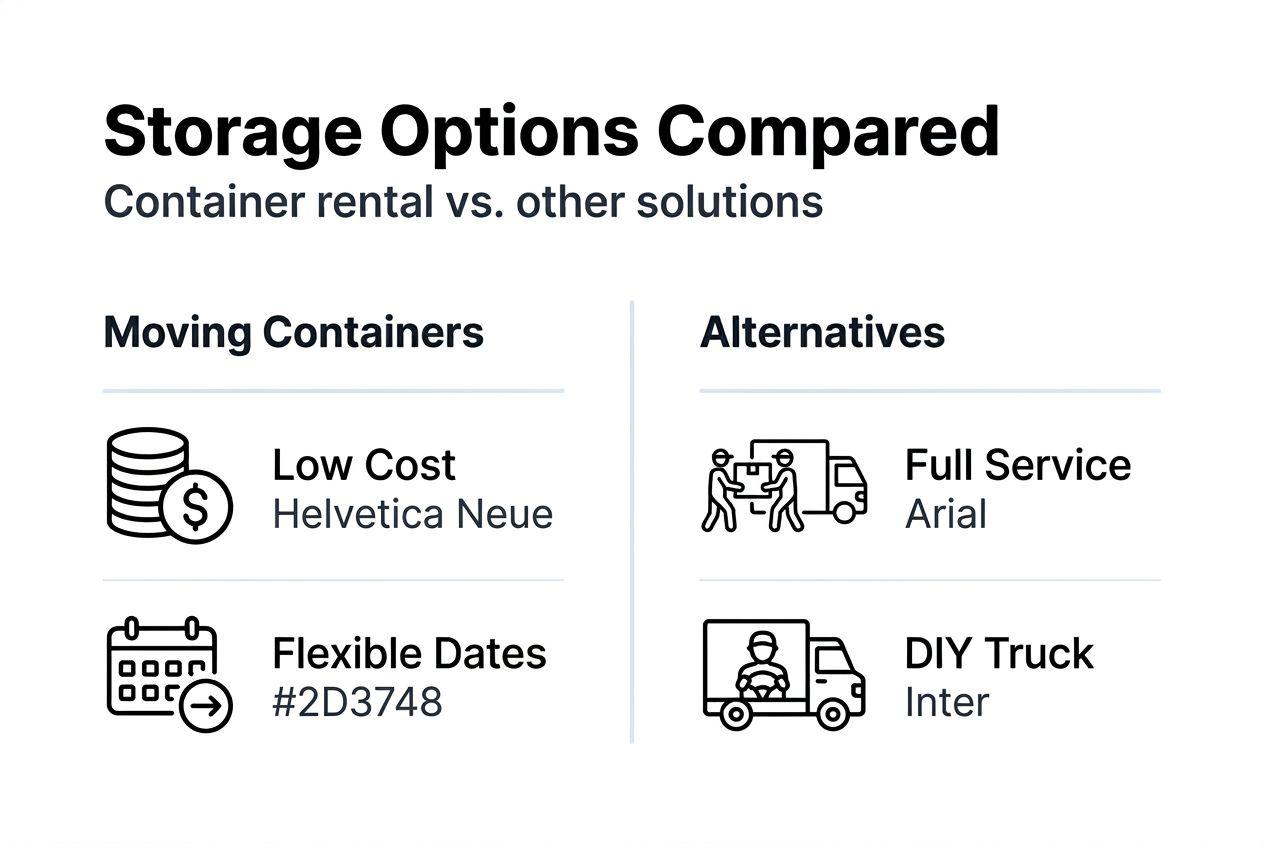
Container rentals offer distinct benefits compared to alternative moving and storage solutions. Understanding when each option makes sense improves decision-making.
| Solution | Average cost | Flexibility | Best for |
|---|---|---|---|
| Container rental | $500-$1,200 total | High – load at your pace, storage included | DIY movers, gradual packing, combined moving and storage needs |
| Full-service movers | $2,000-$5,000+ | Low – scheduled loading/unloading dates | Time-constrained moves, minimal physical involvement desired |
| Container leasing | $150-$300/month ongoing | Medium – lower monthly cost, longer commitment | Businesses with recurring storage needs, construction sites |
| Traditional storage units | $80-$200/month plus moving costs | Medium – separate transport required | Long-term storage without immediate moving needs |
DIY container rentals offer 25-40% lower move costs compared to full-service movers. This savings comes from eliminating labor charges while maintaining professional container transport.
When container leasing makes more sense:
- Business operations requiring permanent on-site storage for inventory or equipment
- Construction projects spanning 6+ months needing tool and material security
- Seasonal businesses storing products during off-peak periods
- Long-term commitments reducing monthly costs by 30-40%
Explore leasing explained to understand when leasing arrangements benefit your situation better than short-term rentals.
Common misconceptions debunked:
- Myth: Containers always cost more than traditional movers
- Reality: Container rentals save 25-40% on typical moves by eliminating labor costs
- Myth: Containers aren’t secure enough for valuable items
- Reality: Commercial-grade locks and insurance options provide robust protection
- Myth: You’re locked into long rental periods
- Reality: Most companies offer flexible terms with monthly billing and simple pickup scheduling
Common misconceptions about moving storage containers
Several persistent myths discourage people from considering container rentals despite their practical advantages. Correcting these misunderstandings improves rental decisions.
Cost misconceptions:
- Myth: Hidden fees make containers more expensive than advertised
- Reality: Reputable companies provide transparent quotes listing delivery, rental, and pickup costs separately
- Myth: Insurance requirements inflate total costs unreasonably
- Reality: Basic coverage costs $25-$50 monthly; many homeowner policies already cover container contents
Security misbeliefs:
- Myth: Containers sitting on properties are easy theft targets
- Reality: Heavy-duty locks, tamper seals, and strategic placement create effective deterrence
- Myth: Container walls are easily breached
- Reality: Welded steel construction requires specialized equipment to compromise
Flexibility confusion:
- Myth: You must commit to specific rental periods upfront
- Reality: Month-to-month terms allow extensions or early returns with simple notice
- Myth: Delivery dates are inflexible once scheduled
- Reality: Most companies accommodate date changes with 48-72 hours notice
Understanding actual container capabilities and terms helps you evaluate whether rentals fit your moving and storage needs better than alternatives.
How to choose and use a moving storage container rental
Following a systematic approach ensures you select appropriate containers and manage rentals efficiently throughout Massachusetts.
- Assess your storage volume: List all items requiring storage, estimate total cubic footage, and add 20% buffer for packing materials and spacing
- Determine your timeline: Identify move dates, packing duration needed, and whether combined storage serves your situation
- Request detailed quotes: Contact 3-4 providers asking for itemized pricing covering delivery, monthly rental, insurance, and pickup fees
- Verify permit requirements: Check with your municipality about placement permits, especially for street or sidewalk locations
- Compare total costs: Evaluate quotes based on complete expense including all fees, not just advertised monthly rates
- Prepare your delivery site: Clear pathways, verify overhead clearance, and ensure level ground for stable container placement
- Schedule strategic delivery: Coordinate arrival 1-2 days before you need to start packing, avoiding weekend premium charges when possible
- Implement security measures: Install quality locks immediately upon delivery, position containers within sight lines, and photograph contents
- Monitor rental duration: Track your usage to schedule pickup promptly, avoiding daily late fees that accumulate quickly
- Plan pickup logistics: Empty and clean containers 24-48 hours before scheduled pickup, ensuring clear access for removal trucks
Pro Tip: Book containers 2-3 weeks ahead during peak moving season (May through September) to secure preferred delivery dates and avoid last-minute size compromises.
Properly executing these steps prevents common rental problems including undersized containers, unexpected fees, permit violations, and security issues that complicate moves unnecessarily.
Discover moving and storage solutions at Apple Truck & Trailer
Ready to simplify your next move or storage project? Apple Truck & Trailer brings decades of Massachusetts experience to your relocation needs. Our flexible storage container rentals in Massachusetts accommodate residential moves, business transitions, and temporary storage requirements across the region.
Beyond containers, explore our truck and trailer sales Massachusetts inventory when your project demands specialized transport. Whether you need secure storage containers for valuable equipment or short-term rental solutions for home clean-outs, our team helps you select appropriate options matching your timeline and budget.
Frequently asked questions
What size moving storage container should I rent in Massachusetts?
Most renters choose between 8ft, 16ft, or 20ft containers depending on their storage volume. A 16ft container suits typical 1-2 bedroom apartments, while 20ft options accommodate 3+ bedroom homes or small business relocations. Review container sizes in Massachusetts to match capacity with your specific needs.
How long does delivery usually take for a moving container rental in Massachusetts?
Delivery generally requires 2 to 5 business days from order placement depending on demand and location. Peak moving season (May through September) extends timelines, so schedule containers 2-3 weeks ahead. Early booking ensures your preferred delivery dates align with move timelines.
Do I need a permit to place a moving storage container on my property in Massachusetts?
Permits are often needed if containers occupy public space like sidewalks or streets, typically costing $50-$150 in Massachusetts cities. Residential private property placement usually doesn’t require permits, but check local permit requirements in Boston and other municipalities. Setback rules from property lines may apply even on private land.
What security measures should I expect with my moving storage container rental?
Standard containers include heavy-duty padlock hasps and tamper-evident seals protecting against unauthorized access. Upgraded models offer integrated lock boxes shielding padlock shackles from cutting tools. Review container security tips and inquire about insurance options covering theft and damage during your rental period.