
Over two million American semi trailers are on the road every day, quietly powering the nation’s supply chain. Whether hauling food, machinery, or retail goods, these massive vehicles are critical for delivering the essentials that keep businesses and families running smoothly. Understanding how a semi trailer works can reveal surprising advantages for both drivers and fleet managers, from improved efficiency to smarter cargo handling.
Table of Contents
- What Is A Semi Trailer And How It Works
- Major Types Of Semi Trailers Explained
- Essential Features And Functional Components
- Legal Regulations And Safety Standards
- Cost, Maintenance, And Common Pitfalls
Key Takeaways
| Point | Details |
|---|---|
| Semi Trailers Defined | Semi trailers are non-powered vehicles that couple with motor vehicles, supporting part of their weight through a sophisticated coupling system, enhancing maneuverability and load distribution. |
| Types of Semi Trailers | Various types cater to specific cargo needs, including Flatbed, Refrigerated, Lowboy, Tank, and Dry Van Trailers, each offering unique advantages for transportation efficiency. |
| Essential Components | Key components like the kingpin, landing gear, and braking system are crucial for operational performance, safety, and longevity of the trailer. |
| Regulatory Compliance | Fleet managers must adhere to federal and state regulations regarding weight, dimensions, and safety standards to ensure road safety and operational compliance. |
What Is a Semi Trailer and How It Works
A semi trailer represents a specialized transportation vehicle designed for efficient cargo movement in commercial logistics. Defined by the World Road Association, these trailers are non-powered vehicles constructed to be coupled with a motor vehicle, with a critical design feature allowing part of their weight to be supported by the tractor.
The fundamental mechanics of a semi trailer involve a sophisticated coupling system that enables seamless attachment and detachment from different tractor units. Unlike full trailers, semi trailers transfer a significant portion of their weight onto the tractor, which enhances maneuverability and load distribution. Semi truck configurations typically feature a fifth wheel mechanism that allows precise connection between the trailer and towing vehicle.
Key components of a semi trailer include the kingpin (connection point), landing gear for independent support, robust axles, suspension systems, and a sturdy frame designed to withstand heavy freight loads. Fleet owners appreciate these trailers for their flexibility – they can be quickly switched between tractors, enabling more efficient transportation operations. The adaptable design supports various trailer types, from flatbeds and refrigerated units to specialized container transporters, making them indispensable in modern commercial transportation networks.
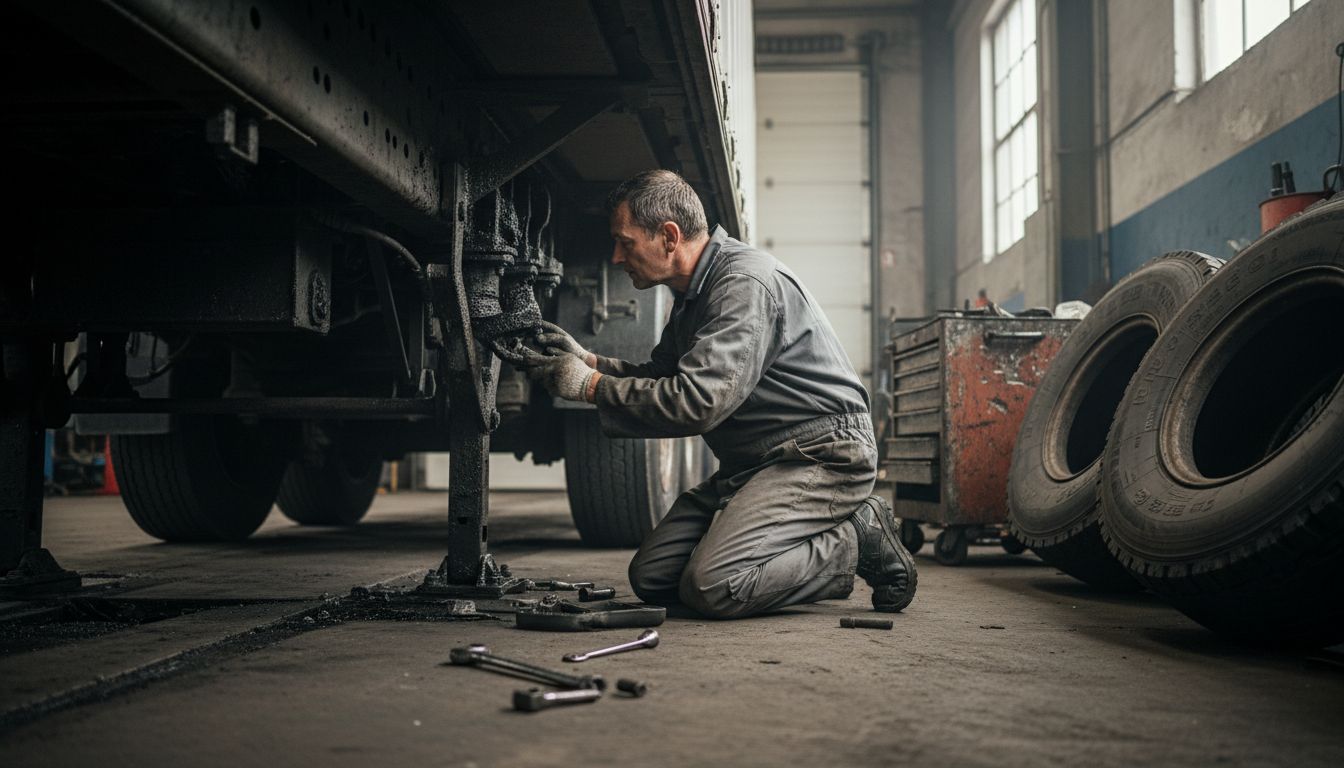
Designed for maximum efficiency, semi trailers offer fleet operators significant advantages: reduced operational complexity, improved load management, and enhanced logistical adaptability. Their engineering allows for rapid cargo transfers, minimal downtime, and the ability to match specific trailer types with precise shipping requirements.
Major Types of Semi Trailers Explained
Semi trailers are highly specialized vehicles engineered to meet diverse transportation requirements across multiple industries. Wikipedia highlights the remarkable variety of trailer types designed to accommodate specific cargo needs, ranging from general freight to specialized transportation solutions.
Key semi trailer types include:
- Flatbed Trailers: Standard carriers for oversized or irregularly shaped cargo, offering maximum flexibility for load securing
- Refrigerated Trailers (Reefers): Temperature-controlled units critical for transporting perishable goods like food and pharmaceuticals
- Lowboy Trailers: Specialized transporters with exceptionally low deck heights, engineered for hauling heavy machinery and equipment
- Tank Trailers: Designed for liquid cargo transportation, featuring sealed compartments for safe chemical and fuel transport
- Dry Van Trailers: Enclosed units protecting cargo from environmental conditions, standard for packaged and palletized goods
The lowboy trailer represents a particularly fascinating design. As specialized transportation research indicates), these trailers feature unique deck configurations with strategic height drops, enabling the transportation of oversized industrial equipment that would exceed standard trailer height restrictions. Their distinctive engineering allows fleet operators to move massive construction machinery, agricultural equipment, and industrial components with exceptional precision.
Understanding these trailer variations is crucial for fleet managers seeking optimal transportation solutions. Each trailer type offers unique advantages, from load capacity and cargo protection to specialized handling capabilities. By matching the appropriate trailer to specific cargo requirements, businesses can maximize operational efficiency, reduce transportation costs, and ensure the safe, secure movement of goods across diverse logistical landscapes.
Essential Features and Functional Components
Semi trailers are complex engineering marvels with multiple critical components designed to ensure efficient and safe transportation. Wikipedia outlines key structural elements that define a trailer’s operational capabilities, including the crucial kingpin which serves as the primary connection point between the trailer and tractor’s fifth wheel coupling.
Key functional components include:
- Kingpin: The central connection mechanism that links trailer to tractor
- Landing Gear: Hydraulic or manual support system for trailer stability when detached
- Suspension System: Absorbs road impacts and ensures smooth cargo transportation
- Braking System: Integrated control mechanism synchronized with the tractor’s brake controls
- Frame: Robust structural backbone providing overall trailer strength
Some specialized trailers feature innovative design elements that enhance transportation efficiency. Live bottom trailers demonstrate remarkable unloading technology, incorporating integrated conveyor belt systems that allow controlled material discharge without tilting, particularly useful for transporting bulk materials like asphalt or gravel. This advanced mechanism provides significant advantages in environments with limited overhead clearance, representing a sophisticated evolution in trailer engineering.
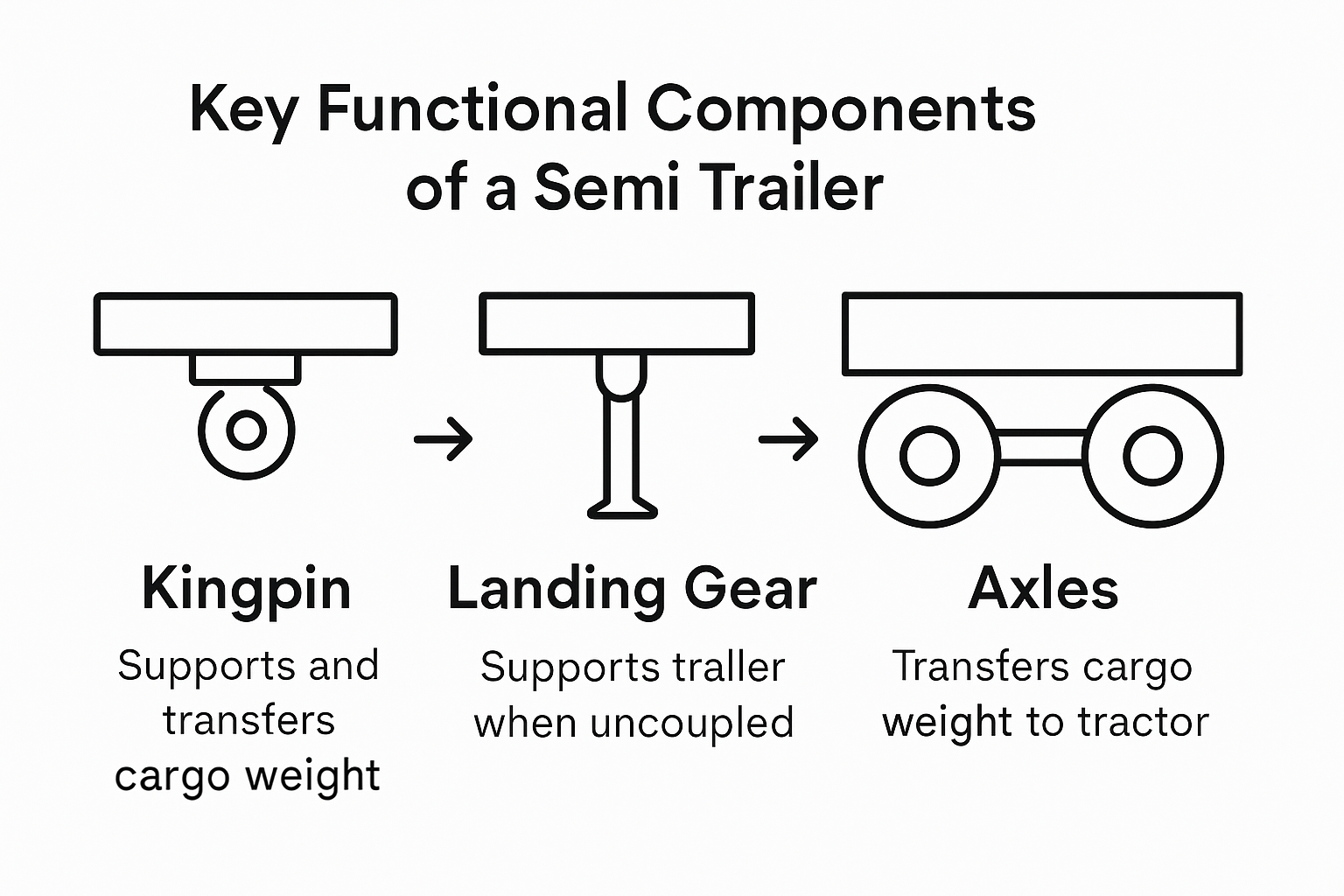
Understanding these functional components is essential for fleet managers and operators. Each element plays a critical role in ensuring trailer performance, safety, and longevity. By comprehending the intricate design and purpose of these components, professionals can make informed decisions about trailer selection, maintenance, and operational strategies that optimize transportation efficiency and minimize potential mechanical risks.
Legal Regulations and Safety Standards
Navigating the complex landscape of semi trailer regulations requires a comprehensive understanding of federal and state requirements that ensure road safety and operational compliance. Automotive Industry Standards provide critical guidelines that define essential specifications for trailer manufacturing, operation, and performance.
Key regulatory considerations for fleet operators include:
- Weight Limitations: Maximum gross vehicle weight restrictions
- Dimensional Constraints: Maximum trailer length and width specifications
- Braking System Requirements: Integrated control and performance standards
- Safety Equipment Mandates: Lighting, reflective markings, and securing mechanisms
- Periodic Inspection Protocols: Mandatory maintenance and safety check intervals
Comprehensive safety standards address multiple dimensions of trailer operation. The Complete Guide to American Semi Trucks highlights the importance of adherence to Department of Transportation (DOT) regulations, which cover everything from structural integrity to operational safety protocols. These standards mandate specific design features, load distribution requirements, and maintenance practices that minimize potential road hazards and ensure consistent performance across commercial transportation networks.
Fleet managers must remain vigilant about evolving regulatory landscapes. Compliance is not just a legal requirement but a critical safety imperative that protects drivers, cargo, and other road users. By staying informed about current standards, implementing rigorous maintenance protocols, and investing in regular training and equipment upgrades, transportation companies can create safer, more efficient operational environments that meet or exceed established safety benchmarks.
Cost, Maintenance, and Common Pitfalls
Transport industry research reveals that semi trailer ownership involves complex financial considerations beyond initial purchase price. Fleet managers must carefully evaluate total cost of ownership, which encompasses initial investment, ongoing maintenance expenses, operational efficiency, and potential performance impacts.
Common financial and operational challenges include:
- Initial Purchase Costs: Significant upfront investment varying by trailer type
- Maintenance Expenses: Regular servicing and unexpected repair requirements
- Depreciation Rates: Potential value loss over time
- Operational Downtime: Revenue impact of mechanical failures
- Fuel Efficiency: Long-term operational expenses related to trailer design
Aerodynamic trailer designs) demonstrate how strategic equipment selection can mitigate long-term expenses. Certain trailer configurations, like teardrop-shaped models with curved roofs, reduce air resistance and potentially generate substantial fuel savings. What Is Fleet Maintenance? emphasizes the critical role of proactive maintenance in minimizing unexpected costs and extending trailer lifecycle.
Successful fleet management requires a holistic approach to trailer economics. Managers must balance initial investments with long-term performance metrics, prioritizing equipment that offers reliability, efficiency, and minimal operational disruption. By implementing comprehensive maintenance strategies, conducting regular performance assessments, and making data-driven procurement decisions, transportation companies can optimize their trailer fleet’s financial and operational effectiveness.
Enhance Your Fleet with Trusted Semi Trailer Solutions
Managing a fleet means understanding the vital role of equipment like semi trailers in operational efficiency and safety. This article highlights common challenges such as selecting the right trailer type, ensuring maintenance reliability, and navigating complex regulations. If you want to avoid costly downtime and improve load management, the right trailer and service partner makes all the difference.
Explore a wide selection of quality used equipment and comprehensive services tailored for fleet owners at Semi Truck and Trailer – Apple Truck & Trailer.

Start optimizing your fleet today by choosing from reliable semi trailers and tractor-trailer combos backed by decades of experience serving Massachusetts and surrounding regions. Visit Apple Truck & Trailer now to discover how our inventory and expert maintenance support can keep your operations running smoothly and profitably.
Frequently Asked Questions
What is a semi trailer?
A semi trailer is a non-powered vehicle designed for transporting cargo and is coupled with a motor vehicle, typically transferring part of its weight to the towing tractor for improved maneuverability and load distribution.
What are the major types of semi trailers?
The major types of semi trailers include flatbed trailers, refrigerated trailers (reefers), lowboy trailers for heavy machinery, tank trailers for liquids, and dry van trailers for enclosed cargo.
What are the essential components of a semi trailer?
Key components of a semi trailer include the kingpin, landing gear, suspension system, braking system, and the frame, all designed to ensure safe and efficient transportation of goods.
How do legal regulations affect semi trailer operation?
Legal regulations dictate weight limitations, dimensional constraints, braking system requirements, safety equipment mandates, and necessary periodic inspections to ensure safe operation on the road.
Recommended
- Tractor Trailer vs Semi Truck
- Semi Trucks Guide: Exploring Different Kinds of Semi Trucks – Apple Truck & Trailer
- Easily Explained: What is the Difference Between a Semi-Truck and a Tractor-Trailer? – Apple Truck & Trailer
- Practical Guide to Leasing a Semi Truck: Is Leasing a Semi-Truck a Good Idea? – Apple Truck & Trailer