
Seasonal freight surges often leave mid-sized trucking companies in Massachusetts searching for dependable storage solutions. When warehouse space runs thin, secure storage containers can help tackle overflow without risking asset damage or compliance headaches. This guide focuses on protecting valuable transportation investments while navigating flexible rental options and regulatory requirements, so logistics managers can choose the right container setup for temporary or seasonal needs.
Table of Contents
- What Are Tractor Trailer Storage Containers?
- Types and Key Uses in Fleet Operations
- Regulatory Requirements for Massachusetts Businesses
- Rental, Leasing, and Ownership Options Explained
- Cost Factors, Permits, and Common Pitfalls
Key Takeaways
| Point | Details |
|---|---|
| Secure Storage Solutions | Tractor trailer storage containers provide safe and flexible spaces for managing and protecting fleet assets. |
| Types of Containers | Various storage options are available, each tailored for different cargo types and operational needs. |
| Compliance and Regulations | Fleet operators must navigate strict commercial trucking regulations in Massachusetts to ensure legal operation. |
| Acquisition Strategies | Businesses have multiple options for obtaining storage containers, including rentals, leases, and ownership, each with unique financial implications. |
What Are Tractor Trailer Storage Containers?
Tractor trailer storage containers are specialized storage solutions designed to accommodate commercial transportation equipment when not actively in service. These versatile units provide critical infrastructure for fleet management in Massachusetts, offering secure and flexible spaces for parking, protecting, and organizing trailers and related equipment.
At their core, these storage containers serve multiple essential functions for trucking operations:
- Secure parking for trailers between transportation assignments
- Weather protection for expensive transportation assets
- Equipment storage for spare parts and maintenance tools
- Theft prevention through controlled access environments
Tractor trailer storage units range from open parking lots to fully enclosed indoor facilities, each tailored to meet specific fleet requirements. The primary goal is safeguarding valuable transportation investments while maintaining operational readiness.
Typically, these storage solutions accommodate various trailer sizes and configurations, ensuring flexibility for different fleet needs. Fleet managers can select options based on factors like security level, climate control, accessibility, and proximity to primary operational zones. Some facilities offer additional services like basic maintenance checkups, tire pressure monitoring, and cleaning stations.
Pro tip: Always inspect storage container facilities for comprehensive security measures, including perimeter fencing, 24/7 surveillance, and controlled entry points before committing to a long-term storage arrangement.
Types and Key Uses in Fleet Operations
Fleet operators in Massachusetts have multiple storage solutions available, with each type serving specific operational needs. Trailer and container types vary significantly based on cargo requirements, mobility, and storage duration.
The primary types of storage containers and trailers include:
- Dry van trailers: Enclosed units for boxed and packaged goods
- Refrigerated trailers: Temperature-controlled units for perishable items
- Flatbed containers: Open-top units for oversized or irregularly shaped cargo
- Specialized storage containers: Customized units for unique fleet requirements
- Intermodal containers: Standardized units for multimodal transportation
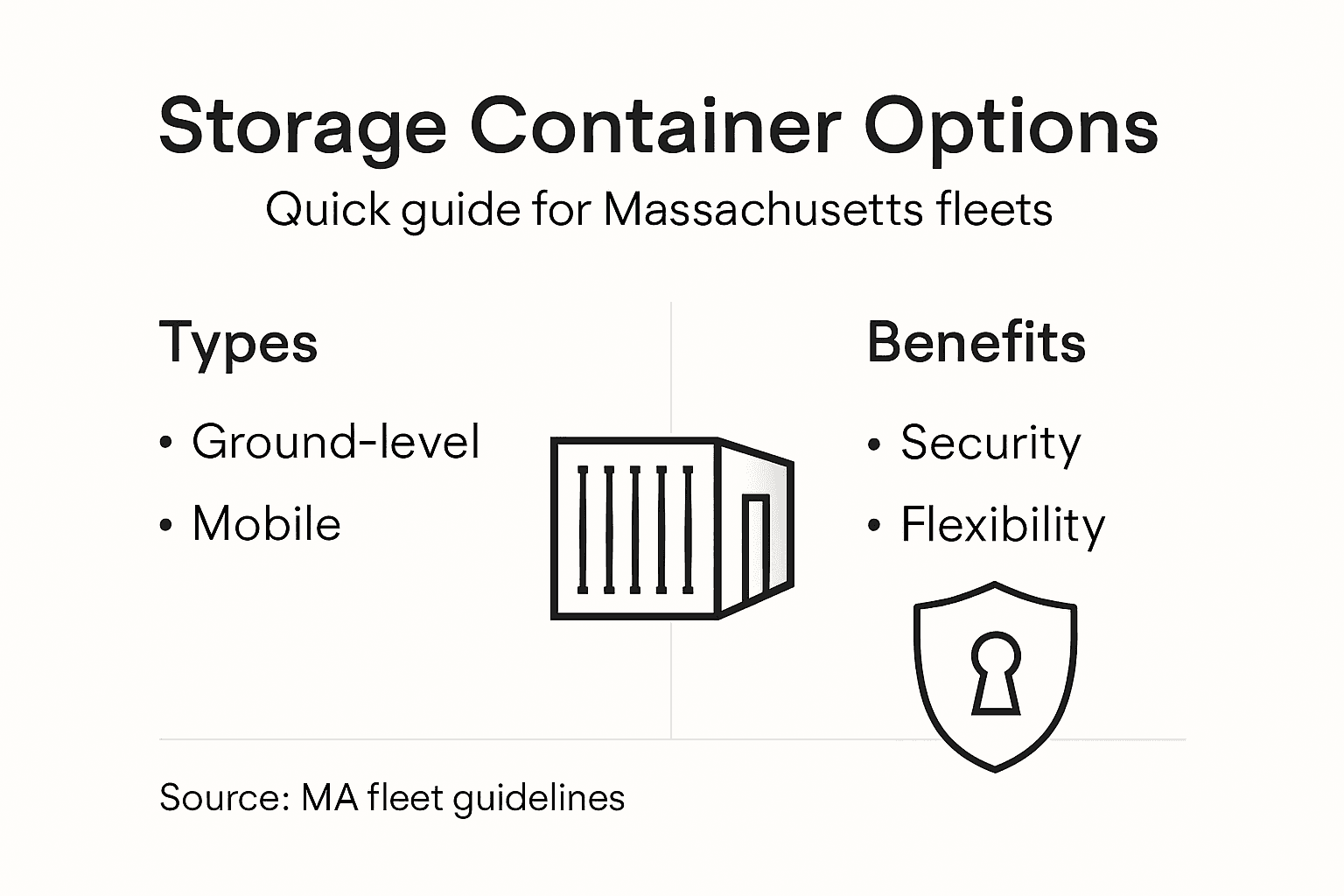
Each storage solution offers distinct advantages for fleet management. Ground-level storage containers provide stationary, secure environments ideal for long-term equipment protection. Trailers, conversely, offer enhanced mobility and dock-height access, streamlining loading and transportation processes.
Here’s a comparison of major storage container types and their ideal business applications:
| Container Type | Best Use Case | Security Level | Mobility/Access |
|---|---|---|---|
| Dry Van Trailer | Packaged goods | Moderate | High (dock-height) |
| Refrigerated Trailer | Perishable inventory | High (temperature) | High |
| Flatbed Container | Oversized cargo | Low | Maximum |
| Intermodal Container | Multimodal transport | High (standardized) | Moderate |
| Specialized Container | Unique fleet needs | Variable | Variable |
Fleet managers must consider critical factors when selecting storage solutions, including:
- Cargo type and sensitivity
- Required storage duration
- Frequency of access needed
- Security requirements
- Budget constraints
Pro tip: Conduct a comprehensive fleet audit to determine precise storage needs before investing in trailer or container solutions, ensuring optimal operational efficiency.
Regulatory Requirements for Massachusetts Businesses
Massachusetts imposes strict commercial trucking regulations that fleet operators must carefully navigate to ensure legal compliance and operational efficiency. These regulations encompass comprehensive guidelines governing vehicle specifications, safety standards, and operational protocols.
Key regulatory requirements for fleet operators include:
- Vehicle registration with Massachusetts Department of Transportation
- Compliance with state and federal weight limitations
- Mandatory safety equipment specifications
- Proper load securement standards
- Commercial driver’s license requirements
- Periodic vehicle inspection protocols
Trailer and storage container dimensions are subject to specific legal constraints. Massachusetts enforces strict maximum width, height, and length requirements for commercial vehicles. Oversize or overweight vehicles necessitate special permitting, with detailed application processes and additional safety assessments.
Operational compliance involves multiple layers of regulatory oversight:
- Comprehensive vehicle safety inspections
- Documentation of maintenance records
- Driver qualification and training verification
- Insurance coverage meeting state minimums
- Adherence to federal transportation safety administration guidelines
Pro tip: Maintain a dedicated compliance officer or team to track evolving regulatory requirements and ensure your fleet remains consistently aligned with Massachusetts commercial transportation standards.
Rental, Leasing, and Ownership Options Explained
Massachusetts fleet operators have multiple strategic options for acquiring tractor trailer storage containers, each with unique financial and operational implications. Container rental solutions provide flexible alternatives for businesses seeking adaptable storage infrastructure without long-term capital commitments.
The primary acquisition strategies include:
- Short-term rental: Ideal for seasonal or project-based needs
- Long-term leasing: Provides predictable monthly expenses
- Full ownership: Maximum control and potential tax benefits
- Shared/cooperative ownership: Cost-sharing among multiple businesses
- Lease-to-own arrangements: Gradual path to container ownership
Rental options typically range from compact 10-foot units to expansive 53-foot containers, accommodating diverse operational requirements. Pricing structures vary based on container size, rental duration, and additional service requirements. Short-term rentals offer maximum flexibility, while long-term leases provide more stable, predictable financial planning.
Below is a summary of acquisition strategies for tractor trailer storage containers with key business impacts:
| Acquisition Option | Initial Cost | Flexibility | Ownership Benefits |
|---|---|---|---|
| Short-term Rental | Low | Maximum | No asset depreciation |
| Long-term Leasing | Moderate | Predictable | Easier monthly budgeting |
| Full Ownership | High | Limited | Tax advantages, full control |
| Shared Ownership | Variable | Medium | Cost-sharing, less autonomy |
| Lease-to-Own | Moderate | Stable | Gradual equity, flexible terms |
Business owners must evaluate several critical factors when selecting their storage container acquisition strategy:
- Anticipated storage duration
- Budget constraints
- Frequency of equipment rotation
- Maintenance capabilities
- Future scalability requirements
Pro tip: Conduct a comprehensive cost-benefit analysis comparing rental, leasing, and ownership options, considering not just initial expenses but total lifecycle costs of your storage container strategy.
Cost Factors, Permits, and Common Pitfalls
Navigating the complex landscape of tractor trailer storage container regulations requires careful financial and legal planning. Massachusetts storage container regulations impose multifaceted requirements that can significantly impact overall project costs and operational feasibility.
Key cost considerations and potential financial pitfalls include:
- Permit acquisition expenses: Varying fees across different municipalities
- Zoning compliance costs: Potential architectural or location modifications
- Environmental regulation expenses: Maintenance and disposal requirements
- Site preparation investments: Ground leveling, foundation work
- Ongoing maintenance budgets: Regular inspections and repairs
Municipal permit requirements can create unexpected financial challenges for fleet managers. Each Massachusetts city and town maintains distinct regulatory frameworks, with permit costs ranging from minimal administrative fees to substantial infrastructure modification expenses. Businesses must conduct thorough preliminary research to accurately budget for container placement and compliance.
The most common pitfalls fleet operators encounter involve:
- Underestimating total permit costs
- Overlooking specific local zoning restrictions
- Failing to account for environmental compliance expenses
- Neglecting site preparation requirements
- Miscalculating long-term maintenance budgets
Pro tip: Consult with local municipal authorities and a compliance specialist before finalizing your storage container investment to uncover potential hidden costs and regulatory challenges.
Secure and Optimize Your Fleet with Expert Tractor Trailer Storage Solutions
Managing tractor trailer storage containers comes with challenges like security, regulatory compliance, and cost control. If you want to protect your valuable equipment from weather and theft while ensuring seamless operational readiness in Massachusetts, the right storage trailers can make all the difference. At Apple Truck & Trailer, we understand these pain points and offer a diverse range of high-quality, used Storage Trailers and tailored Semi Trailer Storage options designed specifically for commercial fleet operators like you.
Explore our reliable Storage Trailers on Wheels that combine mobility with security to fit your unique fleet needs. Act today to enhance your tractor trailer storage strategy with proven solutions from a regional leader trusted since 1986. Visit https://appletruckandtrailer.com to request a quote or consult our experts and keep your Massachusetts fleet compliant and fully protected.
Frequently Asked Questions
What are tractor trailer storage containers used for?
Tractor trailer storage containers are used for secure parking, weather protection, equipment storage, and theft prevention for commercial transportation assets between assignments.
What types of trailer storage options are available for fleet operations?
Fleet operators can choose from various types of storage options including dry van trailers, refrigerated trailers, flatbed containers, specialized storage containers, and intermodal containers, each serving specific cargo needs and operational requirements.
What regulatory requirements should Massachusetts fleet operators be aware of?
Massachusetts fleet operators must comply with vehicle registration, weight limitations, safety standards, load securement, and periodic inspections to ensure operational efficiency and legal compliance.
What acquisition options exist for tractor trailer storage containers?
Operators can acquire tractor trailer storage containers through short-term rentals, long-term leasing, full ownership, shared ownership, or lease-to-own arrangements, each offering different financial and operational benefits.