
Storage containers sit at the heart of supply chains, carrying everything from electronics to clothing across continents. All eyes are on physical locks and towering fences for protection, but that is not where the biggest threats lurk. Cargo crimes now average over $202,000 in losses per incident and criminals use everything from cyber hacks to high-tech GPS jamming. The real game has shifted to digital vulnerabilities and advanced criminal tactics most businesses never see coming.
Table of Contents
- What Is Storage Container Security And Why It Matters?
- Key Risks And Challenges In Storage Container Security
- How Storage Container Security Systems Work
- Essential Components Of Effective Storage Container Security
- Real-World Applications And Best Practices In Storage Container Security
Quick Summary
| Takeaway | Explanation |
|---|---|
| Implement Multi-Layered Security | Protect containers with physical, electronic, and procedural safeguards for optimal security. |
| Conduct Rigorous Inspections | Systematic checks on structural integrity and seals prevent unauthorized access and theft. |
| Utilize Advanced Technologies | Leverage GPS tracking, electronic seals, and real-time monitoring for enhanced oversight. |
| Establish Strong Operational Protocols | Ensure thorough verification of carriers, drivers, and high-risk routes to deter theft. |
| Adapt to Evolving Threats | Continuously update security strategies to address new risks from technology and criminal tactics. |
What is Storage Container Security and Why It Matters?
Storage container security represents a critical approach to protecting goods, assets, and infrastructure during transportation and storage. At its core, this practice involves implementing comprehensive protective measures to safeguard containers from potential risks such as theft, tampering, unauthorized access, and environmental damage.
Understanding Container Security Fundamentals
Container security goes beyond simple physical protection. It encompasses a holistic strategy that integrates multiple layers of defense mechanisms designed to ensure the integrity and safety of stored or transported materials. According to U.S. Customs and Border Protection, effective container security involves several key components:
- Structural integrity verification
- Seal and tamper evidence inspection
- Risk-based screening and prescreening processes
- Advanced non-intrusive inspection technologies
The primary objectives of storage container security include preventing unauthorized entry, detecting potential security breaches, tracking container movements, and maintaining a comprehensive chain of custody for valuable or sensitive materials.
The following table breaks down key components and technologies that form the foundation of effective storage container security, summarizing their main purpose and security contribution.
| Component / Technology | Purpose | Security Contribution |
|---|---|---|
| Structural Integrity Verification | Ensure container strength and detect weaknesses | Prevents entry through compromised areas |
| Seal and Tamper Evidence Inspection | Check for signs of unauthorized access | Detects and documents tampering attempts |
| Risk-Based Screening Processes | Assess and prioritize container risks | Focuses resources on highest-risk containers |
| Advanced Non-Intrusive Inspection | Remote or remote sensing of container contents | Finds hidden threats without opening containers |
| GPS Tracking and Monitoring | Track container location and movement | Enables real-time oversight and faster response |
| Electronic Seals | Provide tamper-evident, trackable safeguards | Instantly alert to breaches or unauthorized access |
| Environmental Sensors | Monitor internal conditions (temp, humidity) | Detects unsafe conditions or tampering attempts |
Economic and Safety Implications
The significance of robust storage container security cannot be overstated. Government Accountability Office research highlights that the U.S. economy relies on the continuous and secure movement of millions of tons of cargo daily. A single security breach can result in substantial financial losses, compromise supply chain operations, and potentially pose significant national security risks.
Businesses across various sectors—from logistics and transportation to manufacturing and international trade—depend on reliable container security measures. These protocols protect not just physical assets but also ensure regulatory compliance, minimize insurance risks, and maintain the overall integrity of global supply chain networks.
By implementing comprehensive storage container security strategies, organizations can mitigate potential vulnerabilities, reduce economic losses, and create a more resilient and trustworthy transportation ecosystem.
Key Risks and Challenges in Storage Container Security
Storage container security faces complex and evolving challenges that threaten the integrity of global supply chains and transportation networks. The landscape of risks has become increasingly sophisticated, requiring comprehensive and adaptive security strategies to protect valuable assets.
Theft and Unauthorized Access Vulnerabilities
Criminal activities targeting storage containers represent a significant operational risk. According to the National Insurance Crime Bureau, cargo crimes have risen dramatically, with average losses exceeding $202,000 per incident. These security breaches manifest through multiple sophisticated techniques:
- Strategic identity theft targeting logistics systems
- Fraudulent transportation documentation
- Cyber-enabled infiltration techniques
- GPS tracking and communication system manipulation
The complexity of these threats demands multifaceted security approaches that address both physical and digital vulnerabilities. Organizations must develop robust monitoring and verification protocols to detect and prevent potential breaches.
Technological and Operational Challenges
Modern storage container security confronts significant technological and operational hurdles. Emerging risks include advanced tampering methods, complex cyber intrusions, and increasingly creative criminal strategies designed to exploit supply chain weaknesses. The fragmented nature of global logistics networks creates additional complexity, making standardized security implementation challenging.
Key operational challenges include maintaining consistent inspection protocols, ensuring seamless communication across different transportation modes, and developing real-time tracking and monitoring capabilities. These requirements demand significant investment in technology, training, and infrastructure to create comprehensive security ecosystems.
Effective storage container security requires a proactive, integrated approach that combines advanced technological solutions, rigorous procedural standards, and continuous adaptation to emerging threat landscapes. By recognizing and addressing these multifaceted challenges, organizations can develop more resilient and secure transportation and storage strategies.
This table summarizes the main risks and challenges to storage container security, highlighting their description and impact on operations.
| Risk / Challenge | Description | Impact on Operations |
|---|---|---|
| Theft and Unauthorized Access | Criminals target containers using advanced tactics | Financial loss, supply chain disruption |
| Strategic Identity Theft | Fake credentials used to infiltrate logistics systems | Compromises integrity, harder to trace |
| Fraudulent Documentation | Use of forged paperwork to access containers | Enables undetected theft |
| Cyber-enabled Infiltration | Hacking into logistics networks and control systems | Disrupts tracking and security controls |
| GPS Jamming or Manipulation | Interfering with tracking devices | Obscures location, delayed response to incidents |
| Operational Complexity | Fragmented global logistics, inconsistent protocols | Difficult to standardize and enforce security procedures |
| Evolving Criminal Strategies | Increasingly sophisticated tactics and technologies | Requires continuous adaptation and investment |
How Storage Container Security Systems Work
Storage container security systems represent a sophisticated network of technological and procedural safeguards designed to protect valuable assets throughout their transportation and storage lifecycle. These integrated systems combine multiple layers of protection to create comprehensive monitoring and prevention mechanisms.
Physical and Electronic Monitoring Components
According to the Department of Homeland Security, effective container security systems typically incorporate several critical technological components:
- High-resolution video surveillance systems
- Intrusion detection sensors
- Electronic seal tracking mechanisms
- Access control infrastructure
- Real-time communication and alert networks
These interconnected technologies work collaboratively to create a holistic security environment that can detect, record, and respond to potential threats in near real-time. The integration of physical monitoring with digital tracking enables organizations to maintain continuous oversight of container movements and conditions.
Seal and Sensor Technology
At the core of modern storage container security systems are advanced seal and sensor technologies. Electronic seals provide tamper-evident protection by generating immediate alerts when unauthorized access attempts occur. These sophisticated devices can track container location, monitor environmental conditions, and transmit critical status information across secure communication networks.
Key functionalities include detecting door openings, tracking temperature and humidity changes, and generating encrypted communication signals that can be monitored remotely.
By combining physical barrier protection with digital tracking capabilities, these systems create multiple layers of security that significantly reduce the potential for theft, tampering, or unauthorized access.
The complexity of modern storage container security systems reflects the evolving nature of global logistics challenges. As criminal techniques become more sophisticated, security technologies continue to adapt, creating increasingly robust and intelligent protection mechanisms that safeguard valuable assets across complex transportation networks.
Essential Components of Effective Storage Container Security
Effective storage container security requires a comprehensive approach that integrates multiple sophisticated systems, technologies, and procedural controls to protect valuable assets throughout their transportation and storage lifecycle. Organizations must develop robust, multilayered security strategies that address potential vulnerabilities across physical, technological, and operational domains.
Structural and Procedural Safeguards
According to U.S. Customs and Border Protection, comprehensive container security involves systematic inspection and verification of critical structural components. This includes detailed examination of key areas that could potentially compromise container integrity:
- Door and lock mechanisms
- Side wall structural integrity
- Floor and undercarriage condition
- Roof and ceiling structural assessment
- Comprehensive seal and tamper evidence verification
These structural inspections serve as the first line of defense, identifying potential weaknesses or signs of unauthorized access before containers enter transportation networks. Implementing standardized, rigorous inspection protocols creates a foundational layer of security that prevents potential breaches.
Technological and Monitoring Infrastructure
Modern storage container security demands sophisticated technological integration that goes beyond traditional physical inspections. Advanced monitoring systems combine electronic tracking, real-time communication networks, and intelligent sensor technologies to provide comprehensive asset protection.
Key technological components include electronic seal tracking, GPS-enabled location monitoring, environmental condition sensors, and encrypted communication channels. These systems enable organizations to maintain continuous oversight, detect potential security incidents instantaneously, and respond to threats with unprecedented speed and precision.
By combining meticulous procedural controls with cutting-edge technological solutions, organizations can create robust storage container security frameworks that adapt to evolving global logistics challenges.
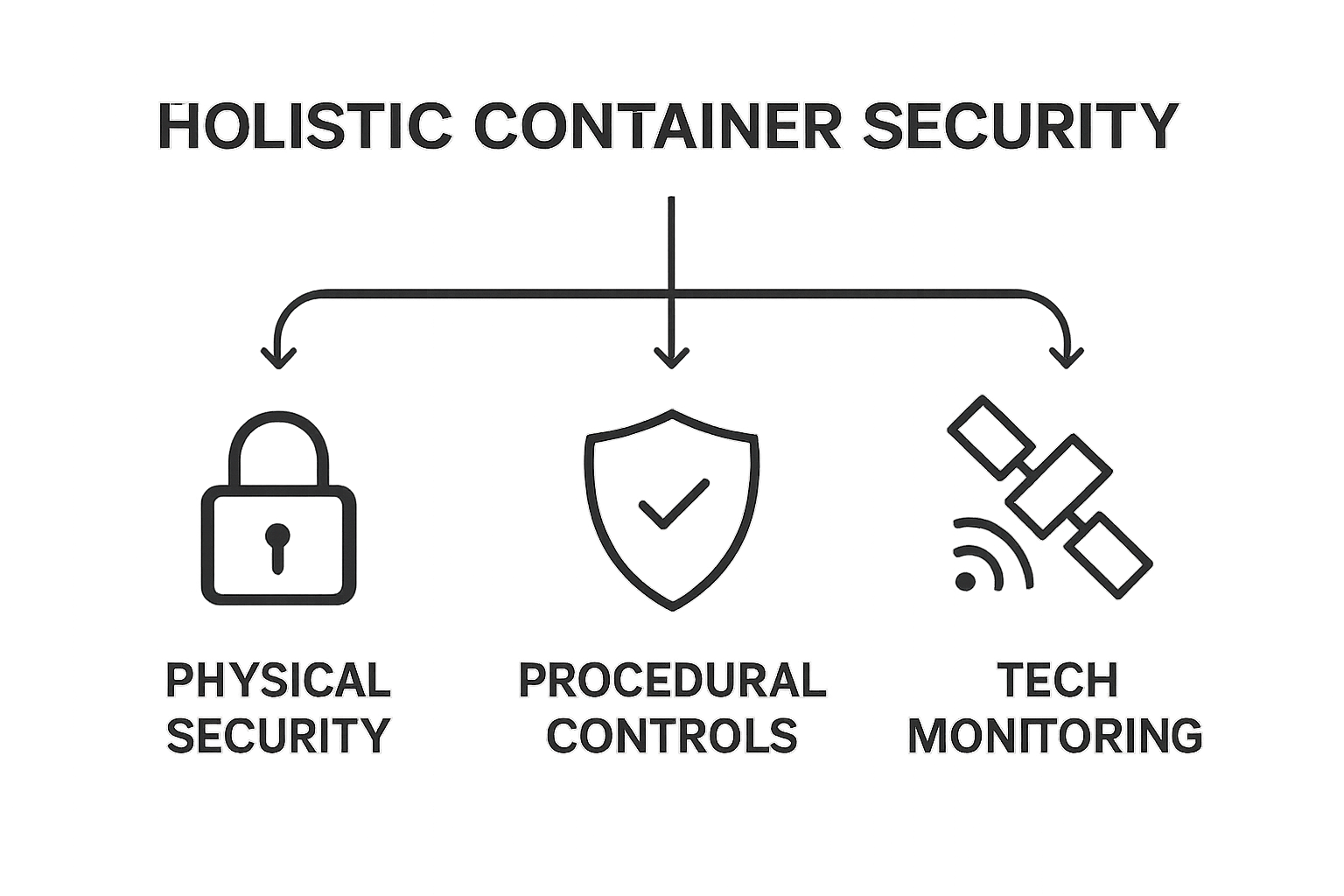
The most effective security strategies recognize that protection requires a holistic, integrated approach that addresses potential vulnerabilities across multiple dimensions.
Real-World Applications and Best Practices in Storage Container Security
Storage container security transcends theoretical concepts, requiring practical implementation strategies that address complex real-world challenges. Organizations across industries must develop comprehensive approaches that integrate technological solutions with robust operational protocols to effectively protect valuable assets.
Operational Security Protocols
According to the Federal Bureau of Investigation, implementing effective container security involves multiple strategic considerations:
- Rigorous carrier and driver verification processes
- Secure identification and authentication mechanisms
- Enhanced monitoring of high-risk transportation routes
- Strategic use of advanced locking systems
- Comprehensive documentation and tracking protocols
These operational protocols serve as critical defense mechanisms against potential theft, unauthorized access, and supply chain disruptions.
By establishing standardized verification procedures, organizations can significantly reduce vulnerabilities and create more resilient transportation networks.
Technological Integration and Risk Management
Modern storage container security demands sophisticated technological integration that transforms traditional security approaches. Advanced systems now combine multiple layers of protection, including real-time tracking, environmental monitoring, and intelligent alert mechanisms.
Key technological applications include GPS-enabled location tracking, electronic seal technologies, remote monitoring platforms, and encrypted communication networks. These integrated solutions enable organizations to maintain continuous oversight, detect potential security incidents instantaneously, and respond to emerging threats with unprecedented precision and speed.
Successful storage container security represents a dynamic, adaptive approach that recognizes the evolving nature of global logistics challenges. By combining cutting-edge technological solutions with comprehensive operational strategies, organizations can create robust security frameworks that protect valuable assets across complex transportation ecosystems.
Strengthen Your Storage Container Security with Local Experts
Are you worried about theft, tampering, or risky gaps in your storage container protection? This article highlights just how crucial strong storage container security is for your assets and peace of mind. If you want to avoid stressful break-ins or costly mistakes, it makes sense to turn to an experienced provider that understands the day-to-day reality of keeping your investments safe.

With over 30 years of expertise, Apple Truck and Trailer delivers the practical solutions you need. Whether you are a fleet manager seeking compliant, secure storage or a homeowner wanting safe, reliable options for a big move or clean-out, our team can help. From high-quality storage containers and trailers to hands-on service and local support, we provide inventory, installation, maintenance, and flexible rentals—all customized to your needs. Visit our storage solutions page today and take control of your container security. Our inventory moves fast, so act now to secure the most reliable protection for your business or home.
Frequently Asked Questions
What are the main components of storage container security?
Effective storage container security includes structural integrity verification, tamper-evidence inspection, risk-based screening processes, and advanced non-intrusive inspection technologies.
How can businesses protect against theft and unauthorized access to storage containers?
Businesses can implement rigorous carrier and driver verification processes, enhance monitoring on high-risk transportation routes, utilize advanced locking systems, and establish clear documentation and tracking protocols.
What role does technology play in storage container security?
Technology enhances storage container security through real-time tracking, environmental monitoring, electronic seal technologies, and remote monitoring systems, all of which help in detecting and responding to security incidents quickly.
Why is storage container security important for the economy?
Storage container security is vital as it helps prevent financial losses, maintains supply chain integrity, ensures regulatory compliance, and minimizes risks that could threaten national security.