
Finding the right 40 ft trailer for your fleet in Massachusetts is never as simple as picking the first option on the lot. One wrong choice can lead to higher costs, compliance headaches, and cargo issues that slow down your business. The real challenge is knowing what to look for and how every detail can impact your operations.
This list will walk you through critical steps for selecting the best trailer, covering everything from capacity planning and build quality to local regulations and security. You will learn how to avoid common mistakes and make confident decisions that protect your investment and keep your business moving smoothly.
If you want specific, actionable tips that can save you money and keep your fleet running safely, keep reading. Each point is designed to help you make smart trailer choices with practical advice you can use immediately.
Table of Contents
- Understand Your Cargo and Capacity Needs
- Compare New vs Used 40 Ft Trailers
- Evaluate Trailer Build Quality and Materials
- Examine Lease, Rental, and Purchase Options
- Consider Local Service and Maintenance Support
- Check Compliance With Massachusetts Regulations
- Plan for Storage, Parking, and Security
Quick Summary
| Key Insight | Clarification |
|---|---|
| 1. Assess Cargo Needs First | Understanding cargo weight, dimensions, and requirements helps select the best trailer and ensures efficient transport. |
| 2. Weigh New vs. Used Trailers | Analyze budget, operational needs, and maintenance risks before choosing new or used trailers to maximize investment value. |
| 3. Evaluate Build Quality Carefully | Look for high-quality materials, construction, and standards to ensure the trailer’s durability and performance for long-term use. |
| 4. Choose the Right Acquisition Option | Determine if leasing, renting, or purchasing meets financial goals and operational needs to optimize your fleet management strategy. |
| 5. Ensure Local Maintenance Support | A strong local service network is vital for reducing downtime and ensuring compliance with maintenance regulations, impacting overall trailer efficiency. |
1. Understand Your Cargo and Capacity Needs
Choosing the right 40 ft trailer starts with a comprehensive understanding of your cargo requirements and weight capacity. Your trailer selection directly impacts transportation efficiency, safety, and overall logistics performance.
Most semi trailers can carry between 20 to 25 tons, with specific configurations significantly affecting pallet and cargo capacity. Roadway cargo capacity calculations involve analyzing operational factors, load limits, and dimensional constraints that determine your trailer’s practical utility.
To accurately assess your needs, start by cataloging your typical cargo. Measure the total weight, dimensions, and specific transportation requirements. Standard Euro pallets (1200 mm × 800 mm) provide an excellent reference point for estimating trailer capacity. Depending on cargo type, a standard semi trailer can accommodate approximately 22 to 33 pallets.
Key considerations include:
- Total cargo weight
- Cargo dimensions and shape
- Frequency of transportation
- Special handling requirements
- Potential weight distribution challenges
Pro tip: Always add a 10% buffer to your estimated cargo weight to account for unexpected variations and ensure safe transportation margins.
2. Compare New vs Used 40 ft Trailers
Navigating the decision between new and used 40 ft trailers requires careful analysis of your operational needs, budget constraints, and long term financial strategy. Understanding the pros and cons of each option can help you make an informed investment decision.
New trailers provide immediate advantages with modern features, updated technology, and manufacturer warranties that protect your investment. These units offer peak reliability and typically include the latest safety enhancements. However, they come with significantly higher upfront costs that can strain your capital budget.
Used trailers present an attractive alternative for budget conscious fleet managers. Government auctions offer economical options for acquiring trailers at reduced prices. While these units can provide substantial savings, they also carry potential risks related to maintenance history and potential wear.
Key considerations when comparing new versus used trailers include:
- Initial purchase price
- Maintenance and repair costs
- Expected operational lifespan
- Warranty coverage
- Technology and safety features
- Potential resale value
Certified pre owned trailers represent an excellent middle ground. These units undergo rigorous inspections and often include extended warranties, providing a balance between cost savings and reliability.
Pro tip: Always request a comprehensive maintenance history and professional inspection before purchasing a used trailer to identify potential hidden issues and ensure sound mechanical condition.
3. Evaluate Trailer Build Quality and Materials
Choosing a high-performance 40 ft trailer demands careful examination of build quality and material standards that directly impact durability, safety, and long-term operational efficiency. The materials and construction techniques used in trailer manufacturing are critical determinants of your investment’s reliability and performance.
Truck trailer manufacturing standards play a crucial role in ensuring equipment meets rigorous industry specifications. Professional manufacturers prioritize selecting materials that demonstrate exceptional strength, corrosion resistance, and structural integrity.
Key material considerations include:
- Steel grade and thickness
- Aluminum composition
- Welding techniques
- Protective coating quality
- Structural reinforcement design
- Resistance to environmental stress
Industry associations like the Truck Trailer Manufacturers Association establish comprehensive guidelines that help fleet managers understand critical quality markers. Look for trailers constructed with high tensile steel or advanced aluminum alloys that provide optimal weight to strength ratios.
When evaluating build quality, pay close attention to:
- Uniform and clean welding patterns
- Minimal surface imperfections
- Consistent material thickness
- Robust connection points
- Evidence of precision manufacturing
Pro tip: Request detailed metallurgical certifications and manufacturing process documentation to validate the trailer’s material quality and construction standards.
4. Examine Lease, Rental, and Purchase Options
Choosing between leasing, renting, and purchasing a 40 ft trailer requires careful analysis of your operational requirements, financial strategy, and long-term business goals. Each option presents unique advantages and potential drawbacks that can significantly impact your fleet management approach.
Leasing versus buying strategies reveal nuanced financial implications for commercial trailer acquisition. Leasing typically offers lower monthly payments and easier equipment upgrades, while purchasing builds asset equity and provides greater operational flexibility.
Key considerations for each option include:
Leasing Advantages:
- Spread out equipment costs
- Lower initial capital investment
- Easier equipment upgrades
- Potential tax benefits
- Reduced maintenance responsibilities
Purchasing Advantages:
- Full asset ownership
- Long-term cost savings
- Complete customization options
- No recurring monthly payments
- Asset can be resold
Rental Benefits:
- Extremely flexible short-term solution
- No long-term commitment
- Ideal for project specific needs
- Quick equipment access
- Minimal maintenance responsibilities
Your specific business model, financial capacity, and operational requirements will ultimately determine the most suitable acquisition strategy. Consider factors like anticipated usage duration, budget constraints, and long-term equipment needs when making your decision.
Pro tip: Calculate your total cost of ownership for each option including maintenance, depreciation, and potential tax implications before making a final trailer acquisition decision.
5. Consider Local Service and Maintenance Support
Choosing a 40 ft trailer involves more than just assessing its initial condition. Local service and maintenance support are critical factors that can significantly impact your trailer’s long-term performance, reliability, and operational efficiency.
Massachusetts trailer maintenance regulations underscore the importance of consistent professional servicing and compliance with state safety standards. A robust local service network ensures your trailer remains operational and meets all legal requirements.
Key aspects of comprehensive maintenance support include:
Maintenance Network Considerations:
- Proximity of service centers
- Response time for repairs
- Technical expertise
- Parts availability
- Cost of maintenance services
- Specialization in trailer type
Benefits of Strong Local Support:
- Reduced operational downtime
- Faster repair turnaround
- Access to specialized technicians
- Compliance with state regulations
- Preventive maintenance options
- Extended trailer lifespan
When evaluating service providers, investigate their technical capabilities, response times, and experience with your specific trailer type. Request references from other fleet managers and review their track record of reliability and customer satisfaction.
Pro tip: Establish a relationship with multiple service centers to ensure backup support and negotiate preventive maintenance contracts that include priority response times.
6. Check Compliance With Massachusetts Regulations
Navigating the complex landscape of trailer regulations requires meticulous attention to legal requirements specific to Massachusetts. Understanding state mandates is crucial to avoiding potential fines, operational disruptions, and legal complications.
Commercial trailer requirements in Massachusetts encompass multiple critical aspects of trailer operation and ownership. State laws define precise parameters for trailer dimensions, weight limits, registration, and roadway usage that directly impact commercial fleet management.
Key regulatory considerations include:
Dimensional Restrictions:
- Maximum trailer width of 102 inches
- Maximum trailer length of 40 feet
- Specific weight distribution requirements
- Tow vehicle compatibility standards
Compliance Documentation:
- Commercial trailer registration
- Appropriate licensing
- Vehicle identification numbers
- Inspection certificates
- Special use permits
- Safety equipment verification
Massachusetts General Laws Chapter 90 Section 19 provides comprehensive guidelines for trailer operational standards. Fleet managers must carefully review these regulations to ensure full legal compliance and avoid potential penalties.
Implementation strategies involve:
- Conducting thorough regulatory research
- Maintaining updated documentation
- Performing regular compliance audits
- Consulting local transportation authorities
- Staying informed about regulatory changes
Pro tip: Schedule an annual compliance review with a Massachusetts commercial vehicle compliance specialist to proactively identify and address potential regulatory gaps.
7. Plan for Storage, Parking, and Security
Securing appropriate storage and parking solutions for your 40 ft trailer is a critical operational consideration that extends far beyond simple spatial requirements. Your storage strategy directly impacts equipment longevity, security, and overall fleet management effectiveness.
Massachusetts towing policies outline specific regulations governing trailer parking and storage that fleet managers must carefully navigate. Compliance involves understanding local ordinances, zoning restrictions, and security protocols.
Key storage and security considerations include:
Storage Location Factors:
- Proximity to operational base
- Zonal compliance
- Access control
- Ground surface stability
- Drainage capabilities
- Perimeter security
Security Infrastructure:
- Surveillance systems
- Locked gating
- Alarm mechanisms
- Lighting
- Restricted access protocols
- Weather protection features
Additional strategic planning involves evaluating storage sites for environmental protection, potential damage risks, and insurance implications. Consider sites that offer comprehensive security features while maintaining convenient access for your operational needs.
Implementation strategies involve:
- Conducting site security assessments
- Verifying local parking regulations
- Developing comprehensive storage protocols
- Investing in robust security technologies
- Creating detailed inventory tracking systems
Pro tip: Create a comprehensive storage checklist that documents site security features, access protocols, and emergency contact information for each trailer storage location.
Below is a summary table outlining the essential information provided in the article about choosing and managing a 40 ft trailer effectively for various applications.
| Aspect | Details | Key Recommendations |
|---|---|---|
| Understanding Needs | Assess your cargo’s weight, dimensions, and operational frequency. | Add a 10% weight buffer for safe transport. |
| New vs. Used Trailers | New offers modern features; used is budget-friendly. | Inspect and verify maintenance history of used trailers. |
| Build Quality | Evaluate materials such as high-tensile steel and advanced welding techniques. | Request manufacturing certifications. |
| Acquisition Methods | Options include leasing, renting, or purchasing. | Calculate total cost of ownership before deciding. |
| Maintenance and Support | Ensure access to reliable local maintenance services. | Build relationships with service centers for preventive maintenance. |
| Regulatory Compliance | Abide by state regulations for dimensions and documentation specific to Massachusetts. | Conduct annual compliance reviews. |
| Storage and Security | Secure storage with proper environmental repairs and surveillance. | Develop a comprehensive security and storage checklist. |
Find the Perfect 40 Ft Trailer to Power Your Fleet
Choosing the right 40 ft trailer can feel overwhelming with so many factors like cargo capacity, build quality, compliance, and maintenance to consider. If you want a reliable, cost-effective solution that fits your unique hauling needs in Massachusetts and the surrounding region, Apple Truck & Trailer is here to help. Whether you need a durable Flatbed Trailer for versatile freight or a climate-controlled Reefer Trailer Rental to protect sensitive loads, our wide selection of quality used trailers roots out the guesswork from this critical investment.
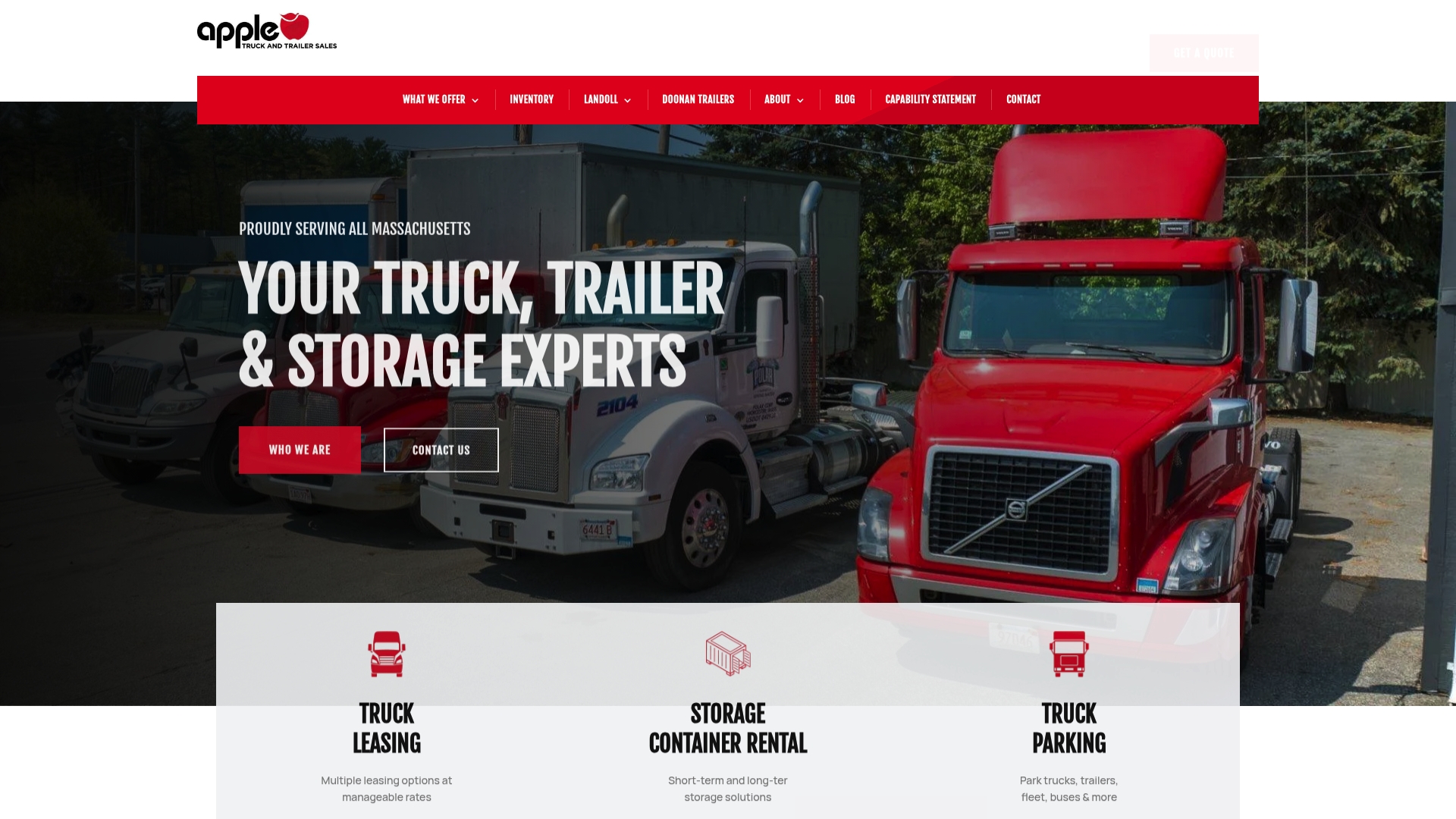
Explore top-quality trailers crafted to meet strict manufacturing standards and regional regulations. We back our equipment with experienced local maintenance support to keep your fleet running with minimal downtime. Act now to secure the ideal trailer for your operational demands. Visit Apple Truck & Trailer today to request a quote or speak with a specialist who understands your challenges and goals.
Frequently Asked Questions
How do I determine the right cargo and capacity needs for a 40 ft trailer?
To determine the right cargo and capacity needs, start by cataloging your typical cargo, including weight and dimensions. Measure the total weight and use standard Euro pallets as a reference to estimate trailer capacity, considering any special handling requirements.
What are the advantages of purchasing a new versus a used 40 ft trailer?
New trailers come with modern features, manufacturer warranties, and enhanced safety, while used trailers offer significant savings but may have hidden maintenance issues. Evaluate the initial purchase price, expected lifespan, and warranty options to make an informed decision based on your budget.
What materials should I look for in a high-quality 40 ft trailer?
Look for trailers constructed with high tensile steel or advanced aluminum alloys that provide strength and corrosion resistance. Pay attention to the welding quality and structural design to ensure long-term performance and durability.
How can I assess lease, rental, and purchase options for 40 ft trailers?
Evaluate your financial strategy and operational needs by comparing the total cost of ownership, including maintenance and depreciation for each option. This will help determine whether leasing, renting, or purchasing aligns best with your business model over the long term.
Why is local service and maintenance support important for my trailer?
Local service and maintenance support are critical as they reduce downtime and keep your trailer compliant with safety regulations. Find a service provider with expertise in your trailer type to ensure quick repairs and reliable technical support, improving your fleet’s operational efficiency.
What are some key compliance regulations I need to consider for a 40 ft trailer?
Important regulatory considerations include maximum trailer dimensions, weight limits, and necessary documentation such as registration and inspection certificates. Regularly review these compliance requirements to avoid penalties and ensure smooth operational flow.
Recommended
- 7 Key Tips for Buying Storage Trailers for Sale – Apple Truck & Trailer
- 7 Key Tips for 40ft Container for Rent Near Me Success – Apple Truck & Trailer
- Trailer Rental FAQs: Solving Common Fleet Challenges – Apple Truck & Trailer
- A Beginner’s Ultimate Guide: 53 Storage Trailer Rental – Apple Truck & Trailer