
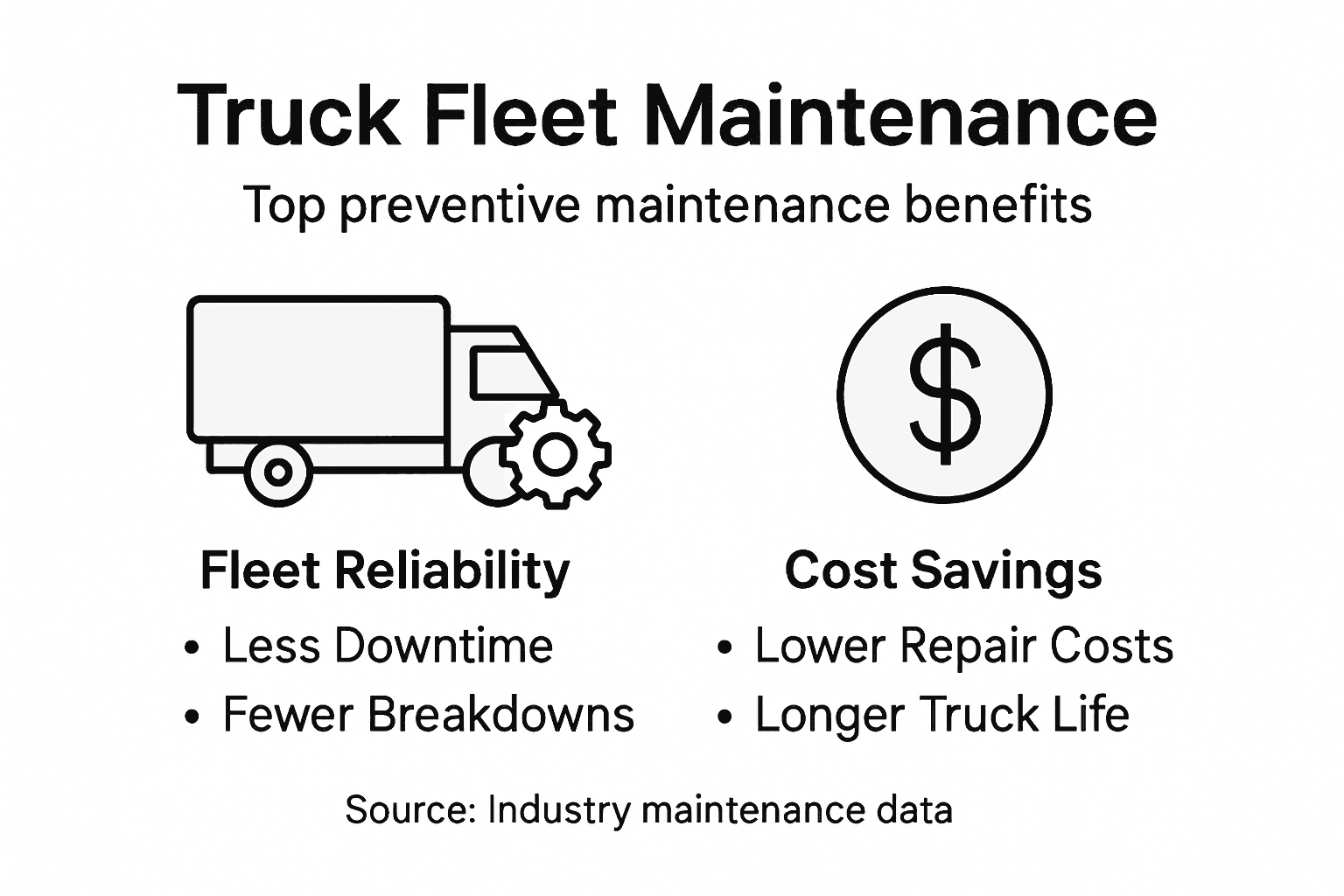
Unexpected breakdowns can bring even the best-managed fleets to a halt, making every hour of downtime costly for Massachusetts trucking companies. Focusing on preventive maintenance is more than a smart move—it is a proactive strategy that helps keep trucks on the road, extends their lifespan, and keeps repair bills predictable. By prioritizing scheduled inspections, servicing, and targeted repairs, fleet maintenance managers can strengthen reliability, lower operational expenses, and build a foundation for steady business growth.
Table of Contents
- Defining Preventive Maintenance For Trucks
- Types Of Preventive Maintenance Programs
- How Preventive Maintenance Improves Safety
- Financial Impact On Fleet Operations
- Reducing Downtime And Extending Vehicle Life
- Ensuring Dot Regulatory Compliance
Key Takeaways
| Point | Details |
|---|---|
| Preventive Maintenance Role | Preventive maintenance minimizes unexpected breakdowns and extends vehicle lifespan through systematic inspections and timely servicing. |
| Types of Maintenance Programs | Implementing a hybrid maintenance strategy can enhance fleet reliability, combining time-based, condition-based, predictive, and risk-based approaches. |
| Safety Improvements | Regular maintenance checks significantly reduce accidents by identifying potential issues before they escalate, enhancing workplace safety for drivers. |
| Financial Benefits | Investing in preventive maintenance can lead to substantial cost savings, reducing repair expenses and extending equipment lifespans, positively impacting overall economic performance. |
Defining Preventive Maintenance for Trucks
Preventive maintenance is a systematic approach to truck fleet management that focuses on proactively maintaining vehicles before critical failures occur. It represents a strategic methodology designed to extend vehicle lifespan, reduce unexpected breakdowns, and optimize operational efficiency.
At its core, preventive maintenance involves scheduled inspections, routine servicing, and timely component replacements. Technology & Maintenance Council recommended practices emphasize the importance of consistent monitoring and strategic interventions to maintain equipment reliability.
Key components of truck preventive maintenance include:
- Regular oil changes
- Comprehensive filter replacements
- Systematic lubrication and greasing
- Detailed engine diagnostics
- Fuel system assessments
- Electronic Control Module (ECM) updates
- Diesel Exhaust Fluid (DEF) level monitoring
These activities serve multiple critical purposes. By implementing a robust preventive maintenance strategy, fleet managers can:
- Minimize unexpected vehicle downtime
- Extend overall truck lifespan
- Reduce long-term repair expenses
- Ensure compliance with emission regulations
- Maintain peak vehicle performance
Pro tip: Schedule comprehensive maintenance checks every 10,000-15,000 miles to catch potential issues before they escalate into expensive repairs.
Types of Preventive Maintenance Programs
Preventive maintenance encompasses several strategic approaches designed to optimize truck fleet performance and minimize unexpected equipment failures. Maintenance strategies range from time-based routines to sophisticated predictive techniques, each tailored to specific operational requirements.
The primary types of preventive maintenance programs include:
Time-Based Maintenance
- Scheduled at regular intervals
- Predetermined service schedules
- Consistent routine inspections
Condition-Based Maintenance
- Real-time equipment monitoring
- Performance tracking
- Interventions based on actual equipment status
Predictive Maintenance
- Advanced data analytics
- Forecasting potential equipment failures
- Utilizing sensor and diagnostic technologies
Risk-Based Maintenance
- Prioritizing high-criticality equipment
- Focused on preventing catastrophic failures
- Strategic resource allocation
Each maintenance approach offers unique advantages. Time-based maintenance provides structured regularity, while condition-based strategies allow more dynamic, responsive interventions. Predictive maintenance represents the most technologically advanced approach, leveraging data analytics to anticipate potential issues before they escalate.

Here’s a comparison of the main preventive maintenance program types and their ideal use cases:
| Program Type | Best For | Key Technologies Used | Typical Benefit |
|---|---|---|---|
| Time-Based | Predictable schedules | Manual logs, calendars | Consistent reliability |
| Condition-Based | Variable equipment usage | Sensors, telematics | Adaptive problem response |
| Predictive | Large, high-tech fleets | Predictive analytics | Early failure warnings |
| Risk-Based | Critical vehicles/assets | Risk assessment tools | Reduced major breakdowns |
Selecting the appropriate maintenance program depends on your fleet’s specific operational goals, equipment complexity, and budgetary constraints.
Pro tip: Implement a hybrid maintenance strategy that combines multiple approaches to maximize fleet reliability and operational efficiency.
How Preventive Maintenance Improves Safety
Preventive maintenance plays a crucial role in enhancing workplace safety for truck fleet operations. Hazard prevention through systematic maintenance directly reduces the risk of equipment-related accidents and protects both drivers and support personnel from potential workplace injuries.
Key safety improvements from preventive maintenance include:
Early Detection of Critical Issues
- Identifying potential equipment failures before they occur
- Preventing sudden breakdowns during transportation
- Reducing unexpected roadside emergencies
Comprehensive Vehicle System Checks
- Thorough brake system inspections
- Tire condition and pressure monitoring
- Suspension and steering component assessments
- Electrical system diagnostics
Operator Protection Mechanisms
- Ensuring safety equipment functionality
- Verifying emergency system responsiveness
- Maintaining critical vehicle safety features
Statistically, preventive maintenance demonstrates significant safety benefits. Research indicates that regular maintenance can reduce safety incidents by approximately 25%, dramatically minimizing the potential for accidents caused by equipment malfunction.
Proactive maintenance is not just about preventing breakdowns—it’s about creating a comprehensive safety ecosystem for your entire fleet.
Pro tip: Develop a standardized safety checklist that technicians must complete during every maintenance inspection to ensure consistent and thorough safety evaluations.
Financial Impact on Fleet Operations
Preventive maintenance represents a strategic financial investment that can dramatically transform a fleet’s economic performance. Cost savings through systematic maintenance demonstrate substantial economic benefits for commercial trucking operations, with potential reductions in total maintenance expenses ranging from 12% to 18%.
Key financial advantages of preventive maintenance include:
Direct Cost Reduction
- Lowering unplanned repair expenses
- Minimizing extended vehicle downtime
- Reducing emergency maintenance costs
Long-Term Asset Management
- Extending vehicle operational lifespan
- Preserving equipment market value
- Optimizing capital equipment investments
Operational Efficiency Improvements
- Decreasing fuel consumption
- Enhancing vehicle performance
- Streamlining maintenance scheduling
Companies implementing comprehensive preventive maintenance strategies can expect significant financial returns. Research indicates that well-managed programs can reduce operational disruptions by up to 30% while extending equipment lifespan by 25-30%, creating substantial long-term economic value.
This table summarizes the financial and operational impacts of preventive maintenance on truck fleets:
| Impact Area | Practical Effect | Long-Term Value |
|---|---|---|
| Repair Costs | Fewer expensive repairs | Increased savings |
| Vehicle Lifespan | More years in operation | Delayed replacement costs |
| Downtime | Reduced service interruptions | Improved delivery reliability |
| Compliance | Fewer regulatory violations | Lower legal and penalty risk |
Preventive maintenance is not an expense—it’s a strategic financial investment that directly impacts bottom-line performance.
Pro tip: Develop a detailed tracking system to quantify maintenance costs and performance metrics, enabling data-driven financial decision-making for your fleet.
Reducing Downtime and Extending Vehicle Life
Preventive maintenance is a strategic approach that directly addresses two critical challenges in fleet management: minimizing vehicle downtime and maximizing operational lifespan. Maintenance optimization strategies can dramatically reduce equipment failures and extend vehicle performance beyond traditional expectations.
Key strategies for reducing downtime and extending vehicle life include:
Systematic Inspection Protocols
- Comprehensive component assessments
- Early detection of potential failures
- Proactive replacement of wear-prone parts
Advanced Diagnostic Techniques
- Real-time performance monitoring
- Predictive maintenance tracking
- Data-driven maintenance scheduling
Critical Component Management
- Regular lubrication and alignment
- Precise calibration of mechanical systems
- Targeted wear-and-tear prevention
Research demonstrates significant benefits of preventive maintenance. Fleet operators can potentially reduce equipment downtime by up to 30%, minimize machinery failures by 40%, and increase vehicle operational lifespan by 25-30% through consistent, strategic maintenance interventions.
Effective maintenance is not about fixing trucks—it’s about preventing problems before they emerge.
Pro tip: Implement a digital tracking system that logs every maintenance action, enabling precise prediction of vehicle performance and potential failure points.
Ensuring DOT Regulatory Compliance
Navigating Department of Transportation (DOT) regulatory requirements demands a comprehensive approach to fleet maintenance that goes beyond routine servicing. DOT maintenance regulations mandate systematic vehicle inspections and meticulous record-keeping to ensure commercial truck safety and operational integrity.
Key compliance requirements include:
Mandatory Vehicle Inspections
- Pre-trip safety assessments
- Annual comprehensive vehicle evaluations
- Detailed component condition checks
Documentation and Recordkeeping
- Maintenance log maintenance
- Repair and inspection documentation
- Digital tracking of vehicle history
Critical Compliance Areas
- Brake system functionality
- Tire condition and pressure
- Lighting and electrical systems
- Steering and suspension components
Fleet operators must understand that DOT compliance is not just about avoiding penalties—it’s about creating a robust safety framework that protects drivers, cargo, and other road users. Proactive maintenance significantly reduces the risk of violations and potential out-of-service declarations.
Compliance is not a destination, but a continuous journey of safety and operational excellence.
Pro tip: Create a standardized digital compliance checklist that tracks every regulatory requirement and maintenance action, ensuring no critical inspection falls through the cracks.
Maximize Fleet Performance with Expert Preventive Maintenance Solutions
Maintaining your truck fleet through effective preventive maintenance is key to reducing costly downtime and ensuring safety on the road. If you face challenges like unexpected breakdowns or complex compliance requirements, integrating a tailored maintenance program is essential. At Apple Truck and Trailer, we understand these pain points. We offer professional maintenance services designed to help commercial fleet operators in Massachusetts and surrounding states extend vehicle lifespan, improve safety, and control repair costs.
Don’t wait until minor issues become major problems. Visit Apple Truck and Trailer to explore our comprehensive truck and trailer maintenance offerings. Our experienced team is ready to support your fleet with scheduled inspections, repairs, and compliance assistance. Get started today to protect your investment and keep your operations running smoothly with reliable preventive maintenance. Contact us now and drive your business forward.
Frequently Asked Questions
What is preventive maintenance for trucks?
Preventive maintenance for trucks is a systematic approach aimed at proactively maintaining vehicles through scheduled inspections, routine servicing, and timely component replacements to avoid critical failures, extend lifespan, and optimize operational efficiency.
How does preventive maintenance improve safety for truck fleets?
Preventive maintenance enhances safety by identifying potential equipment failures before they occur, ensuring thorough inspections of critical vehicle systems, and verifying the functionality of safety features, ultimately reducing the risk of accidents.
What types of preventive maintenance programs are available for truck fleets?
There are several types of preventive maintenance programs, including time-based maintenance, condition-based maintenance, predictive maintenance, and risk-based maintenance. Each approach is tailored to specific operational needs and offers distinct advantages for fleet management.
How can preventive maintenance impact the financial performance of a truck fleet?
Implementing preventive maintenance can lead to substantial financial benefits, including reduced repair costs, extended vehicle lifespan, increased operational efficiency, and lower downtime, resulting in significant long-term economic value for fleet operators.
Recommended
- What Is Fleet Maintenance? A Comprehensive Guide – Apple Truck & Trailer
- 2025 Truck Maintenance Checklist for Businesses and Fleets – Apple Truck & Trailer
- Winter Emergency Preparedness for Commercial Fleets – Apple Truck & Trailer
- 7 Effective Driver Retention Strategies for Fleet Success – Apple Truck & Trailer