
Winter storms in New England cost american businesses over $5 billion in lost productivity every year. Fleet managers across Massachusetts face steep challenges keeping vehicles safe and running smoothly when cold snaps hit hard. From assessing vulnerabilities to double-checking inspections, this guide offers practical steps to help american fleets stay prepared, reduce downtime, and protect drivers throughout the harshest months.
Table of Contents
- Step 1: Assess Fleet Winter Vulnerabilities
- Step 2: Implement Vehicle Winterization Measures
- Step 3: Stock Emergency Supplies And Equipment
- Step 4: Train Staff For Winter Protocols
- Step 5: Verify Preparedness Through Inspections
Quick Summary
| Key Point | Explanation |
|---|---|
| 1. Assess Fleet Vulnerabilities | Conduct a detailed evaluation of each vehicle’s winter risk factors to prioritize maintenance efforts and upgrades. |
| 2. Implement Winterization Measures | Optimize vehicle performance by using winter-specific lubricants, inspecting batteries, and switching to winter tires. |
| 3. Stock Emergency Supplies | Prepare each vehicle with essential emergency kits to ensure driver safety during winter challenges. |
| 4. Train Staff on Winter Protocols | Provide drivers with comprehensive training on winter driving techniques to enhance safety and operational resilience. |
| 5. Verify Readiness with Inspections | Conduct thorough winter readiness inspections, documenting findings to ensure all vehicles meet safety standards. |
Step 1: Assess Fleet Winter Vulnerabilities
Understanding your fleet’s potential winter risks is crucial for preventing operational disruptions and maintaining safety. Fleet risk assessment involves systematically examining each vehicle and operational component to identify potential winter weather vulnerabilities.
Start by conducting a comprehensive inventory of your fleet, documenting each vehicle’s age, maintenance history, and specific winter performance characteristics. Focus on critical components like batteries, tires, heating systems, and electrical systems that are most susceptible to cold weather challenges. Pay special attention to older vehicles or those with previous winter performance issues. Analyze historical maintenance records to identify recurring winter problems and create a targeted assessment strategy. Climate change vulnerability analysis techniques recommend examining each vehicle’s exposure to temperature fluctuations, potential freezing conditions, and expected operational environments.
Create a detailed risk matrix that categorizes vehicles based on their winter vulnerability levels. Group vehicles into high risk, moderate risk, and low risk categories, which will help prioritize preemptive maintenance and potential equipment upgrades. Engage your maintenance team to provide insights into each vehicle’s specific winter performance challenges and gather their frontline observations.
Pro Tip: Develop a standardized winter assessment checklist that maintenance teams can quickly complete to ensure consistent and thorough vulnerability evaluations across your entire fleet.
Here’s how different winter fleet vulnerabilities impact business operations:
| Vulnerability Type | Potential Impact | Mitigation Priority |
|---|---|---|
| Battery Weakness | Increased breakdown risk | High—replace or service promptly |
| Poor Tire Condition | Reduced traction, delays | High—inspect and upgrade quickly |
| Failing Heating System | Driver discomfort | Moderate—schedule repairs |
| Electrical Failures | Safety system failures | High—test and monitor closely |
Step 2: Implement Vehicle Winterization Measures
Preparing your commercial fleet for winter demands a strategic and comprehensive approach to ensure vehicle reliability and operational continuity. Fleet winterization protocols are critical for preventing performance degradation and minimizing costly breakdowns during extreme cold conditions.
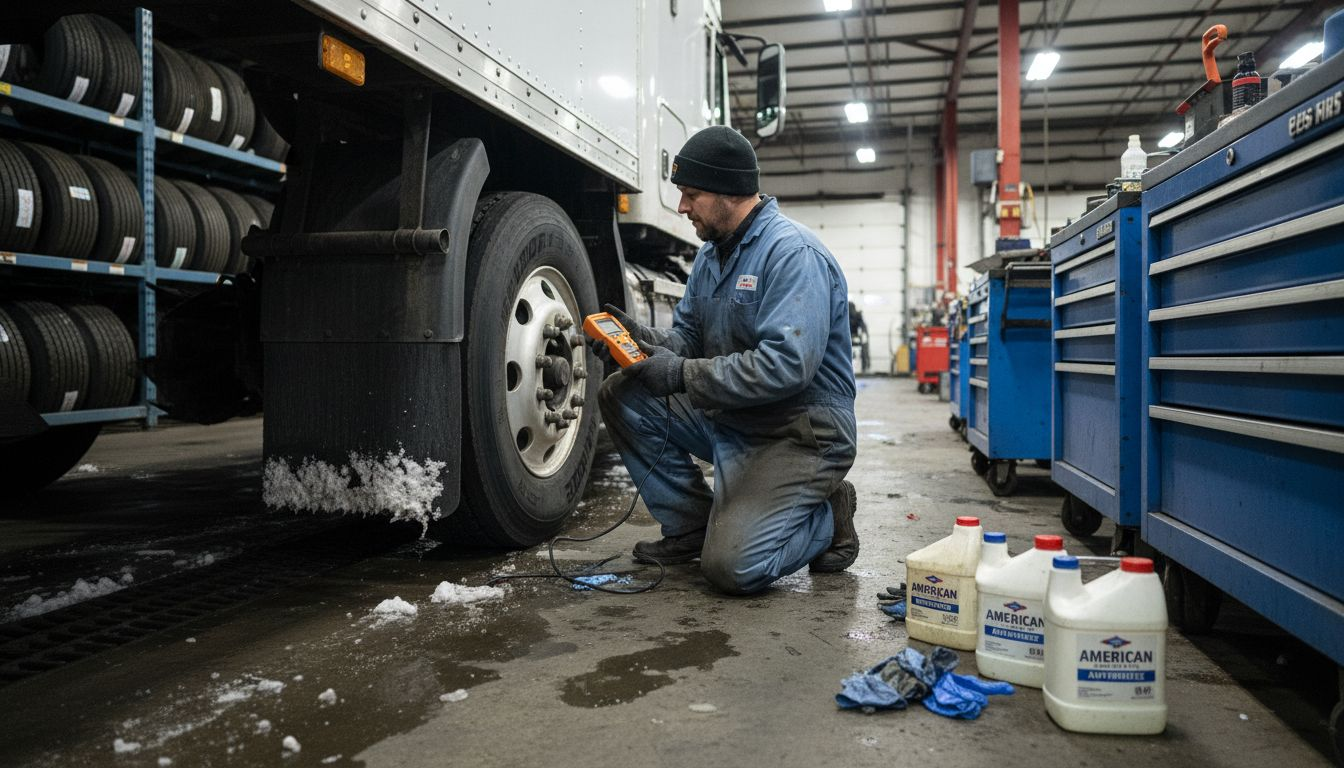
Begin with a thorough inspection of each vehicle, focusing on critical systems vulnerable to winter challenges. Prioritize engine oil viscosity by switching to winter grade lubricants that maintain proper flow at lower temperatures. Check battery health meticulously battery connections must be clean and tight to prevent starting issues. Replace batteries that show signs of weakness or are more than three years old. Examine tire conditions carefully inspect tread depth and consider switching to winter tires with enhanced traction. Cold region vehicle maintenance techniques recommend applying specialized antifreeze solutions and ensuring all fluid levels are appropriate for freezing temperatures.
Develop a systematic winterization workflow that covers electrical systems cooling systems fuel systems and exterior components. Create detailed checklists for maintenance teams to follow consistently across the entire fleet. This approach helps standardize preparation and identifies potential vulnerabilities before they become operational problems.
Pro Tip: Document each vehicle’s winterization process with detailed maintenance records to track performance improvements and create a comprehensive historical reference for future fleet management strategies.
Step 3: Stock Emergency Supplies and Equipment
Preparing your commercial fleet for potential winter emergencies requires a comprehensive approach to equipping vehicles with essential survival supplies. National Weather Service guidelines recommend creating detailed emergency kits that can sustain drivers during unexpected winter challenges.
Compile a standardized emergency kit for each vehicle that includes critical survival items. Essential components should include multiple flashlights with extra batteries, portable battery powered radios, first aid kits, warm clothing layers, emergency blankets, and specialized winter gear like thermal gloves and additional socks. FEMA winter preparedness recommendations emphasize including non perishable food items bottled water and specialty medications. Additional crucial equipment includes jumper cables traction materials like sand or kitty litter emergency signaling devices and a comprehensive communication plan with backup charging options for mobile devices.
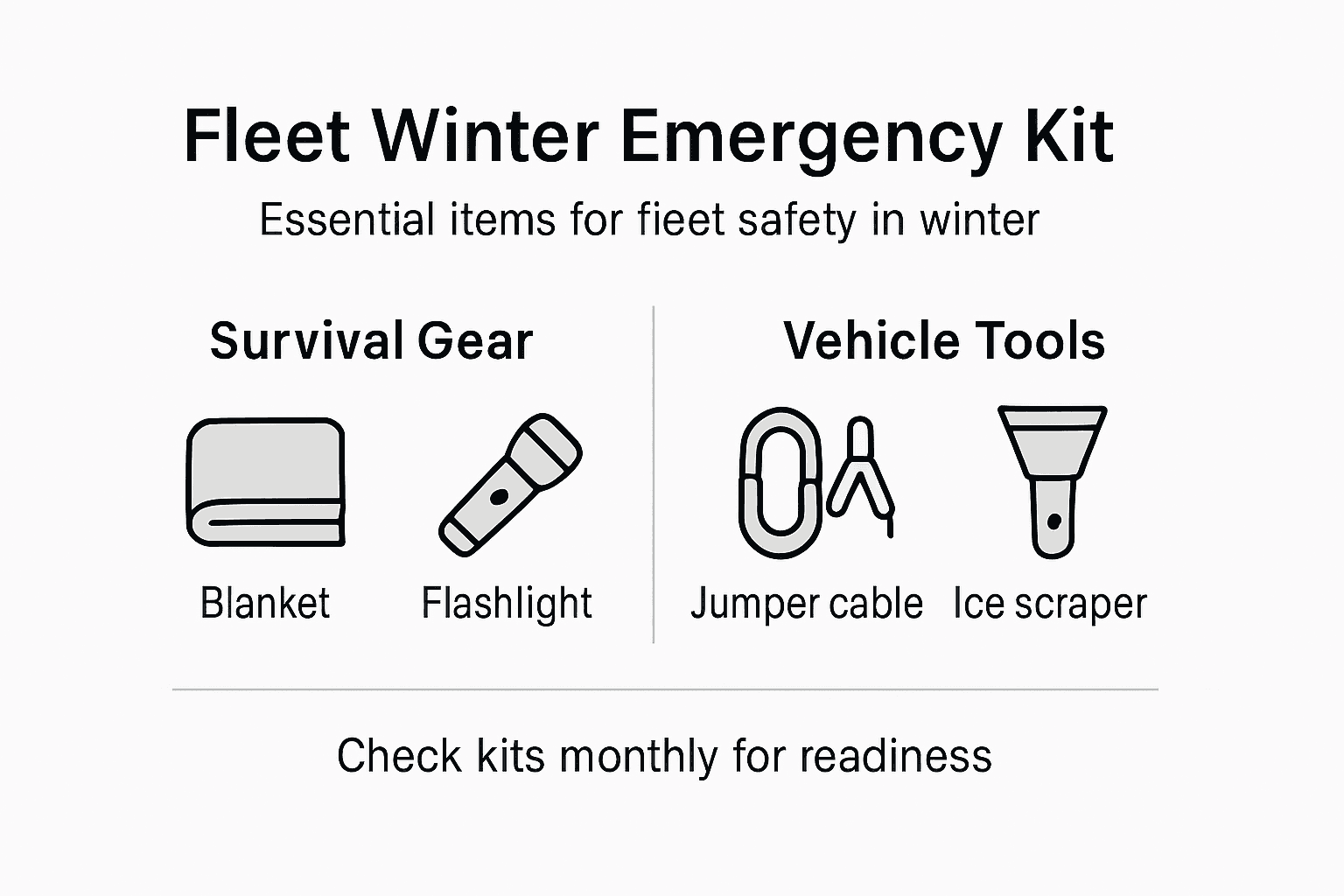
Organize and regularly inspect these emergency kits to ensure all items remain functional and within their usable lifespan. Assign a specific team member responsibility for quarterly reviews and restocking of supplies. Rotate perishable items and check battery conditions to guarantee readiness during potential winter emergencies.
Pro Tip: Create a detailed inventory checklist for each vehicle emergency kit and laminate it inside the kit for quick reference during stressful situations.
Use this summary to streamline your winter emergency kit checks:
| Item Category | Key Purpose | Replacement Interval |
|---|---|---|
| Lighting (flashlights) | Night visibility, signaling | Each season or as needed |
| First Aid & Medications | Treat injuries, health emergencies | Check expiry quarterly |
| Warm Clothing & Blankets | Prevent hypothermia | Each winter, check for wear |
| Traction & Signaling Gear | Free vehicle, signal for help | Inspect and restock quarterly |
| Food & Water | Sustain drivers if stranded | Replace every 6 months |
Step 4: Train Staff for Winter Protocols
Effective winter preparedness extends far beyond vehicle maintenance to include comprehensive staff training that builds confidence and operational resilience. Fleet safety training strategies emphasize creating a proactive approach that equips drivers with the knowledge and skills to navigate challenging winter conditions.
Develop a structured winter protocol training program that covers multiple critical areas. Begin with comprehensive safety briefings that detail winter driving techniques specific to your fleet vehicles. Focus on advanced skills like managing reduced visibility handling unexpected road conditions managing tire traction and understanding vehicle performance limitations in extreme cold. Implement hands on training sessions that simulate challenging winter scenarios allowing drivers to practice emergency responses in controlled environments. Fleet management winter training recommendations highlight the importance of creating scenario based learning experiences that build muscle memory and decision making skills under pressure.
Establish a continuous learning approach by conducting regular refresher courses and updating training materials based on recent winter incident reports and emerging best practices. Create a feedback loop where drivers can share their experiences and insights helping to refine training protocols. Develop digital training resources like video modules online assessments and interactive simulations that drivers can access throughout the winter season to reinforce critical skills.
Pro Tip: Implement a mentorship program pairing experienced winter drivers with newer team members to share practical insights and build a culture of collective knowledge and safety.
Step 5: Verify Preparedness through Inspections
Conducting thorough winter readiness inspections is the final critical step in ensuring your commercial fleet remains safe and operational during challenging cold weather conditions. Commercial vehicle safety inspections represent a systematic approach to validating your fleet’s winter preparedness and identifying potential vulnerabilities before they become operational problems.
Implement a comprehensive inspection protocol that goes beyond standard maintenance checks. Create a detailed winter specific checklist that covers every critical vehicle system including electrical components heating mechanisms tire conditions battery performance fuel systems and emergency equipment functionality. Train your inspection team to conduct rigorous examinations that simulate extreme winter scenarios ensuring each vehicle can withstand harsh environmental challenges. Systematic inspection procedures recommend documenting each inspection meticulously recording specific observations potential risks and recommended immediate actions.
Develop a digital tracking system that allows real time monitoring of inspection results and enables rapid response to identified issues. Schedule staggered inspection windows to ensure continuous fleet readiness without disrupting overall operational capabilities. Establish clear performance benchmarks that each vehicle must meet to be considered winter ready with mandatory remediation steps for any vehicles failing to meet established safety standards.
Pro Tip: Create a color coded tagging system for vehicles during winter inspections to quickly communicate their current readiness status and required maintenance actions.
Ensure Your Commercial Fleet Is Winter Ready with Expert Support from Apple Truck and Trailer
Winter emergency preparedness demands more than just knowledge it requires reliable equipment and professional maintenance to keep your fleet operating safely and efficiently. This article highlights critical concepts such as winterization measures, emergency supplies, and rigorous vehicle inspections that protect your operations from costly downtime and safety risks during harsh cold weather. Key pain points include battery weaknesses, tire conditions, and emergency readiness that directly impact your fleet’s reliability.
At Apple Truck and Trailer, we understand these challenges well. Since 1986, we have provided commercial truck and trailer solutions specifically tailored to fleets in Massachusetts and the surrounding region. Whether you need high-quality used trucks and trailers built to withstand tough winter conditions or expert maintenance services to implement winterization protocols, we offer the dependable support your fleet needs. Protect your investments by leveraging our leasing, rental, and parking options that ensure operational continuity even when weather strikes.
Take action now to safeguard your fleet this winter.
Prepare your equipment confidently with our comprehensive inventory and services designed for commercial fleet operators just like you.
Explore our offerings at Apple Truck and Trailer and request a quote today. Don’t wait for winter emergencies to happen act now and ensure your fleet’s safety and performance with trusted partners at your side.
Frequently Asked Questions
How can I assess my fleet’s winter vulnerabilities?
To assess your fleet’s winter vulnerabilities, conduct a thorough inventory of each vehicle, focusing on age, maintenance history, and winter performance. Prioritize critical components like batteries and tires, and analyze past maintenance records within 30 days to identify recurring issues.
What winterization measures should I implement for my fleet vehicles?
Implement winterization measures by performing a comprehensive inspection and switching to winter-grade lubricants for engines. Additionally, ensure battery health and inspect tire conditions to maintain optimal performance before the first snowfall.
What essential supplies should I include in my fleet’s winter emergency kits?
Include critical survival items in your fleet’s winter emergency kits, such as flashlights, first aid kits, warm clothing, and non-perishable food. Organize and inspect these kits quarterly to ensure all items are functional and prepared for emergencies.
How should I train my staff for winter driving conditions?
Train your staff for winter driving conditions by developing a structured program that covers safety techniques and emergency scenarios. Conduct hands-on training sessions to practice these skills in a controlled environment, enabling drivers to respond effectively to unexpected challenges.
What steps should I take to verify my fleet’s winter preparedness?
Verify your fleet’s winter preparedness by conducting thorough inspections that cover all critical systems, including batteries and heating mechanisms. Schedule staggered inspections and document findings meticulously to ensure all vehicles meet established safety standards before the winter season.
Recommended
- What Is Fleet Maintenance? A Comprehensive Guide – Apple Truck & Trailer
- 2025 Truck Maintenance Checklist for Businesses and Fleets – Apple Truck & Trailer
- Commercial Vehicle Storage Options for Massachusetts Fleets – Apple Truck & Trailer
- Truck and Trailer Inspections—Why Compliance Matters – Apple Truck & Trailer