
Many contractors and homeowners assume renting a container for remodeling is an unnecessary expense, believing they can manage materials and debris with frequent trips to the dump. This misconception leads to wasted time, higher hauling costs, and cluttered work sites that slow progress. Container rentals actually streamline remodeling projects by keeping materials secure and accessible on-site, eliminating multiple trips and protecting your investment from weather and theft. Whether you’re tackling a residential kitchen renovation or a commercial building upgrade in Massachusetts, understanding how to select and use container rentals effectively can transform your project timeline and budget. This guide walks you through everything you need to know about choosing the right container rental for your remodeling needs.
Table of Contents
- Key takeaways
- Why container rental is essential for remodeling projects
- Types and sizes of containers for remodeling needs
- Key factors to consider when renting a container for remodeling in Massachusetts
- How to maximize the value of your container rental during remodeling
- Why choose Apple Truck & Trailer for your container rental needs
- Frequently asked questions about container rental for remodeling
Key Takeaways
| Point | Details |
|---|---|
| On site storage | Container rentals keep materials and debris secure on site, reducing trips to disposal facilities and keeping the job moving. |
| Right size and delivery | Selecting the proper container size and delivery schedule minimizes costs and prevents overflow or underutilized space. |
| Massachusetts planning | Massachusetts projects require accounting for access constraints, weather protection, and local regulations when renting containers. |
| Flexible terms | Choose rental terms that align with your project timeline to avoid paying for containers you no longer need. |
Why container rental is essential for remodeling projects
Remodeling projects generate massive amounts of clutter, debris, and materials that need organized storage. A typical kitchen renovation produces 3 to 5 tons of demolition waste, while whole-house remodels can exceed 15 tons. Without proper containment, these materials create safety hazards, block work areas, and slow your crew’s productivity. Storage solutions for renovations secure materials and debris on-site, enhancing project efficiency.
On-site container rentals eliminate the need for repeated trips to disposal facilities or storage yards. Each hauling trip costs time, fuel, and labor that could be spent on actual remodeling work. Having a container steps from your work area means crews can quickly dispose of debris and access stored materials without breaking workflow. This convenience translates directly into faster project completion and lower labor costs.
Containers protect your investment from weather damage and theft. Remodeling materials like lumber, fixtures, and appliances are vulnerable when left exposed or stored in unsecured locations. A locked container keeps expensive materials dry during rain and secure overnight, preventing the costly replacements that derail budgets. For commercial sites with valuable equipment, this security becomes even more critical.
Flexible rental durations accommodate varied remodeling timelines. Small bathroom updates might need a container for two weeks, while major commercial renovations could require months of on-site storage. Quality rental providers offer adjustable terms that match your actual needs rather than forcing you into rigid timeframes. This flexibility prevents you from rushing work or paying for containers you no longer need.
Choosing container rentals helps maintain site safety and regulatory compliance. Properly contained debris reduces trip hazards and keeps work areas organized for inspections. Many municipalities require enclosed waste storage for renovation projects, making containers not just convenient but legally necessary.
Pro Tip: Schedule your container delivery for the day before demolition begins. This ensures you have immediate disposal capacity when debris starts accumulating, preventing the chaotic first-day clutter that slows momentum.
Types and sizes of containers for remodeling needs
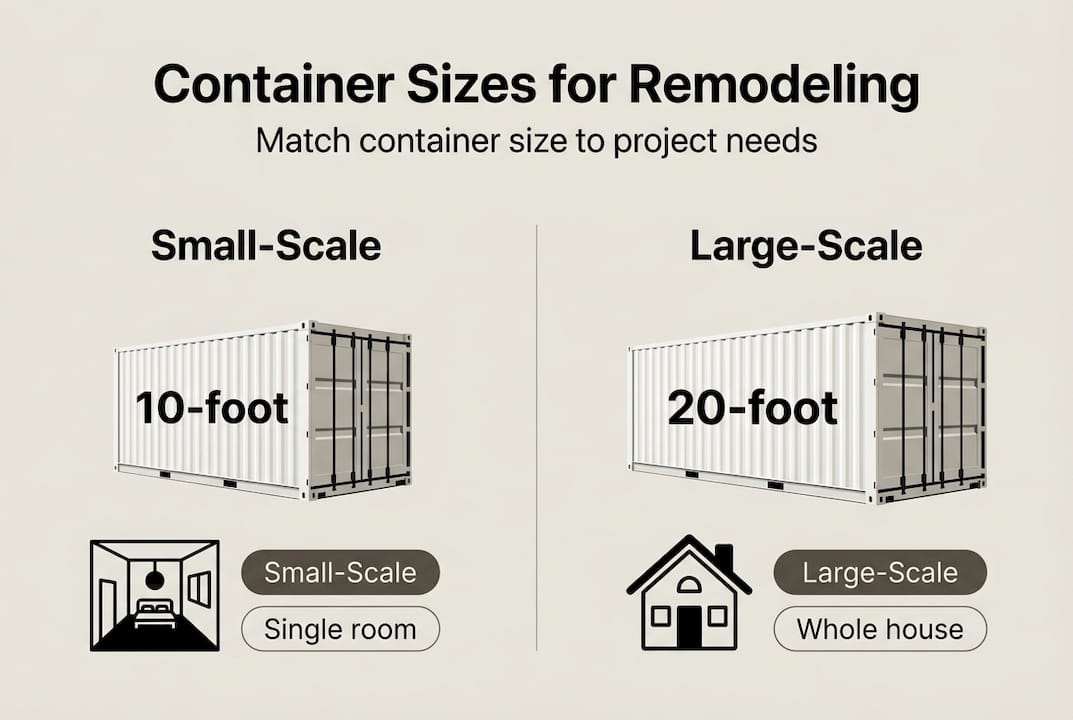
Container sizes typically range from 10 feet to 40 feet in length, with each serving distinct project scopes and spatial constraints. Understanding these options helps you match capacity to your actual needs without overpaying for excessive space or scrambling to manage overflow.
| Container Size | Capacity | Best For | Typical Cost Range |
|---|---|---|---|
| 10 ft | 400-500 cu ft | Small bathroom/kitchen remodels, tight urban spaces | $150-250/month |
| 20 ft | 1,000-1,200 cu ft | Most residential projects, moderate commercial work | $200-350/month |
| 40 ft | 2,400-2,800 cu ft | Large commercial renovations, whole-house remodels | $350-550/month |
Ten-foot containers suit small residential remodeling projects or locations with limited access. If you’re renovating a single bathroom or updating a small kitchen, this compact option provides adequate debris capacity without overwhelming your driveway or yard. These containers fit into narrow alleys and tight residential streets where larger units can’t navigate, making them ideal for dense urban neighborhoods throughout Massachusetts.
Twenty-foot containers strike the perfect balance for most residential and many commercial remodeling projects. 20-foot storage container rentals balance capacity and urban maneuverability in Massachusetts, handling multi-room renovations or substantial commercial updates without requiring excessive placement space. They’re easier to position in urban areas than 40-foot units while offering double the capacity of 10-foot containers.

Forty-foot containers accommodate large commercial projects with high-volume requirements. Major office building renovations, retail space overhauls, or whole-house gut rehabs generate debris and require material storage that smaller containers can’t handle. These units provide the capacity to store bulk materials like drywall sheets, lumber bundles, and large fixtures while containing substantial demolition waste.
Weatherproofing features protect sensitive materials from moisture damage. Look for containers with sealed roofs, weather-resistant doors, and elevated floors that prevent water intrusion during storms. Lock security systems deter theft and unauthorized access, essential for overnight storage of valuable fixtures and tools. Delivery access impacts container choice significantly, as larger units require wider streets, stronger ground surfaces, and clearance for delivery trucks.
Pro Tip: Measure your available placement area before ordering. Add 5 feet to the container’s length and 3 feet to its width to ensure delivery trucks can position it safely without damaging landscaping or structures.
Key factors to consider when renting a container for remodeling in Massachusetts
Successful container rental starts with confirming delivery access and site preparation before your rental period begins. Delivery trucks need clear pathways at least 12 feet wide and overhead clearance of 16 feet for safe container placement. Inspect your driveway, yard, or street for obstacles like low-hanging wires, overhanging trees, or soft ground that could prevent delivery or cause property damage.
Local permits and street usage permissions vary significantly across Massachusetts municipalities. Boston, Worcester, and Cambridge often require permits for containers placed on public streets or sidewalks, with fees ranging from $50 to $200 depending on duration and location. Storage container rental in Massachusetts requires understanding local delivery restrictions and permit requirements for efficient placement. Contact your city or town hall at least two weeks before delivery to secure necessary approvals and avoid delays.
Rental terms deserve careful review to prevent unexpected costs and complications:
- Duration flexibility: Confirm whether your rental agreement allows extensions without penalties if your project timeline shifts.
- Damage liability: Understand who pays for container damage from normal use versus negligence or accidents.
- Insurance requirements: Verify whether your homeowner’s or commercial property insurance covers rental containers or if additional coverage is needed.
- Weight limits: Check maximum weight allowances to avoid overage fees, especially important for concrete or masonry debris.
- Pickup scheduling: Clarify how much advance notice you must provide for container removal to prevent paying for extra days.
Comparing costs requires looking beyond the base rental rate. Delivery fees typically add $75 to $150 per trip, meaning providers charging lower monthly rates but higher delivery costs may not offer better value. Calculate total project cost by multiplying the monthly rate by your expected duration, then adding delivery, pickup, and any potential overage fees. Request quotes from at least three providers to identify the most competitive overall pricing.
Evaluating provider reliability and customer support quality protects your project from disruptions. Read recent customer reviews focusing on delivery punctuality, container condition, and responsiveness to problems. Ask providers about their backup plans if delivery delays occur or containers need emergency replacement. Companies with local Massachusetts operations typically offer faster response times and better understanding of regional logistics challenges than national chains with distant customer service centers.
How to maximize the value of your container rental during remodeling
Strategic container placement dramatically impacts your remodeling efficiency and safety. Position containers as close to your primary work area as possible while maintaining safe clearances from structures and utilities. For residential projects, placing containers in driveways near garage doors allows easy debris disposal without tracking mess through living areas. Commercial sites benefit from containers positioned near loading docks or service entrances where crews can quickly access them without disrupting business operations.
Organizing materials inside your container prevents damage and speeds access when you need specific items. Stack heavy materials like tile boxes and paint cans on the bottom, creating a stable base that won’t shift during your rental period. Place frequently needed items near the door for quick retrieval without climbing over debris piles. Keep similar materials grouped together, such as storing all plumbing fixtures in one section and electrical components in another. This organization saves hours of searching and reduces the risk of damaging materials by repeatedly moving them.
Monitoring your rental period prevents costly overrun fees that inflate your project budget. Mark your rental end date on your project calendar and set reminders one week before expiration. If you realize you need additional time, contact your provider immediately rather than waiting until the last day. Customer reasons for storage container rental show proper container usage and maintenance reduce delays and damage risks during remodeling. Most providers offer better rates for extensions requested in advance compared to automatic overrun charges.
Maintaining a cleanup schedule keeps your container space efficient throughout the project:
- Designate one crew member to manage container loading, ensuring materials are distributed evenly and space is maximized.
- Break down cardboard boxes and flatten them before disposal to conserve valuable container volume.
- Schedule a mid-project debris removal if you’re approaching capacity, preventing overflow that creates site hazards.
- Separate recyclable materials when possible, potentially reducing disposal costs with some rental providers.
Communicating clearly with your rental provider ensures smooth delivery and pickup coordination. Provide accurate site access information including gate codes, parking restrictions, and best delivery times. Notify them immediately if your project timeline changes or if you need to relocate the container. Take photos of the container’s condition upon delivery and before pickup to document any pre-existing damage, protecting yourself from unwarranted damage claims.
“The difference between a smooth remodeling project and a chaotic one often comes down to how well you manage your materials and debris. A properly used container rental becomes your project’s backbone, keeping everything organized and accessible when you need it.”
Pro Tip: Create a simple loading map showing where different material types should go in your container. Share this with all crew members to maintain organization even when multiple people are using the container throughout the day.
Why choose Apple Truck & Trailer for your container rental needs
When your remodeling project demands reliable storage solutions, Apple Truck & Trailer delivers the expertise and service quality Massachusetts contractors and homeowners trust. Since 1986, they’ve provided storage container rental in Massachusetts with flexible terms that adapt to your actual project timeline, not rigid schedules that force you to rush or overpay. Their range of container sizes ensures you get the perfect fit for your specific remodeling scope, whether you’re updating a single room or renovating an entire commercial building.
Their secure storage containers feature weatherproof construction and reliable locking systems that protect your valuable materials from theft and damage. You’ll work with knowledgeable staff who understand regional delivery logistics, permit requirements, and site access challenges unique to Massachusetts, Rhode Island, Connecticut, and New Hampshire. This local expertise translates into on-time deliveries, accurate placement, and responsive support when your project needs change. Beyond containers, their comprehensive inventory includes solutions for contractors needing equipment transport, making them your single source for remodeling logistics. Discover how their commitment to customer service and quality equipment can streamline your next project by exploring their buying a used commercial truck options for contractors expanding their capabilities.
Frequently asked questions about container rental for remodeling
What size container do I need for a typical home remodeling project?
Most single-room renovations like kitchens or bathrooms work well with 10-foot containers, while multi-room projects or whole-floor remodels typically require 20-foot containers. If you’re doing a complete gut renovation or adding significant square footage, consider a 40-foot container to handle the increased debris volume and material storage needs.
How long can I rent a container for remodeling purposes?
Rental periods typically range from one week to several months, with most providers offering flexible terms you can extend as needed. Short-term rentals work for quick cosmetic updates, while major renovations often require 2 to 4 month rentals. Discuss your estimated timeline with providers upfront to secure the best rates for longer commitments.
Are there permits required to place a rental container on public property in Massachusetts?
Yes, most Massachusetts cities and towns require permits if you’re placing containers on public streets, sidewalks, or right-of-ways. Permit costs range from $50 to $200 depending on your municipality and rental duration. Containers on private property typically don’t need permits, but verify with your local building department to ensure compliance.
Can I keep my remodeling materials safe in a rental container?
Quality rental containers provide excellent security for materials when properly locked and maintained. Choose containers with weatherproof seals to protect against moisture damage and sturdy locking mechanisms to deter theft. Store valuable items toward the container’s interior rather than near doors, and consider adding your own padlock for additional security.
What should I do if I need to extend my container rental period?
Contact your rental provider as soon as you realize you need additional time, ideally at least one week before your current rental expires. Providers typically offer better extension rates for advance requests compared to automatic overrun charges. Most companies can accommodate extensions easily if you communicate your needs promptly rather than waiting until the last minute.