
Managing busy sites across Massachusetts often means wrestling with limited space, security challenges, and unpredictable weather. For commercial fleet managers and logistics operators, finding a dependable way to protect assets without blowing the budget is a constant struggle. Portable storage units offer durable, adaptable solutions that simplify temporary site management and keep inventory safe—without sacrificing flexibility or cost efficiency.
Table of Contents
- Defining Mobile Storage Containers And Misconceptions
- Common Types And Their Key Features
- Top Business And Commercial Applications
- Rental Vs. Purchase: Costs And Commitments
- Security, Liability, And Regulatory Issues
Key Takeaways
| Point | Details |
|---|---|
| Understanding Mobile Storage Containers | Mobile storage containers are robust, versatile solutions that enhance security and efficiency in logistics and inventory management. |
| Types of Mobile Storage Containers | Various container types, including Dry Freight, Refrigerated, and Secure Vault containers, cater to specific operational needs and enhance business capabilities. |
| Rental vs. Purchase Decisions | Choosing between renting and purchasing containers involves assessing financial and operational factors to optimize storage solutions for your fleet. |
| Security and Compliance Considerations | Effective management of mobile storage requires adherence to security protocols and regulatory compliance to protect assets and ensure accountability. |
Defining Mobile Storage Containers and Misconceptions
Mobile storage containers represent versatile transportation and storage solutions designed for commercial fleet operators seeking flexible and secure asset management. These robust metal structures provide portable storage units capable of withstanding multiple transportation modes and environmental conditions, making them critical infrastructure for logistics and inventory management.
Understanding the precise nature of mobile storage containers requires examining their core characteristics. The International Maritime Organization highlights safety standards that govern these containers, ensuring they meet rigorous international transport requirements. Key features include:
- Standardized dimensions for intermodal compatibility
- Durable steel or aluminum construction
- Weatherproof and tamper-resistant designs
- Lockable entry points for enhanced security
- Stackable configurations for efficient space utilization
Common misconceptions about mobile storage containers often stem from limited understanding of their capabilities. Many fleet operators mistakenly believe these units are simple metal boxes with minimal functionality. However, modern containers incorporate sophisticated design elements that make them far more than basic storage solutions.
The Department of Defense’s security guidelines underscore that these containers are engineered to delay unauthorized entry and protect valuable assets. They are not just passive storage spaces but active security tools designed to safeguard sensitive equipment, materials, and inventory across various operational contexts.
Pro tip: Before investing in mobile storage containers, conduct a comprehensive assessment of your fleet’s specific storage requirements to ensure optimal container selection and configuration.
Common Types and Their Key Features
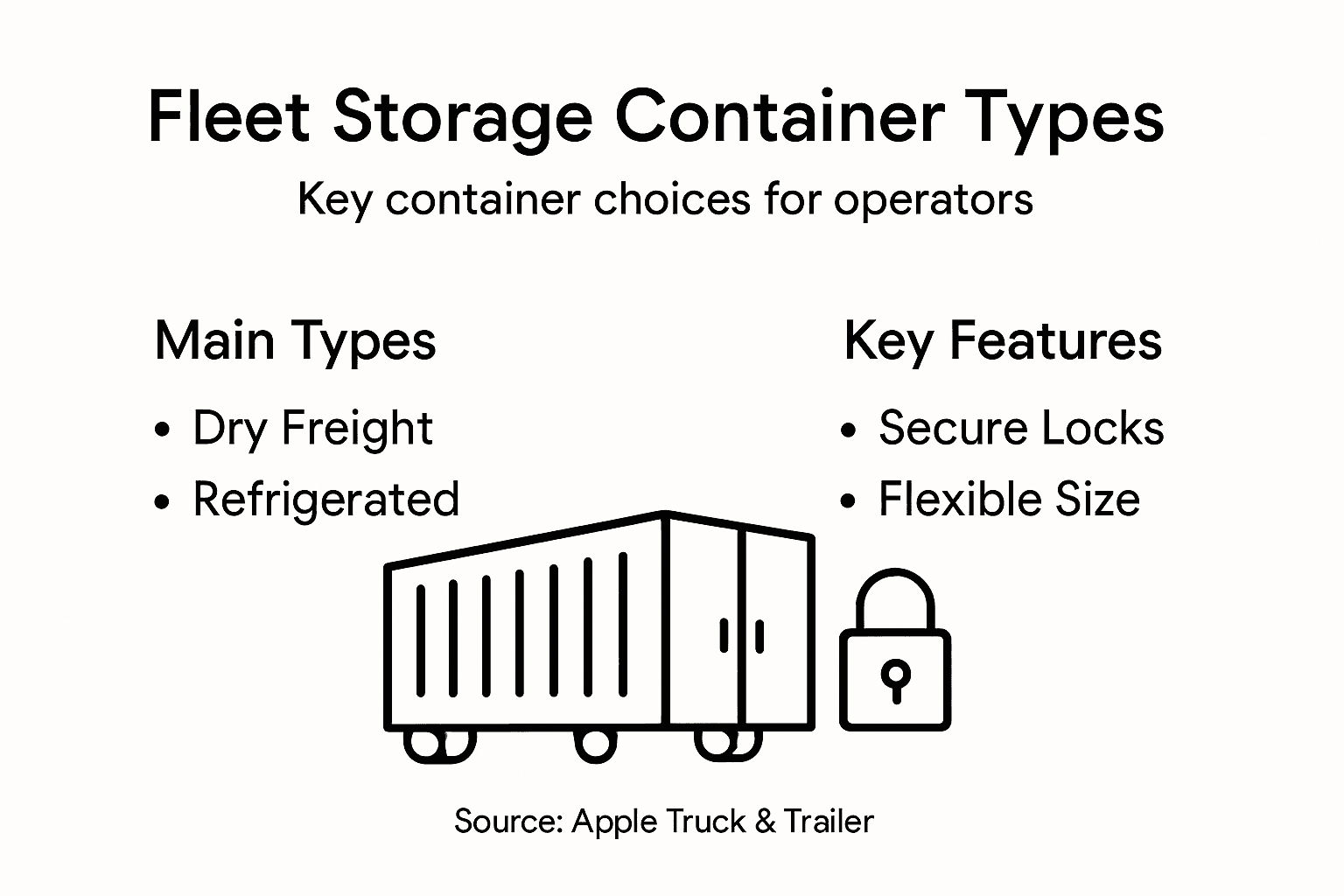
Mobile storage containers come in diverse configurations, each designed to address specific logistical and operational requirements for fleet managers. Intermodal container standards outline several primary categories that commercial operators must understand to optimize their storage and transportation strategies.
Dry Freight Containers represent the most common mobile storage solution, characterized by their versatile design and universal application. Key attributes include:
- Fully enclosed metal construction
- Standard exterior dimensions for easy transport
- Weatherproof sealed environments
- Robust lockable entry mechanisms
- Compatible with multiple transportation modes
Refrigerated Containers, often called “reefers,” provide specialized storage for temperature-sensitive materials. These units incorporate advanced cooling systems that maintain consistent internal environments, making them critical for industries requiring precise temperature control such as food distribution, pharmaceutical transportation, and chemical logistics.
Department of Defense security guidelines highlight additional specialized container types designed for secure asset management. These include:
- Secure room containers
- High-security vault containers
- Classified material storage units
- Custom-engineered security containers
Tank Containers offer unique solutions for liquid and gaseous cargo transportation. Constructed with specialized internal compartments, these containers ensure safe, controlled transport of chemicals, petroleum products, and other fluid materials across extensive distances.
Here is a summary of major mobile storage container types and their ideal business uses:
| Container Type | Best For | Example Use Case |
|---|---|---|
| Dry Freight | General logistics | Retail inventory transport |
| Refrigerated | Temperature control | Pharmaceutical distribution |
| Secure/Vault | High-security assets | Sensitive equipment storage |
| Tank | Bulk liquids/gases | Chemical transport |
Selecting the appropriate container type directly impacts operational efficiency, asset protection, and transportation cost management.
Pro tip: Conduct a comprehensive inventory analysis to match specific container types with your fleet’s unique cargo and transportation requirements before making investment decisions.
Top Business and Commercial Applications
Mobile storage containers have transformed how businesses approach logistics, inventory management, and transportation across multiple industries. Intermodal container technologies enable seamless movement of goods through complex supply chain networks, providing unprecedented flexibility for commercial operators.
In the transportation and shipping sector, these containers play a critical role in global trade infrastructure. Freight rail and intermodal operations rely extensively on these versatile storage solutions to streamline cargo movement across different transportation modes. Key commercial applications include:
- E-commerce inventory management
- International shipping logistics
- Construction site material storage
- Temporary on-site equipment housing
- Secure document and asset preservation
Construction companies leverage mobile storage containers as robust, secure alternatives to traditional site storage. These units provide weather-resistant environments for expensive machinery, tools, and materials, protecting valuable assets from theft and environmental damage.
Manufacturing and industrial sectors utilize these containers for several strategic purposes:
- Inventory overflow management
- Temporary warehouse expansion
- Just-in-time supply chain optimization
- Secure inter-facility material transfer
- Emergency response and disaster recovery storage
Mobile storage containers represent more than simple metal boxes – they are dynamic logistical solutions that enhance operational efficiency across multiple business domains.
Pro tip: Evaluate your specific operational requirements and conduct a comprehensive cost-benefit analysis before investing in mobile storage containers to ensure maximum return on investment.
Rental vs. Purchase: Costs and Commitments
Mobile storage container acquisition represents a significant strategic decision for fleet operators, with complex financial implications that extend beyond simple capital expenditure. Moving container rental services offer flexible alternatives that can dramatically reshape traditional ownership models for commercial storage solutions.
Rental options provide several compelling advantages for businesses seeking adaptable storage strategies:
- Lower initial capital investment
- Reduced maintenance responsibilities
- Scalable storage capacity
- Minimal long-term commitment
- Predictable monthly expenses
Purchasing mobile storage containers demands a more substantial upfront investment but generates long-term benefits for organizations with consistent, predictable storage requirements. Energy storage investment strategies suggest that ownership becomes more economically attractive when usage patterns are stable and consistent.
Financial considerations for fleet operators should include a comprehensive analysis of multiple factors:
See how key factors differ for rental versus purchase decisions:
| Consideration | Rental Approach | Purchase Approach |
|---|---|---|
| Upfront Cost | Minimal investment | Significant capital outlay |
| Flexibility | Easily scalable | Fixed storage capacity |
| Maintenance | Provider responsibility | Owner responsibility |
| Long-Term Value | No asset accumulation | Ownership builds equity |
- Total cost of ownership
- Depreciation rates
- Maintenance expenses
- Operational flexibility requirements
- Long-term storage infrastructure needs
Choosing between rental and purchase is not just a financial decision, but a strategic operational choice that impacts overall business agility and resource allocation.
Pro tip: Conduct a detailed cost-benefit analysis comparing rental and purchase options, factoring in your specific operational requirements, projected usage duration, and potential future scaling needs.
Security, Liability, and Regulatory Issues
Mobile storage container operations involve complex legal and regulatory frameworks that fleet managers must carefully navigate. International maritime container security establishes comprehensive guidelines to protect assets, ensure safety, and define clear accountability across transportation networks.
Security protocols for mobile storage containers encompass multiple critical dimensions:
- Physical barrier protection
- Access control mechanisms
- Electronic tracking systems
- Tamper-evident seal technologies
- Comprehensive documentation requirements
Liability considerations represent a crucial aspect of container management, with legal responsibilities extending across multiple stakeholders. Transport terminal operator liabilities establish clear frameworks for determining responsibility during transportation and storage processes.
Regulatory compliance demands fleet operators understand and implement multiple layers of protective measures:
- International safety conventions
- National transportation regulations
- Insurance coverage requirements
- Security certification standards
- Customs declaration protocols
Effective container security is not just about physical protection, but creating a comprehensive risk management strategy that anticipates potential vulnerabilities.
Pro tip: Develop a comprehensive risk assessment protocol that integrates legal, security, and operational considerations before deploying mobile storage containers in your fleet management strategy.
Enhance Your Fleet Operations with Reliable Mobile Storage Solutions
Managing fleet storage demands flexibility, security, and durability — challenges highlighted in the discussion on mobile storage container uses for fleet operators. Whether you need weatherproof secure storage, scalable container types, or rental versus purchase options, Apple Truck & Trailer offers tailored solutions built to address these exact needs. Take control of your logistics with high-quality storage containers designed for commercial fleet efficiency.
Explore our extensive inventory of Storage Containers – Apple Truck & Trailer and discover the best fit for your cargo protection and operational flexibility. For businesses seeking short-term or scalable needs, our Portable Storage Container Rentals – Apple Truck & Trailer provide hassle-free solutions backed by decades of trusted service since 1986.
Ready to secure your fleet’s assets and streamline storage management today? Visit Apple Truck & Trailer to view our full range of products and services. Contact our expert team to get a personalized quote and experience the dependable support trusted by fleet operators across Massachusetts and neighboring states.
Frequently Asked Questions
What are mobile storage containers?
Mobile storage containers are versatile transport and storage solutions designed for commercial fleet operators, offering secure, portable storage units that withstand various transportation modes and environmental conditions.
What are the primary types of mobile storage containers?
The primary types of mobile storage containers include dry freight containers, refrigerated containers, secure/vault containers, and tank containers, each tailored for specific logistical needs such as general storage, temperature control, high-security storage, and liquid transport respectively.
How do I decide between renting or purchasing a mobile storage container?
Choosing between renting and purchasing a mobile storage container involves evaluating factors like upfront cost, flexibility, maintenance responsibilities, and long-term storage needs. Renting typically offers lower initial costs and scalable solutions, while purchasing may provide long-term savings for consistent usage.
What security measures are associated with mobile storage containers?
Mobile storage containers incorporate various security measures, including physical barrier protection, access control mechanisms, electronic tracking systems, and comprehensive documentation to protect assets and enhance accountability during transportation and storage.