
Overlooking fuel management can eat up more than half of a typical American trucking company’s operational budget. For fleet managers in Massachusetts, every gallon wasted means missed chances to cut costs and improve efficiency in a highly competitive market. Understanding modern fuel management strategies not only saves money but also helps companies keep up with evolving industry standards and technology.
Table of Contents
- Defining Truck Fleet Fuel Management
- Types of Fuel Management Solutions
- How Fuel Management Systems Work
- Regulatory Compliance and Reporting Requirements
- Optimizing Costs and Enhancing Efficiency
- Common Pitfalls and How to Avoid Them
Key Takeaways
| Point | Details |
|---|---|
| Comprehensive Fuel Management | Truck fleet fuel management is crucial for optimizing fuel consumption and minimizing costs through detailed tracking and strategic interventions. |
| Technological Integration | Advanced technologies like GPS tracking and predictive maintenance significantly enhance fuel efficiency and reduce operational expenses. |
| Alternative Fuel Solutions | Exploring alternative fuels such as CNG and biodiesel can lead to cost savings and lower emissions, improving both economic and environmental performance. |
| Regulatory Compliance | Staying updated on regulations and maintaining detailed documentation are essential for legal adherence and operational efficiency. |
Defining Truck Fleet Fuel Management
Truck fleet fuel management represents a comprehensive strategic approach for commercial transportation companies to monitor, analyze, and optimize their fuel consumption and expenses. At its core, this process involves tracking fuel usage across an entire truck fleet, identifying inefficiencies, and implementing targeted strategies to reduce waste and control operational costs.
Under the fleet management framework recommended by the Federal Energy Management Program, fuel management encompasses several critical components. These include detailed fuel tracking systems, driver performance monitoring, vehicle maintenance protocols, route optimization, and advanced data analysis techniques. By systematically examining each of these elements, fleet managers can develop nuanced approaches to minimize fuel expenditures while maintaining operational effectiveness.
The U.S. Department of Energy provides essential resources that help fleet managers implement robust fuel management strategies. These tools enable precise calculations of petroleum use, total cost of ownership, and environmental emissions, giving managers actionable insights into their fleet’s performance. Fuel management goes beyond simple expense tracking, representing a holistic approach to operational efficiency that considers technological innovations, driver training, vehicle specifications, and strategic planning.
Pro Tip: Implement a comprehensive fuel tracking system that records detailed data on each vehicle’s fuel consumption, maintenance history, and operational patterns to identify opportunities for efficiency improvements.
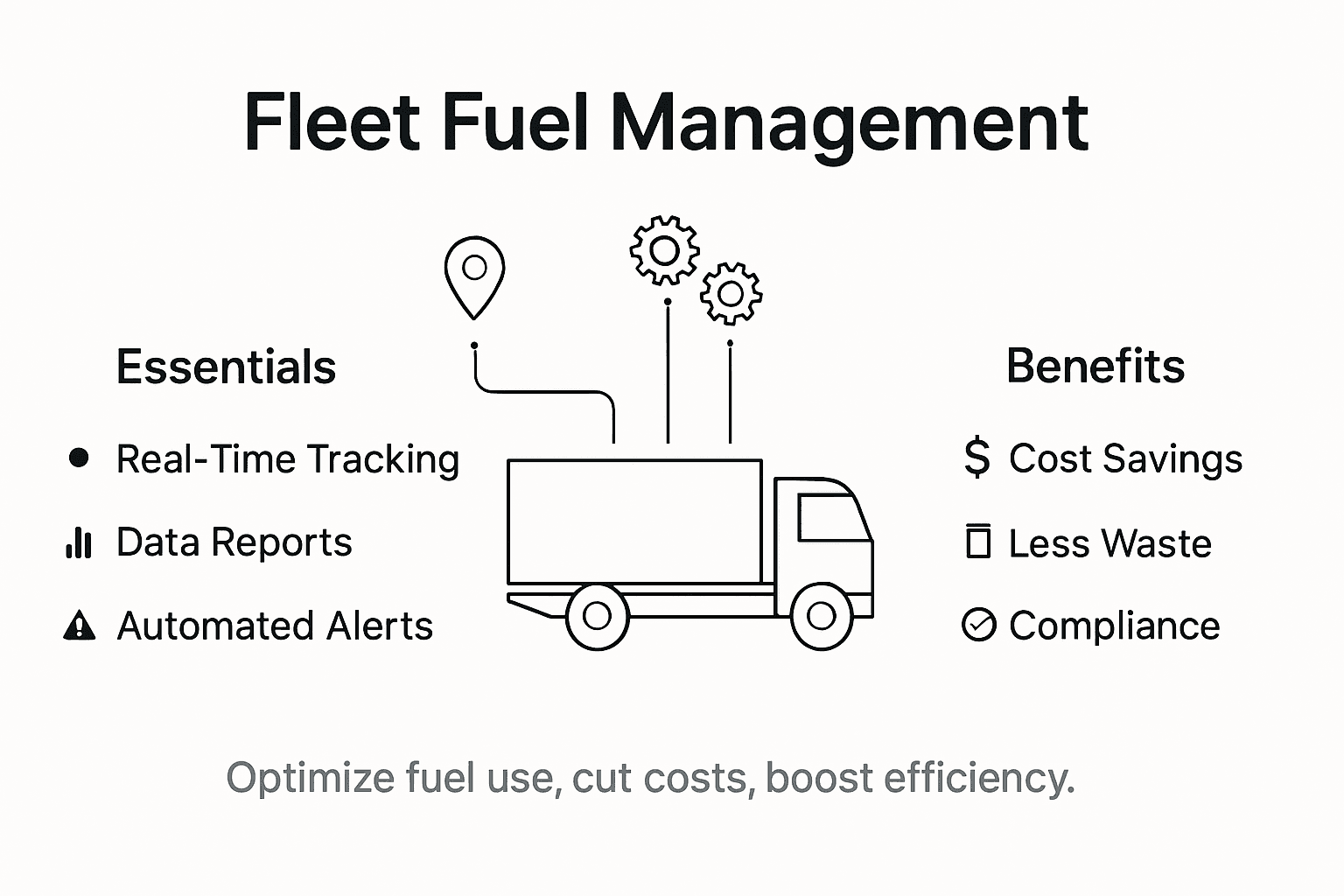
The most successful truck fleet fuel management programs integrate advanced technologies like GPS tracking, real-time fuel consumption monitoring, and predictive maintenance algorithms. These systems provide granular visibility into fuel usage patterns, allowing fleet managers to make data-driven decisions that can significantly reduce operational expenses and environmental impact.
Here is a comparison of common fuel management technologies and their business impact:
| Technology Type | Main Benefit | Typical ROI Timeline |
|---|---|---|
| GPS Tracking | Real-time route optimization | 6-12 months |
| Predictive Maintenance | Fewer unplanned breakdowns | 12-18 months |
| Digital Fuel Monitoring | Precise usage data reduces waste | 6-12 months |
| Driver Performance Analytics | Lower fuel usage via coaching | 6-18 months |
Types of Fuel Management Solutions
Commercial truck fleets have access to a variety of fuel management solutions designed to optimize operational efficiency and reduce overall costs. These solutions range from advanced technological platforms to strategic alternative fuel implementations that can dramatically transform a fleet’s economic and environmental performance.
The National Academies Press highlights several alternative fuel options for truck operations, including compressed natural gas (CNG), liquefied natural gas (LNG), biodiesel, renewable diesel, and propane. Each alternative fuel presents unique advantages in terms of cost efficiency, emissions reduction, and performance characteristics. CNG and LNG, for instance, offer lower emissions compared to traditional diesel, while biodiesel and renewable diesel provide more sustainable fuel alternatives that can integrate seamlessly with existing truck engine technologies.
The table below summarizes alternative fuel options for truck fleets:
| Fuel Option | Cost Efficiency | Emissions Reduction | Compatibility Notes |
|---|---|---|---|
| Compressed Natural Gas (CNG) | Moderate savings | Significant improvement | Requires engine conversion |
| Liquefied Natural Gas (LNG) | Moderate savings | Significant improvement | Requires cold storage systems |
| Biodiesel | Slight savings | Reduced CO2 and particulates | Works in most diesel engines |
| Renewable Diesel | Similar to biodiesel | Similar to biodiesel | Drop-in fuel for diesel engines |
| Propane | Moderate savings | Lower greenhouse gases | Compatible with retrofitted engines |
Technological fuel management systems have become increasingly sophisticated, offering comprehensive tracking and optimization capabilities. Digital fuel management platforms now provide real-time monitoring of fuel consumption, route efficiency, driver performance, and predictive maintenance insights. These systems enable fleet managers to make data-driven decisions that can significantly reduce fuel waste, lower operational expenses, and improve overall fleet performance.
Pro Tip: Conduct a comprehensive fleet fuel audit annually to identify specific consumption patterns, potential inefficiencies, and opportunities for implementing alternative fuel technologies or advanced management systems.
Advanced fuel management solutions go beyond simple tracking, integrating complex algorithms that analyze multiple performance metrics simultaneously. Modern systems can predict maintenance needs, optimize routing to reduce fuel consumption, and provide detailed reporting that helps fleet managers make strategic operational decisions. By leveraging these technological innovations, trucking companies can achieve substantial cost savings and demonstrate a commitment to environmental sustainability.
How Fuel Management Systems Work
Fuel management systems represent sophisticated technological platforms designed to provide comprehensive tracking, monitoring, and optimization of fleet fuel consumption. These advanced solutions integrate multiple data points and technologies to deliver real-time insights that enable fleet managers to make informed operational decisions.

Modern fuel management platforms, such as automated systems like FuelFocus, support real-time fuel management across various communication platforms, processing complex transactions involving fuel and fluid consumables. The core functionality includes tracking fuel purchases, monitoring vehicle-specific consumption patterns, and generating detailed reports that highlight potential inefficiencies or opportunities for cost reduction.
Digital tracking technologies enable these systems to capture granular data points including fuel volume, cost, vehicle identification, driver information, and precise location details. By aggregating and analyzing this information, fleet managers can identify trends, detect potential fuel theft or unauthorized usage, and implement targeted strategies to optimize fuel efficiency. These systems typically integrate GPS tracking, onboard diagnostics, and advanced algorithmic analysis to provide a holistic view of fleet fuel consumption.
Pro Tip: Implement a standardized data validation process to ensure the accuracy of fuel management system inputs, cross-referencing electronic records with physical fuel receipts and vehicle maintenance logs.
The most advanced fuel management systems now incorporate predictive analytics, machine learning algorithms, and integrated reporting tools that transform raw fuel consumption data into actionable strategic insights. By leveraging these technologies, fleet operators can not only track current fuel usage but also forecast future consumption patterns, plan maintenance schedules, and develop more sustainable operational strategies.
Regulatory Compliance and Reporting Requirements
Truck fleet operators must navigate a complex landscape of federal, state, and local regulations governing fuel consumption, emissions, and environmental impact. These regulatory frameworks establish critical standards that commercial trucking companies must meet to ensure operational legitimacy and environmental responsibility.
The Federal Energy Management Program provides comprehensive guidance on sustainable fleet principles, outlining specific strategies for reducing vehicle miles traveled and improving overall fleet fuel efficiency. Compliance reporting involves detailed documentation of fuel consumption, vehicle performance, emissions data, and operational metrics that demonstrate adherence to established environmental and transportation regulations.
Regulatory documentation typically requires fleet managers to maintain extensive records including:
- Fuel purchase receipts
- Vehicle maintenance logs
- Emissions testing results
- Driver performance and training certifications
- Fuel efficiency metrics
- Alternative fuel usage documentation
Modern fleet management systems have become instrumental in simplifying these complex reporting requirements by automatically generating comprehensive reports that meet regulatory standards. These systems can track and compile data across multiple dimensions, providing fleet managers with streamlined tools to demonstrate compliance and identify areas for operational improvement.
Pro Tip: Develop a standardized internal audit process that reviews regulatory compliance documentation quarterly, ensuring all reporting requirements are consistently and accurately maintained.
Fleet operators must stay continuously informed about evolving regulatory landscapes, which frequently introduce new requirements related to emissions standards, fuel efficiency, and environmental impact. Successful compliance requires a proactive approach that integrates advanced technological solutions with rigorous documentation practices, ultimately protecting the organization from potential penalties while promoting sustainable transportation practices.
Optimizing Costs and Enhancing Efficiency
Truck fleet managers face ongoing challenges in reducing operational expenses while maintaining peak performance. Achieving meaningful cost optimization requires a multifaceted approach that integrates technological innovations, strategic planning, and data-driven decision-making across all aspects of fleet management.
The North American Council for Freight Efficiency’s Fleet Fuel Study reveals critical insights into fuel efficiency technologies that can dramatically reduce operational expenses. Efficiency strategies encompass a comprehensive range of interventions, including advanced technological solutions, driver training programs, and sophisticated performance monitoring systems that target specific areas of potential waste and inefficiency.
Key technologies and strategies for optimizing fleet efficiency include:
- Low-rolling resistance tires
- Aerodynamic vehicle modifications
- Advanced telematics systems
- Predictive maintenance algorithms
- Driver performance tracking and coaching
- Route optimization software
- Idle time reduction devices
Technological interventions play a crucial role in cost reduction, with modern fleet management systems providing granular insights into vehicle performance, fuel consumption, and operational patterns. These systems enable fleet managers to make precise, data-driven decisions that can result in significant cost savings and improved overall fleet efficiency.
Pro Tip: Implement a quarterly technology and efficiency audit that systematically evaluates your fleet’s performance metrics, identifying potential areas for technological upgrades or operational improvements.
Successful cost optimization requires a holistic approach that balances technological investment, driver training, and continuous performance monitoring. By creating a culture of efficiency and leveraging advanced analytics, truck fleet operators can achieve substantial cost reductions while maintaining high levels of operational reliability and performance.
Common Pitfalls and How to Avoid Them
Truck fleet fuel management involves navigating numerous potential challenges that can dramatically impact operational efficiency and financial performance. Fleet managers must develop strategic approaches to identify and mitigate risks before they escalate into significant operational problems.
Fleet management systems require careful selection of key features to prevent common operational pitfalls, with critical focus areas including real-time tracking, maintenance scheduling, and comprehensive fuel monitoring. Operational vulnerabilities often emerge from inadequate technological infrastructure, poor data management, and inconsistent performance tracking.
Common fuel management pitfalls include:
- Inconsistent fuel consumption tracking
- Lack of driver performance monitoring
- Inadequate maintenance scheduling
- Poor route optimization
- Inefficient fuel purchasing strategies
- Limited data analysis capabilities
- Minimal preventative maintenance protocols
Data-driven interventions play a crucial role in preventing these challenges, with advanced fleet management technologies providing real-time insights that enable proactive decision-making. Given that fuel costs can represent up to 60% of a fleet’s total operational budget, precise monitoring and strategic management become essential for financial sustainability.
Pro Tip: Develop a comprehensive risk assessment framework that includes quarterly technological audits, performance reviews, and predictive maintenance strategies to identify and address potential operational weaknesses.
Successful fleet managers recognize that avoiding common pitfalls requires a holistic approach combining technological innovation, continuous training, and adaptive management strategies. By implementing robust monitoring systems and maintaining a culture of continuous improvement, trucking companies can effectively mitigate risks and optimize their operational performance.
Drive Fuel Efficiency With Expert Fleet Solutions
Managing a truck fleet’s fuel consumption to reduce costs and waste is a constant challenge requiring reliable equipment and expert support. This article highlights the importance of detailed fuel tracking, driver performance, and maintenance as key steps to optimize fuel management. If your trucking company is focused on cutting fuel expenses while improving operational efficiency, partnering with a trusted service provider can make all the difference.
At Apple Truck & Trailer, we understand that effective fuel management starts with dependable vehicles and consistent maintenance. Explore our comprehensive Truck Maintenance services designed to keep your fleet running efficiently and lower fuel waste caused by poor upkeep. Whether you need to expand your fleet or update your vehicles for better fuel economy, our Truck Leasing options provide flexibility and access to quality used trucks built to perform.
Don’t let inefficient trucks and downtime undermine your fuel savings efforts. Visit Apple Truck & Trailer now to discover how our full-service solutions help trucking companies in Massachusetts and the surrounding region reduce operating costs and improve fleet fuel performance. Request a quote today and take the next step toward smarter fuel management.
Frequently Asked Questions
What is truck fleet fuel management?
Truck fleet fuel management is a strategic approach that helps commercial transportation companies monitor, analyze, and optimize fuel consumption and expenses across their fleet. It involves tracking fuel usage, identifying inefficiencies, and implementing strategies to reduce waste and operational costs.
How can advanced technologies improve fuel management in fleets?
Advanced technologies like GPS tracking, real-time fuel consumption monitoring, and predictive maintenance algorithms significantly enhance fuel management. These systems allow fleet managers to gain better visibility into fuel usage patterns and make data-driven decisions that can lower costs and environmental impact.
What are the main components of a fuel management system?
Key components of a fuel management system include detailed fuel tracking, driver performance monitoring, vehicle maintenance protocols, route optimization, and data analysis. Together, these elements help identify inefficiencies and improve overall fleet performance.
What alternative fuel options are available for commercial truck fleets?
Alternative fuel options for truck fleets include compressed natural gas (CNG), liquefied natural gas (LNG), biodiesel, renewable diesel, and propane. Each option offers various benefits in terms of cost efficiency and emissions reduction, making them viable choices for improving fleet sustainability.