
More than 60 percent of American companies now prefer leasing over buying their commercial trucks. Choosing the right acquisition strategy impacts everything from cash flow to long-term competitiveness. For many American businesses, truck leasing delivers a way to access the latest fleet technology, limit maintenance headaches, and keep finances flexible without locking up capital in hefty purchases.
Table of Contents
- What Truck Leasing Means For Businesses
- Types Of Truck Leasing Agreements Explained
- Financial And Operational Advantages Of Leasing
- Maintenance, Support, And Flexibility Benefits
- Leasing Vs. Buying: Key Differences For Fleets
Key Takeaways
| Point | Details |
|---|---|
| Financial Flexibility | Truck leasing allows businesses to access commercial vehicles without substantial upfront investment, thus reducing financial risks. |
| Operational Efficiency | Leasing offers predictable monthly expenses and simplified maintenance, allowing companies to focus on core operations. |
| Lease Models | Understanding the difference between operating and capital leases is crucial for making informed financial decisions. |
| Access to New Technology | Companies can regularly upgrade to the latest vehicle technologies without the burden of long-term ownership and depreciation. |
What Truck Leasing Means for Businesses
Truck leasing represents a strategic financial alternative for businesses seeking flexible commercial vehicle acquisition without substantial upfront capital investment. By understanding lease arrangements, companies can optimize their transportation infrastructure while managing operational expenses more effectively.
At its core, truck leasing allows businesses to utilize commercial vehicles through structured rental agreements that distribute costs over predetermined periods. These arrangements offer significant advantages compared to traditional vehicle purchases. Fleet operators can access newer equipment, minimize maintenance responsibilities, and maintain financial flexibility by spreading expenses across predictable monthly payments. The Federal Motor Carrier Safety Administration’s Truck Leasing Task Force highlights the importance of understanding lease terms to ensure equitable agreements for trucking businesses.
Businesses typically encounter two primary leasing models: operating leases and capital leases. Operating leases function similar to long-term rentals, where companies use vehicles without assuming ownership responsibilities. Capital leases more closely resemble financing arrangements, often transferring vehicle ownership at the contract’s conclusion. Each model presents unique financial implications:
- Operating Leases
- Lower monthly payments
- Minimal maintenance responsibilities
- Easier equipment upgrades
- Capital Leases
- Build equity over time
- Potential tax advantages
- Longer-term ownership pathway
Successful truck leasing requires careful evaluation of business needs, financial capabilities, and operational requirements. By selecting appropriate lease structures, companies can transform vehicle acquisition from a capital-intensive burden into a strategic operational advantage.
Types of Truck Leasing Agreements Explained
Truck leasing agreements represent complex financial instruments that enable businesses to access commercial vehicles through structured contractual arrangements. Predatory practices and intricate lease structures make it critical for fleet operators to understand the nuanced differences between various lease types and their potential financial implications.
The primary truck leasing models include operating leases, capital leases, and specialized commercial vehicle leases. Financial management resources highlight the distinct characteristics of each agreement type, which can significantly impact a business’s financial strategy and operational flexibility.
Operating Leases function like long-term rentals, providing businesses maximum flexibility:
- Short to medium-term vehicle usage
- Lower monthly payments
- Minimal maintenance responsibilities
- Easy equipment replacement
- No ownership transfer at lease end
Capital Leases more closely resemble financing arrangements:
- Longer lease terms
- Build equity over time
- Potential tax advantages
- Transfer of ownership likely at contract conclusion
- Higher monthly payments
Specialized Commercial Vehicle Leases cater to specific industry needs:
- Tractor-trailer leases
- Box truck leases
- Semi-truck leases
- Customized terms based on vehicle type and business requirements
Careful evaluation of lease agreements requires understanding intricate financial and operational details. Lease agreements for commercial trucks demand thorough analysis of payment structures, maintenance responsibilities, and long-term financial impacts to ensure optimal business performance.
Financial and Operational Advantages of Leasing
Truck leasing offers fleet operators a strategic financial approach that transcends traditional vehicle ownership models. Cost reduction strategies demonstrate how leasing can transform operational expenses, providing businesses with unprecedented financial flexibility and resource optimization.

The primary financial advantages of truck leasing emerge through multiple strategic channels. Unbundled lease structures enable companies to minimize upfront capital investments while maintaining operational agility. These arrangements typically provide several key benefits:
Financial Benefits:
- Reduced initial capital expenditure
- Predictable monthly expenses
- Potential tax deductions
- Improved cash flow management
- Lower financial risk compared to outright purchases
Operational Advantages:
- Access to newest vehicle technologies
- Simplified maintenance protocols
- Easier fleet scaling and replacement
- Reduced administrative burden
- Minimized long-term equipment depreciation risks
Companies can strategically leverage semi-truck leasing options to match their specific operational requirements. This approach allows businesses to maintain cutting-edge fleet capabilities without substantial financial commitments, transforming vehicle acquisition from a capital-intensive process into a flexible, strategic business tool.
Maintenance, Support, and Flexibility Benefits
Truck leasing transforms fleet management by providing comprehensive maintenance and support solutions that traditional vehicle ownership cannot match. Unbundled lease structures enable businesses to optimize maintenance decisions and operational flexibility, creating a more dynamic approach to fleet management.
Asset management strategies demonstrate how leasing can streamline maintenance responsibilities, shifting complex repair and upkeep protocols from fleet operators to leasing providers. This approach offers several critical advantages for businesses:
Maintenance Benefits:
- Reduced in-house maintenance overhead
- Access to professional maintenance networks
- Predictable maintenance scheduling
- Guaranteed equipment performance standards
- Minimized unexpected repair costs
Operational Flexibility Features:
- Quick vehicle replacement options
- Simplified equipment upgrade pathways
- Reduced administrative management burdens
- Customizable lease terms
- Responsive support infrastructure
Fleet maintenance strategies become significantly more efficient when leveraging professional leasing support. By transferring maintenance complexities to specialized providers, businesses can focus on core operational objectives, ultimately improving productivity and reducing long-term operational expenses.
Leasing vs. Buying: Key Differences for Fleets
Financial management strategies reveal complex considerations when fleet operators choose between leasing and purchasing commercial trucks. The decision extends far beyond simple cost comparisons, requiring a nuanced evaluation of long-term operational impacts, financial flexibility, and strategic business objectives.
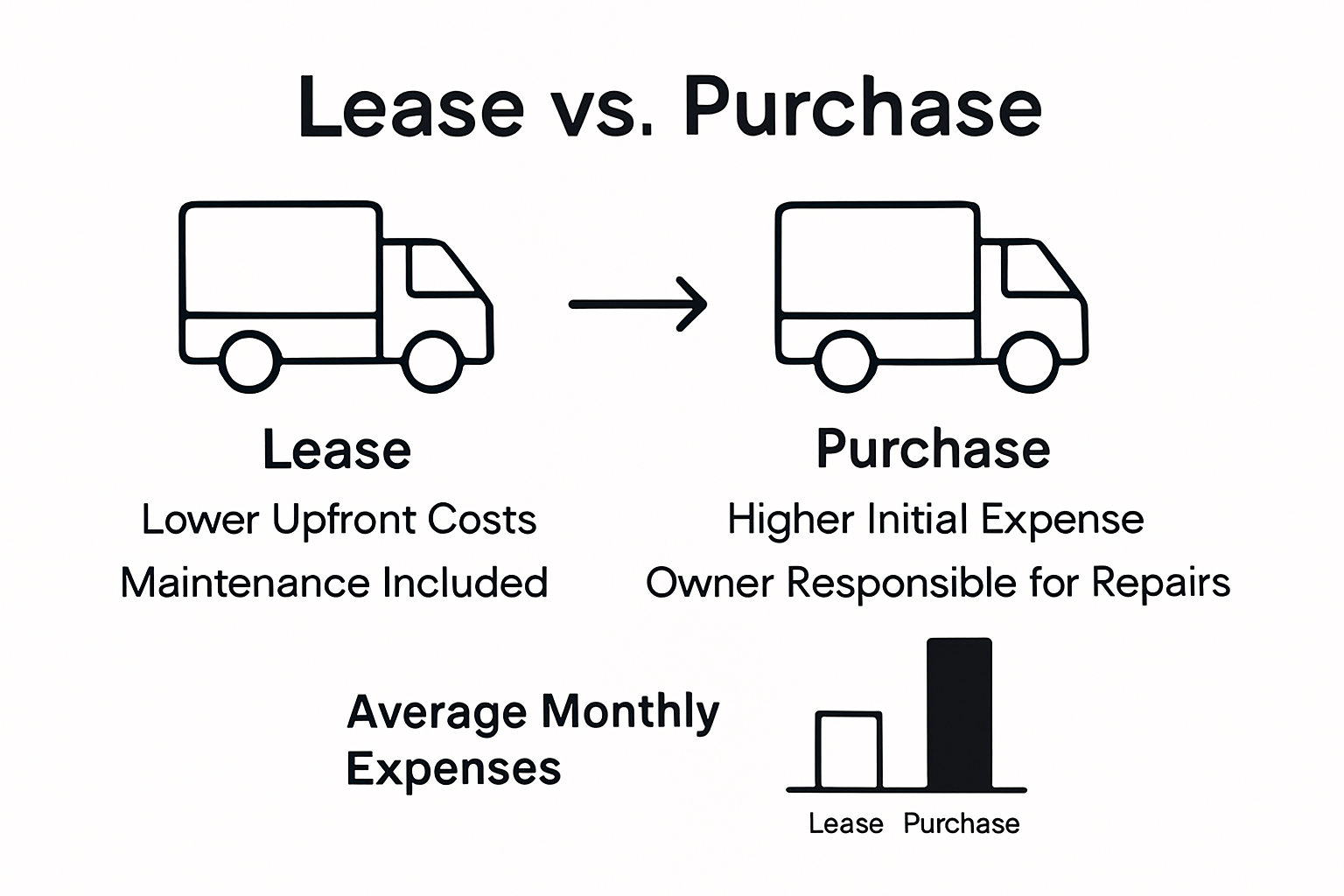
Comparative Analysis of Truck Acquisition Strategies:
Traditional Purchasing:
- Full asset ownership
- Higher upfront capital requirements
- Complete maintenance responsibilities
- Long-term depreciation risks
- Potential tax write-offs for owned equipment
Leasing Approach:
- No direct asset ownership
- Minimal initial financial investment
- Predictable monthly expenses
- Simplified maintenance protocols
- Frequent equipment upgrade opportunities
Cost comparisons from comprehensive business analyses demonstrate that leasing often provides superior financial adaptability. Fleet operators can access newer technologies, minimize maintenance complexities, and maintain operational agility without substantial capital commitments.
Tractor trailer lease cost considerations further illustrate that modern businesses increasingly favor flexible leasing models. This approach allows companies to scale fleet capabilities dynamically, responding quickly to market demands while managing financial risks more effectively than traditional ownership models.
Unlock the Full Potential of Truck Leasing for Your Fleet
If managing upfront costs and maintaining operational flexibility are top priorities for your business then truck leasing could be the ideal solution. Leasing helps reduce the financial strain of purchasing while offering predictable expenses and easier equipment upgrades. This strategic approach allows you to focus on growing your fleet with minimal risks and maximum efficiency. Learn more about tailored leasing options by visiting Is Leasing a Semi-Truck a Good Idea? and understand how affordable leasing can be on our page How Much Does it Cost to Lease a Tractor Trailer.
Experience seamless truck leasing with trusted experts at Apple Truck & Trailer. Benefit from quality used trucks and comprehensive fleet services backed by decades of regional experience. Contact us today to request a quote and take the next step toward smarter fleet management that supports your business goals now.
Frequently Asked Questions
What are the main advantages of truck leasing for fleet operators?
Truck leasing offers several advantages, including lower initial capital investments, predictable monthly expenses, reduced maintenance responsibilities, and improved cash flow management. It allows fleet operators to access newer vehicle technologies while minimizing long-term financial risks.
How do operating leases differ from capital leases in truck leasing?
Operating leases function like long-term rentals with lower monthly payments and no ownership transfer, while capital leases are more like financing agreements that build equity over time with potential ownership transfer at the end of the contract.
What should businesses consider before entering a truck leasing agreement?
Businesses should evaluate their operational needs, financial capabilities, and long-term goals. Understanding lease terms, costs, and maintenance responsibilities is crucial to selecting the best lease structure that aligns with their strategy.
How does truck leasing impact maintenance responsibilities for fleet operators?
Truck leasing often reduces in-house maintenance overhead by transferring complex repair and upkeep tasks to leasing providers, allowing fleet operators to benefit from professional maintenance networks and predictable scheduling.
Recommended
- Practical Guide to Leasing a Semi Truck: Is Leasing a Semi-Truck a Good Idea? – Apple Truck & Trailer
- What is Container Leasing? Understanding Its Importance – Apple Truck & Trailer
- 5 Simple Steps on Lease Agreements: How to Lease a Tractor Trailer? – Apple Truck & Trailer
- The Ultimate Guide to Tractor Trailer Lease Cost – Apple Truck & Trailer