
Most American trucking companies know that a single missed inspection can lead to hefty fines or dangerous accidents. With commercial vehicles carrying billions of tons of cargo each year, safety on the road depends on more than just skilled drivers. This guide breaks down the essentials of truck and trailer inspections, helping you navigate regulations and protect everyone who shares the highway. Even a small oversight can have big consequences in American transportation.
Table of Contents
- Defining Truck and Trailer Inspections
- Types of Inspections and Key Differences
- Inspection Procedures and Critical Checkpoints
- Massachusetts and Federal Inspection Regulations
- Common Failures, Risks, and How to Avoid Them
Key Takeaways
| Point | Details |
|---|---|
| Importance of Inspections | Truck and trailer inspections are critical for ensuring safety and compliance, preventing mechanical failures, and meeting regulatory standards. |
| Types of Inspections | Various inspection levels focus on different components, with Level I being the most comprehensive, emphasizing both vehicle and driver assessments. |
| Key Regulatory Requirements | Operators must adhere to federal standards and specific state regulations, requiring thorough documentation and ongoing vehicle maintenance. |
| Risk Management Strategies | Proactive maintenance, detailed training programs, and internal inspection processes significantly reduce the likelihood of critical failures and enhance overall safety. |
Defining Truck and Trailer Inspections
Truck and trailer inspections represent systematic safety evaluations designed to ensure commercial motor vehicles meet critical operational standards. These comprehensive assessments are fundamental to maintaining road safety and preventing potential mechanical failures or regulatory violations. Commercial vehicle safety protocols require detailed examinations of vehicles to minimize transportation risks.
The core purpose of these inspections involves multiple critical components: verifying vehicle structural integrity, checking mechanical systems, examining driver documentation, and ensuring compliance with federal safety regulations. Safety inspectors methodically review critical aspects such as braking systems, tire conditions, steering mechanisms, electrical systems, and cargo securement. Unlike casual visual checks, these are structured evaluations that follow precise governmental guidelines established by organizations like the Commercial Vehicle Safety Alliance (CVSA).
Inspections typically fall into different categories based on complexity and focus. Comprehensive inspections involve thorough examinations of virtually every vehicle system, while periodic inspections might concentrate on specific safety-critical components. Truck maintenance checklists help fleet operators systematically track and schedule these essential evaluations, ensuring consistent adherence to safety standards. Key objectives always remain consistent: preventing accidents, protecting drivers, safeguarding other road users, and maintaining the highest possible operational standards for commercial transportation.
By implementing rigorous inspection protocols, trucking companies and independent operators demonstrate commitment to safety, regulatory compliance, and professional responsibility. These assessments are not merely bureaucratic requirements but crucial interventions that directly impact public safety, vehicle performance, and operational efficiency across the transportation industry.
Types of Inspections and Key Differences
Commercial vehicle safety regulations recognize multiple inspection types, each designed to address specific safety and compliance requirements. These diverse inspection protocols range from comprehensive vehicle assessments to targeted examinations of specific operational components, ensuring a multi-layered approach to transportation safety.

The Commercial Vehicle Safety Alliance (CVSA) has established eight distinct levels of inspections, each with unique characteristics and focus areas. Level I Inspections represent the most comprehensive evaluation, involving a thorough examination of both the vehicle and driver. These rigorous assessments include detailed checks of critical systems such as brakes, steering mechanisms, tires, and driver credentials. Level VIII Inspections represent the opposite end of the spectrum, focusing exclusively on electronic monitoring and documentation review.
Key Inspection Categories Include:
- Vehicle Equipment Inspections: Focused on mechanical integrity and operational safety
- Driver Credential Reviews: Verifying licensing, medical qualifications, and work hour compliance
- Hazardous Materials Compliance Checks: Ensuring proper handling and transportation of dangerous goods
- Border Crossing Inspections: Addressing international transportation safety standards
Truck maintenance checklists play a crucial role in helping fleet operators navigate these complex inspection requirements. By systematically tracking and preparing for these various inspection levels, transportation professionals can proactively address potential safety issues, minimize downtime, and maintain regulatory compliance. The ultimate goal remains consistent: protecting drivers, cargo, and the broader public by maintaining the highest possible safety standards in commercial transportation.
Inspection Procedures and Critical Checkpoints
North American Standard Inspection procedures represent a comprehensive framework for evaluating commercial vehicle safety, establishing rigorous protocols that systematically examine every critical aspect of transportation equipment. These meticulous assessments go far beyond simple visual checks, involving detailed technical evaluations designed to identify potential mechanical vulnerabilities and regulatory compliance issues.
Inspection procedures typically involve several critical checkpoints that safety professionals methodically evaluate. Key Inspection Checkpoints include:
- Braking system functionality and pressure
- Tire condition, tread depth, and structural integrity
- Steering mechanism alignment and responsiveness
- Suspension system components
- Lighting and electrical system performance
- Cargo securement mechanisms
- Driver documentation and credentials
- Vehicle identification and registration verification
Transportation safety requires a comprehensive approach that addresses both mechanical and human factors. Border crossing inspection protocols demonstrate this complexity, combining technical vehicle assessments with detailed driver credential reviews. Inspectors must verify not just mechanical soundness but also ensure that operators meet medical qualifications, maintain appropriate licensing, and adhere to regulated work hour limitations.
The ultimate objective of these extensive inspection procedures transcends mere regulatory compliance. By establishing such detailed checkpoints, transportation safety professionals create a multilayered defense mechanism that protects drivers, cargo, and the broader traveling public. These systematic evaluations identify potential mechanical failures before they can become catastrophic, ultimately reducing accident risks and maintaining the highest possible safety standards in commercial transportation.
Massachusetts and Federal Inspection Regulations
Truck safety device regulations in Massachusetts represent a comprehensive approach to ensuring commercial vehicle safety, integrating state-specific requirements with federal standards. These regulations create a multilayered framework of compliance that addresses the unique transportation challenges faced by commercial operators in the Northeast region.
The regulatory landscape for truck and trailer inspections involves multiple critical components. Key Regulatory Requirements include:
- Compliance with 49 CFR Parts 390-397 federal standards
- Mandatory safety device installations
- Specific equipment requirements for vehicles over 10,000 lbs
- Special provisions for hazardous material transportation
- Enhanced safety monitoring for passenger buses
- Detailed documentation and record-keeping protocols
Massachusetts legal standards demonstrate a nuanced approach to vehicle safety, extending beyond basic federal guidelines. Commercial operators must navigate a complex system of regulations that require not just mechanical compliance, but also comprehensive documentation, driver qualifications, and ongoing vehicle maintenance. These regulations aim to create a proactive safety environment that minimizes potential risks before they can develop into serious transportation hazards.
The comprehensive nature of these regulations reflects a commitment to public safety that goes beyond simple checklist compliance. By establishing rigorous standards for equipment, documentation, and operational practices, Massachusetts and federal authorities work together to create a robust safety ecosystem that protects drivers, passengers, and other road users. Commercial vehicle operators must remain vigilant, continuously updating their knowledge and adapting to evolving regulatory requirements to maintain full compliance and operational excellence.
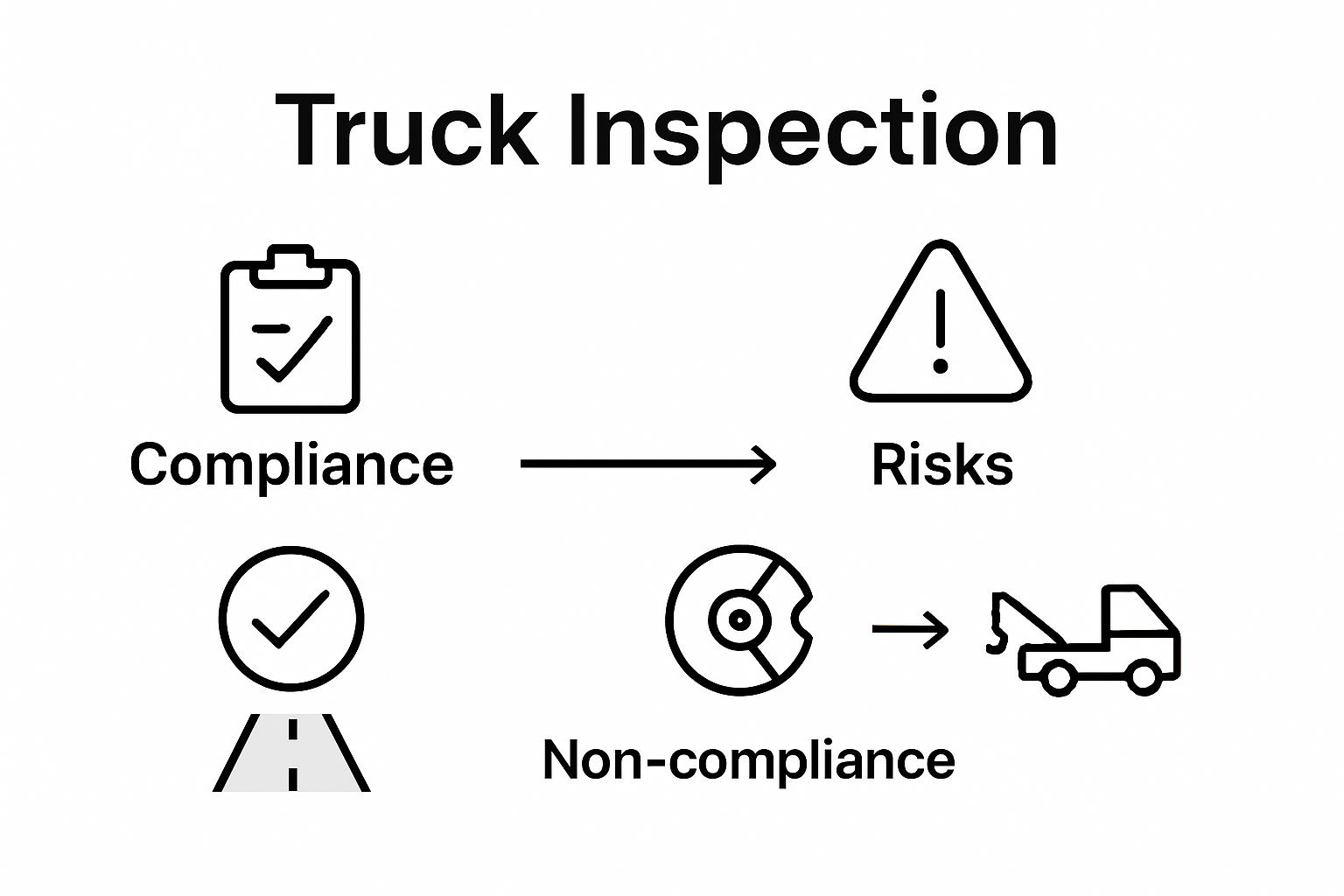
Common Failures, Risks, and How to Avoid Them
Commercial vehicle inspection data reveals a pattern of critical failures that can compromise transportation safety, highlighting the importance of proactive maintenance and rigorous operational protocols. Understanding these common vulnerabilities allows fleet operators to develop targeted strategies that mitigate potential risks before they escalate into serious mechanical or regulatory issues.
Critical Failure Categories Include:
- Brake System Deficiencies
- Tire Structural Integrity Problems
- Lighting and Electrical System Malfunctions
- Load Securement Violations
- Driver Hours-of-Service Non-Compliance
- Documentation and Credential Inconsistencies
Border crossing safety protocols underscore the complexity of preventing transportation failures. Successful risk mitigation requires a multifaceted approach that combines advanced technological monitoring, comprehensive driver training, and systematic maintenance schedules. Fleet operators must develop robust internal inspection processes that go beyond minimal regulatory requirements, creating a culture of safety that anticipates and addresses potential vulnerabilities.
Preventative strategies are the most effective method for minimizing inspection failures and operational risks. This involves implementing comprehensive training programs, maintaining detailed maintenance records, investing in regular equipment upgrades, and fostering a safety-first organizational culture. By treating vehicle inspections as a continuous process of improvement rather than a periodic compliance requirement, transportation professionals can significantly reduce the likelihood of critical failures and ensure the highest standards of operational safety.
Ensure Compliance and Safety with Trusted Truck and Trailer Solutions
Truck and trailer inspections are critical to avoiding costly failures and maintaining regulatory compliance. When your fleet faces challenges like brake system deficiencies, tire issues, or documentation inconsistencies, having reliable equipment and expert maintenance is essential. Our focus on thorough inspection standards and ongoing operational safety aligns perfectly with your need to protect drivers and cargo on every trip.
Explore high-quality used trucks and trailers built to meet safety requirements at Semi Truck and Trailer – Apple Truck & Trailer. Keep your fleet in top condition with professional services found at Truck Maintenance – Apple Truck & Trailer. Act now to secure dependable equipment and expert support from Apple Truck & Trailer, your trusted partner in Massachusetts and beyond. Contact us today to ensure your next inspection is hassle-free and your operations stay compliant.
Frequently Asked Questions
What are the main purposes of truck and trailer inspections?
Truck and trailer inspections serve to ensure that commercial motor vehicles meet safety and operational standards, preventing mechanical failures and regulatory violations, thereby enhancing road safety for drivers and the public.
What are the different types of inspections for trucks and trailers?
There are various types of inspections, including comprehensive inspections focusing on the entire vehicle and periodic inspections that concentrate on specific safety-critical components like brakes or tires.
What are key checkpoints during a truck inspection?
Key checkpoints include evaluating the braking system, tire condition, steering mechanisms, suspension components, lighting systems, cargo securement, and verifying driver documentation and credentials.
How can fleet operators avoid common inspection failures?
Fleet operators can prevent common inspection failures by implementing regular maintenance, adhering to detailed inspection checklists, investing in driver training, and fostering a safety-first culture within their organization.
Recommended
- 2025 Truck Maintenance Checklist for Businesses and Fleets – Apple Truck & Trailer
- The Ultimate Guide to Safe Truck Parking – Apple Truck & Trailer
- Ultimate Guide to Semi Truck Tire Lifespan: How Many Miles Do Semi Truck Tires Last? – Apple Truck & Trailer
- Understanding Storage Container Security: Key Concepts Explained – Apple Truck & Trailer