
A 20 foot shipping container might look pretty basic at first glance. Most people guess it can fit a couple of couches, some boxes, maybe a motorcycle or two. Yet the truth is wild. A single 20 foot container can hold up to 24,000 kilograms and about 33.2 cubic meters of cargo. That is enough room for several entire living rooms or stacks of heavy machinery. These dimensions are not just stats. They completely change how businesses and homeowners think about transport and storage.
Table of Contents
- The Dimensions And Space Capacity Of A 20 Foot Container
- Common Items And Goods Suitable For 20 Foot Containers
- Why Understanding Container Capacity Matters
- Practical Applications In Logistics And Storage Solutions
Quick Summary
| Takeaway | Explanation |
|---|---|
| Understand container dimensions for efficiency | Knowing accurate dimensions helps optimize loading and storage strategies. |
| Maximize cargo capacity for cost savings | Utilizing the full weight and volume capacity minimizes transportation costs significantly. |
| Leverage containers for diverse applications | 20 foot containers can be used for logistics, personal storage, and various commercial purposes. |
| Implement safety standards to avoid risks | Proper weight distribution ensures compliance and prevents cargo damage during transit. |
| Utilize intermodal transport for streamlined logistics | 20 foot containers enable efficient transfers across various transport modes, reducing handling costs. |
The Dimensions and Space Capacity of a 20 Foot Container
Understanding the precise dimensions and space capacity of a 20 foot container is crucial for businesses and individuals planning logistics, storage, or transportation needs. A standard 20 foot container offers substantial interior space designed for efficient cargo management.
Container External and Internal Dimensions
According to Federal Register specifications, a 20 foot container has specific external and internal measurements that determine its practical usability. Externally, the container measures approximately 19 feet 10.5 inches in length, 8 feet in width, and 8 feet in height. These external dimensions allow for standardized transportation across various shipping platforms.
Internally, the container provides slightly smaller dimensions to accommodate structural integrity. The interior space measures about 19 feet 4 11/64 inches long, 7 feet 8 17/32 inches wide, and 7 feet 4 3/16 inches high. These precise measurements translate into a significant storage capacity that can accommodate numerous items.
Cargo Capacity and Weight Specifications
The storage potential of a 20 foot container is impressive. Cargo capacity varies based on the specific container type, but a standard dry container typically offers:
- Maximum gross weight capacity of approximately 24,000 kg
- Tare weight (empty container weight) around 2,370 kg
- Net payload capacity of roughly 21,630 kg
These specifications make 20 foot containers versatile for multiple applications, from international shipping to local storage solutions. Our guide on container storage can help you understand how to maximize these spaces effectively.
The internal volume of a standard 20 foot container is approximately 33.2 cubic meters, providing ample room for various storage and transportation needs.
Below is a summary table comparing the key internal and external dimensions, weight capacities, and volume specifications of a standard 20 foot shipping container for quick reference.
| Specification | Value |
|---|---|
| External Length | 19 ft 10.5 in |
| External Width | 8 ft |
| External Height | 8 ft |
| Internal Length | 19 ft 4 11/64 in |
| Internal Width | 7 ft 8 17/32 in |
| Internal Height | 7 ft 4 3/16 in |
| Maximum Gross Weight | 24,000 kg |
| Tare Weight (Empty) | 2,370 kg |
| Net Payload Capacity | 21,630 kg |
| Internal Volume | 33.2 m³ |
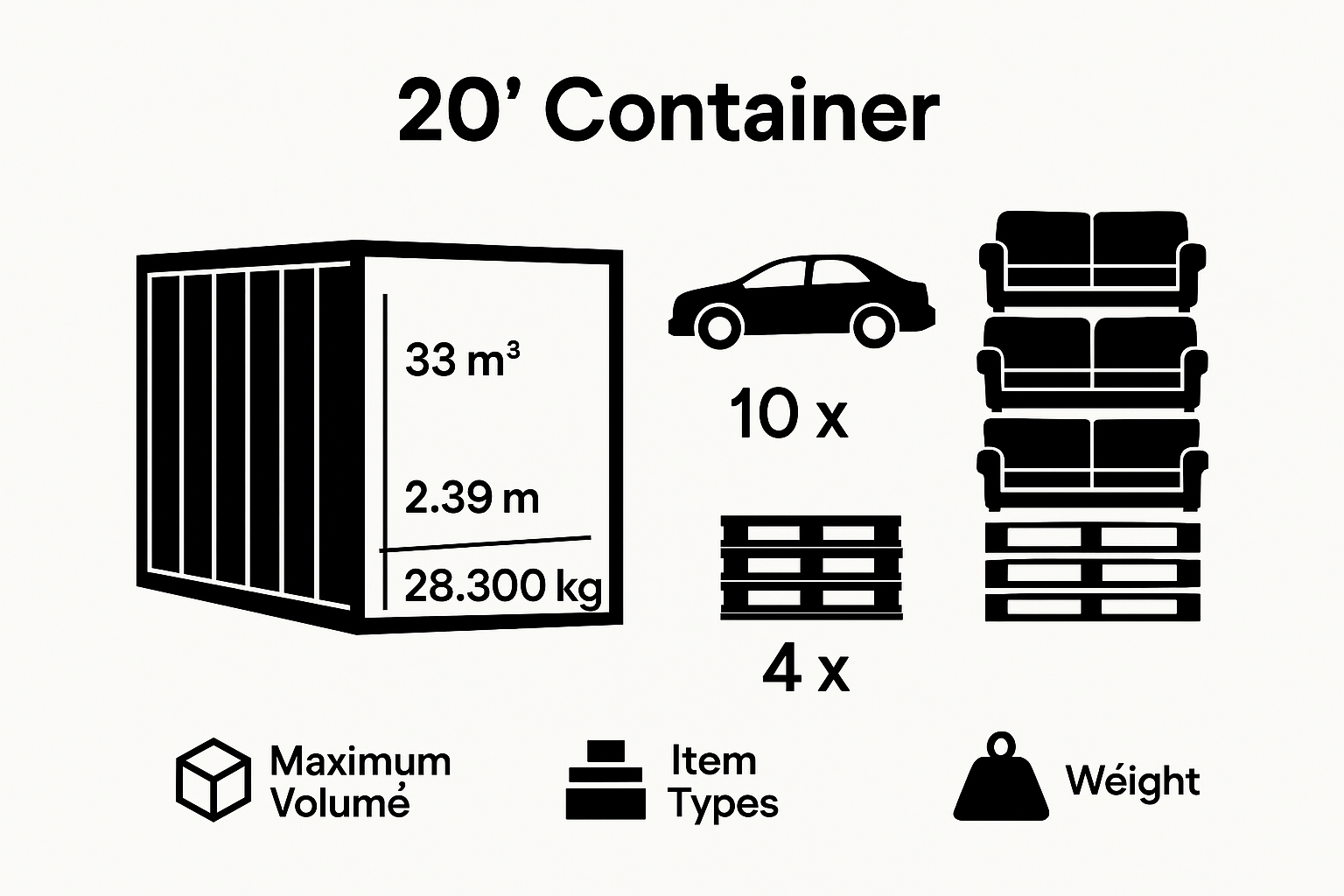 This capacity allows businesses and individuals to transport significant quantities of goods, equipment, or personal belongings in a single, secure container.
Common Items and Goods Suitable for 20 Foot Containers
The versatility of a 20 foot container makes it an exceptional solution for transporting and storing a wide range of items across various industries. Understanding the types of goods that can be efficiently packed into these containers helps businesses and individuals optimize their logistics and storage strategies.
Commercial and Industrial Cargo
Industrial and commercial sectors frequently utilize 20 foot containers for transporting diverse merchandise. According to UN Economic and Social Commission research, these containers are particularly effective for shipping machinery, textiles, consumer electronics, and manufacturing components. Businesses can leverage these containers for:
- Bulk machinery and industrial equipment
- Electronic components and finished products
- Textile rolls and clothing inventory
- Manufacturing spare parts and tools
The standardized dimensions ensure secure transportation and efficient loading across different shipping platforms, making them ideal for international and domestic freight.
Residential and Personal Storage Applications
Beyond commercial use, 20 foot containers serve as excellent storage solutions for residential and personal needs. Our shipping container storage solutions provide insights into maximizing these spaces. Homeowners and individuals can effectively store:
- Furniture during home renovations or relocations
- Seasonal equipment like boats, motorcycles, or recreational vehicles
- Construction materials and landscaping supplies
- Personal belongings during long-term travel or housing transitions
The robust construction of these containers protects items from environmental factors, ensuring safe and secure storage for extended periods.
The following table organizes common commercial and residential uses for 20 foot containers, highlighting the variety of items and applications discussed in the article.
| Application Area | Example Items & Uses |
|---|---|
| Commercial/Industrial | Bulk machinery, electronics, textiles, spare parts |
| Residential/Personal | Furniture, seasonal equipment, personal belongings |
| Renovation/Relocation | Furniture and household storage during transitions |
| Construction | Building materials, landscaping supplies |
| Agricultural | Equipment and supply protection |
| Temporary Workspace | Mobile offices, workspaces |
| Emergency Response | Relief supplies, mobile command units |
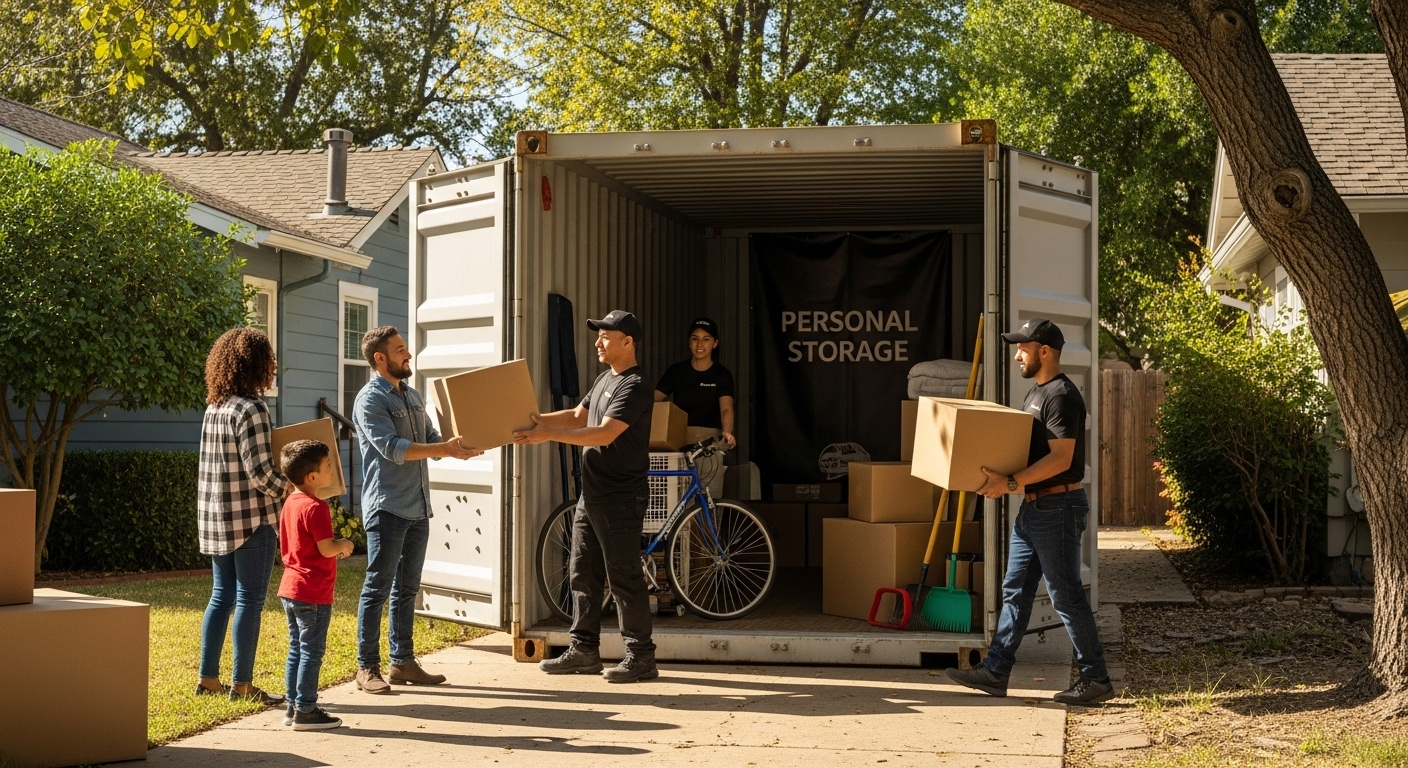
Whether for business logistics or personal storage, 20 foot containers offer an adaptable, secure, and cost-effective solution for managing and transporting a vast array of goods across different contexts.
Why Understanding Container Capacity Matters
Comprehending container capacity is more than a technical exercise. It represents a critical strategic consideration for businesses, logistics professionals, and individuals seeking efficient transportation and storage solutions. Understanding precise capacity helps optimize resources, reduce costs, and ensure safe and effective cargo management.
Economic and Logistical Implications
According to Federal Reserve Bank research, large importers can significantly benefit from understanding container capacity. Optimizing container utilization directly impacts shipping economics. By maximizing space and understanding weight limitations, businesses can:
- Reduce per-unit transportation costs
- Minimize wasted shipping space
- Improve overall logistics efficiency
- Lower carbon footprint through consolidated shipping
Effective capacity management transforms containers from mere transportation vessels into strategic logistics tools that drive operational excellence.
Risk Management and Compliance
Precise knowledge of container capacity is essential for legal and safety compliance. Overloading containers can lead to structural risks, transportation violations, and potential cargo damage. Accurate weight and volume calculations prevent:
- Potential transportation accidents
- Legal penalties for exceeding weight limits
- Cargo shifting during transit
- Insurance claim complications
Learn how to pack a storage container efficiently to maximize space while maintaining safety standards.
Ultimately, understanding container capacity is not just about numbers. It represents a comprehensive approach to resource management, cost optimization, and operational safety across various industries and applications.
Practical Applications in Logistics and Storage Solutions
Twenty-foot containers represent far more than simple metal boxes. They are dynamic solutions transforming how businesses and individuals approach transportation, storage, and logistics across multiple sectors. Understanding their versatile applications can help organizations optimize their operational strategies.
Intermodal Transportation Strategies
According to Missouri Department of Transportation research, 20-foot containers are fundamental to modern intermodal transportation networks. These standardized containers enable seamless cargo transfers between different transportation modes such as ships, trucks, and trains. Key advantages include:
- Rapid loading and unloading processes
- Reduced transportation handling costs
- Enhanced cargo security during transfers
- Simplified international shipping procedures
The uniformity of 20-foot containers allows for efficient global trade, creating a universal language in transportation logistics.
Diverse Storage and Deployment Scenarios
Beyond transportation, 20-foot containers offer remarkable flexibility for storage solutions. Our comprehensive guide to long-term storage solutions explores the extensive applications of these versatile units. Businesses and individuals can leverage containers for:
- Construction site material storage
- Temporary office or workspace configurations
- Emergency response and disaster relief operations
- Agricultural equipment and supply protection
The robust construction and standardized dimensions make these containers adaptable to numerous environments and requirements, transforming them from simple storage units into strategic assets.
The practical applications of 20-foot containers extend far beyond traditional shipping, representing a dynamic solution for complex logistical challenges across industries. Their versatility, durability, and standardized design make them an indispensable tool in modern transportation and storage ecosystems.
Maximize What Fits: Your Next 20 Foot Container Solution Awaits
Struggling to figure out exactly how much you can fit into a 20 foot container? You are not alone. Most people want every inch of their container to count for business or personal storage, but feel uncertain about container dimensions, weight limits, and how to avoid paying for wasted space. Our team at Apple Truck & Trailer has helped thousands of customers move beyond guesswork, so you always choose the right container for your needs. Let us simplify your next move or logistics project with tailored solutions and local expertise you can trust.
Ready to stop second-guessing what fits? Discover our full range of storage containers and flexible shipping container storage rentals for the Massachusetts region and beyond. Visit Apple Truck & Trailer today for dependable answers, fast quotes, and service that gets you moving right now.
Frequently Asked Questions
What are the internal dimensions of a 20 foot container?
The internal dimensions of a standard 20 foot container are approximately 19 feet 4 11/64 inches long, 7 feet 8 17/32 inches wide, and 7 feet 4 3/16 inches high.
What is the weight capacity of a 20 foot container?
A standard 20 foot container has a maximum gross weight capacity of around 24,000 kg, with a tare weight of approximately 2,370 kg and a net payload capacity of roughly 21,630 kg.
What types of goods can be stored in a 20 foot container?
A 20 foot container can store a variety of items, including machinery, textiles, consumer electronics, furniture, seasonal equipment, and construction materials.
Why is understanding container capacity important?
Understanding container capacity is crucial for optimizing transportation costs, reducing wasted space, ensuring safety compliance, and preventing potential issues such as cargo damage or legal penalties.
Recommended
- Reliable Storage: How Much Does a 20 Foot Storage Container Cost to Rent in MA? – Apple Truck & Trailer
- Essential Tips to Effortlessly Maximize Your Container Storage Space – Apple Truck & Trailer
- How to Pack a Storage Container for Maximum Efficiency
- Essential Guide to Preparing for International Shipping 2025 | Schott Removals