
Picking the right storage trailer for your fleet is rarely straightforward. A mismatch in size, type, or features can lead to wasted money and ongoing logistical headaches. The sheer variety of options and considerations can make the process feel overwhelming, especially when every wrong move carries a real cost for your Massachusetts operation.
The good news is that careful planning lets you avoid costly mistakes. By focusing on key factors like storage capacity needs, trailer features, and dealer support, you can make informed choices that serve your business for years to come. This guide reveals the proven steps that help you confidently select, inspect, and manage storage trailers—so your investment delivers true value without expensive surprises.
Table of Contents
- Understand Your Storage Capacity Needs
- Compare Trailer Types and Features
- Inspect Trailer Condition and Maintenance History
- Evaluate Dealer Reputation and Support Services
- Review Leasing, Rental, and Buying Options
- Check Regional Delivery and Parking Solutions
- Estimate Costs for Long-Term Storage Efficiency
Quick Summary
| Takeaway | Explanation |
|---|---|
| 1. Assess Your Storage Needs Accurately | Conduct a thorough inventory, measuring dimensions and quantities for precise capacity requirements to avoid costly errors in storage. |
| 2. Choose the Right Trailer Type | Understand different trailer structures and features to select ones that fit your operational needs and storage purposes effectively. |
| 3. Inspect Condition and Maintenance Records | Thoroughly evaluate trailers for physical issues and request maintenance histories to avoid unexpected repair expenses after purchase. |
| 4. Evaluate Dealer Support and Reputation | Research dealer reviews and support services to ensure ongoing assistance and reliability in your investment beyond the initial purchase. |
| 5. Factor Long-Term Storage Costs | Calculate the total cost of ownership, including maintenance, insurance, and parking fees, to ensure financial viability over time. |
1. Understand Your Storage Capacity Needs
Before you start shopping for a storage trailer, you need to know exactly how much space you actually require. Getting this calculation wrong at the beginning creates costly problems down the line, whether you end up paying for unused capacity or scrambling to find additional storage when your trailer fills up faster than expected.
Start by conducting a thorough inventory of what you need to store. For fleet operations, this means documenting every piece of equipment, spare parts, seasonal inventory, and materials that will occupy your trailer. Don’t estimate this part. Measure or list items with their dimensions and quantities. If you manage logistics operations across multiple locations in the Boston area, you might need trailers for different purposes, so break down your inventory by category and intended use.
Once you understand your inventory, think about how that translates to actual space. A seemingly straightforward calculation becomes complicated when you factor in practical storage realities. You cannot fill every cubic inch of a trailer. Equipment requires proper spacing to prevent damage, boxes need to be stacked safely, and you must maintain access to items you retrieve frequently. Understanding what fits in different container sizes helps you visualize capacity more accurately than just looking at square footage.
Consider whether any of your stored items require climate control. Sensitive inventory, electronic components, or materials vulnerable to temperature fluctuations need protected environments. This affects which storage trailer type you select and can significantly impact your operational costs. Take inventory of your current home storage options too. Many fleet managers overlook existing space they already control. Assessing what you can store internally helps you avoid renting unnecessarily large trailers simply because you haven’t optimized your existing facilities.
Storage capacity utilization is a key operational metric that directly impacts your bottom line. Accurate estimation saves substantial costs over time because you only pay for the space you genuinely need. A logistics coordinator managing equipment for a mid-sized Massachusetts operation can waste thousands annually by renting trailers sized for worst-case scenarios rather than typical operations.
Calculate your actual volume requirements using this practical approach. Multiply the length, width, and height of your largest items in feet, then add that to your other items. This gives you cubic footage. Add roughly 20 percent to that total for spacing and safety margins. This figure becomes your target storage capacity. If you store seasonal equipment that changes throughout the year, determine your peak season requirements and your typical season requirements separately.
Pro tip: Create a detailed spreadsheet listing each item type, dimensions, and quantity, then update it quarterly as your business evolves. This prevents the common mistake of selecting a trailer based on yesterday’s needs rather than today’s actual requirements.
2. Compare Trailer Types and Features
Not all storage trailers are created equal, and choosing the wrong type can leave you with equipment that doesn’t fit your operation’s needs. Understanding the differences between trailer types and their specific features ensures you invest in something that actually solves your storage problem rather than creating new headaches.
Trailers are primarily categorized into two main categories based on their structural design. Full trailers carry their weight entirely on their own wheels, while semi trailers share weight with the towing vehicle). For most fleet managers at small to mid-sized Massachusetts businesses, full trailers work better because they reduce the burden on your towing vehicle and offer greater flexibility in how you use them. You can park a full trailer and leave it there without needing a truck to support it. This matters when you have multiple pieces of equipment operating simultaneously.
Beyond the basic structure, specific trailer types serve different purposes. Enclosed cargo trailers provide weather protection and security for sensitive inventory. Utility trailers offer open platforms for equipment that doesn’t require protection. Dump trailers work for materials that need to be unloaded quickly. Specialized types exist for nearly every industry, but for general logistics and fleet storage, enclosed cargo trailers and utility trailers dominate the market. When you’re evaluating storage trailers on wheels, think about whether your equipment needs protection from the elements or if open air storage suits your situation.
Key features to compare go beyond just the shell. Axle count affects weight distribution and stability. A single axle trailer handles lighter loads, while dual or triple axle configurations support heavier equipment and distribute weight across more wheels, reducing ground pressure. Suspension type matters too. Spring suspensions offer basic support, while air suspensions provide smoother rides and better protect fragile contents. Locking features determine security, and internal design elements like tie down points, ventilation, and flooring material impact how well your equipment stays protected during transport or storage.
Dimensions and weight capacity must match your specific inventory. A trailer that’s too small wastes money because you’ll need a second one. A trailer with capacity far beyond what you need means you’re paying for unused space. Consider your towing vehicle’s capabilities. Not every truck can safely tow every trailer, and exceeding your vehicle’s capacity creates serious safety and legal issues. Your equipment must be compatible with the hitch type, electrical connections if you’re using lights or power features, and the overall weight your vehicle can handle.
When comparing trailers, always verify that the towing vehicle’s specifications match the trailer’s requirements. Mismatched towing setups create hazardous situations and can result in equipment damage or accidents.
Make a comparison chart before shopping. List your storage needs, the items you’ll be storing, their dimensions, total weight, and any special requirements like climate control or security features. Then evaluate trailers against this checklist. Some trailers include features you don’t need, driving up costs unnecessarily. Others lack features essential to your operation. Container and trailer storage options each have distinct advantages depending on your specific situation, so understanding the full range of options helps you make informed decisions.
Visit facilities in Massachusetts where you can see trailers in person. Photos online don’t tell you about interior condition, wear patterns, or functionality of doors, ramps, and latches. Inspect the flooring for rot or soft spots. Check that doors open and close smoothly and that locking mechanisms function properly. Ask about maintenance history and any repairs or modifications made to the trailer. Used trailers with clear maintenance records offer better value than ones with unknown histories.
Pro tip: Request test towing before purchasing if possible, or at minimum verify that your equipment can legally and safely tow the trailer you’re considering. An hour spent confirming compatibility prevents costly problems after purchase.
3. Inspect Trailer Condition and Maintenance History
A trailer that looks fine on the surface can hide expensive problems lurking underneath. Before you commit to purchasing, you need to thoroughly inspect the physical condition and dig into the maintenance records. This single step separates smart buyers from those who discover costly surprises after the sale closes.
When you first examine a trailer, treat it like a detective investigating a crime scene. Check the flooring for soft spots, rot, or water damage. Run your hand along interior walls to feel for rust or deterioration. Look underneath for fluid leaks, bent axles, or corroded components. Examine the roof and seams where water might have entered. Take photographs of everything, especially any damage or wear you discover. These photos become your reference points if questions arise later.
The wheels and tires tell a story about how a trailer was maintained. Uneven tire wear indicates alignment problems. Bald tires mean the trailer was driven despite safety issues. Rust on wheel rims suggests the trailer spent time exposed to salt or moisture without proper protection. Inspect brake components for corrosion or wear. Brakes that work today might fail tomorrow if they’re corroded internally. The suspension system requires careful attention too. Bent springs, torn bushings, or leaking shock absorbers all signal problems ahead.
Electrical systems and lighting must function properly. Test all lights, connections, and any onboard power features. Corrosion on connectors prevents reliable operation and creates safety hazards on the road. Water intrusion into electrical systems causes intermittent failures that become maddening to diagnose after purchase. Federal regulations require systematic inspection and maintenance records that document the nature, date, and results of all work performed. Request these records from the seller and review them carefully. A trailer with complete documentation spanning several years indicates responsible ownership and regular maintenance.
Maintenance history provides insight into what problems the trailer experienced and how the owner addressed them. Repeated repairs for the same issue suggest an underlying problem never properly resolved. For example, if brake pads were replaced three times in two years, the trailer likely has an alignment or caliper issue causing premature wear. Conversely, records showing regular oil changes, bearing servicing, and preventive maintenance indicate the owner cared about the equipment. Gaps in maintenance records raise red flags. A trailer used actively for three years without a single documented service probably wasn’t maintained properly.
Condition reporting with detailed documentation helps you assess usability and safety comprehensively. Ask the seller for written descriptions of any repairs, modifications, or known issues. Get this in writing rather than relying on verbal assurances. If a trailer was damaged and repaired, understand the extent of that damage and how the repair was completed. Was a professional shop involved or was it a back yard fix? Professional repairs with documented workmanship offer better assurance than amateur repairs.
Bring someone with mechanical knowledge if possible. A fleet mechanic or equipment specialist can spot problems you might miss. They understand what normal wear looks like versus what indicates poor maintenance or abuse. Their expertise can save you from purchasing a trailer that will consume your maintenance budget for years. Ask the seller about the trailer’s history of use. Was it garaged or parked outside? Did it carry heavy loads regularly or light loads occasionally? How many miles or years of operation? These details help you understand what the trailer endured and predict future maintenance needs.
Never purchase a used trailer without requesting maintenance records covering at least the previous two years. If records are unavailable, assume the worst and negotiate the price accordingly.
For Massachusetts fleet operators, working with established dealers like Apple Truck and Trailer gives you access to trailers with verified maintenance histories and professional inspections. Local dealers understand regional conditions and can advise you on what issues commonly affect trailers in New England’s climate. They often provide warranties and stand behind their inventory, giving you recourse if problems emerge shortly after purchase.
Pro tip: Request a pre purchase inspection from a certified mechanic before finalizing any purchase, and have it done at a facility away from the seller’s location to ensure objective assessment.
4. Evaluate Dealer Reputation and Support Services
Buying a storage trailer is not a one-time transaction that ends when you drive away from the lot. You need ongoing support, maintenance services, and someone to turn to when problems arise. Choosing the right dealer matters as much as choosing the right trailer because their reputation and support services directly impact your long-term operational success.
Dealer reputation reflects years of business practices, customer interactions, and how they handle problems when they occur. Start by researching what other customers say about their experiences. Check online reviews on Google, industry forums, and the Better Business Bureau. Look beyond star ratings to read actual customer comments. What specifically do people praise or complain about? Do complaints focus on sales practices or after-sale support? Are complaints resolved quickly or do they linger? Patterns emerge when you read multiple reviews. A dealer with consistent praise for responsiveness and honest dealings builds trust through actions, not marketing claims.
Industry affiliations matter more than you might think. Franchised dealerships benefit customers through regulated and standardized service experiences that protect your investment. Dealerships that belong to industry associations, hold certifications, and maintain regulatory compliance demonstrate commitment to professional standards. These affiliations require dealers to follow ethical guidelines and maintain quality standards. Independent dealers can be excellent too, but verify they have established track records and proper licensing for your region.
When evaluating potential dealers, ask specific questions about their support services. Do they offer maintenance and repair services in-house or do they refer you elsewhere? If they perform maintenance, can you get appointments conveniently? What warranty coverage do they provide after purchase? How quickly do they respond to customer issues? Can they provide references from fleet customers they’ve worked with for multiple years? A dealer that’s been supporting the same customers for five or ten years demonstrates reliability and quality service.
For Massachusetts fleet operators, location and regional expertise matter significantly. A dealer who understands New England winters, salt roads, and the specific challenges of logistics operations in this region can advise you on trailer selection and maintenance needs more effectively than a dealer from elsewhere. They know which trailer features hold up best locally and what maintenance issues frequently affect equipment in your area. Dealers based near you offer faster service response times when you need repairs or support.
Corporate reputation depends on transparent communication and customer service excellence that extends beyond the sale. Strong dealers invest in their customers’ long-term success because they understand that treating people well leads to repeat business and referrals. Ask potential dealers about their approach to customer support. Do they proactively reach out with maintenance reminders? Will they help you understand warranty coverage and what’s included? Do they offer flexible scheduling to minimize your downtime?
Contact the dealer’s current customers directly if possible. Ask how responsive they are when issues arise. How long does it take to get repairs scheduled? Do they provide loaner equipment while yours is being serviced? What happens if a part fails unexpectedly? Dealers confident in their service welcome these conversations because satisfied customers become their best advertising.
Inspect the dealer’s facility when you visit. Is it clean and organized? Do they have service bays equipped for repairs? Can you see evidence of active maintenance work? A professional facility with trained staff indicates the dealer takes service seriously. Poor facilities and disorganized operations suggest you’ll have problems getting reliable support when you need it.
Understand pricing and transparency. Good dealers explain costs clearly and don’t hide fees until the paperwork stage. They provide written quotes and honor them. They explain financing options and warranty terms in plain language. If a dealer seems evasive about costs or pushes pressure during negotiations, that’s a red flag about how they’ll treat you after the purchase. Dealers that operate transparently during sales typically continue that approach with support services.
Choose a dealer based on their reputation for after-sale support and customer service, not just on who has the lowest price. The cheapest trailer from an unreliable dealer costs far more than a properly priced trailer from someone who will support you for years.
Apple Truck and Trailer has served Massachusetts since 1986, building relationships with hundreds of fleet operators throughout New England. Their longevity in the region, established service facilities, and regional expertise demonstrate the kind of dealer partnership that benefits small to mid-sized logistics operations. Dealers with this track record understand your business challenges and provide support tailored to your needs.
Pro tip: Ask potential dealers for contact information from three fleet customers they’ve served for at least three years, then actually call those customers and ask about their real world experience with ongoing support and service.
5. Review Leasing, Rental, and Buying Options
You have more choices than simply buying a storage trailer outright. Understanding leasing, rental, and purchasing options lets you select the approach that aligns best with your operational needs and financial situation. Each option offers distinct advantages and limitations depending on your specific circumstances.
Buying a trailer means you own the asset outright after payment. This gives you complete control and the freedom to modify or customize it to your exact specifications. You build equity in the equipment over time. However, buying requires significant upfront capital and you bear all maintenance and repair costs. If your storage needs fluctuate seasonally or change as your business evolves, owning excess equipment ties up money that could be invested elsewhere. Purchased trailers also depreciate, and eventually you must deal with disposal or trade-in when they reach the end of their useful life.
Renting trailers works well for temporary or seasonal needs. You pay a monthly fee to use equipment without ownership responsibilities. When your peak season ends, you return the trailer and eliminate storage costs during slow periods. Rental offers maximum flexibility because you can adjust quantities based on current demand. However, rentals become expensive if you need the trailer for extended periods, and you cannot customize rental equipment to suit your specific requirements. Monthly rental costs add up quickly over a year compared to purchasing.
Equipment leasing and rental strategies allow businesses to acquire assets without upfront capital expenditure, making this option attractive for operations managing cash flow carefully. Leasing differs from renting in that lease agreements typically cover longer periods, often multiple years. You maintain and operate the leased trailer as if you owned it, but the lessor retains ownership. Leasing offers tax advantages because lease payments are often deductible business expenses. Your financial obligations are predictable because the lease specifies your monthly costs. When the lease ends, you return the equipment with no ownership burden or depreciation loss.
Understanding the different lease types helps you make informed decisions. Operating leases involve short term use without ownership transfer, allowing you to use equipment temporarily while maintaining flexibility to return it when needs change. Capital leases are longer-term arrangements where you might eventually own the equipment or purchase it at lease-end for a residual value. Operating leases work better for businesses with fluctuating needs while capital leases suit companies committed to long-term equipment use.
Your financial situation heavily influences which option makes sense. If you have capital available and plan to keep the trailer for five or more years, buying likely offers the best long-term value. Your monthly ownership costs decline over time as you pay down financing, while rental or lease payments continue indefinitely. However, if you lack capital reserves or anticipate changing needs within two years, leasing or renting avoids tying up money in equipment.
Consider your maintenance obligations carefully. When you own equipment, you handle all repairs and maintenance. This gives you quality control but requires budgeting for unexpected breakdowns. Lease agreements typically include maintenance and support from the lessor, eliminating surprise repair costs. For fleet managers handling multiple trailers across Massachusetts, having a dealer manage maintenance as part of a lease can reduce operational complexity and staffing requirements.
Mar tax and accounting implications affect your decision too. Consult your accountant about how purchasing, leasing, or renting impacts your business taxes. Lease payments may be fully deductible, reducing taxable income. Purchased equipment creates depreciation deductions over time. These tax benefits can make one option financially superior to another for your specific situation. Business accountants can calculate the actual cost of each option after accounting for tax advantages.
Seasonality dramatically influences your best option. If you need storage trailers only during specific months, renting those months and avoiding costs during off-season makes financial sense. Year-round operations might favor purchasing or long-term leases because you spread costs across the entire year. Calculate your average monthly need and compare costs across all three options using that baseline.
Compare the total cost of ownership, leasing, and rental over a three to five year period, accounting for tax benefits and maintenance costs. The cheapest option upfront often becomes expensive over time when maintenance and inefficiency are factored in.
For Massachusetts fleet operators, working with established dealers offers advantages beyond just the equipment itself. Dealers can structure lease agreements that align with your seasonal peaks and valleys. They provide maintenance support integrated into your operations. Apple Truck and Trailer offers leasing, rental, and sales options, allowing you to leverage their expertise in choosing the financial structure that best serves your business.
Don’t overlook the operational benefits of each option either. Owning provides independence and customization. Leasing simplifies administration because one company manages maintenance. Renting offers maximum flexibility without commitment. Your choice should balance financial optimization with operational efficiency.
Pro tip: Calculate the total monthly cost for each option including maintenance for owned equipment, then project that over the timeframe you expect to need storage capacity to identify which financial approach saves the most money for your specific situation.
6. Check Regional Delivery and Parking Solutions
Where you park your storage trailer matters as much as the trailer itself. Delivery logistics and parking availability in your region directly affect how efficiently you operate and whether your investment works for your business. Before purchasing, understand what your area offers and what limitations you’ll face.
Massachusetts presents unique challenges for parking and storing commercial equipment. The region’s dense development, strict zoning regulations, and limited available land mean parking space comes at a premium. Some municipalities restrict where you can park trailers, and others charge fees for commercial vehicle storage. Properties zoned for residential use cannot accommodate commercial trailers, and even industrial areas sometimes have restrictions on trailer parking duration or size. Understanding local regulations prevents costly mistakes like purchasing a trailer you legally cannot park at your facility.
Contact your municipal planning and zoning department before buying. Ask specifically about trailer parking regulations in your area. What size trailers are permitted? Are there setback requirements from property lines? Do you need special permits for commercial equipment storage? How long can trailers remain parked? Some communities allow temporary parking but prohibit permanent storage of trailers without active use. Getting answers to these questions takes an hour and prevents problems down the road.
Dealer delivery logistics deserve careful consideration. Can your preferred dealer deliver to your Massachusetts location, or will you need to arrange transportation separately? Delivery costs add significantly to your trailer purchase price, and finding reliable transportation might prove difficult depending on where you’re located. Dealers with established regional networks like those serving New England can often handle delivery more efficiently than those based elsewhere. Ask potential dealers about their delivery network and whether they have partnerships with transport companies.
Truck parking availability and management strategies vary significantly by region, affecting your ability to store equipment efficiently. Dense urban areas face parking shortages while rural areas often have more available space. Your facility’s proximity to highways, truck stops, and parking availability influences operational efficiency. If your trailer remains parked at your facility most of the time, parking challenges matter less. But if your trailer moves between multiple locations or sits temporarily at customer sites, regional parking infrastructure becomes critical.
For operations requiring temporary parking at customer locations, understand what facilities exist along your typical routes. Interstate 95 and Route 128 have truck stops with parking availability, but finding secure overnight parking near customer locations in Boston or other urban centers proves challenging. Plan routes and delivery schedules accounting for parking limitations. Some fleet managers schedule deliveries to avoid overnight parking situations that strain available resources.
The Federal Motor Carrier Safety Administration emphasizes truck parking availability and regional strategies to support commercial vehicle operations. Massachusetts participates in these initiatives to improve parking infrastructure, but capacity still lags demand during peak seasons. Understanding what resources exist helps you plan operations realistically.
Consider your facility’s physical constraints. How much space do you have for trailer parking? Will you park just one trailer or multiple units? Can your property handle the weight of loaded trailers without damage to pavement or landscaping? Will trailer parking create issues with neighbors or violate covenants? A property that looks good on paper might not work practically once you park heavy equipment there. Visit your facility and visualize where the trailer will sit for extended periods.
Yard space determines your operational flexibility. If you have unlimited parking space at your facility, you can keep trailers parked between uses without worry. Limited space requires more frequent movement and equipment rotation. Some fleet managers use off-site parking facilities for seasonal equipment, paying monthly storage fees to keep trailers elsewhere when not needed. Calculate whether buying a trailer makes sense if you lack on-site parking and must rent additional space.
Access routes matter too. Can your facility accommodate the truck and trailer combination needed to move your trailer? Some narrow driveways, sharp corners, or low clearances prevent larger trailers from entering properties. Measure your access points and verify that the trailer you’re considering can physically get to where you need it parked. Getting stuck with a trailer too large for your property’s access is an expensive discovery.
Verify parking regulations, measure facility access, and understand regional parking infrastructure before purchasing any storage trailer. These three checks prevent buying equipment you cannot legally park, physically access, or operationally accommodate.
Apple Truck and Trailer operates throughout Massachusetts, Rhode Island, Connecticut, and New Hampshire, giving them intimate knowledge of regional parking regulations and delivery logistics. They understand which trailers work best for different locations and can advise you on whether your facility accommodates your intended purchase. Their regional expertise helps you avoid mistakes specific to New England operations.
Pro tip: Contact your local city or town planning department and submit your trailer specifications before purchasing, confirming in writing that your equipment complies with local zoning and parking regulations.
7. Estimate Costs for Long-Term Storage Efficiency
The trailer purchase price is only the beginning of your financial commitment. Long-term storage costs determine whether your investment delivers real value or becomes an expensive burden. Understanding all the expenses involved helps you make decisions that keep your operation efficient and profitable.
Start by calculating your total cost of ownership. This includes the purchase price or lease payment, financing costs if you’re borrowing, insurance, maintenance, repairs, registration and licensing, parking fees if applicable, and any facility improvements needed to accommodate the trailer. Many fleet managers focus only on the purchase price and overlook these ongoing expenses that often exceed the initial investment over five years.
Insurance costs vary based on trailer value, coverage type, and your claims history. A new 40-foot enclosed cargo trailer might cost $150 to $300 monthly for comprehensive coverage, adding $1,800 to $3,600 annually. Older used trailers typically cost less to insure because their replacement value is lower, but they may require additional coverage for depreciated value. Request insurance quotes before purchasing so you understand this ongoing expense clearly.
Maintenance and repair costs are the expenses most fleet managers underestimate. A well maintained trailer averages $800 to $1,500 annually in routine maintenance including tire rotation, bearing servicing, brake inspection, and minor repairs. Trailers with deferred maintenance or age related issues can easily exceed $3,000 yearly. Budget conservatively, perhaps 15 percent of the trailer’s purchase price annually for maintenance unless you have historical records showing different patterns.
Registration and licensing fees in Massachusetts depend on trailer weight and intended use. Commercial trailers typically cost $50 to $150 annually, but check current Massachusetts Registry of Motor Vehicles fees specific to your trailer type. Some jurisdictions charge higher commercial vehicle fees, so factor this into your total cost calculations.
Parking and storage fees apply if you lack on-site space. Secure outdoor parking facilities in the Boston area charge $100 to $300 monthly for trailer storage. Indoor climate-controlled storage runs $300 to $600 monthly depending on location and amenities. Over a year, parking alone adds $1,200 to $7,200 to your costs. Understanding whether your facility provides free parking is critical before committing to trailer ownership.
Fuel costs matter if you move trailers frequently. Calculate your expected mileage and fuel consumption to estimate transportation costs. A truck averaging 6 miles per gallon consuming diesel at $3.50 per gallon costs approximately $0.58 per mile to operate. Moving your trailer 50 miles each week adds about $1,500 annually just in fuel. These costs scale dramatically with increased movement.
Cost estimation for long-term storage efficiency requires considering capital costs, cycle life, and energy efficiency relevant to your specific situation. Think beyond just the storage trailer itself to the entire system supporting your operation. Climate-controlled storage costs more than open parking. Trailers requiring specialized handling cost more than standard utility trailers. Your complete cost picture determines actual affordability.
Compare ownership costs against leasing alternatives. If owning costs $4,000 annually including purchase amortization, maintenance, insurance, and parking, but leasing the same trailer costs $3,500 annually, leasing might provide better financial efficiency. Conversely, if your five-year ownership costs total $20,000 and leasing costs $22,500, owning wins financially. Run these calculations specifically for your situation rather than assuming one option always costs less.
Tax considerations can shift the financial equation significantly. Lease payments are often fully deductible business expenses, lowering your effective cost. Purchased trailers create depreciation deductions over their useful lives, spreading tax benefits across multiple years. Consult your accountant about which option provides better tax advantages for your specific business situation.
Downtime costs represent hidden expenses often overlooked. If a trailer breaks down when you need it, you either rent temporary equipment or halt operations. Even brief delays create cascading problems in logistics operations. Newer, well-maintained trailers experience fewer breakdowns, making their higher purchase costs economically justified by reduced downtime expenses.
Resale or disposal costs emerge when you eventually replace the trailer. Trailers depreciate over time, and older equipment becomes increasingly difficult to sell. Some owners spend money disposing of trailers that have outlived their usefulness. Factor disposal costs into your long-term calculations by assuming minimal resale value after 10 years.
Understanding long-term storage solutions and their cost structures helps you evaluate options comprehensively. Some businesses benefit from buying while others are better served by leasing or renting. Your specific operation, usage patterns, and financial situation determine which approach delivers the best value.
Create a spreadsheet projecting costs over five to ten years for each option you’re considering. Column one lists each cost category. Additional columns show annual costs for years one through ten. The final column sums total costs for each option. This visual comparison clarifies which financial strategy optimizes your investment.
Calculate your true total cost of ownership including all expenses, then compare that against leasing or rental alternatives over the same timeframe. The cheapest purchase price often becomes the most expensive option once ongoing costs are factored in.
Dealers can help you understand costs specific to the equipment you’re considering. Established dealers like Apple Truck and Trailer have experience with Massachusetts operations and can project realistic maintenance costs, insurance requirements, and parking considerations unique to your region. Their expertise helps you make financially sound decisions beyond just comparing purchase prices.
Pro tip: Build a detailed cost projection spreadsheet showing monthly expenses for five years, including maintenance reserves for unexpected repairs, then compare that total against leasing alternatives before deciding which financial structure serves your business best.
The following table provides a concise summary of the article’s key points, strategies, and considerations for purchasing and using storage trailers efficiently through proper selection, maintenance, and dealer evaluation.
| Aspect | Details and Recommendations | Importance and Benefits |
|---|---|---|
| Storage Capacity Needs | Conduct an inventory of items, account for practical space use, and consider climate control requirements. | Ensures optimal trailer sizing and prevents costly mismatches or inefficiencies. |
| Comparing Trailer Types | Understand trailer variants, configurations, and features to align with your equipment requirements. | Aids in selecting functional trailers tailored to specific operations. |
| Inspecting Condition and Records | Check physical conditions meticulously, review maintenance history, and document any issues found. | Avoids unexpected repairs and guarantees safety and reliability. |
| Dealer Reputation and Services | Evaluate dealer reviews, certifications, and after-sales services; prioritize reliability over upfront price. | Establishes long-term partnerships supporting operational success. |
| Leasing vs. Buying Trailers | Weigh flexible leasing against permanent ownership concerning costs, maintenance, and financial goals. | Helps optimize upfront expenditures and long-term operational efficiency. |
| Regional Logistics and Parking | Assess delivery options, understand local parking regulations, and ensure facility accessibility. | Prevents logistical challenges affecting operational convenience. |
| Estimating Total Ownership Costs | Include purchase costs, insurance, maintenance, registration, parking, and fuel in calculations; compare with leasing alternatives. | Guarantees financially strategic decisions aligned with business objectives. |
Discover the Perfect Storage Trailer Tailored to Your Needs
Finding the right storage trailer involves precise planning and understanding exactly what your operation demands. This article highlights common challenges such as selecting the right size, inspecting trailer condition, evaluating dealer reputation, and balancing ownership with leasing or rental choices. Don’t let costly mistakes happen by choosing equipment that does not fit your inventory dimensions or operational reality. Whether you require climate-controlled options or trailers suited for Massachusetts weather, knowing your storage capacity and parking regulations saves you from unexpected hassle.
If you want expert support throughout this decision process, explore our extensive inventory of Storage Trailers and versatile Storage Trailers on Wheels. At Apple Truck and Trailer, we provide tailored solutions plus flexible Storage Trailer Rental options that fit seasonal demands and evolving needs.
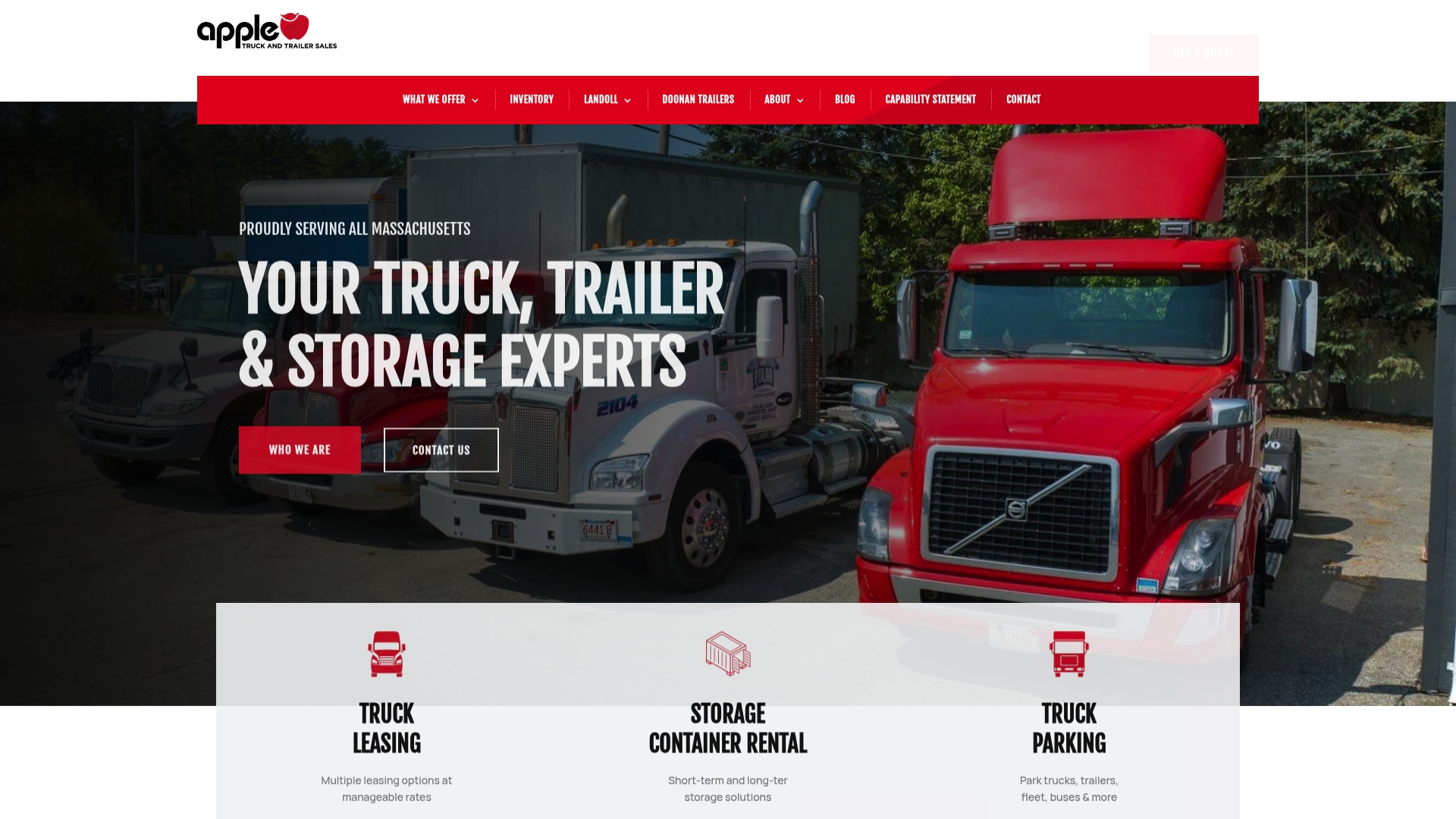
Ready to secure reliable, well-maintained storage equipment backed by regional expertise in Massachusetts and New England since 1986? Visit https://appletruckandtrailer.com now to browse our high-quality trailers, request a personalized quote, and connect with professionals who understand your fleet’s unique challenges. Don’t wait until your storage solution slips out of reach—act today for dependable service and the best value on trailers built to last.
Frequently Asked Questions
How do I determine my storage capacity needs for a trailer?
To determine your storage capacity needs, conduct a thorough inventory of the items you plan to store, measuring their dimensions and quantities. Calculate the cubic footage required and add about 20% for spacing and safety margins to find your ideal trailer size.
What are the main differences between storage trailer types?
Storage trailers primarily differ in their structural design, such as full trailers that support their weight entirely on their own wheels and semi trailers that share weight with the towing vehicle. Evaluate the specific features of each type to ensure it meets your storage requirements, like climate control or security.
What should I look for when inspecting the condition of a used trailer?
Inspect the trailer for soft spots, rust, leaks, and the condition of tires, brakes, and electrical systems. Thoroughly check maintenance records for a history of repairs to identify any potential issues that may arise after purchase.
How can I evaluate a dealer’s reputation before buying a trailer?
Assess a dealer’s reputation by researching customer reviews, specific mentions of their support services, and industry affiliations. Contact current customers directly to hear about their experiences regarding service and reliability.
What financial factors should I consider when choosing between buying, leasing, or renting a trailer?
Calculate the total cost of ownership, which includes purchase price, maintenance, insurance, and storage fees, then compare it to leasing or rental costs over the expected timeframe. Consider factors like capital availability and tax implications to choose the most financially efficient option.
How do regional delivery and parking solutions affect my trailer purchase?
Understand local parking regulations and availability to ensure you can legally park your trailer where needed. Evaluate delivery logistics with dealers to determine if they can efficiently transport the trailer to your location, which can significantly impact your operational efficiency.
Recommended
- 7 Key Tips for Buying Storage Trailers for Sale – Apple Truck & Trailer
- Container Versus Trailer Storage: Complete Comparison Guide – Apple Truck & Trailer
- Ultimate Guide to Storage Trailers on Wheels: Discovering the Types and Benefits for Business Use – Apple Truck & Trailer
- Buyer’s Guide: Best Semi Trailer Storage Solutions for 2024 – Apple Truck & Trailer