When a big truck breaks down on a Massachusetts highway, every minute of delay costs your fleet money. Downtime averages $448 to $760 per truck per day, making fast, reliable roadside service essential. Local big truck road service providers deliver emergency repairs, mobile maintenance, and 24/7 support to get your vehicles back on schedule quickly. Understanding how to access and maximize these services protects your bottom line and keeps logistics operations running smoothly. Truck parking options in Massachusetts complement reliable service networks for comprehensive fleet support.
Table of Contents
- Introduction To Big Truck Road Service In Massachusetts
- Prerequisites And Preparation Before Calling Road Service
- 24/7 Emergency Mobile Roadside Repair Services
- Selecting A Reliable Big Truck Road Service Provider Near Me
- Common Mistakes And Troubleshooting During Roadside Repairs
Key Takeaways
| Point | Details |
|---|---|
| Fast Response Saves Money | Immediate access to 24/7 local road service cuts downtime by over 25%, preserving logistics schedules. |
| Preparation Accelerates Repairs | Proper documentation and clear communication expedite emergency repairs and authorization. |
| Safety Protocols Protect Teams | Following OSHA safety protocols prevents secondary accidents during roadside fixes. |
| Local Expertise Matters | Choosing local providers ensures faster response times and familiarity with Massachusetts regulations. |
| Prevention Reduces Emergencies | Preventive maintenance lowers breakdown frequency by 20 to 30%, supporting fleet reliability. |
Introduction to Big Truck Road Service in Massachusetts
Massachusetts fleets face frequent breakdown scenarios that threaten delivery schedules and revenue. Tire blowouts, engine overheating, brake failures, and electrical issues account for the majority of roadside emergencies. When these problems strike on I-90, Route 128, or city streets, specialized big truck road service becomes the fastest path back to productivity.
Regional coverage matters because Massachusetts highway networks and urban traffic patterns demand providers who know the territory. Fast response in high-density areas like Boston, Worcester, and Springfield depends on local dispatch and strategically positioned repair teams. Emergency roadside repair handles immediate breakdowns, while preventive maintenance and mobile repair services address ongoing fleet needs.
Minimizing downtime directly impacts your logistics efficiency and cost control. A truck idled for four hours on the side of the road can miss critical delivery windows, triggering penalties and customer dissatisfaction. Quick repairs restore schedule integrity and prevent cascading operational problems.
Local knowledge benefits compliance with Massachusetts regulations governing commercial vehicles. Providers familiar with state inspection requirements, weight limits, and roadside safety protocols help you avoid violations during repairs. This expertise extends to understanding seasonal challenges like winter road conditions and salt damage common in the region.
Three primary service categories support Massachusetts fleets:
- Emergency roadside repair for immediate breakdowns
- Mobile on-site maintenance for routine service without facility visits
- Preventive inspection programs to catch problems early
Understanding commercial truck basics in Massachusetts helps fleet managers communicate effectively with service providers. Familiarity with truck parking in Massachusetts ensures safe staging during extended repairs. State-specific requirements, detailed in Massachusetts local service regulations, influence how providers operate and maintain credentials.
Prerequisites and Preparation Before Calling Road Service
Preparation before breakdowns occur determines how quickly you receive effective help. Smart fleet managers maintain organized documentation and train drivers on emergency protocols. This groundwork transforms chaotic roadside situations into manageable service calls.
Gather these documents and keep them accessible in every truck:
- Vehicle registration and current insurance certificates
- Recent maintenance and inspection records
- Emergency contact list for approved service providers
- Driver license and medical certification copies
Provide clear breakdown details to dispatch immediately. Location precision matters: use mile markers, exit numbers, or GPS coordinates rather than vague descriptions. Describe symptoms accurately, whether it’s unusual noises, smoke, warning lights, or performance issues. This information helps technicians arrive with the right tools and parts.
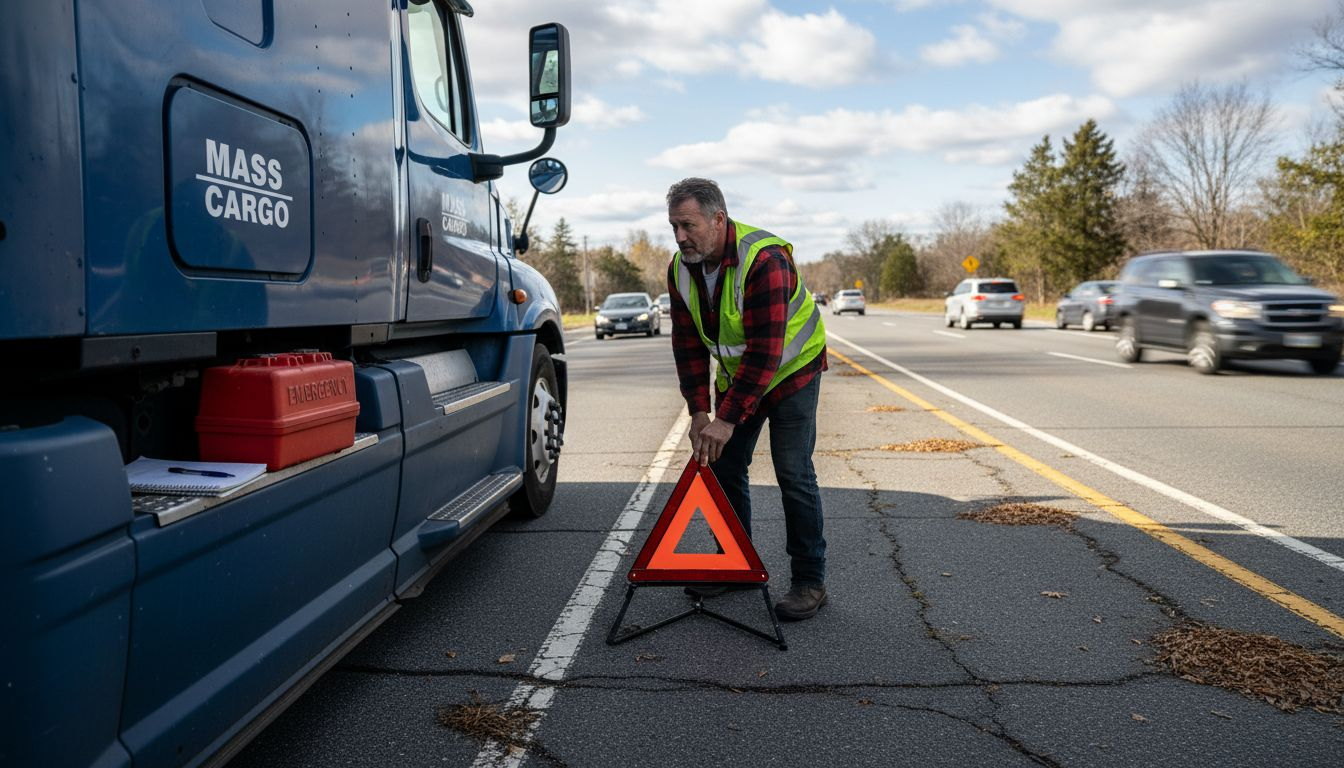
Secure the vehicle at the breakdown site following safety protocols. Deploy warning triangles 100 to 500 feet behind the truck depending on road speed. Activate hazard lights and use reflective cones if available. Move the truck to the shoulder when possible, but never risk further damage or safety by forcing movement.
Have contact information for trusted local 24/7 big truck road service providers programmed into fleet systems and driver phones. Researching providers during an emergency wastes valuable time. Establish relationships with qualified services before you need them.
Prepare truck drivers and personnel with clear safety protocols. According to Benefits of Preventive Maintenance for Truck Fleets, vehicle registration, insurance, and maintenance histories accelerate service authorization and repair accuracy. Training should cover when to attempt minor fixes versus when to call professionals immediately.
Pro Tip: Create laminated emergency cards for each vehicle listing provider contact numbers, vehicle specifications, and basic troubleshooting steps. This reference tool helps drivers stay calm and provide accurate information under stress.
Review vehicle preparation tips to understand how pre-trip inspections reduce breakdown frequency. Regular checks of tire pressure, fluid levels, and brake function catch many problems before they strand trucks on highways.
24/7 Emergency Mobile Roadside Repair Services
Emergency mobile roadside repair services bring the shop to your broken truck, eliminating tow costs and facility delays. These specialized teams operate around the clock, equipped to handle common failures that would otherwise leave vehicles stranded for hours.
Mobile repair teams perform several critical services onsite:
- Tire changes and repairs for blowouts or punctures
- Battery testing, charging, and replacement
- Diagnostic scanning for engine and electrical issues
- Minor mechanical fixes including belt and hose replacement
- Fluid top-offs and leak repairs
- Brake adjustments when safe to perform roadside
They arrive equipped with portable compressors, generators, diagnostic computers, and inventories of common spare parts. This mobile capability means repairs start immediately rather than waiting for tow trucks and shop availability.
Availability matters because truck problems don’t follow business hours. A 2 AM breakdown on the Mass Pike demands the same urgent response as a midday failure in Worcester. Services offering true 24/7 coverage maintain dispatch operations and technician rotations to ensure consistent response.
According to MD Fleet Solutions 2024, mobile mechanics in Massachusetts typically arrive within 60 minutes, cutting downtime by 25%. Quick response prevents the compounding costs of missed deliveries, driver overtime, and customer relationship damage.
Statistic: Local Massachusetts mobile repair services average 60-minute response times, reducing fleet downtime by over 25% compared to traditional tow and shop repairs.
Typical repair costs range from $150 for simple fixes like battery replacement to $500 for more complex roadside diagnostics and part installations. These costs represent significant savings compared to towing fees that start at $200 plus mileage, combined with shop labor rates and multi-hour delays.
Local presence facilitates regulatory compliance because Massachusetts-based providers understand state commercial vehicle requirements. They know inspection standards, seasonal equipment mandates, and documentation practices that keep your fleet legal. Route familiarity means faster arrival and better communication about safe repair locations.
Explore truck service options in Massachusetts to understand the full scope of available support. Coordination with services detailed in partner service cooperation in Massachusetts demonstrates how regional networks enhance reliability.
Selecting a Reliable Big Truck Road Service Provider Near Me
Choosing the right road service provider affects response speed, repair quality, and total cost. Massachusetts fleet managers must evaluate multiple factors to identify partners who deliver consistent emergency support.
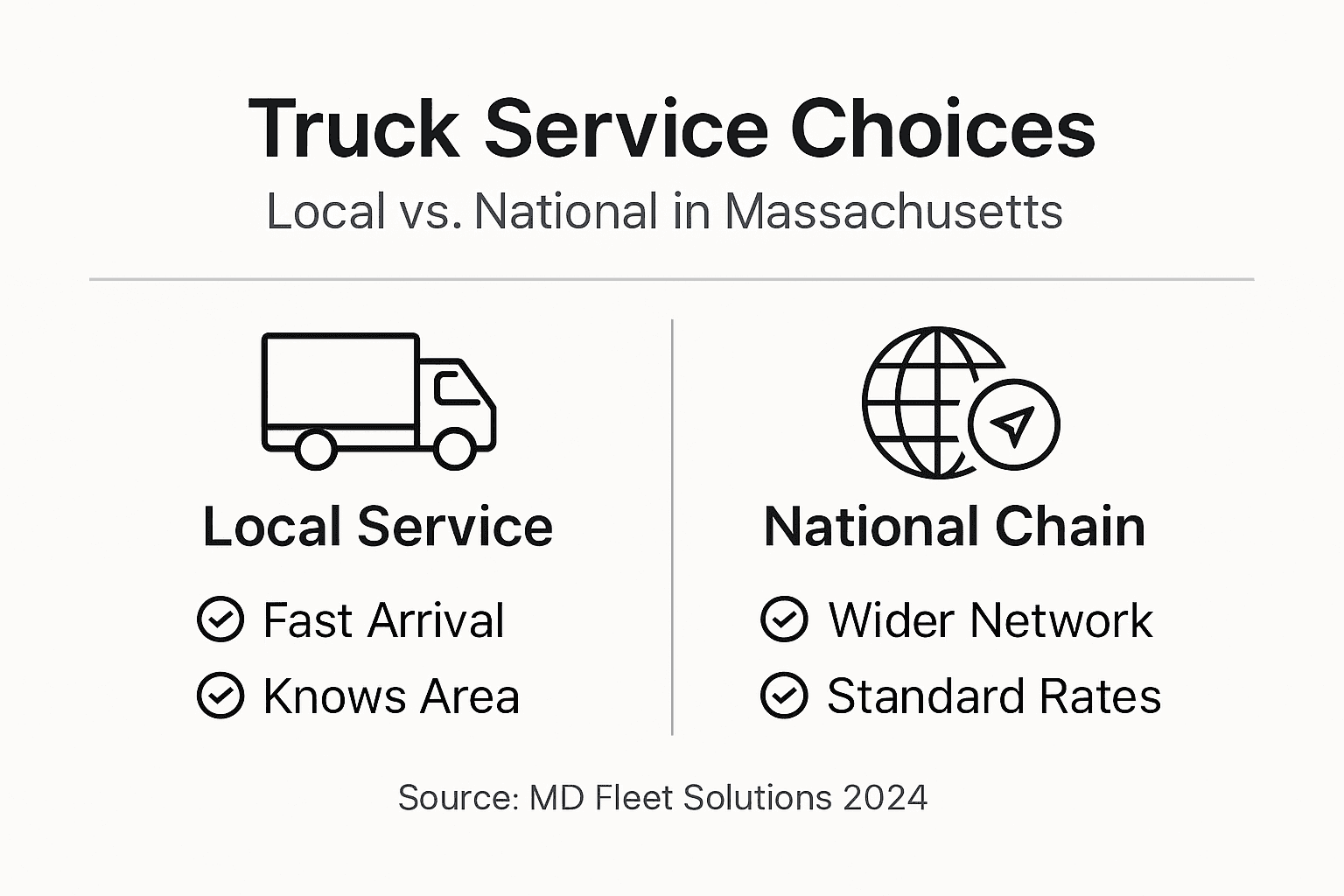
Response time separates effective providers from inadequate ones. Local Massachusetts services average 60-minute arrival times because they maintain technician networks throughout the state. National chains may offer broader geographic coverage but often struggle with rural areas and peak demand periods in the region.
Evaluate provider familiarity with Massachusetts trucking regulations and inspection requirements. Local services understand state-specific rules about brake systems, weight limits, and seasonal equipment. This knowledge prevents compliance issues during repairs and helps you avoid violations that trigger fines or out-of-service orders.
Service scope varies significantly between providers:
- Some offer only tire changes and jump starts
- Others provide full diagnostic and mechanical repair capabilities
- The most comprehensive services include preventive maintenance programs
- Premium providers offer fleet management integration and reporting
Costs should balance value against budget constraints. Cheaper services sometimes lack proper insurance, qualified technicians, or reliable equipment. Request quotes for common repairs and compare them against service guarantees and response commitments.
Reviews and credentials reveal provider reliability. Check references from other fleet operators, verify insurance coverage, and confirm technician certifications. Membership in industry organizations signals professionalism and commitment to standards.
| Factor | Local Providers | National Chains |
|---|---|---|
| Average Response Time | ~60 minutes | 75+ minutes in MA |
| Regional Knowledge | Excellent | Variable |
| Service Flexibility | High, tailored solutions | Standardized packages |
| Cost Structure | Competitive, negotiable | Fixed pricing |
| Compliance Understanding | Deep MA expertise | General federal knowledge |
According to MD Fleet Solutions 2024, local providers offer faster response times and better regional knowledge than national chains. This advantage proves critical during weather emergencies or high-demand periods when every minute counts.
Choosing local truck service providers supports faster, more compliant emergency management. Providers offering comprehensive solutions like those detailed in truck and trailer sales in Massachusetts often deliver better overall fleet support through integrated services.
Common Mistakes and Troubleshooting During Roadside Repairs
Frequent errors during breakdowns extend downtime and increase costs unnecessarily. Understanding these pitfalls helps fleet managers and drivers respond more effectively when problems occur.
Delaying the service call represents the most damaging mistake. Drivers sometimes attempt extended troubleshooting or hope problems resolve themselves, wasting critical minutes. According to 2025 Truck Maintenance Checklist for Businesses and Fleets, delaying service calls and failing to secure vehicles are the most common causes of extended downtime. Every delayed minute increases the chance of secondary damage and compounds schedule disruption.
Improper securing of broken trucks increases safety risks and repair delays. Vehicles left in travel lanes or poorly marked create accident hazards that can result in citations, liability, and further complications. Always prioritize safe positioning before attempting diagnosis or waiting for help.
Incomplete or vague problem descriptions hamper accurate diagnosis. When drivers report