
Over eight million American commercial trucks are on the road, moving everything from fresh produce to construction equipment each day. These vehicles form the backbone of supply chains that keep businesses stocked and projects running. Understanding the different types of commercial trucks, their features, and the legal requirements that affect American drivers helps businesses make smart decisions and avoid costly mistakes.
Table of Contents
- Defining Commercial Trucks And Their Role
- Major Types Of Commercial Trucks Explained
- Essential Features And Fleet Options
- Licensing, Registration, And Massachusetts Laws
- Cost Factors, Risks, And Buying Pitfalls
Key Takeaways
| Point | Details |
|---|---|
| Definition and Role of Commercial Trucks | Commercial trucks are essential for economic logistics, designed for transporting goods across various industries and regions. They are classified based on weight, purpose, and cargo type. |
| Types and Uses of Commercial Trucks | Different truck types, such as flatbed, box, refrigerated, dump, and tanker trucks, cater to specific industry needs and applications, enhancing logistics efficiency. |
| Licensing and Compliance in Massachusetts | Operating commercial trucks requires obtaining a Commercial Driver’s License (CDL) with appropriate endorsements and maintaining documentation for regulatory compliance. |
| Comprehensive Cost Considerations | Buyers must assess total ownership costs, including maintenance, fuel efficiency, and insurance, to make informed investment decisions in commercial trucks. |
Defining Commercial Trucks and Their Role
Commercial trucks are specialized vehicles designed to transport goods across industries and regions, serving as the critical backbone of economic logistics. The Federal Highway Administration defines these vehicles as motor vehicles with a Gross Vehicle Weight (GVW) rating of 10,001 pounds or more, engineered specifically for freight transportation.
These powerful machines come in multiple configurations, ranging from light-duty delivery trucks to heavy-duty semi-trucks and tractor-trailers. Their primary function involves moving raw materials, finished products, construction equipment, and essential supplies across cities, states, and national highways. Federal regulations classify commercial vehicles based on their weight, purpose, and interstate commerce involvement, which directly impacts their registration, insurance requirements, and operational compliance.
Commercial trucks play a pivotal role in various sectors, including construction, agriculture, retail, manufacturing, and utilities. Each truck type serves a unique purpose: box trucks handle local deliveries, flatbed trucks transport oversized equipment, refrigerated trucks move perishable goods, and tanker trucks carry liquid or gaseous materials. Their versatility and reliability make them indispensable to modern economic infrastructure.
Here’s a summary highlighting how various commercial truck types align with major industries and their primary uses:
| Truck Type | Typical Industry | Key Use Case |
|---|---|---|
| Flatbed Truck | Construction | Moving heavy equipment |
| Box Truck | Retail & Delivery | Transporting boxed goods |
| Refrigerated Truck | Food Distribution | Hauling perishables |
| Dump Truck | Waste Management | Handling debris and materials |
| Tanker Truck | Chemical & Fuels | Carrying liquids and gases |
Pro Truck Selection Tip: Research the specific weight class and cargo requirements for your business needs before investing in a commercial truck to ensure maximum operational efficiency and cost-effectiveness.
Major Types of Commercial Trucks Explained
Commercial trucks represent a diverse ecosystem of vehicles designed to meet specific transportation and logistics needs. The Federal Highway Administration categorizes commercial trucks into multiple platform types and configurations, each engineered to handle unique industrial requirements. These vehicles range from compact delivery trucks to massive long-haul transportation systems.
The primary categories of commercial trucks include platform-specific designs and functional classifications. Single-unit trucks are typically used for local deliveries and specialized services, while combination trucks handle more extensive freight transportation needs. Some notable truck types include:
- Flatbed Trucks: Open platforms ideal for transporting oversized or irregularly shaped cargo
- Box Trucks: Enclosed vehicles perfect for secure local and regional deliveries
- Refrigerated Trucks: Temperature-controlled vehicles for perishable goods
- Dump Trucks: Specialized for construction and waste management industries
- Tanker Trucks: Designed to transport liquids and gaseous materials
Federal highway regulations further classify commercial vehicles into three primary configurations: single-unit trucks, combination trucks, and longer combination vehicles (LCVs). Each configuration offers distinct advantages depending on cargo type, transportation distance, and specific industry requirements.

Truck Selection Pro Tip: Always match the truck type to your specific cargo requirements, considering weight, volume, transportation distance, and potential industry-specific regulations to maximize operational efficiency and compliance.
Essential Features and Fleet Options
Commercial truck fleet selection involves carefully evaluating specialized equipment and configurations that meet diverse operational requirements. Modern commercial trucks are engineered with advanced features that go far beyond basic transportation, offering businesses sophisticated solutions tailored to specific industry demands.
The essential features of commercial trucks typically include advanced technological and functional capabilities:
- Safety Systems: Collision avoidance technologies
- Fuel Efficiency: Sophisticated engine management systems
- Cargo Management: Specialized loading and unloading mechanisms
- Telematics: Real-time tracking and performance monitoring
- Customization Options: Modular designs for industry-specific adaptations
Federal highway regulations outline multiple fleet configurations, ranging from single-unit trucks for local deliveries to complex longer combination vehicles (LCVs) designed for extensive freight transportation. These configurations allow businesses to select precisely matched vehicles that optimize operational efficiency, cargo capacity, and transportation economics.
Fleet Selection Pro Tip: Conduct a comprehensive operational analysis before investing in commercial trucks, carefully mapping your specific cargo requirements, transportation distances, and anticipated future business needs to ensure you select the most cost-effective and adaptable fleet configuration.
Licensing, Registration, and Massachusetts Laws
Operating commercial trucks in Massachusetts requires navigating a complex landscape of state-specific regulations that demand careful attention to legal requirements. Commercial vehicle operators must obtain specialized Commercial Driver’s Licenses (CDL) with specific endorsements based on their truck type, weight classification, and intended cargo.
The licensing process involves multiple critical components:
CDL Classifications:
- Class A: Combination vehicles over 26,000 pounds
- Class B: Single vehicles over 26,000 pounds
- Class C: Smaller vehicles transporting hazardous materials
Required Documentation:
- Valid medical certification
- Proof of residency
- Successful written and skills examinations
- Background check
Registration for commercial vehicles in Massachusetts involves additional complexities beyond standard passenger vehicle requirements. Trucks must be registered through the Massachusetts Registry of Motor Vehicles, with fees determined by vehicle weight, gross vehicle weight rating (GVWR), and specific operational classifications.
Commercial Vehicle Compliance Pro Tip: Maintain meticulous records of all licensing, medical certifications, and vehicle registrations, and schedule regular reviews to ensure continuous compliance with evolving Massachusetts commercial transportation regulations.
Cost Factors, Risks, and Buying Pitfalls
Purchasing a commercial truck represents a significant financial investment that requires comprehensive evaluation of multiple cost factors beyond the initial purchase price. Total ownership costs encompass far more than the sticker price, including maintenance, fuel efficiency, insurance, potential financing expenses, and long-term operational performance.
Key financial considerations for commercial truck buyers include:
Initial Purchase Expenses:
- Upfront acquisition cost
- Sales tax and registration fees
- Potential financing interest rates
Ongoing Operational Costs:
- Fuel consumption
- Regular maintenance and repairs
- Insurance premiums
- Potential depreciation
- Compliance and licensing expenses
Risks associated with commercial truck purchases can be substantial, ranging from mechanical reliability concerns to potential operational limitations. Buyers must carefully assess:
- Vehicle history and previous usage
- Maintenance records
- Potential hidden mechanical issues
- Compatibility with specific business requirements
- Long-term performance potential
Smart Purchasing Pro Tip: Conduct a comprehensive total cost of ownership analysis that extends beyond the initial purchase price, including projected maintenance costs, fuel efficiency, potential resale value, and anticipated operational requirements to make a truly informed commercial truck investment decision.
For quick reference, compare the overall cost impact factors when purchasing and operating a commercial truck:
| Cost Factor | Short-Term Impact | Long-Term Impact |
|---|---|---|
| Purchase Price | High upfront expense | Affects initial investment |
| Maintenance | Ongoing small expenses | May escalate over time |
| Fuel Efficiency | Monthly fuel savings | Major influence on total cost |
| Insurance | Regular premium payments | Changes with claim history |
| Depreciation | Minimal at first | Significant over truck’s life |

Find the Right Commercial Truck Solution for Massachusetts Buyers
Navigating the complexities of Massachusetts commercial truck ownership means understanding the right truck type, licensing requirements, and total cost of ownership. Whether you are looking for a reliable semi-truck or a versatile tractor-trailer, it is critical to choose equipment tailored to your cargo needs and business goals. With challenges like regulatory compliance and cost management, having the right partner for purchasing, leasing, and fleet maintenance is essential to keep your operations efficient and compliant.
Explore our extensive selection of high-quality used trucks in the Semi Truck and Tractor-Trailer category designed to meet diverse freight and delivery demands.
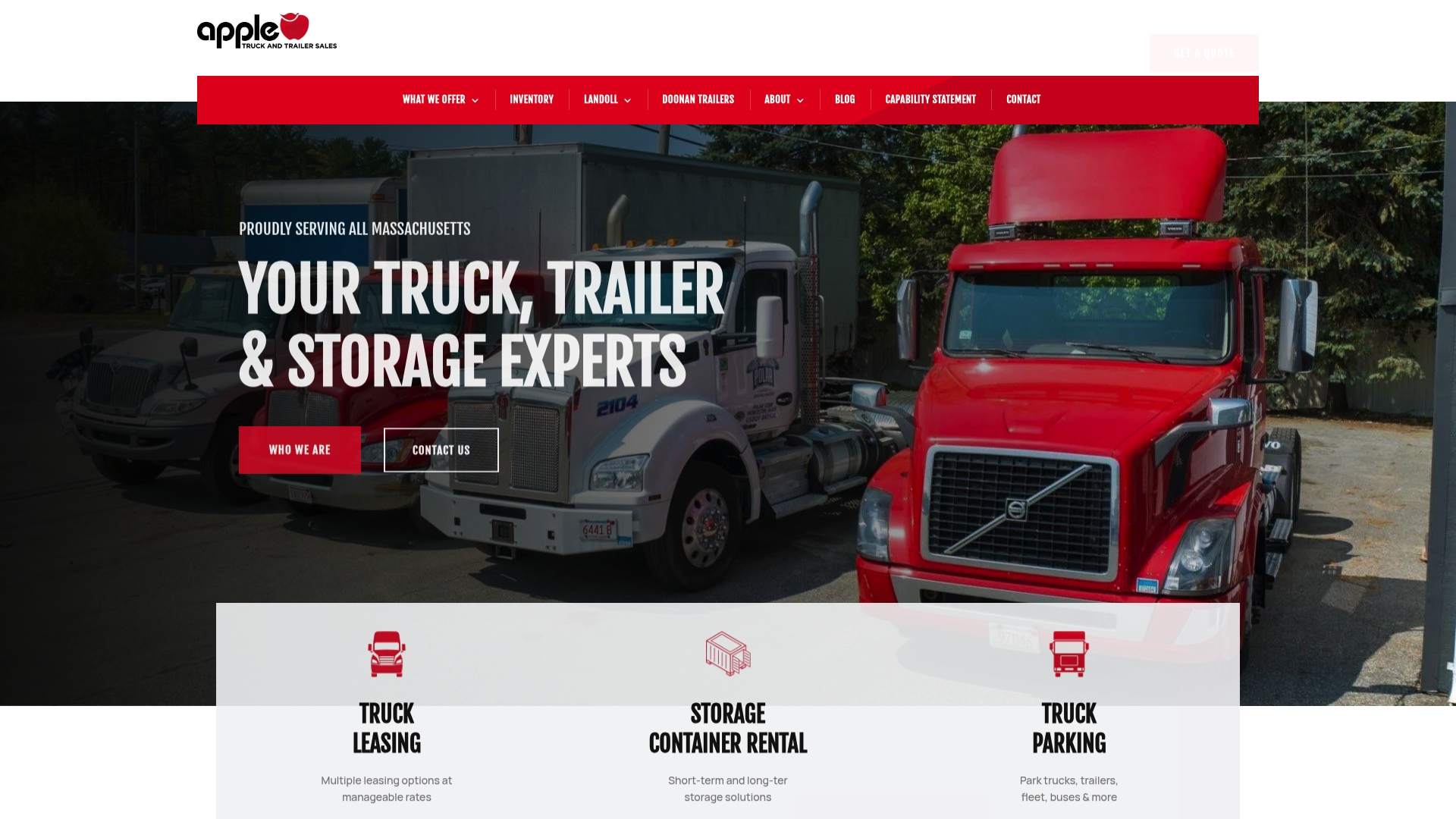
Take control of your commercial trucking investments today with expert guidance and dependable equipment at Apple Truck & Trailer. Whether you are buying or considering leasing options discussed in Is Leasing a Semi-Truck a Good Idea?, we provide tailored solutions for Massachusetts fleet operators. Contact us now to get a personalized quote or browse our inventory to find the perfect commercial truck for your business needs.
Frequently Asked Questions
What types of commercial trucks are available for different industries?
Commercial trucks come in various types tailored to specific industries, including flatbed trucks for construction, box trucks for retail deliveries, refrigerated trucks for food distribution, dump trucks for waste management, and tanker trucks for transporting liquids and gases.
What factors should I consider when selecting a commercial truck?
When selecting a commercial truck, consider the weight class, cargo type, transportation distance, fuel efficiency, safety features, and any specific industry regulations that might apply to your business needs.
What are the licensing requirements for operating a commercial truck?
To operate a commercial truck, you must obtain a Commercial Driver’s License (CDL) appropriate for your vehicle type and weight classification, as well as meet medical certification and background checks.
What are the key cost factors associated with owning a commercial truck?
Key cost factors include the purchase price, maintenance expenses, fuel efficiency, insurance premiums, and potential depreciation over time. It’s important to consider total ownership costs beyond just the initial purchase price.