
TL;DR:
- Neglecting preventive maintenance causes most truck breakdowns and violations, especially brake and oil neglect. Using dual-trigger scheduling and daily inspections helps prevent costly failures across critical systems. Building good shop relationships and following proper shutdown procedures extend equipment lifespan and operational uptime.
Common truck maintenance errors are the leading cause of preventable commercial truck breakdowns, out-of-service violations, and premature component failure. The industry term for avoiding these mistakes is preventive maintenance (PM), and the gap between operators who practice it and those who don’t shows up directly in repair bills and downtime hours. Brake neglect, missed oil change intervals, and skipped pre-trip inspections are the three most damaging categories. This guide identifies exactly where truck owners and operators go wrong, explains why each error escalates, and gives you a concrete plan to stop the cycle before it costs you a load.
What are the top common truck maintenance errors?
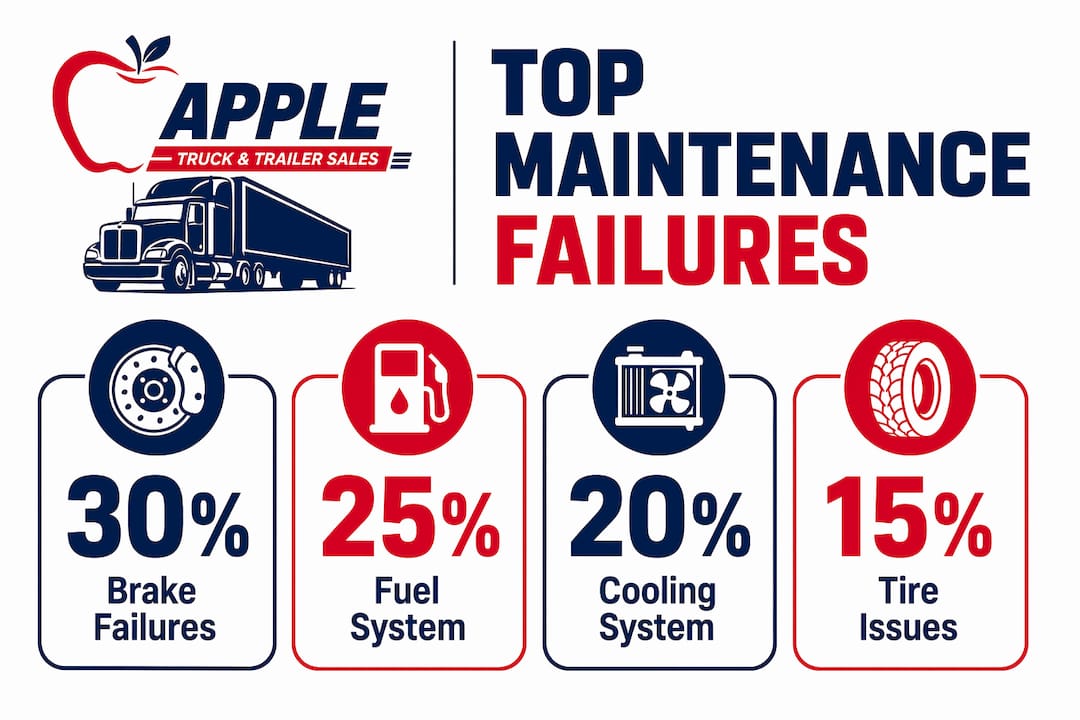
Brake-related defects are the single leading cause of commercial truck out-of-service orders, accounting for 30% of all violations. That number means nearly one in three trucks pulled from service could have stayed on the road with a simple adjustment. Skipping brake inspections is not a time-saver. It is a guaranteed path to a roadside shutdown.
Here are the most frequent truck servicing errors operators make:
- Neglecting brake adjustments. Air brake slack adjusters drift out of spec faster than most operators expect. The fix is straightforward: inspect and adjust every 12,000–15,000 miles.
- Wrong oil change intervals for diesel engines. Diesel engines produce more soot than gasoline engines due to higher compression ratios. That soot acts like fine sandpaper on internal components when oil changes are delayed. Gasoline engine intervals do not apply to diesel trucks.
- Ignoring fuel filter replacement. A single drop of water or debris reaching a fuel injector can destroy it in seconds. Fuel filters are cheap. Injectors are not.
- Skipping pre-trip and scheduled inspections. Daily inspections catch early defects before they become roadside failures. Operators who skip them consistently pay more in emergency repairs and lost operational hours.
- Lugging the engine at low RPMs. Running a diesel at low RPMs under heavy load stresses cylinders and prevents the diesel particulate filter (DPF) from completing its regeneration cycle. The result is accelerated wear and expensive DPF replacements.
Pro Tip: If your truck runs heavy loads regularly, treat the DPF regeneration light as a mandatory stop signal, not a suggestion. Ignoring it while lugging the engine compounds the damage fast.
How can owners build effective preventive maintenance schedules?
The most common scheduling mistake is using a single trigger, either mileage alone or calendar time alone. Single-trigger maintenance schedules either over-service trucks that sit idle or miss critical degradation in trucks running hard. Multi-trigger scheduling fixes this by triggering service based on whichever condition arrives first.
Here is how to build a schedule that actually works:
- Set dual triggers for every service interval. Pair a mileage threshold with a calendar date. For brake adjustments, that means every 12,000–15,000 miles or every 90 days, whichever comes first.
- Integrate driver defect reporting into daily workflow. Digital driver workflows and structured defect reporting significantly increase PM compliance and catch problems before they escalate. A paper log left in the cab does not count.
- Establish a shop relationship before you need one. Owner-operators who maintain routine shop visits get priority service and faster turnaround during breakdowns. Walking in cold during a peak season breakdown puts you at the back of the line.
- Account for idle time and PTO use. Trucks running power take-off (PTO) equipment accumulate engine hours without adding mileage. A calendar-only PM program misses this entirely.
- Review and adjust intervals annually. Operating conditions change. A truck that moved to heavier regional routes needs tighter intervals than one doing light local runs.
| Schedule Type | Trigger | Best For |
|---|---|---|
| Single-trigger (mileage) | Miles only | High-mileage, consistent routes |
| Single-trigger (calendar) | Time only | Low-mileage or seasonal trucks |
| Multi-trigger | Mileage or time, first to occur | Mixed fleets, idle-heavy operations |
Pro Tip: Never use a calendar-only PM program for trucks that run significant idle time, such as refrigerated units or construction equipment carriers. Engine hours accumulate without miles, and your oil degrades on schedule regardless.
Which components suffer most from maintenance errors?
Four systems account for the majority of costly failures tied to neglected truck maintenance areas: brakes, fuel systems, cooling systems, and tires. Each one follows a predictable failure path when maintenance slips.
Brake system
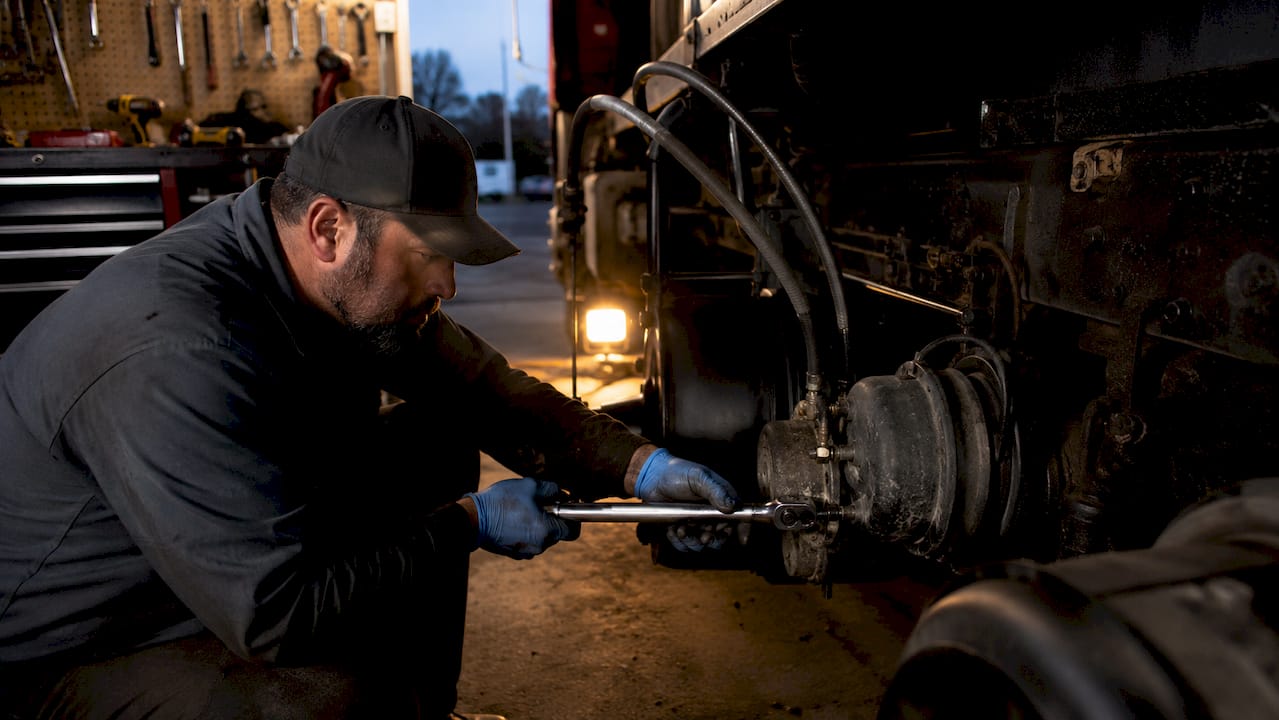
Overlooked lining wear, skipped air brake adjustments, and corroded brake lines are the primary causes of brake system failures in commercial trucks. The failure pattern is consistent: a small adjustment skipped becomes a worn lining, which becomes a heat event, which becomes a cracked drum or rotor. Regular brake inspections break this chain at the first link.
Fuel system
Contaminated fuel filters allow debris and water to pass directly into injectors. Given that a single injector replacement on a Class 8 diesel can run several hundred dollars per cylinder, a $20 filter replacement is not optional maintenance. It is cost control.
Cooling system
Cooling system neglect leads to cavitation in the water pump and chronic overheating. Cavitation occurs when coolant additives deplete and the pump creates vapor bubbles that erode metal surfaces. The fix is straightforward: test coolant additive concentration at every PM interval and replace coolant on schedule.
Tires
Tire pressure monitoring is one of the most neglected truck maintenance areas in daily operations. Under-inflated tires generate excess heat, accelerate tread wear, and reduce fuel economy. Over-inflated tires reduce contact patch and increase blowout risk on rough roads. Neither condition announces itself until damage is already done.
| Component | Common Error | Consequence |
|---|---|---|
| Brakes | Skipped adjustments and lining checks | Out-of-service violations, brake fade |
| Fuel system | Delayed filter replacement | Injector failure, fuel system contamination |
| Cooling system | Depleted coolant additives | Cavitation, overheating, head gasket failure |
| Tires | Improper inflation monitoring | Blowouts, excess wear, poor fuel economy |
What daily steps prevent the most frequent truck repair mistakes?
The most practical way to avoid frequent truck repair mistakes is to build a non-negotiable daily inspection habit. Skipping daily vehicle inspections directly increases service costs and lost operational hours. The inspection itself takes less than 15 minutes. The breakdown it prevents can cost days.
Your daily pre-trip checklist should cover:
- Lights and signals. Check headlights, brake lights, turn signals, and marker lights. A burned-out marker light is a DOT violation waiting to happen.
- Brake function and air pressure. Build air pressure to operating range and check for leaks. Listen for air loss with the engine off.
- Tire condition and inflation. Walk all axles. Check for cuts, bulges, and uneven wear. Use a calibrated gauge, not a kick.
- Fluid levels. Engine oil, coolant, DEF, and power steering fluid. Low DEF triggers a speed derate on most modern trucks.
- Mirrors and windshield. Visibility issues cause accidents. Cracked glass and misaligned mirrors are fixable in minutes.
Turbo shutdown procedure
Turbochargers spin at tens of thousands of RPMs under extreme heat and rely on engine oil for lubrication and cooling. Shutting the engine down immediately after hard running cuts oil flow while the turbo is still spinning at high speed. The residual heat cooks the oil in the bearing housing, a process called oil coking, which destroys the turbo bearing over time. Let the engine idle for 3–5 minutes after a hard run before shutdown.
Record keeping
Digital maintenance records give you a clear picture of service history, part replacement cycles, and emerging patterns. A truck that has needed three alternators in 18 months is telling you something. Paper logs stuffed in a glove box do not tell you anything useful at 2 a.m. on I-95.
Pro Tip: When replacing components like injectors or brake shoes, always replace the full set per axle or cylinder bank. Replacing only the failed unit leaves worn components next to new ones, which creates uneven wear and accelerates the next failure.
Key takeaways
Avoiding common truck maintenance errors requires consistent brake adjustments, multi-trigger PM scheduling, daily inspections, and proper shutdown procedures across brakes, fuel systems, cooling systems, and tires.
| Point | Details |
|---|---|
| Brakes are the top failure point | Brake defects cause 30% of out-of-service violations; adjust every 12,000–15,000 miles. |
| Multi-trigger scheduling prevents gaps | Use mileage and calendar triggers together to avoid both over-servicing and missed intervals. |
| Fuel filters protect injectors | Replace filters on schedule; one contaminated injector costs far more than the filter itself. |
| Daily inspections cut emergency costs | Pre-trip checks catch defects early and reduce unplanned downtime and repair bills. |
| Turbo cooldown is non-negotiable | Idle 3–5 minutes after hard runs to prevent oil coking and premature turbo bearing failure. |
What 35 years in this industry taught me about maintenance mistakes
I have watched operators run excellent equipment into the ground through nothing more than deferred maintenance and wishful thinking. The pattern is always the same: one skipped brake adjustment becomes two, the lining wears past spec, and the truck gets pulled at a weigh station on a Friday afternoon with a full load. The cost of that one afternoon, including the tow, the emergency repair rate, the missed delivery, and the potential fine, is always ten times what the adjustment would have cost.
The operators who keep their trucks running longest are not the ones with the newest equipment. They are the ones who treat their shop relationship like a business partnership. They call in for routine work consistently, which means when something goes wrong at an inconvenient time, they get a call back. Cold customers wait.
The other habit I see in long-running operators is that they never treat a warning light as optional information. A DPF regeneration light, a low coolant warning, a brake pressure drop: these are the truck telling you something specific. The operators who ignore them are the ones I see making expensive decisions later. The benefits of preventive maintenance are not theoretical. They show up in repair invoices and operational uptime, month after month.
The mindset shift that matters most is moving from reactive to proactive. Reactive maintenance means you fix what breaks. Proactive maintenance means you study the maintenance checklist for trucks and you act before the break. That shift alone separates the operators who grow their business from the ones who spend their margin on emergency repairs.
Keep your truck running with Apple Truck & Trailer
Apple Truck & Trailer has been serving commercial truck owners and fleet operators across Massachusetts, Rhode Island, Connecticut, and New Hampshire since 1986. Whether you need a trusted service relationship before your next breakdown or you are looking to add reliable equipment to your fleet, Apple Truck & Trailer brings the expertise to help you avoid the maintenance pitfalls that cost operators the most.
If you are in the market for well-maintained used equipment, the used commercial truck guide at Apple Truck & Trailer walks you through exactly what to look for before you buy. For operators who want to understand their full range of options, the truck and trailer inventory covers available stock across the region. Start the relationship before you need it. That is the single best maintenance decision you can make.
FAQ
What is the most common cause of truck out-of-service violations?
Brake-related defects are the leading cause, accounting for 30% of all commercial truck out-of-service orders. Regular brake adjustments every 12,000–15,000 miles prevent the majority of these violations.
How often should diesel truck oil be changed?
Diesel engines require more frequent oil changes than gasoline engines because higher compression produces more soot, which degrades oil faster. Follow your engine manufacturer’s interval and never apply a gasoline engine schedule to a diesel.
Why does fuel filter replacement matter so much?
A single drop of water or debris reaching a fuel injector can destroy it in seconds. Replacing the fuel filter on schedule is the only barrier between contaminated fuel and an expensive injector failure.
What is the right way to shut down a turbocharged diesel?
Let the engine idle for 3–5 minutes after hard running before shutdown. Cutting the engine immediately while the turbo is still spinning at high speed causes oil coking in the bearing housing, which destroys the turbo over time.
What is multi-trigger preventive maintenance scheduling?
Multi-trigger PM scheduling triggers a service interval based on whichever condition arrives first: mileage or calendar time. This approach prevents both over-servicing idle trucks and under-servicing high-use vehicles, making it the most reliable method for mixed or heavy-duty fleets.
Recommended
- 2025 Truck Maintenance Checklist for Businesses and Fleets – Apple Truck & Trailer
- Why regular truck service matters: 58% fewer breakdowns – Apple Truck & Trailer
- Semi truck maintenance checklist: Boost fleet reliability – Apple Truck & Trailer
- Benefits of Preventive Maintenance for Truck Fleets – Apple Truck & Trailer