
Managing a trucking fleet in Massachusetts often feels like juggling rising fuel costs, unpredictable repairs, and tightening regulations. Keeping trucks moving safely and efficiently is vital to protect your bottom line. Fleet management brings together vehicle upkeep, driver supervision, route planning, and compliance tracking to help you control expenses and prevent costly surprises. This article offers practical strategies for boosting efficiency and minimizing risks, making your trucking operation more predictable and profitable.
Table of Contents
- Defining Fleet Management for Trucking Companies
- What Fleet Management Actually Covers
- Why This Matters for Your Bottom Line
- The Core Components You’ll Manage
- Core Strategies for Fleet Efficiency and Control
- Managing Fuel Consumption
- Optimizing Driver Behavior
- Continuous Performance Monitoring
- Vehicle Maintenance and Compliance Requirements
- Federal Maintenance and Inspection Requirements
- Building a Preventive Maintenance Program
- Documentation and Record-Keeping
- Technology Solutions for Modern Fleet Operations
- Real-Time Vehicle Tracking and Diagnostics
- Dynamic Route Optimization
- Decision Support and Analytics
- Cost Control, Risks, and Common Pitfalls
- The Cost Transparency Problem
- Risk Management and Mitigation
- Common Pitfalls That Drain Profits
Key Takeaways
| Point | Details |
|---|---|
| Fleet Management is Essential | Effective fleet management optimizes costs, enhances safety, and maintains compliance, directly impacting profitability. |
| Focus on Core Components | Manage vehicles, drivers, operations, and compliance to prevent inefficiencies and unexpected expenses. |
| Leverage Technology | Utilize modern telematics and analytics to gain real-time insights and improve decision-making processes. |
| Emphasize Preventive Maintenance | Implement a preventive maintenance program to minimize downtime and repair costs, ensuring vehicle safety and reliability. |
Defining Fleet Management for Trucking Companies
Fleet management is the systematic oversight of your commercial vehicles, drivers, and operations to reduce costs, improve safety, and maintain regulatory compliance. For trucking companies in Massachusetts and surrounding states, it’s not just about keeping trucks on the road—it’s about maximizing every dollar spent while minimizing risk.
At its core, fleet management involves coordinating multiple operational elements:
- Vehicles: Maintaining trucks and trailers in safe, productive condition
- Drivers: Ensuring qualifications, availability, and safety compliance
- Operations: Organizing routes, movements, and usage to prevent inefficiencies
- Monitoring: Tracking performance, fuel consumption, and compliance metrics
The goal is straightforward: keep your fleet fit for purpose while controlling costs that can quickly spiral out of control.
What Fleet Management Actually Covers
Fleet management encompasses far more than just vehicle maintenance. Fleet management functions include vehicle leasing, licensing, compliance tracking, telematics, driver management, and fuel optimization. For trucking operations specifically, this means managing everything from fuel expenses to regulatory compliance to driver safety records.
You’re essentially balancing multiple pressures at once. Can you afford new equipment? Should you lease instead? Are your drivers properly documented? Is your maintenance preventing breakdowns? These questions sit at the heart of effective fleet management.
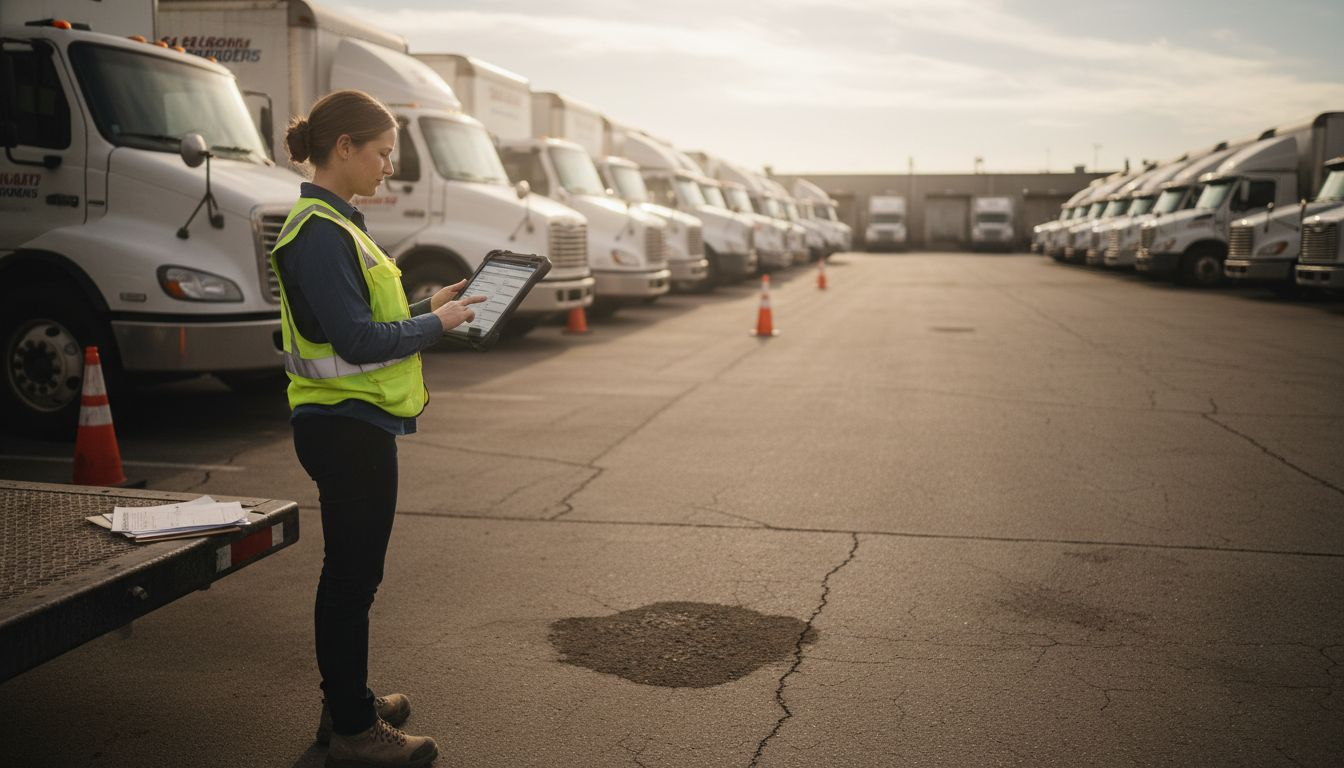
Why This Matters for Your Bottom Line
Effective fleet management directly impacts your profitability. Poor management leads to unexpected downtime, fuel waste, compliance violations, and costly accidents. Strong management reduces these expenses significantly.
Consider what happens without proper oversight:
- Vehicles break down unexpectedly, stopping revenue-generating trips
- Fuel costs spike due to inefficient routing or poor vehicle condition
- Compliance violations bring fines and legal complications
- Driver turnover increases when safety standards aren’t prioritized
The alternative is a managed fleet that runs predictably and efficiently.
Effective fleet management isn’t a single task—it’s coordinating drivers, vehicles, movements, and monitoring into one unified system.
The Core Components You’ll Manage
Your fleet management responsibilities break into distinct areas:
- Vehicle Management: Keeping trucks and trailers operational and compliant
- Driver Administration: Maintaining qualifications, licensing, and safety records
- Operational Coordination: Planning routes and managing resource requests efficiently
- Performance Monitoring: Tracking usage patterns, fuel consumption, and maintenance needs
- Compliance: Ensuring regulatory requirements are met consistently
Each component feeds into the others. A well-maintained vehicle reduces driver risk. Efficient routing reduces fuel costs. Proper monitoring prevents overuse that damages equipment.
Here is a summary of how core fleet management components influence overall operations:
| Component | Main Role | Impact on Costs | Effect on Safety |
|---|---|---|---|
| Vehicle Management | Maintains equipment & compliance | Reduces repairs, extends asset life | Lowers accident risk |
| Driver Administration | Documents qualifications & records | Minimizes fines, lowers insurance | Improves driver retention |
| Operational Coordination | Optimizes routes and assignments | Cuts fuel & labor expenses | Decreases fatigue risk |
| Performance Monitoring | Tracks usage and efficiency | Identifies savings opportunities | Flags unsafe practices |
| Compliance | Ensures legal obligations are met | Avoids penalties and downtime | Prevents regulatory action |
Pro tip: Start by identifying which area costs you the most money right now—whether that’s maintenance, fuel, or downtime—then focus your initial improvements there for the quickest return on investment.
Core Strategies for Fleet Efficiency and Control
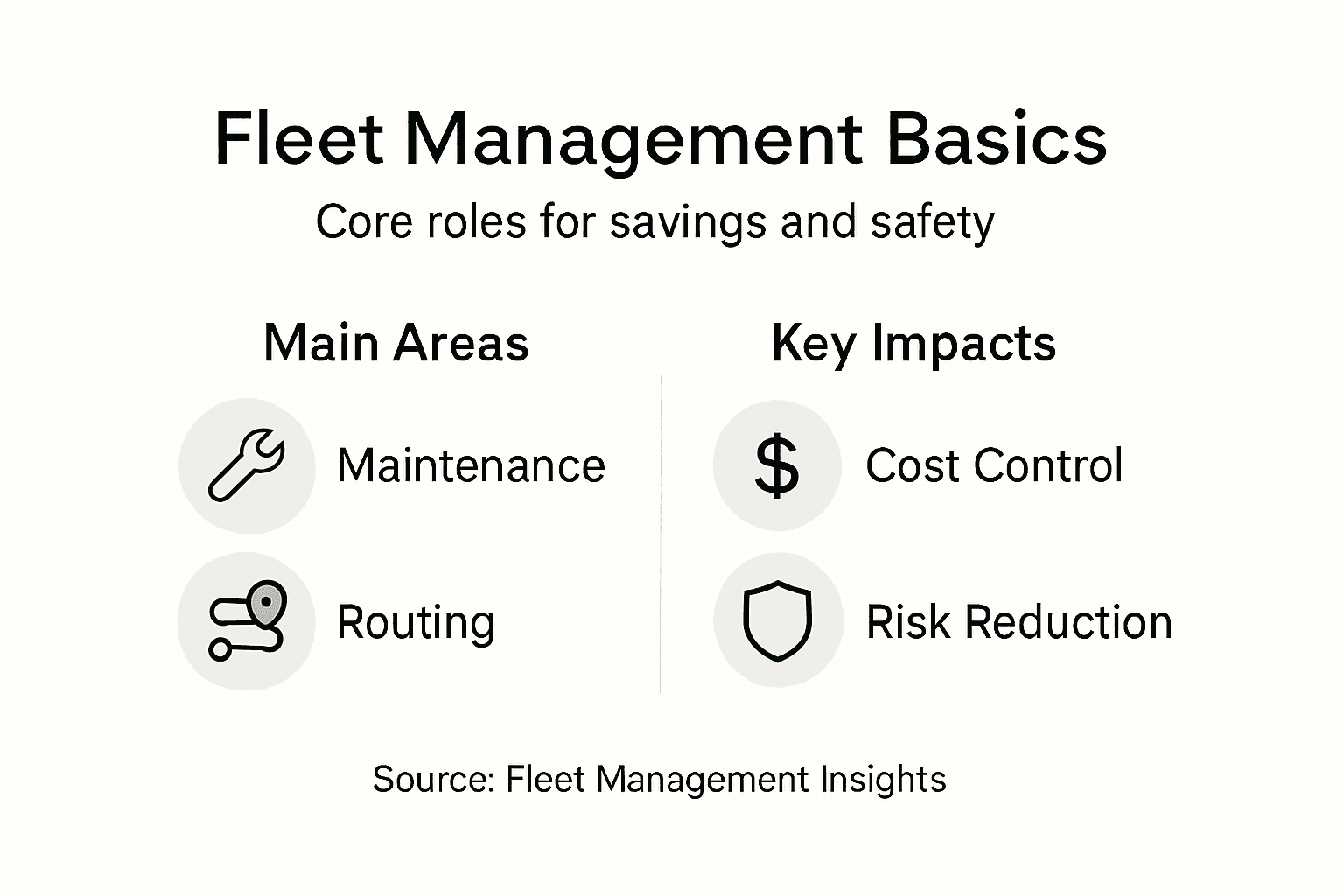
Maximizing fleet efficiency isn’t about working harder—it’s about working smarter. For trucking operations in Massachusetts, controlling costs and improving performance come down to three interconnected strategies: managing fuel consumption, optimizing driver behavior, and continuous performance monitoring.
These aren’t theoretical concepts. They directly impact your bottom line every single day.
Managing Fuel Consumption
Fuel typically represents 20-30% of operating costs for trucking companies. Fuel-saving technologies and practices can significantly reduce this expense through improved vehicle specifications and operational choices.
Your fleet’s fuel efficiency depends on several factors working together:
- Vehicle maintenance: Properly maintained engines, tire pressure, and aerodynamic features reduce drag and fuel waste
- Equipment upgrades: Newer tractors with fuel-efficient engines consume less per mile
- Route optimization: Smart routing eliminates unnecessary miles and idling time
- Load management: Avoiding overloading reduces engine strain and fuel consumption
Even small improvements compound quickly. A 5% reduction in fuel consumption saves thousands annually across a medium-sized fleet.
Optimizing Driver Behavior
Driver habits directly affect fuel costs and vehicle longevity. Aggressive acceleration, excessive idling, and speeding increase fuel consumption by 10-15%. Training drivers to recognize fuel-efficient practices pays dividends.
Key driver behaviors to monitor and improve:
- Smooth acceleration and braking patterns
- Reducing unnecessary idling during stops
- Maintaining consistent highway speeds
- Planning efficient routes to minimize backtracking
- Proper vehicle inspection and reporting of maintenance issues
When drivers understand how their behavior impacts costs—and your bottom line—they become invested in efficiency.
Drivers who receive regular feedback on their fuel consumption improve by an average of 5-10% within weeks.
Continuous Performance Monitoring
You can’t improve what you don’t measure. Modern telematics systems track real-time data on fuel consumption, vehicle health, driver behavior, and maintenance needs. This visibility is your foundation for decision-making.
Monitoring should cover:
- Fuel metrics: Consumption per mile, idle time, and cost trends
- Vehicle health: Engine diagnostics, tire pressure, and maintenance alerts
- Driver performance: Safety scores, efficiency ratings, and compliance metrics
- Operational patterns: Peak usage times, route efficiency, and equipment utilization
Regular analysis of this data reveals trends and opportunities. Maybe certain routes consistently underperform. Perhaps specific vehicles need earlier maintenance. Data turns hunches into actionable insights.
Pro tip: Establish a monthly performance review where you analyze fuel costs, identify the top three efficiency opportunities, and focus your team’s efforts on those areas for measurable quarterly improvements.
Vehicle Maintenance and Compliance Requirements
Maintenance isn’t optional for trucking companies. Federal law requires you to keep every vehicle in safe operating condition, and the paperwork proves it. Failure to maintain proper records or neglect maintenance can result in fines, out-of-service orders, and liability issues that threaten your entire operation.
For fleet managers in Massachusetts, understanding both the maintenance requirements and compliance obligations is non-negotiable.
Federal Maintenance and Inspection Requirements
Federal regulations mandate that motor carriers systematically inspect and maintain vehicles under their control to keep all parts and accessories in safe operating condition. This isn’t a suggestion—it’s a legal requirement with teeth.
Your obligations include:
- Systematic inspections: Regular checks of brakes, lighting, tires, and critical safety components
- Documented repairs: Records showing what was fixed, when, and by whom
- Maintenance scheduling: Planned service intervals based on manufacturer specifications
- Record retention: Keep inspection and repair records for one year minimum for active vehicles
Non-compliance puts your company at risk. Federal inspectors can place vehicles out-of-service immediately if maintenance standards aren’t met.
Building a Preventive Maintenance Program
Vehicle maintenance is critical for ensuring operational safety, maximizing availability, and controlling costs. Preventive maintenance strategies work better than reactive repairs because they catch problems before they become expensive breakdowns.
A solid preventive maintenance program includes:
- Scheduled periodic services based on manufacturer intervals
- Daily vehicle pre-trip and post-trip inspections by drivers
- Regular brake system, tire, and lighting checks
- Engine diagnostics and fluid level monitoring
- Documentation of all work completed and parts replaced
When you address small issues early, you avoid costly emergency repairs and unexpected downtime.
Preventive maintenance reduces unexpected breakdowns by 70% and cuts overall repair costs by 25-30% compared to reactive maintenance.
Documentation and Record-Keeping
The law requires specific documentation. You must maintain records of inspections, repairs, and maintenance for at least one year for vehicles you currently operate and six months after a vehicle leaves your control.
Your records should document:
- Pre-trip inspections: Driver-completed daily checks identifying issues
- Service records: Dates, work performed, parts used, and technician signature
- Repair completion: Evidence that reported problems were actually fixed
- Maintenance schedules: Planned service dates and actual completion dates
Proper documentation protects you during audits and provides liability protection if incidents occur.
Pro tip: Use a digital maintenance management system that automatically tracks inspection schedules, sends alerts before service dates, and maintains searchable records—this eliminates manual paperwork and ensures nothing falls through the cracks during audits.
Technology Solutions for Modern Fleet Operations
Technology has transformed fleet management from paperwork and guesswork into data-driven decision-making. Modern solutions give you visibility into every vehicle, real-time insights into performance, and the ability to prevent problems before they cost you thousands in downtime.
For Massachusetts trucking operations, the right technology stack is no longer a luxury—it’s a competitive necessity.
Real-Time Vehicle Tracking and Diagnostics
IoT-driven fleet management systems combine hardware and software to provide real-time vehicle tracking, diagnostics, and decision support. These systems monitor engine health, track location, measure fuel consumption, and alert you to maintenance issues before they become breakdowns.
What this means practically:
- GPS tracking: Know exact vehicle locations and verify route compliance in real time
- Engine diagnostics: Detect mechanical problems through onboard sensors before drivers experience failures
- Fuel monitoring: Track consumption patterns and identify vehicles operating inefficiently
- Maintenance alerts: Receive automatic notifications when service is due based on actual vehicle usage
You’re no longer flying blind. Data replaces assumptions.
The following table compares traditional fleet operations with technology-driven solutions:
| Aspect | Traditional Approach | Modern Technology Approach |
|---|---|---|
| Maintenance Alerts | Paper logs & manual checks | Automated real-time notifications |
| Route Planning | Static, paper-based routes | Dynamic, data-driven optimization |
| Cost Tracking | Manual spreadsheets | Centralized, real-time analytics |
| Compliance Reporting | Reactive, after violations | Proactive, automated reminders |
| Driver Oversight | Limited visual checks | Ongoing telematics monitoring |
Dynamic Route Optimization
Traditional routing wastes fuel and driver time through inefficient paths. Modern fleet management systems analyze traffic patterns, weather, vehicle capacity, and delivery priorities to suggest optimal routes automatically.
The benefits are measurable:
- Reduced mileage: Eliminating unnecessary distances saves 5-10% on fuel annually
- Faster deliveries: Optimized routes get loads to customers quicker
- Improved driver satisfaction: Less time spent driving in circles means happier drivers
- Better customer communication: Real-time location data allows accurate delivery windows
Route optimization alone often pays for the entire technology investment within months.
Real-time tracking and diagnostics reduce equipment breakdowns by 30-40% and cut maintenance costs significantly through early problem detection.
Decision Support and Analytics
Data is only valuable if you can understand it and act on it. Modern fleet management platforms translate raw sensor data into actionable insights. You see trends, identify problem vehicles or drivers, and make informed business decisions.
You gain visibility into:
- Driver behavior patterns: Which drivers operate safely and efficiently
- Vehicle performance trends: Which trucks need replacement or major repairs
- Cost analysis: Fuel, maintenance, and labor costs broken down by vehicle, driver, or route
- Compliance status: Inspection records and maintenance schedules in one searchable location
This intelligence drives smarter capital decisions and operational improvements.
Pro tip: Start with a system that tracks fuel consumption and vehicle health diagnostics—these two metrics typically generate the fastest return on investment, often paying for themselves within 6-12 months through reduced maintenance and fuel costs.
Cost Control, Risks, and Common Pitfalls
Uncontrolled costs sink trucking companies faster than almost anything else. Without clear visibility into where money goes and what risks threaten operations, you’re essentially managing blind. Most fleet managers discover their cost problems only after they’ve already caused serious damage.
Understanding common pitfalls helps you avoid becoming another cautionary tale.
The Cost Transparency Problem
Effective cost control requires comprehensive tracking and allocation of all expenses to specific users, vehicles, and activities. When you don’t know exactly what each truck costs to operate, you can’t make smart decisions about which vehicles to keep, which to replace, or how to price your services.
Common cost tracking failures include:
- Hidden maintenance costs: Small repairs scattered across different vendors, never consolidated
- Fuel expense blind spots: Not tracking consumption per vehicle or per mile
- Driver-related expenses: Training, safety violations, and turnover costs flying under the radar
- Idle time expenses: Downtime costs not allocated to specific vehicles
Without transparency, you can’t optimize anything.
Risk Management and Mitigation
Risk management in fleet operations requires identifying hazards, assessing impact and probability, and implementing controls. Too many fleet managers skip this step entirely, then react in crisis mode when problems strike.
Key operational risks to assess:
- Vehicle breakdown risk: Older trucks failing unexpectedly during peak seasons
- Driver safety risk: Inexperienced or careless drivers causing accidents and liability claims
- Compliance risk: Missing inspection deadlines or maintenance schedules leading to fines
- Fuel price risk: Unexpected fuel spikes eroding profit margins
- Equipment obsolescence risk: Trucks becoming unreliable at the worst possible time
Identifying these risks upfront lets you build protection into your strategy.
Poor cost allocation hides problems until they become expensive crises. Inadequate risk assessment turns surprises into catastrophes.
Common Pitfalls That Drain Profits
You don’t need to invent new mistakes. Fleet managers make the same costly errors repeatedly. Recognizing them saves you thousands.
The most damaging pitfalls:
- Underestimating external factors: Weather, fuel prices, and market conditions changing faster than budgets adjust
- Ignoring early warning signs: Small maintenance issues ignored until they cause major breakdowns
- Poor driver accountability: Not tracking individual driver performance, costs, and safety records
- Reactive maintenance only: Waiting for failures instead of preventing them through scheduled service
- Insufficient documentation: No paper trail when disputes arise or audits happen
Each of these pitfalls costs real money.
Pro tip: Create a monthly cost report showing fuel, maintenance, and downtime expenses broken down by vehicle—this single document reveals cost trends instantly and highlights which vehicles are bleeding money so you can address problems before they compound.
Take Control of Your Fleet Efficiency and Savings Today
Managing fuel consumption, driver behavior, and vehicle maintenance are critical challenges for any trucking operation aiming to boost profitability and ensure regulatory compliance. If unpredictable costs, downtime, or complicated compliance requirements are holding your fleet back, finding trusted equipment and reliable support is essential. Apple’s extensive inventory and full-service solutions can help you overcome these hurdles with confidence.
Discover how Fleet Management – Apple Truck & Trailer delivers tailored options for used commercial trucks and trailers in Massachusetts and nearby states. Our expert team provides leasing, rental, maintenance, and Truck Parking – Apple Truck & Trailer services designed to keep your fleet running smoothly and cost-effectively. Visit https://appletruckandtrailer.com now to request a quote or speak with a specialist. Take the first step to maximize your fleet’s efficiency and savings before expenses spiral out of control.
Frequently Asked Questions
What are the core components of fleet management?
Fleet management includes vehicle management, driver administration, operational coordination, performance monitoring, and compliance. Each component contributes to reducing costs and improving safety and efficiency.
How can I improve fuel efficiency in my trucking fleet?
Improving fuel efficiency can be achieved through regular vehicle maintenance, optimizing routes, implementing fuel-saving technologies, and training drivers on efficient driving practices.
What are the benefits of using technology in fleet management?
Technology enhances fleet management by providing real-time tracking, diagnostics, dynamic route optimization, and data analytics to inform decision-making, ultimately leading to increased efficiency and reduced costs.
What are the key maintenance requirements for commercial trucks?
Key maintenance requirements include systematic inspections, documented repairs, scheduled services based on manufacturer specifications, and maintaining records for one year for active vehicles. Proper documentation is crucial for compliance and safety.
Recommended
- Truck Parking Solutions: Maximizing Fleet Efficiency – Apple Truck & Trailer
- 7 Effective Driver Retention Strategies for Fleet Success – Apple Truck & Trailer
- Storage Solutions for Renovations: What Fleets Need – Apple Truck & Trailer
- What Is Fleet Maintenance? A Comprehensive Guide – Apple Truck & Trailer