
TL;DR:
- Expanding a trucking fleet requires careful planning, including financial stability, operational systems, and driver readiness.
- Adding trucks without proven profitability can lead to cash flow problems and operational chaos, risking business failure.
Expanding a trucking fleet is defined as the deliberate process of adding vehicles, drivers, and operational capacity to grow revenue while maintaining profitability. Fleet managers who scale successfully treat each new truck as a business unit, not just a piece of equipment. The total operating cost per truck runs $11,000 to $18,000 per month before that truck earns a single dollar. That number alone separates operators who plan from those who guess. This guide covers the financial benchmarks, acquisition strategies, and operational systems you need to grow your fleet without losing control.
What are the key prerequisites before expanding your trucking fleet?
Fleet expansion requires financial stability, not just available credit. Before adding a single truck, you need consistent double-digit profit margins and at least one or two secured freight contracts that justify the new capacity. Adding a truck to chase freight you do not yet have is one of the fastest ways to burn cash reserves.
Your back office must be ready before your fleet grows. Business flaws multiply with growth, so billing errors, missed maintenance windows, and compliance gaps that feel manageable at one truck become serious problems at three. A transportation management system (TMS), a maintenance tracking tool, and a compliance calendar are non-negotiable before you scale.
Cash reserves are the most overlooked prerequisite. Industry guidance calls for reserves covering one to two months of non-revenue operating costs for each new truck you add. For a single truck costing $11,000 to $18,000 per month to operate, that means $22,000 to $36,000 in reserve before you sign anything.
Driver readiness is the third pillar. You need a clear recruitment pipeline and a driver retention strategy in place before the truck arrives. A truck sitting idle because you cannot find a qualified driver costs you money every day.
- Confirm profit margins are consistent and double-digit before adding capacity
- Secure freight contracts that justify the new truck’s operating costs
- Implement a TMS, maintenance tracking, and compliance management tools
- Build cash reserves of one to two months of operating costs per new truck
- Establish a driver recruitment and retention pipeline
Pro Tip: Run your current operation for 90 days straight without a cash flow shortfall before you commit to adding a truck. If you cannot do that, fix the foundation first.
How to plan and finance the acquisition of new trucks
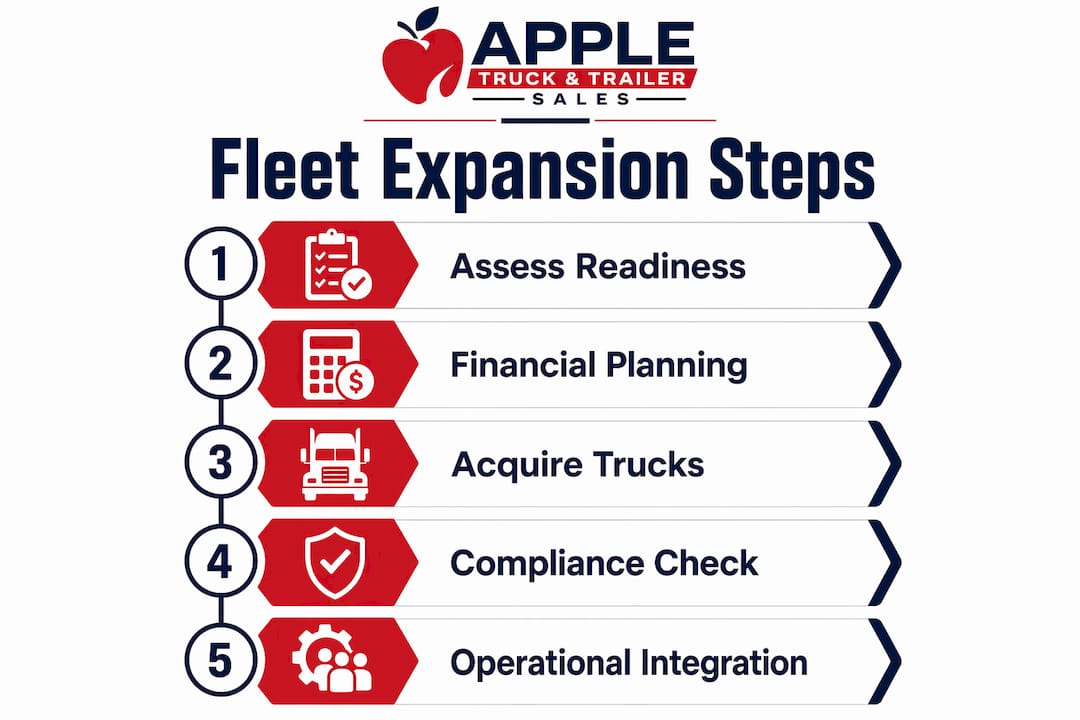
Financial planning for fleet growth starts with understanding the full cost of ownership, not just the monthly payment. Each truck carries payments, insurance, driver pay, fuel, and maintenance costs that stack up fast.

| Cost Component | Monthly Range |
|---|---|
| Truck payment | $1,800 to $2,500 |
| Insurance | $800 to $1,500 |
| Driver pay | $4,000 to $6,000 |
| Fuel | $4,000 to $7,000 |
| Maintenance | $500 to $1,000 |
| Total | $11,100 to $18,000 |
Understanding these numbers lets you calculate the minimum revenue each truck must generate to break even. Any truck earning below that threshold is a liability, not an asset.
Financing options vary by risk tolerance and cash position. Commercial loans give you ownership from day one but require strong credit and a down payment. Leasing options preserve cash flow and keep maintenance costs predictable, which matters when you are adding multiple units. SBA loans offer lower interest rates for qualifying small carriers. Lease-purchase agreements sit in the middle, giving drivers a path to ownership while reducing your upfront exposure.
Used trucks aged 3–5 years with 300,000 to 500,000 miles, priced at $40,000 to $80,000, are the preferred acquisition strategy for growing fleets. They cost significantly less than new units and let you test profitability without taking on heavy debt. If the truck does not perform as expected, your downside is far smaller.
Pro Tip: Get insurance quotes before you finalize any purchase or lease agreement. Insurance costs vary widely by truck age, driver history, and cargo type. A quote that comes in higher than expected can change the entire financial case for that unit.
Update your DOT operating authority and FMCSA registration whenever you add vehicles. Compliance gaps at the acquisition stage create expensive problems later.
What are the operational steps for integrating new trucks into your fleet?
Smooth integration follows a structured sequence. Skipping steps creates operational chaos that costs more to fix than it would have cost to prevent.
A 90-day expansion timeline is the industry standard for adding vehicles without disrupting existing operations:
- Days 1–30: Finalize vehicle specifications, complete insurance quotes, and confirm freight contracts for the new unit
- Days 31–60: Secure funding, install telematics hardware, set up fleet management software profiles, and complete driver onboarding paperwork
- Days 61–90: Launch routes, monitor key performance indicators daily, and adjust dispatch based on real data
Standardizing your vehicle platforms makes this process repeatable. Selecting one or two primary truck models across your fleet simplifies parts inventory, reduces mechanic training time, and cuts diagnostic complexity. A fleet with five different truck makes is five times harder to maintain than a fleet running one platform.
Telematics and route planning tools are not optional at this stage. They give you visibility into driver behavior, fuel consumption, and idle time from day one. That data becomes the baseline you measure future performance against.
- Install telematics before the truck enters service, not after
- Assign each new driver a written safety and performance policy on their first day
- Set a maintenance schedule before the truck runs its first load
- Review KPIs weekly for the first 90 days: revenue per mile, cost per mile, and on-time delivery rate
What common challenges do fleet owners face during expansion?
The most dangerous mistake in fleet growth is adding too many trucks too fast. Industry experts recommend adding 1–2 trucks per year in the early stages. Adding 3–5 vehicles at once multiplies management complexity before your systems are proven at the new scale.
The 3–10 truck range is where many carriers stall or fail. This range is uniquely difficult because the fleet is too large for one owner-driver to manage personally, but too small to justify the overhead of a full-time operations manager. Owners who stay in the cab too long at this stage watch their business deteriorate around them.
“Growth amplifies existing business flaws. Billing, maintenance, and compliance must be handled efficiently before fleet growth, not after.” — CCJ Digital
Driver retention is a deeper problem than most fleet owners admit. Wages matter, but profit margins and driver culture are equally critical to keeping drivers long enough to justify the cost of recruiting and training them. A fleet that turns over drivers every six months cannot scale.
- Never add trucks to solve a revenue problem. Add trucks to capture proven, contracted demand.
- Avoid the shopping spree mindset: one well-integrated truck beats three trucks causing operational chaos
- Fix billing, compliance, and maintenance tracking before adding the next unit
- Treat driver culture as a retention tool, not just a morale exercise
How to sustainably scale your trucking fleet for long-term growth
Sustainable fleet growth follows a wave model. Wave expansions of 3–5 trucks work only after you have proven profitability and system maturity at your current size. Attempting a wave before that proof exists is how carriers end up in financial distress.
The owner’s role must change as the fleet grows. Dispatch is the first function to delegate when you move beyond one truck. A dispatcher costs $40,000 to $60,000 annually but frees the owner to focus on freight contracts, financing, and driver management. That trade-off pays for itself quickly in a growing fleet.
Building cash reserves is not a one-time task. A 5-truck fleet needs approximately $150,000 in reserves to absorb the unexpected: a truck breakdown, a slow freight week, or a driver departure. That cushion is what separates operators who grow through setbacks from those who fold under them.
- Add trucks in waves of 3–5 only after proving profitability at current scale
- Delegate dispatch first, then consider adding an operations coordinator
- Pursue dedicated freight contracts to reduce spot market exposure and stabilize revenue
- Invest in fleet management tools that give you margin visibility across every unit
Pro Tip: Track revenue per mile and cost per mile for every truck individually. A fleet average hides underperforming units. One truck running at a loss can erase the profit from three trucks running well.
Key Takeaways
Successful fleet expansion depends on financial readiness, proven systems, and disciplined pacing. Operators who add trucks before fixing their foundation consistently underperform those who grow slowly and deliberately.
| Point | Details |
|---|---|
| Know your cost baseline | Each new truck costs $11,000 to $18,000 per month before earning revenue. |
| Build reserves first | Maintain one to two months of operating costs in reserve per new truck added. |
| Use used trucks to reduce risk | Trucks aged 3–5 years at $40,000 to $80,000 test growth without heavy debt. |
| Follow the 90-day integration plan | Finalize specs, secure funding, and launch routes in three structured phases. |
| Delegate dispatch early | Hiring a dispatcher at $40,000 to $60,000 annually frees owners to manage growth. |
What I have learned from managing fleet growth the hard way
The 3–10 truck range is where I have seen the most capable operators stumble. You think you can keep driving and managing at the same time. You cannot. The moment you hit three trucks, the business needs a manager more than it needs another driver. That shift is uncomfortable, especially if driving is what you know best. But staying in the cab while your back office falls apart is not discipline. It is avoidance.
The other thing I would tell any fleet owner is this: tested growth beats fast growth every time. Adding one truck, proving it profitable, fixing what broke, then adding another is slower than it sounds. But it builds a business that actually holds together at scale. I have watched carriers add five trucks in a year and collapse under the weight of their own overhead. I have watched others add one truck a year for five years and build something genuinely durable.
Driver culture is the variable most owners underestimate. Pay matters, but drivers stay for predictability, respect, and a dispatcher who does not make their lives harder. Fix that before you worry about your next acquisition.
Apple Truck & Trailer: a practical partner for fleet expansion
Growing your fleet is easier when you start with the right equipment at the right price. Apple Truck & Trailer has served fleet operators across Massachusetts, Rhode Island, Connecticut, and New Hampshire since 1986, with a deep inventory of quality used commercial trucks and trailers built for working fleets.
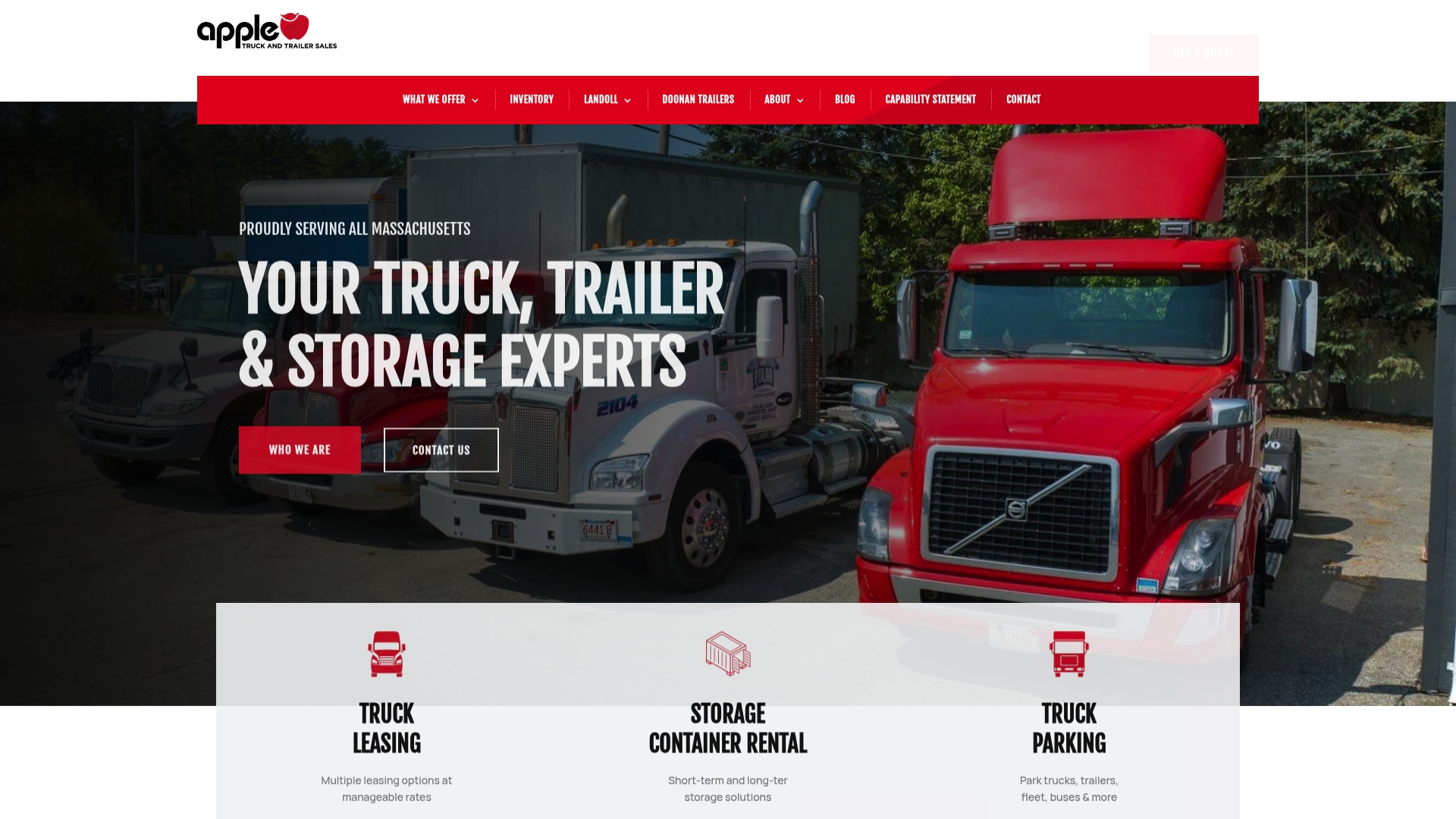
Used trucks in the 3–5 year range are the most cost-effective way to add capacity without overextending your finances. Apple Truck & Trailer’s inventory is sourced and inspected with fleet buyers in mind. Whether you are adding your second truck or your tenth, their team can match you with the right unit and walk you through buying a used commercial truck with confidence. For fleet operators in the region, their truck and trailer sales inventory is worth a close look before you commit to any acquisition.
FAQ
What is the monthly cost of adding one truck to a fleet?
Each new commercial truck costs $11,000 to $18,000 per month in operating expenses before generating revenue. That figure includes payments, insurance, driver pay, fuel, and maintenance.
How fast should I expand my trucking fleet?
Industry guidance recommends adding 1–2 trucks per year in the early stages of growth. Adding 3–5 at once significantly increases the risk of cash flow problems and operational failure.
Should I buy new or used trucks when expanding?
Used trucks aged 3–5 years with 300,000 to 500,000 miles, priced at $40,000 to $80,000, reduce financial risk during expansion. They cost far less than new units and let you test profitability before committing to larger debt.
When should a fleet owner stop driving and focus on management?
Owner-drivers typically need to stop driving and shift to full-time management when their fleet reaches 3–10 trucks. At that size, the business requires dedicated oversight that cannot be done from behind the wheel.
What cash reserves does a growing fleet need?
A 5-truck fleet needs approximately $150,000 in cash reserves to handle unexpected costs. For each new truck added, maintain one to two months of operating costs in reserve before the unit enters service.
Recommended
- How to choose used trucks: a fleet manager’s guide – Apple Truck & Trailer
- Fleet Truck Maintenance Checklist: 2026 Compliance Guide – Apple Truck & Trailer
- Leasing a big rig: Smart strategies for fleet operators – Apple Truck & Trailer
- Fleet Management Advice: Maximizing Efficiency and Savings – Apple Truck & Trailer