
TL;DR:
- Medium duty trucks have a GVWR between 10,001 and 26,000 pounds, covering Classes 3 through 6. Selecting the right class depends on matching weight ratings, duty cycle, and compliance needs to the operational demands.
A medium duty truck is defined as a commercial vehicle with a Gross Vehicle Weight Rating (GVWR) between 10,001 and 26,000 pounds, covering Classes 3 through 6 as established by the Federal Motor Carrier Safety Administration. This classification sits between light duty pickups and full heavy duty semis, making it the workhorse category for contractors, fleet managers, and local delivery operations. Understanding the medium duty truck definition before you buy or lease protects you from costly mismatches in licensing, insurance, and operational capacity.
What is a medium duty truck? Weight classes explained
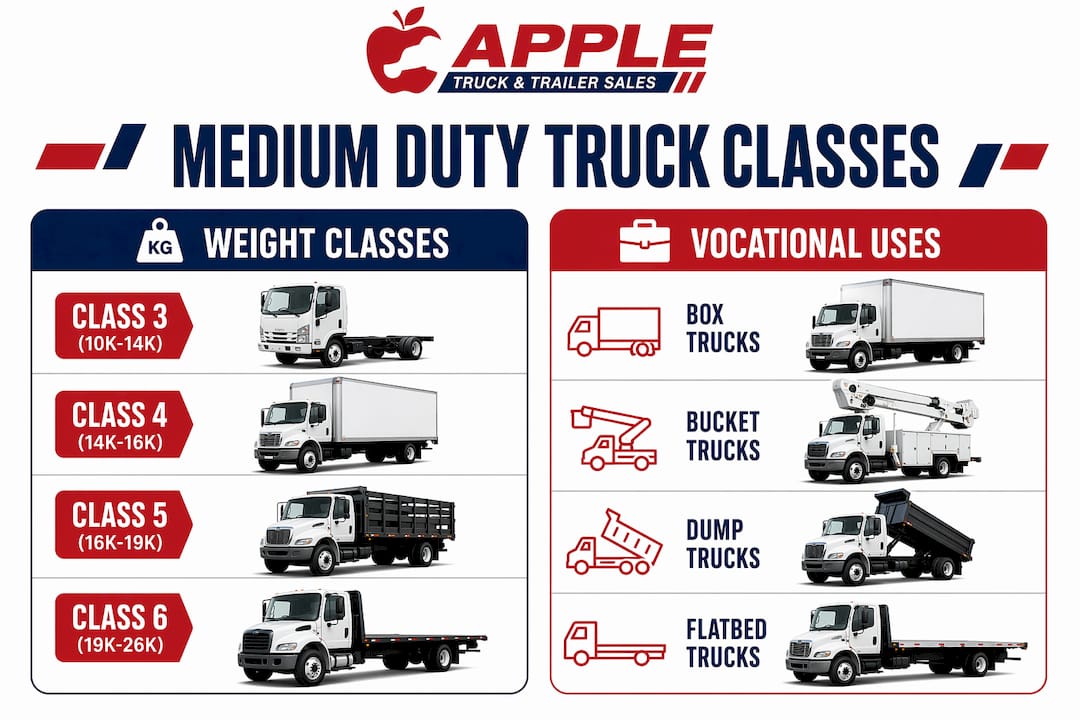
The medium duty category spans four distinct federal weight classes, and each one carries different operational implications. Class 3 covers 10,001–14,000 lbs GVWR, Class 4 covers 14,001–16,000 lbs, Class 5 covers 16,001–19,500 lbs, and Class 6 covers 19,501–26,000 lbs. Class 7, which runs from 26,001–33,000 lbs, is sometimes grouped into discussions of medium duty trucks but sits in a separate regulatory tier for most compliance purposes.
The practical difference across this range is significant. A Class 3 vehicle feels and drives much like a heavy duty pickup truck. A Class 6 vehicle resembles a small semi-truck in both size and operational demands. That spectrum matters when you are choosing a vehicle for a specific job, because the wrong class can create licensing headaches or leave you short on payload.
Common medium duty truck examples include:
- Box trucks (Class 4–6): Used for local freight, moving companies, and retail delivery
- Single-axle dump trucks (Class 5–6): Standard on construction sites for hauling aggregate and debris
- Bucket trucks and utility vehicles (Class 4–5): Used by electrical and telecom crews
- Flatbed trucks (Class 4–6): Versatile haulers for equipment and building materials
- Refrigerated trucks (Class 5–6): Cold chain delivery for food service and medical supply
Light duty trucks, such as standard half-ton and three-quarter-ton pickups, top out below 10,001 lbs GVWR. Heavy duty trucks begin at 26,001 lbs. Medium duty trucks occupy the gap where payload demands exceed what a pickup can handle but a full semi would be overkill. For a deeper look at how freight weight classifications affect transportation decisions, the weight tier system applies well beyond just the truck itself.
What vocational uses and payloads do medium duty trucks support?
Medium duty trucks serve a wide range of vocational applications, and that versatility is the core reason this category exists. Construction hauling, municipal utility services, local and regional freight delivery, and emergency response vehicles all rely on Class 3–6 platforms. The payload capacity varies considerably across the range.
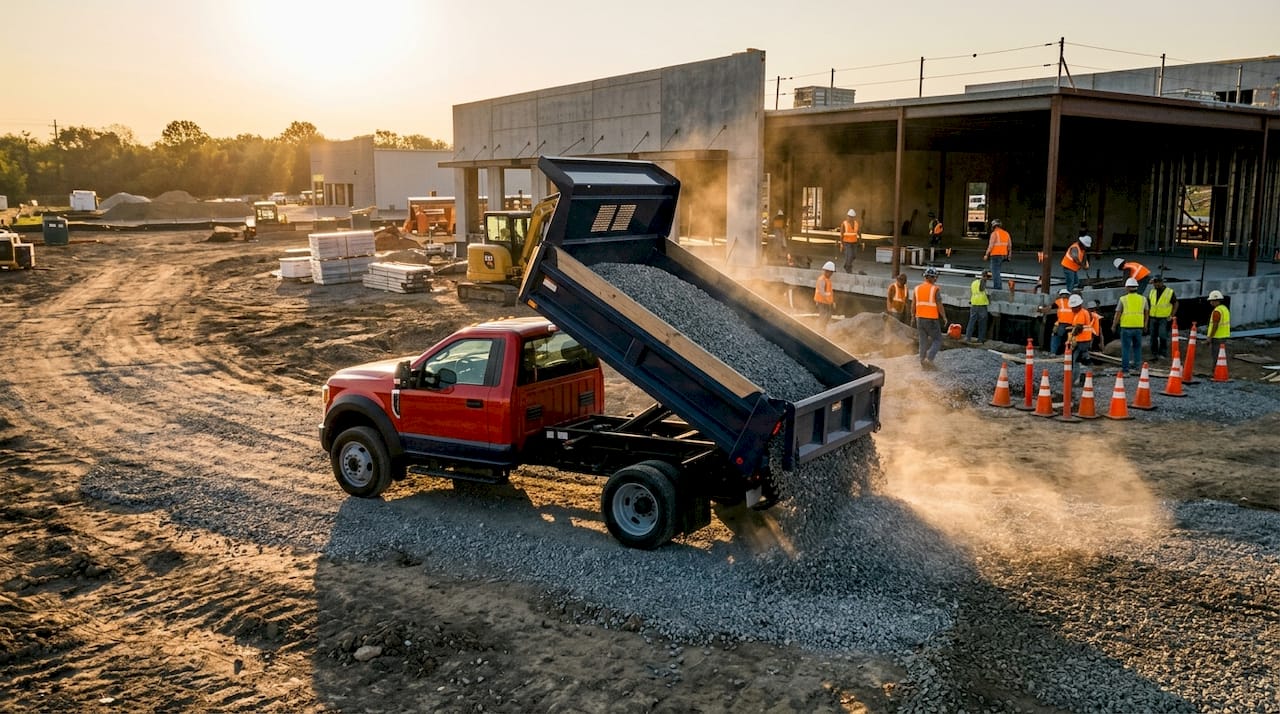
Dump trucks rated at Class 5–6 carry 5–12 tons, while heavier vocational builds can handle 10–18 tons depending on axle configuration and local weight limits. That payload range covers the majority of contractor and municipal work without requiring a full heavy duty chassis.
Upfits, meaning the specialized bodies and equipment added to a base chassis, dramatically expand what these trucks can do. A bucket truck requires a hydraulic system integrated into the chassis electrical and power takeoff systems. A refrigerated box truck needs auxiliary power for the cooling unit. Each upfit adds weight and power demands that must be factored into the original chassis selection.
Pro Tip: Always calculate your upfit weight before selecting a chassis class. A fully equipped bucket truck body can add 3,000–5,000 lbs to the base vehicle weight, which can push a Class 4 chassis dangerously close to its GVWR limit.
Duty cycle is the other critical variable. A truck making 40 stop-and-go deliveries per day in an urban area stresses its brakes, transmission, and cooling system very differently than the same truck making three long highway runs per week. Matching the truck’s mechanical specifications to your actual duty cycle prevents early failures and reduces maintenance costs over the vehicle’s life.
How do licensing requirements affect medium duty truck operation?
The 26,000 lb GVWR threshold is the single most important regulatory line in the medium duty category. A CDL is required at 26,001 lbs GVWR or GCWR, or when the vehicle transports hazardous materials or passengers above certain thresholds. That one pound of difference between a Class 6 and Class 7 vehicle triggers a completely different compliance and hiring framework.
The manufacturer’s door-sticker GVWR is legally authoritative. The DOT and insurance carriers treat this number as the vehicle’s legal loaded weight limit for inspection and coverage purposes. Attempts to under-rate a truck’s GVWR to avoid CDL requirements are rejected by DOT and insurers and can expose fleet operators to serious liability.
Operating at or below 26,000 lbs GVWR carries real financial advantages. Fleets that stay under the 26,001 lb threshold avoid CDL hiring requirements, which expands the pool of eligible drivers and reduces annual compliance costs. For small contractors and regional delivery operations, this distinction directly affects labor costs and scheduling flexibility.
Fleet managers also need to account for how GVWR affects insurance classification. A vehicle rated above 26,000 lbs triggers commercial vehicle insurance requirements that differ from standard business auto policies. Getting this wrong at the time of purchase creates coverage gaps that only surface during a claim.
How should you match medium duty truck specs to your duty cycle?
Selecting a medium duty truck based on purchase price alone is the most common and most expensive mistake in fleet acquisition. Total cost of ownership is the correct metric, and maintenance downtime is the largest hidden cost in that calculation. A truck that costs $10,000 less upfront but spends three weeks per year out of service costs far more than a properly specified vehicle.
Duty cycle mismatches lead to premature vehicle failures. A Class 5 box truck spec’d for light regional delivery will fail faster under daily urban stop-and-go conditions than a Class 6 vehicle with a heavier-duty transmission and upgraded cooling system. The weight class alone does not determine suitability. The mechanical specifications within that class determine reliability.
Key factors to evaluate when matching specs to duty cycle:
- Braking system: Urban delivery and construction applications require heavy-duty brake packages rated for frequent stops under load
- Cooling capacity: High-idle applications like bucket trucks and refrigerated units need upgraded cooling to prevent engine damage
- Transmission type: Automated manual transmissions reduce driver fatigue in high-cycle urban routes; manual transmissions suit long-haul or variable-load applications
- Chassis and upfit compatibility: Hydraulic systems for bucket trucks must match the chassis power takeoff rating to avoid early drivetrain failures
- Axle rating: Payload requirements must fall within the front and rear axle ratings, not just the overall GVWR
Pro Tip: Request the truck’s full spec sheet, not just the GVWR sticker, before purchasing. Compare the engine torque curve, transmission gear ratios, and axle ratings against your actual load and route profile. A fleet manager’s guide to used trucks can help you build this evaluation framework.
Oversizing a truck creates its own problems. A Class 6 vehicle doing Class 4 work burns more fuel, costs more to maintain, and is harder to maneuver in tight urban environments. Undersizing is worse. It accelerates wear, creates safety risks under load, and voids manufacturer warranties when the vehicle is operated beyond its rated capacity.
Key Takeaways
Medium duty trucks are defined by GVWR between 10,001 and 26,000 lbs, and selecting the right class requires matching weight rating, duty cycle, and compliance requirements to your specific operation.
| Point | Details |
|---|---|
| GVWR defines the class | Classes 3–6 cover 10,001–26,000 lbs; this rating drives licensing, insurance, and payload limits. |
| The 26,000 lb line is critical | Crossing into 26,001 lbs triggers CDL requirements and changes your insurance classification. |
| Duty cycle beats purchase price | Match braking, cooling, and transmission specs to your actual route and load before buying. |
| Upfits add weight and power demands | Calculate fully equipped weight and power takeoff needs before choosing a chassis class. |
| TCO outweighs sticker price | Maintenance downtime is the largest hidden cost; local service access should factor into every purchase. |
The spec sheet matters more than the class badge
Buyers new to medium duty trucks tend to fixate on the weight class number as if it settles the decision. It does not. I have seen Class 5 trucks fail within two years because the buyer matched the GVWR to the load but ignored the duty cycle entirely. The transmission was not rated for 50 stops per day, and the cooling system was not sized for high-idle auxiliary equipment. The truck was technically the right class. It was the wrong truck.
The 26,000 lb threshold deserves more attention than most buyers give it. Crossing that line does not just mean a bigger truck. It means CDL drivers, different insurance, DOT inspections, and a different maintenance cost structure. For a small contractor running two or three vehicles, that compliance burden can reshape the entire business model. Staying at 25,999 lbs is a deliberate business decision, not just a spec choice.
The other misconception I see regularly is treating purchase price as the primary filter. Fleet managers who have operated medium duty trucks for years know that total cost of ownership is the only number that matters at the end of a three-year operating cycle. A truck with strong local service support and a proven reliability record in your specific application will almost always cost less to operate than a cheaper vehicle with limited parts availability in your region.
Future-proofing matters too. If your business is growing, spec the truck for where your payload will be in two years, not where it is today. Upgrading a chassis mid-cycle is expensive. Getting the spec right at purchase is not.
Apple Truck & Trailer: your resource for medium duty trucks in New England
Apple Truck & Trailer has served fleet operators and contractors across Massachusetts, Rhode Island, Connecticut, and New Hampshire since 1986. If you are evaluating medium duty trucks for purchase, lease, or rental, the team at Apple Truck & Trailer brings hands-on knowledge of Class 3–6 specifications, compliance requirements, and vocational upfit considerations.
Whether you are buying a used commercial truck for the first time or expanding an existing fleet, Apple Truck & Trailer’s inventory and leasing options cover the full medium duty range. For fleet operators in New England, truck leasing in Massachusetts is also available for businesses that need flexibility without the capital commitment of a purchase. Contact Apple Truck & Trailer directly to discuss your specific payload, duty cycle, and compliance requirements.
FAQ
What is the GVWR range for a medium duty truck?
A medium duty truck has a GVWR between 10,001 and 26,000 pounds, covering Classes 3 through 6 as defined by the Federal Motor Carrier Safety Administration.
Do you need a CDL to drive a medium duty truck?
A CDL is not required for vehicles rated at or below 26,000 lbs GVWR, unless the vehicle carries hazardous materials or passengers above regulated thresholds. Vehicles at 26,001 lbs or above require a CDL.
What are common examples of medium duty trucks?
Common medium duty truck examples include box trucks, single-axle dump trucks, bucket trucks, flatbed trucks, and refrigerated delivery vehicles, typically in the Class 4–6 range.
How is a medium duty truck different from a heavy duty truck?
Medium duty trucks are rated up to 26,000 lbs GVWR, while heavy duty trucks begin at 26,001 lbs. The difference triggers CDL requirements, different insurance classifications, and more rigorous DOT compliance obligations.
Why does duty cycle matter when choosing a medium duty truck?
Duty cycle determines the mechanical stress placed on braking, cooling, and drivetrain systems. A truck spec’d for light use will fail prematurely under high-cycle urban or construction conditions, even if the GVWR matches the load.