
TL;DR:
- Trailer rentals provide a cost-effective, flexible solution for businesses with low monthly trailer usage by eliminating capital costs and idle asset expenses. They enhance operational agility through quick swaps, job-specific trailer options, and reduce downtime caused by maintenance issues, making them ideal for seasonal or project-based needs. For usage below 25 days per month, renting remains the most economical and practical choice to optimize profitability and simplify logistics.
Trailer rental is defined as a short-term or project-based equipment agreement that converts a large capital purchase into a fully deductible operating expense. For business owners managing variable freight, seasonal surges, or project-based logistics, understanding why businesses need trailer rentals comes down to one core equation: lower overhead plus greater flexibility equals stronger margins. A pro-grade enclosed trailer costs $6,000 to $10,000 to purchase outright, while rental rates start at $80 per day with weekly and monthly options available. That gap in cash commitment is where the financial case for renting begins and where most business owners stop leaving money on the table.
What financial advantages do trailer rentals offer businesses?
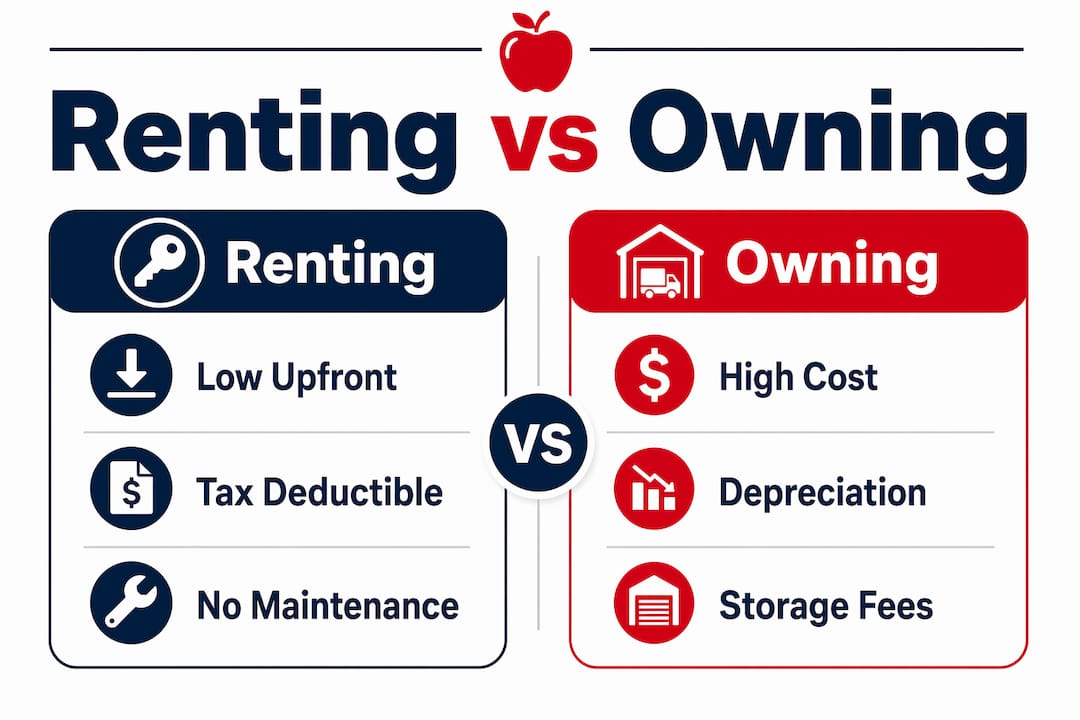
Trailer rental fees are 100% tax deductible as operating expenses in the year they are incurred. Ownership, by contrast, locks capital into a depreciating asset and spreads tax benefits across a multi-year depreciation schedule. For a small or mid-size business managing cash flow tightly, the difference between writing off $2,400 this fiscal year versus recovering that same amount over five years is not trivial.
Ownership also carries costs that rarely appear in the purchase price conversation. Storage fees, annual registration, commercial insurance, and routine maintenance accumulate even when the trailer sits idle. Idle asset expenses are a real drag on profitability, particularly for businesses with seasonal demand patterns. A landscaping company in Massachusetts that needs a dump trailer from April through October has no productive use for that asset during winter months, yet the costs keep running.
Pro Tip: Before calculating whether to rent or buy, add up your projected storage, insurance, and registration costs for a full calendar year. Most business owners find that number is 15 to 25 percent of the trailer’s purchase price annually, which changes the math significantly.
The table below compares the two approaches across the most financially relevant categories:
| Category | Renting | Owning |
|---|---|---|
| Upfront cost | $0 to minimal deposit | $6,000 to $10,000+ |
| Tax treatment | 100% deductible in year incurred | Depreciated over multiple years |
| Maintenance responsibility | Rental provider | Business owner |
| Storage cost | None | Ongoing, even during idle periods |
| Insurance | Often included or minimal add-on | Separate commercial policy required |
| Flexibility | Swap or upgrade per job | Fixed to one asset |
The rental column wins on nearly every line for businesses that do not use a trailer daily. The ownership column only becomes competitive when utilization is high enough to justify the fixed cost base, a threshold explored in detail later in this article.
How do trailer rentals enhance operational flexibility for businesses?
The most underrated benefit of trailer rental services is what industry insiders call the “swap factor.” When a rented trailer develops a mechanical fault, the rental provider swaps it quickly to prevent project delays. An owned trailer with a broken axle or faulty lighting puts your crew on hold until repairs are completed, which can take days. That downtime has a direct dollar cost attached to it.
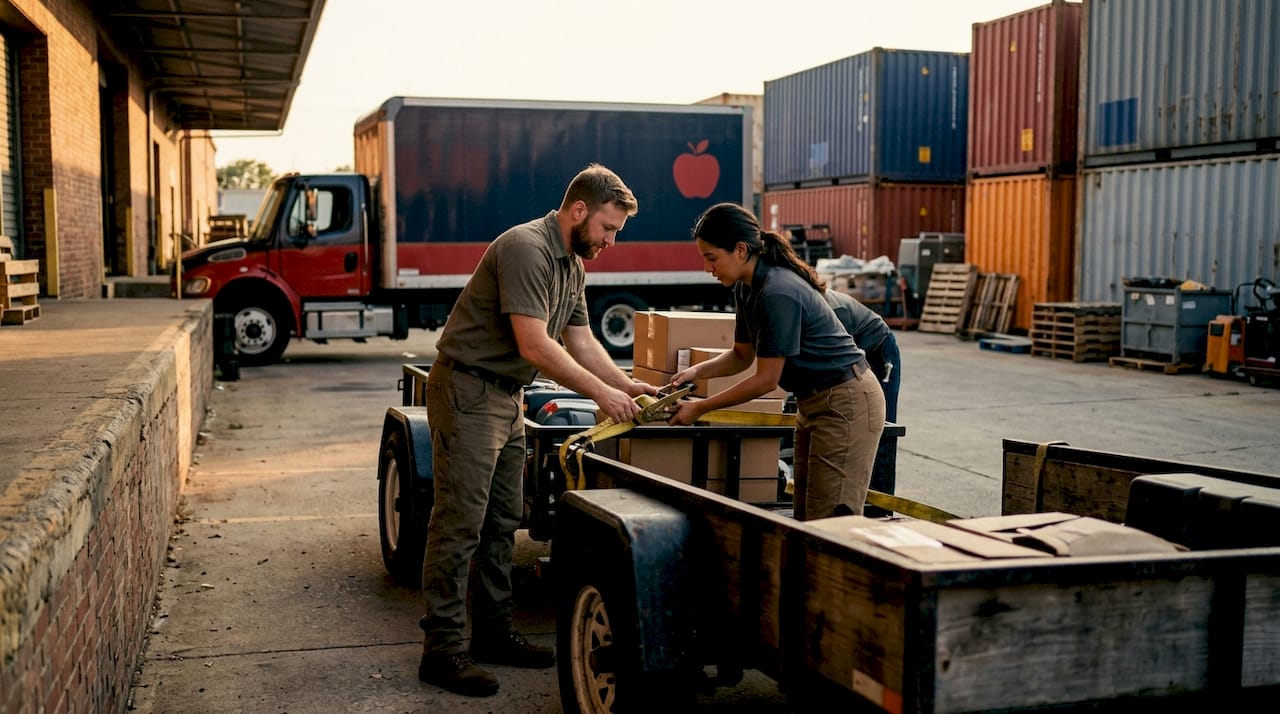
Flexibility also means matching the right equipment to each specific job. Varied trailer types including utility, enclosed, flatbed, and dump trailers serve fundamentally different freight needs. A business that owns one enclosed trailer is forced to use it for every job, even when a flatbed or dump trailer would be faster and safer. Renting lets you select the right tool for each task without owning every tool in the shed.
Short-term rentals also support rapid scaling during unexpected demand spikes without altering long-term capital plans. A contractor who lands a large demolition project in July can rent a dump trailer for six weeks and return it when the job ends. No long-term commitment, no storage problem in August.
Here are the business scenarios where rental flexibility delivers the clearest advantage:
- Seasonal businesses such as landscapers, holiday retailers, and agricultural suppliers that need heavy hauling capacity for three to six months per year
- Project-based contractors in construction, renovation, or event production who need specific trailer types for defined job durations
- Startups and growing companies that need to preserve capital while still meeting client delivery requirements
- Businesses testing new service lines before committing to equipment purchases
- Companies with variable freight volumes that fluctuate week to week based on client demand
Pro Tip: When renting for a multi-week project, ask the provider about weekly or monthly rate structures. Rates at $80 per day can drop significantly on a monthly agreement, and locking in a longer term also guarantees availability during peak seasons when trailer supply tightens.
When is renting more cost-effective than ownership?
The 25 days per month threshold is the standard industry benchmark for determining when ownership becomes economically competitive with renting. Below that usage level, the combined savings on maintenance, depreciation, insurance, and storage make renting the leaner choice. Above it, the per-day cost of ownership drops enough to justify the capital commitment.
The table below illustrates how cost-effectiveness shifts based on usage frequency:
| Monthly usage | Recommended approach | Primary reason |
|---|---|---|
| 1 to 8 days | Rent | Low utilization makes ownership expensive per use |
| 9 to 15 days | Rent, evaluate annually | Savings on ownership still marginal vs. rental costs |
| 16 to 24 days | Evaluate both options | Crossover zone; run full cost comparison including idle costs |
| 25+ days | Consider ownership | High utilization begins to justify capital investment |
Business type matters as much as usage frequency. Startups benefit from renting because capital preservation is critical in early stages. Seasonal operations benefit because they avoid paying for an asset that sits idle for months. Project-based businesses benefit because their equipment needs change with each contract. The businesses most at risk of overcommitting to ownership are those that buy a trailer after one busy season and then find demand normalizes the following year.
Owning a trailer can cause real business disruptions when maintenance needs arise at the wrong time. A trailer that needs brake work the week before a major delivery is not just an inconvenience. It is a liability. Renting removes that risk entirely by transferring maintenance responsibility to the provider.
For businesses in Massachusetts, Rhode Island, Connecticut, and New Hampshire, the key considerations for storage trailers add another layer to this decision, particularly for companies evaluating on-site storage needs alongside transport requirements.
What practical steps should businesses take before renting a trailer?
Getting the most from a trailer rental requires preparation before the keys change hands. Follow these steps to avoid the most common and costly mistakes:
-
Verify tow vehicle compatibility. Brake controller compatibility and hitch drop height are the two most common points of failure. A mismatch between your truck’s hitch receiver and the trailer coupler can make the rental unusable on day one. Confirm specifications with your fleet manager or mechanic before booking.
-
Review the rental agreement in detail. Understand what is covered under the provider’s insurance and what falls to you. Some agreements include basic liability coverage; others require you to add the rental to your commercial auto policy for the duration.
-
Inspect the trailer at pickup. Document any existing damage with photos before you leave the lot. This protects you from being charged for pre-existing wear when you return the equipment.
-
Match the trailer type to your freight. An enclosed trailer protects cargo from weather but limits loading options. A flatbed offers easier loading for oversized items but provides no weather protection. A dump trailer is built for bulk materials, not finished goods. Choosing the wrong type costs time and can damage cargo.
-
Plan pickup and return logistics. Coordinate timing to minimize disruption to your operations. If you are renting for a specific project, build in a buffer day at the start for loading and at the end for unloading before the return deadline.
-
Ask about swap availability. Confirm that the provider can replace a faulty unit quickly if something goes wrong mid-project. Providers like Appletruckandtrailer, who have operated in the New England region since 1986, maintain inventory depth that makes rapid swaps realistic.
For businesses exploring flatbed trailer leasing as an alternative to short-term rental, the operational preparation steps are largely the same, though the financial and contractual considerations differ.
Key takeaways
Trailer rentals are the most cost-effective logistics solution for businesses using equipment fewer than 25 days per month, because they eliminate capital lock-up, maintenance liability, and idle asset costs simultaneously.
| Point | Details |
|---|---|
| Financial advantage | Rental fees are 100% tax deductible in the year incurred, unlike depreciated ownership costs. |
| Usage threshold | Renting beats ownership below 25 days of monthly use due to lower total cost of operation. |
| Operational flexibility | Rentals let businesses match trailer type to each job and swap faulty units without downtime. |
| Hidden ownership costs | Storage, insurance, and registration fees accumulate even when an owned trailer sits idle. |
| Best candidates for renting | Startups, seasonal businesses, and project-based contractors gain the most from rental models. |
What I’ve learned from watching businesses choose between renting and owning
I have seen this decision play out dozens of times, and the pattern is consistent. Business owners who buy a trailer after a strong quarter often regret it within 18 months. The asset sits in a lot, the insurance bill arrives, and the next busy season does not materialize at the same level. The trailer becomes a fixed cost on a variable revenue base, which is exactly the wrong structure for a growing business.
What surprises most owners is how much the “jobs around the job” consume their time and money. Scheduling maintenance, finding storage, managing registration renewals, and dealing with unexpected repairs are all real labor costs that do not show up in the purchase price. Rental models remove all of that. You call, you pick up, you return. The provider handles everything else.
The rental market has also matured significantly. In 2026, businesses have access to more specialized trailer types and more flexible rental durations than at any point in the past decade. Reefer trailers, flatbeds, enclosed cargo units, and dump trailers are all available on short notice from established providers. That specialization means businesses can access the right equipment for each job without the overhead of owning a diverse fleet.
My honest recommendation: if you are using a trailer fewer than three weeks per month, run the full cost comparison before buying. Include storage, insurance, registration, and a realistic estimate of maintenance. Most businesses find the rental option is not just cheaper. It is operationally simpler, and simplicity has real value when you are running a business.
— Andrew
How Appletruckandtrailer supports your business logistics
Appletruckandtrailer has served commercial fleet operators and business owners across Massachusetts, Rhode Island, Connecticut, and New Hampshire since 1986. The company offers a range of trailer rental options covering diverse freight and storage needs, with flexible daily, weekly, and monthly rental durations to match your project timeline. Competitive pricing, well-maintained equipment, and responsive customer support make it a practical choice for businesses that need reliable logistics solutions without the overhead of ownership. Whether you are managing a one-time project or covering a seasonal surge, Appletruckandtrailer has the inventory and the experience to keep your operation moving. Explore truck and trailer options or request a quote directly to find the right fit for your business.
FAQ
What does it cost to rent a trailer for a business?
Trailer rental rates start at $80 per day with weekly and monthly options available at lower per-day rates. Total cost depends on trailer type, rental duration, and provider location.
How do I know if renting or buying a trailer is better for my business?
Renting is more cost-effective when your business uses a trailer fewer than 25 days per month, because savings on maintenance, insurance, and storage outweigh the per-day rental cost.
What types of trailers can businesses rent?
Businesses can rent utility, enclosed, flatbed, dump, and refrigerated trailers depending on their freight needs. Matching the trailer type to the specific job improves efficiency and protects cargo. Learn more about specialized options like reefer trailer rentals for temperature-sensitive freight.
Are trailer rental fees tax deductible for businesses?
Trailer rental fees are fully deductible as operating expenses in the year they are incurred, unlike purchased trailers which are depreciated over multiple years.
What should I check before renting a trailer?
Verify that your tow vehicle’s brake controller and hitch height are compatible with the rental trailer before pickup. Also review the rental agreement for insurance coverage and document any pre-existing damage at the time of pickup.