
TL;DR:
- Massachusetts businesses find 20ft containers cost-effective for storage and logistics needs.
- Rental costs range from 100 to 350 monthly, with rent-to-own offering an affordable ownership path.
- Delivery, site prep, and regional factors significantly influence total container costs and options.
Most fleet managers and small business owners in Massachusetts assume that getting a 20ft shipping container is either expensive or complicated. The reality is almost the opposite. Whether you need short-term storage between jobs, overflow space during a busy season, or a permanent on-site solution, the options available today are far more flexible than most people expect. This article breaks down real price ranges for renting, buying, and rent-to-own in New England, explains what drives costs up or down, and gives you a clear framework for choosing the right option without overpaying or locking yourself into the wrong contract.
Table of Contents
- Overview of 20ft shipping container uses and benefits
- Price breakdown: Renting vs. buying vs. rent-to-own
- What influences 20ft shipping container cost in Massachusetts?
- How to pick the right 20ft shipping container option for your business
- Hidden costs and expert tips for smart container budgeting
- What most guides miss about shipping container costs in Massachusetts
- Find your 20ft shipping container solution in Massachusetts
- Frequently asked questions
Key Takeaways
| Point | Details |
|---|---|
| Flexible acquisition options | You can rent, buy, or choose rent-to-own based on your business needs and cash flow. |
| Local price bands matter | 20ft container costs in Massachusetts typically range from $100 to $350 per month depending on condition and terms. |
| Watch for hidden charges | Ask about delivery, site prep, and insurance fees so you know your total cost. |
| Right-size your decision | Pick the container option that matches both your duration of need and budget. |
Overview of 20ft shipping container uses and benefits
Before diving into numbers, it helps to understand why the 20ft container has become the workhorse of small business storage and logistics. It is not the biggest option on the market, but that is exactly the point.
A 20ft container measures roughly 20 feet long, 8 feet wide, and 8.5 feet tall, giving you about 1,170 cubic feet of usable space. For most Massachusetts businesses, that hits a sweet spot. It fits on a standard commercial lot, a residential driveway, or a job site without requiring special permits in most municipalities. The size and flexibility of 20ft containers make them a top choice for storage and logistics across New England.
Here are the most common use cases we see from regional customers:
- Seasonal inventory storage for landscaping, construction, and retail businesses
- Logistics overflow when warehouse space runs tight during peak shipping periods
- Job site tool and equipment storage for contractors working across multiple towns
- Temporary storage during office or facility renovations
- Residential moves and clean-outs where a portable unit beats renting a truck
Compared to a 40ft container, the 20ft model is easier to place, cheaper to deliver, and simpler to manage on tight urban lots common in cities like Worcester, Providence, or Hartford. You can learn more about what fits in a 20ft container if you want a detailed breakdown before committing.
One misconception we hear often is that 20ft containers are not secure enough for valuable equipment. That is simply not true. Standard units come with heavy-duty steel construction and lockbox-ready door hardware. A quality padlock or a disk lock is all most businesses need.
Pro Tip: Before placing your container, check local zoning rules and confirm you have at least 10 feet of clearance on the delivery side. Tight access is the number one cause of delivery delays and added fees. If you are unsure about placement, 20ft container rentals in central MA providers can often do a site assessment before scheduling delivery.
Price breakdown: Renting vs. buying vs. rent-to-own
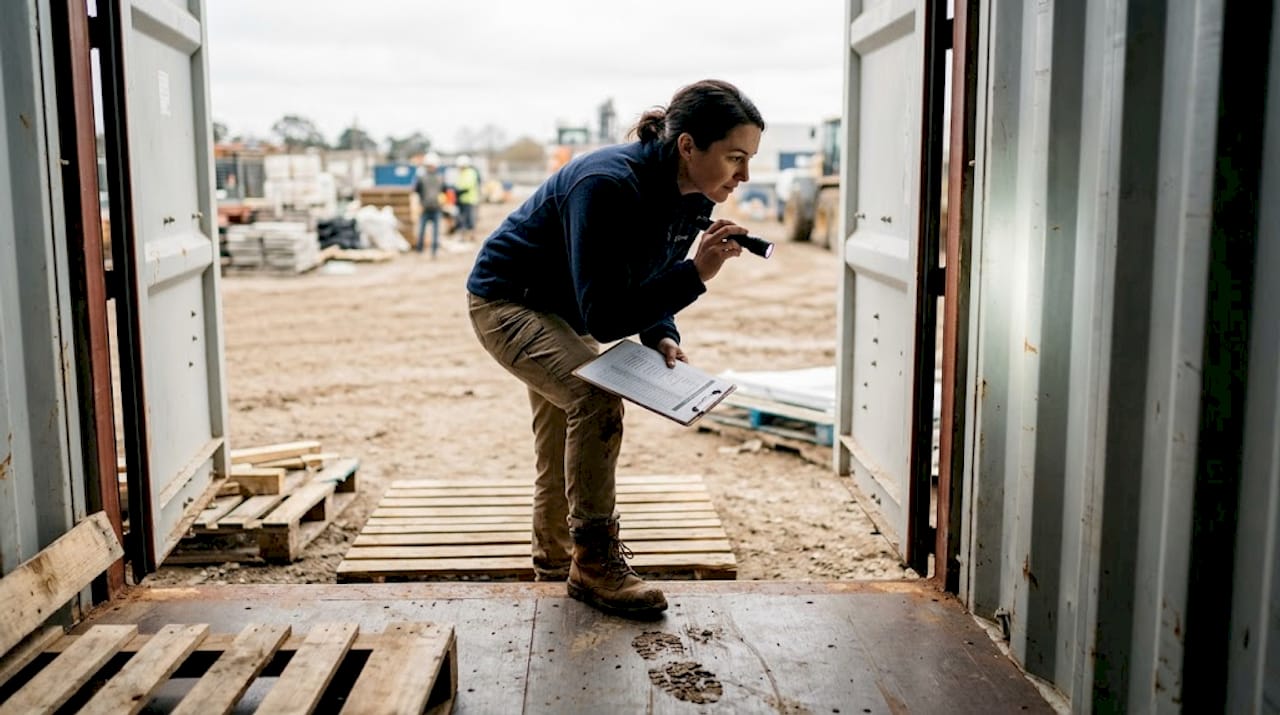
Now let’s get into the numbers. The cost of a 20ft container in Massachusetts depends heavily on how you acquire it. Here is a side-by-side comparison of the three main options:
| Acquisition model | Typical monthly cost | Upfront cost | Ownership at end? |
|---|---|---|---|
| Standard rental (used) | $100–$200/mo | Low or none | No |
| Standard rental (new) | $200–$350/mo | Low or none | No |
| Rent-to-own | $50–$125/mo | Varies | Yes |
| Outright purchase (used) | One-time $1,500–$3,500 | Full price | Yes |
| Outright purchase (new) | One-time $4,000–$6,500 | Full price | Yes |
For most small businesses in New England, rental costs for 20ft containers fall between $100 and $350 per month depending on condition and contract length. Rent-to-own programs typically run $50 to $125 per month, making them surprisingly affordable for businesses that want to eventually own the unit.
A few factors that directly shape where you land in those ranges:
- Container condition: Wind and watertight (WWT) grade units cost less than one-trip or new containers
- Contract length: Longer commitments often unlock lower monthly rates
- Delivery distance: Longer hauls from the depot add to your total cost
- Market timing: Demand spikes in spring and fall in Massachusetts
For a deeper look at what drives the 20ft storage container rental cost in MA, it helps to compare quotes from local vendors rather than national platforms, which often do not reflect regional delivery fees.
Pro Tip: If you need a container for more than 12 months, run the math on rent-to-own. In many cases, you will pay less over 24 months than a standard rental and walk away owning the unit. Check 20ft container rental Massachusetts options to compare current rates side by side.
What influences 20ft shipping container cost in Massachusetts?
Comparing sticker prices only scratches the surface. In reality, container cost is shaped by a few critical factors that most buyers do not think about until after they have signed.
Here are the top five drivers to understand before you request a quote:
- New vs. used condition: A one-trip container (used once from overseas) looks nearly new and costs close to new pricing. A WWT-grade unit may have surface rust and dents but is structurally sound and significantly cheaper.
- Seasonal demand: Massachusetts sees storage demand spike in spring (construction season) and late fall (inventory buildup). Prices often rise 10 to 20 percent during these windows.
- Delivery fees: This is where most buyers get surprised. Delivery fees and market demand can result in significant price swings depending on your location and access.
- Contract length: Month-to-month rentals cost more per month than 6 or 12-month agreements. Locking in a longer container rental term in Massachusetts can save you real money.
- Vendor reputation and service: A low quote from an unreliable vendor can cost you more in delays, damaged units, or poor pickup coordination.
Massachusetts geography adds another layer. Delivering to dense urban areas like Boston or Cambridge involves tighter access, potential permitting, and longer driver time, all of which get passed to the customer. Rural deliveries in western MA may involve longer haul distances. Understanding the delivery process in MA before signing helps you anticipate these costs.
“The cheapest quote is rarely the cheapest outcome. Factor in delivery, condition, and vendor reliability before you decide.”
Pro Tip: Always ask vendors to itemize delivery fees separately from the base rental rate. Some bundle them in, making comparison shopping harder. Getting line-item quotes from two or three local providers gives you real leverage.
How to pick the right 20ft shipping container option for your business
Once you understand the variables, here is how to decide which container solution best fits your operations. This does not need to be complicated. Work through these steps and the right answer usually becomes clear.
- Assess how long you need it. Less than 3 months? Rent. More than 12 months? Rent-to-own or buy. In between? Compare the total cost of each.
- Set your budget ceiling. Know your monthly maximum and your available upfront cash. This eliminates options before you waste time on quotes.
- Evaluate your storage frequency. Seasonal businesses that only need storage 4 to 6 months per year are almost always better off renting. Year-round users should lean toward ownership.
- Check your site. Can a flatbed truck deliver safely? Is there room for the driver to tilt and slide the container off? Site limitations can force you toward smaller units or higher delivery fees.
- Read the contract carefully. Flexible acquisition options for 20ft containers exist, but terms vary widely. Look for early termination clauses, damage liability, and pickup scheduling policies.
For seasonal contractors in Massachusetts, renting through a container rental Massachusetts provider makes the most sense. For a retail business that needs permanent overflow storage, rent-to-own often wins on total cost.
Pro Tip: Before signing any rental agreement, ask what happens if you need to extend. Some vendors charge a premium for month-to-month extensions after the initial term. Knowing this upfront prevents surprises. Review 20ft container rental tips for a checklist of questions to ask before you commit.
Hidden costs and expert tips for smart container budgeting
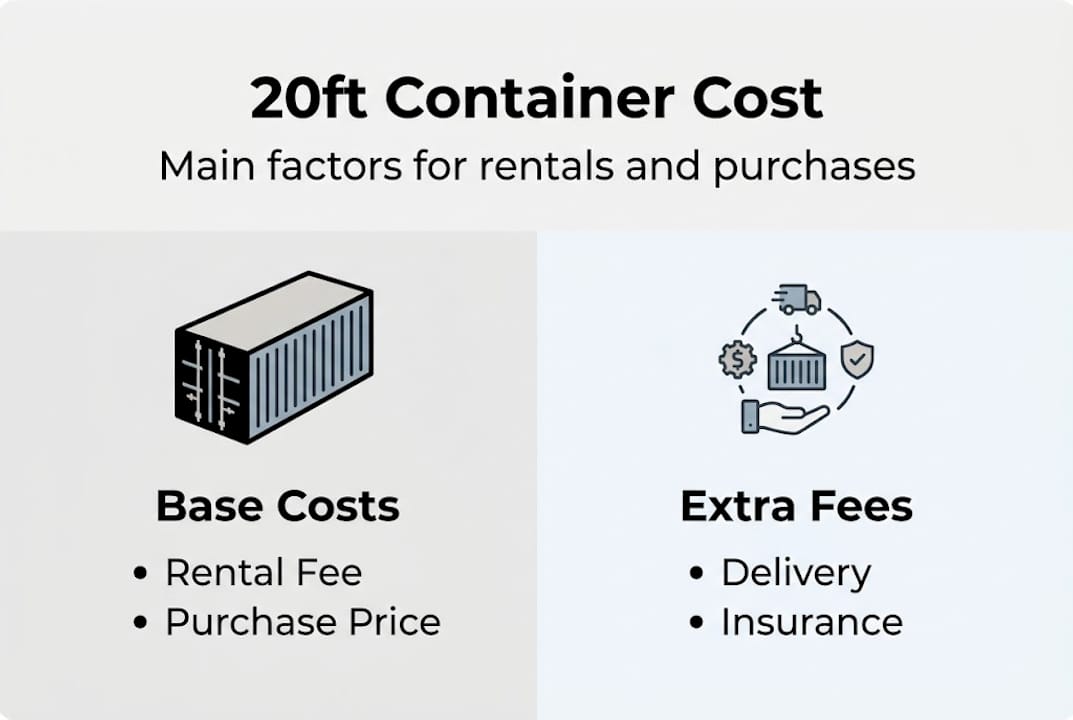
Before committing to a container, factor in these easily overlooked costs for an accurate budget. The monthly rate is just one piece of the picture.
Common hidden expenses include delivery, insurance, and site preparation, and they can add hundreds of dollars to your real cost if you are not prepared.
Here is a sample all-in cost estimate for a typical Massachusetts small business renting a used 20ft container for 6 months:
| Cost item | Estimated amount |
|---|---|
| Base rental (6 months at $150/mo) | $900 |
| Delivery fee | $150–$300 |
| Pickup fee | $100–$200 |
| Site prep (gravel pad or blocks) | $0–$250 |
| Insurance (rider on business policy) | $50–$150 |
| Total estimated all-in cost | $1,200–$1,800 |
That is a meaningful difference from the $900 base figure. Planning for it upfront keeps your budget honest.
Here are the expert tips that help our customers control these costs:
- Bundle delivery and pickup into a single negotiated fee when possible
- Check if your existing business insurance covers stored contents in a container, or add a rider
- Prepare your site before delivery day to avoid rescheduling fees
- Ask about off-peak delivery windows since some vendors offer lower delivery fees on slower days
- Use the moving container budgeting guide to build a complete cost model before requesting quotes
Pro Tip: If you are storing valuable equipment or inventory, verify that your insurance covers theft and weather damage inside the container. Many standard policies have exclusions for off-site storage that can leave you exposed.
What most guides miss about shipping container costs in Massachusetts
National pricing guides are a starting point, not a finish line. We have seen customers come in with quotes they found online, only to discover that delivery to their Worcester suburb or coastal Rhode Island location adds $200 or more that no national calculator accounts for.
The real insight is this: container sourcing in New England is a relationship business. Vendors who know your site, your schedule, and your business needs consistently deliver better outcomes than the lowest bidder you found on a national platform. That means better pickup timing, honest condition grading, and flexibility when your project runs long.
Cheap containers from unknown vendors also carry regulatory risk. A unit that does not meet local zoning standards or arrives in worse condition than advertised creates headaches that cost more to resolve than the savings were worth. Check real-world container pricing examples from local providers to calibrate your expectations.
Treat this as a business investment with a local partner, not a commodity purchase. The difference in total value is significant.
Find your 20ft shipping container solution in Massachusetts
At Apple Truck & Trailer, we have been helping Massachusetts businesses find the right storage and logistics solutions since 1986. Whether you need to rent for a single season, lock in a rent-to-own program, or purchase outright, we carry inventory and offer flexible terms built for New England operations.
Our team knows Massachusetts delivery logistics inside and out, from tight Boston lots to rural western MA sites. We offer secure storage container options for businesses that need reliable, weather-tight units fast. You can also explore our full range of Massachusetts truck and trailer sales or get started with lease or rent-to-own containers today. Contact us for a no-pressure quote and we will match you with the right unit at the right price.
Frequently asked questions
What is the average monthly cost to rent a 20ft shipping container in Massachusetts?
Depending on condition and contract length, expect to pay between $100 and $350 per month for a 20ft container rental in Massachusetts, with used units at the lower end of that range.
How does rent-to-own compare to traditional renting for shipping containers?
Rent-to-own programs typically run $50 to $125 per month in Massachusetts and give you ownership of the container at the end of your term, unlike standard rentals where you return the unit.
What hidden container costs should I watch out for?
Beyond the monthly rate, budget for delivery, insurance, and site prep, which can add $300 to $700 or more to your total cost depending on your location and site conditions.
Is buying a used 20ft container a good option for small businesses?
Yes, especially for year-round storage needs. Used 20ft containers in New England typically rent for $100 to $200 per month, and outright purchase prices make them a strong long-term value for predictable, ongoing use.
Recommended
- 7 Key Tips for 40ft Container for Rent Near Me Success – Apple Truck & Trailer
- Rent to own shipping containers near me Massachusetts 2026 – Apple Truck & Trailer
- The Ultimate Guide to Shipping Container Storage Rentals – Apple Truck & Trailer
- Reliable Storage: How Much Does a 20 Foot Storage Container Cost to Rent in MA? – Apple Truck & Trailer