
Choosing and managing 40-foot trailers for your fleet can feel overwhelming when there are so many rules, specs, and financial choices involved. It’s easy to worry about legal requirements, cargo weight limits, and rising costs—especially if you want to operate safely and maximize your investment. The right information makes all the difference when it comes to smart trailer selection, cost control, and fleet reliability.
This guide lays out the practical knowledge fleet managers need, from understanding maximum gross cargo weights to weighing the benefits of leasing. You’ll discover actionable tips for legal compliance, maintenance, and deciding when to repair or replace your trailers. Each section offers real-world advice that helps you avoid expensive mistakes and get the most out of every trailer in your operation.
Table of Contents
- 1. Understanding 40 Trailer Specifications And Load Limits
- 2. Factors To Consider When Choosing A 40 Trailer
- 3. Cost-Saving Benefits Of Leasing A 40 Trailer
- 4. Essential Maintenance Tips For 40 Trailers
- 5. Legal And Safety Compliance For 40 Trailer Operations
- 6. Maximizing Fleet Utilization With 40 Trailers
- 7. When To Repair Vs Replace A 40 Trailer
Quick Summary
| Takeaway | Explanation |
|---|---|
| 1. Understand Trailer Specifications | Familiarize yourself with critical metrics like GVWR and weight limits for operational safety. |
| 2. Choose the Right Trailer Carefully | Assess cargo requirements and vehicle capacity to match trailers to specific operational needs. |
| 3. Leasing Offers Financial Flexibility | Leasing trailers can reduce upfront costs and provide access to newer technologies without ownership risks. |
| 4. Prioritize Regular Maintenance | Implement a systematic maintenance schedule to prevent breakdowns and ensure compliance. |
| 5. Know When to Repair or Replace | Evaluate repair costs against trailer value to make informed asset management decisions. |
1. Understanding 40 Trailer Specifications and Load Limits
Fleet managers must have precise knowledge about 40 trailer specifications to ensure safe and efficient transportation operations. Understanding load limits and weight regulations is not just a technical requirement but a critical safety and legal responsibility.
Trailer specifications directly impact your operational capacity and legal compliance. Most 40-foot trailers have maximum gross cargo weights ranging between 43,700 to 44,000 pounds depending on the specific trailer variant. Federal weight regulations establish clear guidelines that fleet managers must follow.
Key specifications every fleet manager should understand include:
- Gross Vehicle Weight Rating (GVWR)
- Payload capacity
- Axle weight distribution
- Trailer structural integrity limits
- Legal weight restrictions by state and federal regulations
Weight management requires careful planning. Commercial truck operators typically need a Class A Commercial Driver’s License if their truck and trailer combined weight rating exceeds 26,001 pounds and the trailer rating exceeds 10,000 pounds.
Accurate weight calculations prevent potential legal penalties and ensure road safety.
Understanding trailer specifications helps fleet managers:
- Optimize cargo loading
- Prevent overweight violations
- Reduce potential equipment damage
- Maintain compliance with transportation regulations
- Minimize potential roadside inspection risks
Pro tip: Always conduct a precise weight calculation before each load and maintain updated documentation for every trailer in your fleet.
2. Factors to Consider When Choosing a 40 Trailer
Selecting the right trailer for your fleet requires careful analysis of multiple critical factors beyond just size and weight. Strategic trailer selection can dramatically impact operational efficiency and long-term transportation costs.
Fleet managers must evaluate several key dimensions when choosing a 40-foot trailer. Trailer selection guidelines emphasize the importance of matching vehicle specifications with operational requirements.
Critical factors to consider include:
- Cargo weight and volume
- Towing vehicle capacity
- Intended transportation routes
- Material transportation requirements
- Durability and maintenance needs
- Compliance with federal regulations
- Total cost of ownership
The Gross Vehicle Weight Rating (GVWR) represents a fundamental consideration when selecting trailers. Understanding your towing vehicle’s capacity prevents potential safety risks and legal complications.
Matching trailer specifications precisely to operational needs ensures maximum fleet performance and safety.
Trailer types vary significantly based on specific transportation requirements. Options include:
- Open trailers for general cargo
- Enclosed trailers for sensitive materials
- Refrigerated trailers for temperature-controlled goods
- Specialized flatbed configurations
Pro tip: Always conduct a comprehensive analysis of your specific transportation needs before finalizing trailer selection to optimize fleet efficiency and minimize unexpected expenses.
3. Cost-Saving Benefits of Leasing a 40 Trailer
Leasing a 40-foot trailer represents a strategic financial decision for fleet managers seeking operational flexibility and reduced capital expenditure. Smart leasing strategies can transform your fleet management approach while minimizing long-term financial risks.
Vehicle leasing strategies provide fleet operators with significant economic advantages that extend far beyond simple equipment acquisition. By choosing to lease instead of purchase, companies can preserve capital and maintain technological competitiveness.
Key cost-saving benefits of trailer leasing include:
- Lower monthly payments compared to purchasing
- Reduced upfront capital investment
- Minimal maintenance responsibilities
- Tax advantages for business operations
- Ability to upgrade equipment more frequently
- Avoiding asset depreciation risks
- Improved cash flow management
The financial flexibility of leasing allows fleet managers to allocate resources more strategically. Instead of tying up substantial capital in trailer ownership, businesses can invest in other critical operational improvements.
Leasing transforms equipment acquisition from a massive capital expense into a manageable operational cost.
Specific advantages for fleet managers involve:
- Predictable monthly expenses
- Access to newer trailer technologies
- Reduced long-term maintenance costs
- Enhanced fleet adaptability
- Simplified accounting processes
Pro tip: Always negotiate lease terms that include comprehensive maintenance packages and flexible upgrade options to maximize your financial benefits.
4. Essential Maintenance Tips for 40 Trailers
Trailer maintenance is the backbone of fleet reliability and safety. Proactive care prevents costly breakdowns and ensures your 40-foot trailer remains operational and compliant with industry standards.
Preventive maintenance practices are critical for extending trailer lifespan and minimizing unexpected repair expenses. Fleet managers must develop systematic approaches to trailer upkeep that address structural, mechanical, and operational components.
Key maintenance focus areas include:
- Brake system inspections
- Tire pressure and condition monitoring
- Structural frame integrity checks
- Electrical system diagnostics
- Lubrication of moving parts
- Suspension component evaluations
- Lighting and signal mechanism testing
The comprehensive maintenance strategy involves regular professional inspections and meticulous record keeping. Systematic documentation helps track equipment performance and predict potential failure points before they become critical issues.
Regular maintenance is not an expense but an investment in your fleet’s long-term performance and safety.
Maintenance frequency recommendations:
- Daily visual equipment checks
- Weekly detailed inspections
- Monthly comprehensive evaluations
- Quarterly technical diagnostics
- Annual complete system assessments
Pro tip: Develop a standardized digital maintenance log that tracks every inspection, repair, and component replacement to ensure consistent trailer performance and regulatory compliance.
5. Legal and Safety Compliance for 40 Trailer Operations
Legal and safety compliance represents the critical foundation for responsible trailer fleet management. Fleet managers must navigate complex regulatory landscapes to ensure operational integrity and minimize potential legal risks.
Federal Motor Carrier Safety regulations establish comprehensive guidelines that govern commercial trailer operations across the United States. Understanding and implementing these standards is not optional but a fundamental business requirement.
Critical compliance areas include:
- Hours-of-service regulations
- Driver qualification standards
- Vehicle maintenance requirements
- Cargo securement protocols
- Drug and alcohol testing procedures
- Weight and dimension restrictions
- Insurance and documentation mandates
The regulatory compliance framework demands continuous attention and proactive management. Fleet operators must develop systematic approaches to meet evolving federal and state transportation regulations.
Compliance is not a one-time achievement but an ongoing commitment to safety and legal responsibility.
Key implementation strategies:
- Develop comprehensive training programs
- Establish regular documentation review processes
- Conduct frequent internal audits
- Maintain updated safety technologies
- Monitor regulatory changes consistently
Pro tip: Create a dedicated compliance management system that tracks regulatory updates in real-time and automatically alerts your team to potential modifications in transportation safety standards.
6. Maximizing Fleet Utilization with 40 Trailers
Fleet utilization represents the critical metric that determines operational efficiency and financial performance. Strategic management of trailer assets can transform your transportation economics and competitive positioning.
Trailer utilization strategies reveal that top-performing fleets typically achieve around 80 percent capacity optimization. Understanding and implementing advanced utilization techniques can significantly reduce transportation costs.
Key strategies for maximizing trailer utilization include:
- Implementing real-time fleet tracking
- Consolidating cargo loads efficiently
- Developing sophisticated scheduling algorithms
- Analyzing route performance data
- Minimizing empty return trips
- Investing in advanced logistics technologies
- Creating flexible deployment protocols
The trailer utilization optimization framework requires continuous monitoring and data-driven decision making. Fleet managers must move beyond traditional management approaches to embrace technological solutions.
Effective asset utilization transforms trailers from cost centers into strategic competitive advantages.
Priority implementation steps:
- Install fleet management software
- Train personnel on utilization metrics
- Develop comprehensive tracking protocols
- Create performance benchmarks
- Incentivize efficiency improvements
Pro tip: Implement a digital dashboard that provides real-time visibility into trailer location, load status, and utilization rates to enable proactive management decisions.
7. When to Repair vs Replace a 40 Trailer
Deciding whether to repair or replace a 40-foot trailer represents a critical financial strategy for fleet managers. Understanding the nuanced economics of maintenance can significantly impact your operational budget and long-term asset management.
Standard repair time analysis provides essential insights into making cost-effective equipment decisions. Fleet managers must carefully evaluate multiple factors when determining the most financially prudent path.
Key considerations for repair versus replacement include:
- Total repair cost compared to trailer value
- Age of the trailer
- Frequency of previous repairs
- Structural integrity assessment
- Potential downtime during repairs
- Performance reliability
- Technological obsolescence
The trailer investment decision matrix requires systematic evaluation beyond simple numeric calculations. Emotional attachments or past experiences should not drive critical financial choices.
Strategic asset management means knowing when to invest in repairs and when to make a clean break.
Repair recommendation criteria:
- Repair costs under 50% of trailer replacement value
- Trailer less than 7 years old
- Minimal structural damage
- Strong historical performance record
- No recurring mechanical issues
Pro tip: Develop a standardized decision tree that objectively measures repair costs against replacement expenses to ensure consistent and financially sound equipment management strategies.
Below is a comprehensive summary table that encapsulates the main points presented throughout the article.
| Topic | Details | Key Takeaways |
|---|---|---|
| Understanding Trailer Specifications | Covers gross vehicle weight ratings, axle distribution, payload capacities, and legal regulations. | Ensures safety, compliance, and operational efficiency. |
| Choosing a Trailer | Factors include load weight, vehicle compatibility, route requirements, and overall costs. | Leads to informed decisions enhancing fleet operations. |
| Leasing Benefits | Highlights reduced costs, technology upgrades, taxation advantages, and flexible terms. | Provides financial flexibility and reduced risks. |
| Maintenance Practices | Emphasizes regular checks on tires, brakes, lights, and suspension systems. | Prolongs equipment lifespan and prevents costly repairs. |
| Legal Compliance | Focuses on adherence to regulations like weight limits, driver certifications, and maintenance records. | Minimizes legal risks and promotes safe operations. |
| Enhancing Utilization | Involves strategies like fleet tracking, optimized cargo loading, and reduced empty trips. | Improves operational efficiency and cost-effectiveness. |
| Repair vs. Replace Decision | Considers repair costs, trailer age, and frequency of breakdowns. | Aids in optimal financial management of fleet assets. |
This table provides a detailed yet accessible overview of the article’s key strategic and operational insights concerning the efficient and compliant management of 40-foot trailers.
Ensure Your Fleet Meets Every Challenge with Expert 40 Trailer Solutions
Managing 40-foot trailers means balancing complex demands like weight limits, maintenance, legal compliance, and maximizing utilization. This article highlights essential insights that fleet managers must master to avoid costly downtime and regulatory pitfalls. If you need reliable 40 trailer options built to handle these challenges, Apple Truck & Trailer offers a broad selection of durable equipment and tailored services.
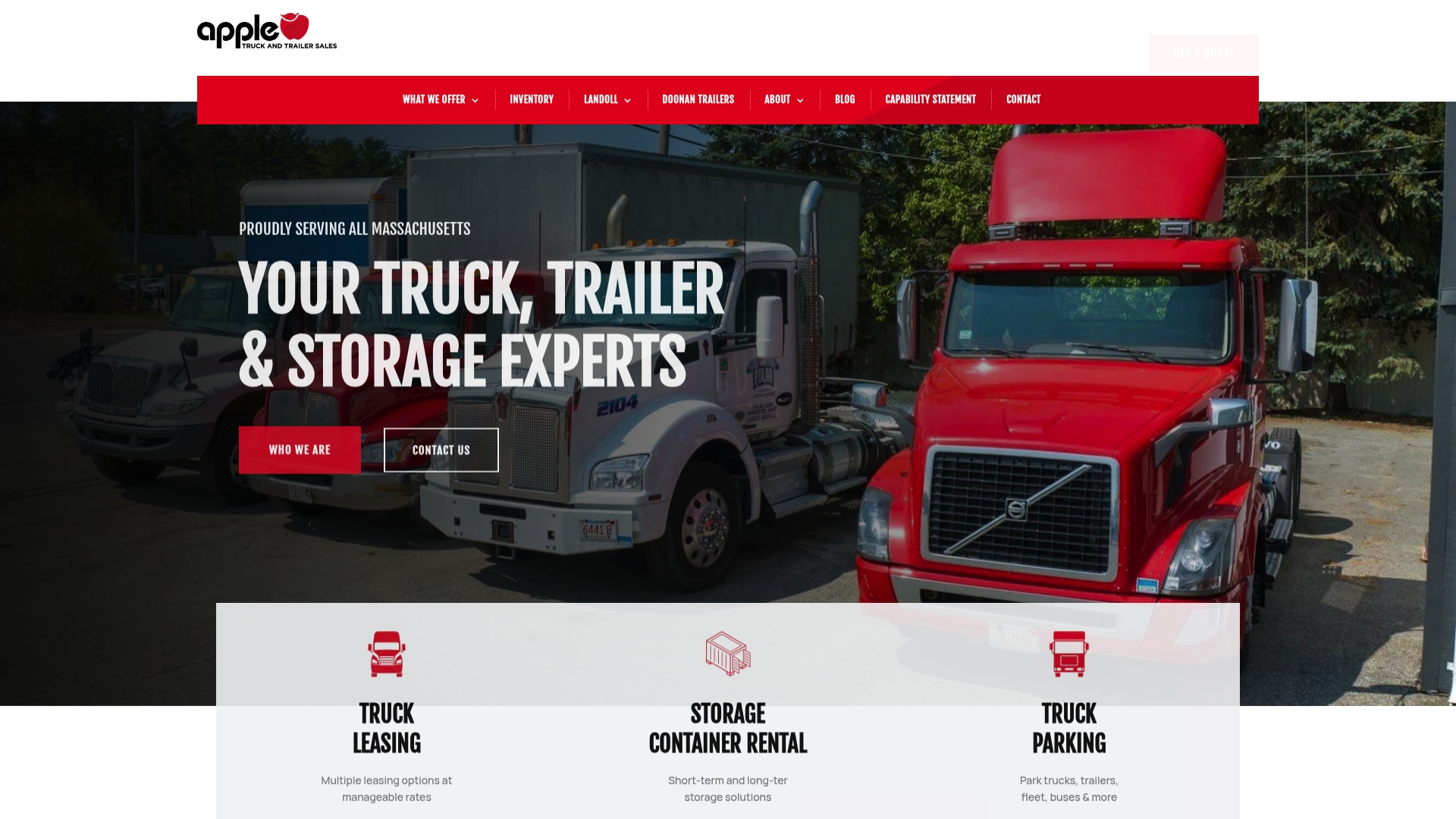
Discover flexible leasing and rental programs, including specialized options like Storage Trailer Rental – Apple Truck & Trailer and Storage Trailers on Wheels – Apple Truck & Trailer. Our full-service support headquartered in Massachusetts helps you optimize your fleet’s performance while staying compliant and cost efficient. Act now to secure the right solutions and expert advice that keeps your commercial operations moving safely and profitably.
Frequently Asked Questions
What are the most important specifications to know about a 40 trailer?
Understanding the Gross Vehicle Weight Rating (GVWR), payload capacity, and axle weight distribution is crucial. Start by reviewing the specific weight regulations for your trailer to ensure compliance and safety.
How can I determine whether to repair or replace a 40 trailer?
Evaluate the total repair costs against the trailer’s value, considering factors like age and frequency of previous repairs. Develop a decision-making process that includes calculating whether repair costs are less than 50% of the replacement cost.
What maintenance practices should I follow for a 40 trailer?
Implement regular inspections focusing on brakes, tires, and structural integrity. Aim for daily visual checks and detailed monthly inspections to ensure optimal performance and compliance.
How can I maximize the utilization of my 40 trailers?
Use real-time fleet tracking and data analysis to optimize cargo loads and reduce empty return trips. Set a target to achieve at least 80% capacity utilization to enhance efficiency and lower transportation costs.
What legal regulations do I need to follow when operating a 40 trailer?
Familiarize yourself with hours-of-service regulations, vehicle maintenance requirements, and cargo securement protocols. Create a compliance checklist that includes regular documentation and training for your team to ensure adherence to safety standards.