
TL;DR:
- Dry vans are the most common, adaptable, and cost-effective trailers in US freight operations.
- They are ideal for non-perishable, packaged goods but unsuitable for perishables or oversized loads.
- Proper loading, securement, and strategic fleet management maximize dry van profitability and efficiency.
Nearly 70% of over-the-road freight in the US moves inside dry vans, yet many fleet managers and logistics professionals treat them as a default choice rather than a strategic asset. That’s a missed opportunity. Dry vans are not just the most common trailer on American highways; they are the most adaptable, cost-effective, and operationally forgiving equipment in your fleet. Whether you’re managing regional distribution out of Worcester or coordinating multi-stop deliveries across New England, understanding exactly how dry vans work, what they can carry, and how to load them properly will sharpen your decision-making and protect your bottom line.
Table of Contents
- What is a dry van trailer? Key features and specifications
- Common uses: What can (and can’t) you haul in a dry van?
- Loading, unloading, and securement: Best practices for safe dry van operations
- Making smart equipment choices: Operational and financial considerations
- Our expert perspective: Why dry vans are the unsung heroes of logistics
- Upgrade your fleet: Find dry van solutions in Massachusetts
- Frequently asked questions
Key Takeaways
| Point | Details |
|---|---|
| Dry vans dominate freight | Approximately 70 percent of over-the-road freight in the US is transported by dry vans. |
| Ideal for non-perishables | Dry vans are best for boxed, palletized, or loose dry goods that don’t require climate control. |
| Pay attention to securement | Proper loading and securement reduce damage and boost fleet safety. |
| Know when not to use | Avoid dry vans for perishables, hazmat, or oversized freight due to their structural and regulatory limits. |
| Market rates and ROI | Spot rates for dry van freight average $2.03–$2.60 per mile, making them versatile and profitable. |
What is a dry van trailer? Key features and specifications
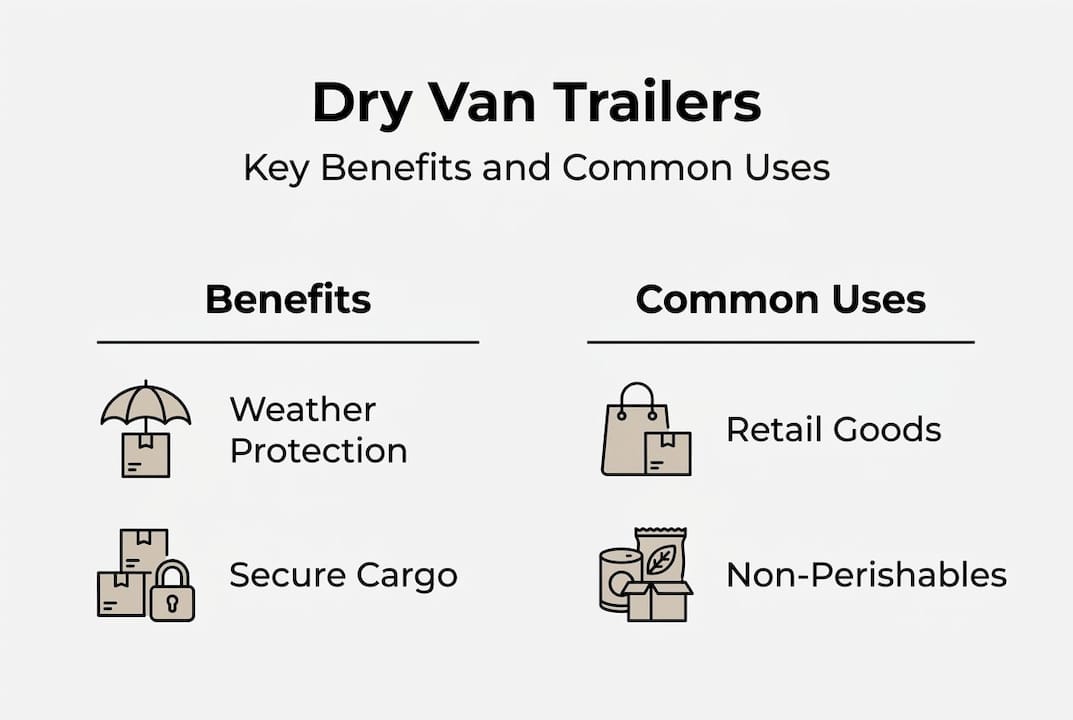
A dry van is an enclosed semi-trailer used for hauling non-perishable freight, offering protection from weather and theft. That definition sounds simple, but the engineering behind it is purpose-built for efficiency. The trailer has a rigid steel or aluminum frame, a solid roof, reinforced sidewalls, and rear swing doors that seal tightly against the elements. There’s no refrigeration unit, no open deck, and no ventilation system beyond basic airflow. What you get is a sealed, secure, weatherproof box on wheels.
Understanding dry van truck basics will clarify why this design dominates freight. The standard configuration is a 53-foot trailer, though 28-foot and 48-foot versions also serve specific regional and intermodal routes. Here’s what the numbers look like for a standard 53-foot unit:
- Length: 52.5 to 53 feet
- Interior width: 8.2 to 8.4 feet
- Interior height: 9 to 9.2 feet
- Cargo volume: Up to 3,400 cubic feet
- Pallet capacity: 26 to 30 standard pallets
- Max payload: 44,000 to 48,000 lbs
That payload capacity is substantial. For context, a fully loaded dry van can carry roughly the equivalent of 20 mid-size cars in weight. Reviewing detailed trailer specifications before purchasing or leasing helps you match the trailer to your actual freight profile.
| Trailer type | Climate control | Cargo type | Typical payload |
|---|---|---|---|
| Dry van | None | Non-perishable, packaged goods | 44,000–48,000 lbs |
| Reefer | Yes (refrigerated) | Perishables, pharmaceuticals | 42,000–45,000 lbs |
| Flatbed | None | Oversized, machinery, construction | 48,000–52,000 lbs |
Reefers cost more to operate and maintain because of the refrigeration unit. Flatbeds offer higher payload but zero weather protection. The dry van sits in a practical sweet spot for most general freight operations.
Common uses: What can (and can’t) you haul in a dry van?
Now that you’re familiar with dry van fundamentals, let’s clarify exactly what these trailers are best and worst at hauling. The short answer is: if it’s dry, packaged, and non-hazardous, a dry van can probably move it.
Dry vans are suited for palletized, boxed, or loose non-perishable goods like consumer products, electronics, furniture, and building materials. Massachusetts shippers across retail, manufacturing, and e-commerce rely on dry vans for the bulk of their regional and long-haul moves.
Freight that works well in a dry van:
- Boxed consumer goods and retail merchandise
- Packaged electronics and appliances
- Furniture and home goods
- Building materials like tile, lumber (when not oversized), and flooring
- Palletized food items that don’t require refrigeration (canned goods, dry pasta, bottled beverages)
- Paper products and office supplies
Freight that does not belong in a dry van:
- Fresh produce, dairy, or frozen foods requiring temperature control
- Live plants or animals
- Oversized machinery or construction equipment that won’t fit the interior
- Hazardous materials requiring specialized containment
- Liquids in bulk without proper containment
For insights on pairing the right trailer to the right load, the fleet manager dry van tips section covers practical scenarios Massachusetts fleets regularly face. When you need temporary on-site storage between legs of a delivery, a storage trailer rental guide is also worth reviewing.
Pro Tip: Don’t assume that “room temperature” freight is always safe in a dry van during New England winters or summer heat waves. Electronics, candles, chocolates, and certain adhesives can be damaged by temperature extremes even without direct moisture exposure. When in doubt, consider a reefer for those loads.
Loading, unloading, and securement: Best practices for safe dry van operations
With a clear idea of what you can haul, it’s crucial to understand how to get freight in and out of dry vans safely and efficiently. Improper loading is one of the most common causes of freight damage and on-site injury in logistics operations.
Here is a structured approach that experienced drivers and dock managers follow:
- Inspect the trailer interior before loading. Check for moisture, sharp protrusions, debris, or structural damage that could compromise freight.
- Plan your load sequence based on delivery stops. Last-stop freight goes in first, closest to the nose of the trailer.
- Use forklifts or pallet jacks to avoid manual handling injuries and speed up turnaround. Never hand-stack pallets when mechanical equipment is available.
- Distribute weight evenly across both axles. Uneven loading can cause handling issues on the road and trigger weigh station violations.
- Secure every load with appropriate straps, load bars, or dunnage bags. This is not optional; it’s a federal regulatory requirement under FMCSA (Federal Motor Carrier Safety Administration) rules.
- Check trailer specs for loading to confirm your equipment matches the freight weight before sealing the doors.
Research consistently shows that proper cargo securement practices can reduce freight damage claims by up to 30%, directly improving profitability on every load.
For a used dry van example of how trailer condition affects loading efficiency, inspecting available inventory is a practical starting point. Knowing proper loading protocols keeps your operation compliant and your freight intact.
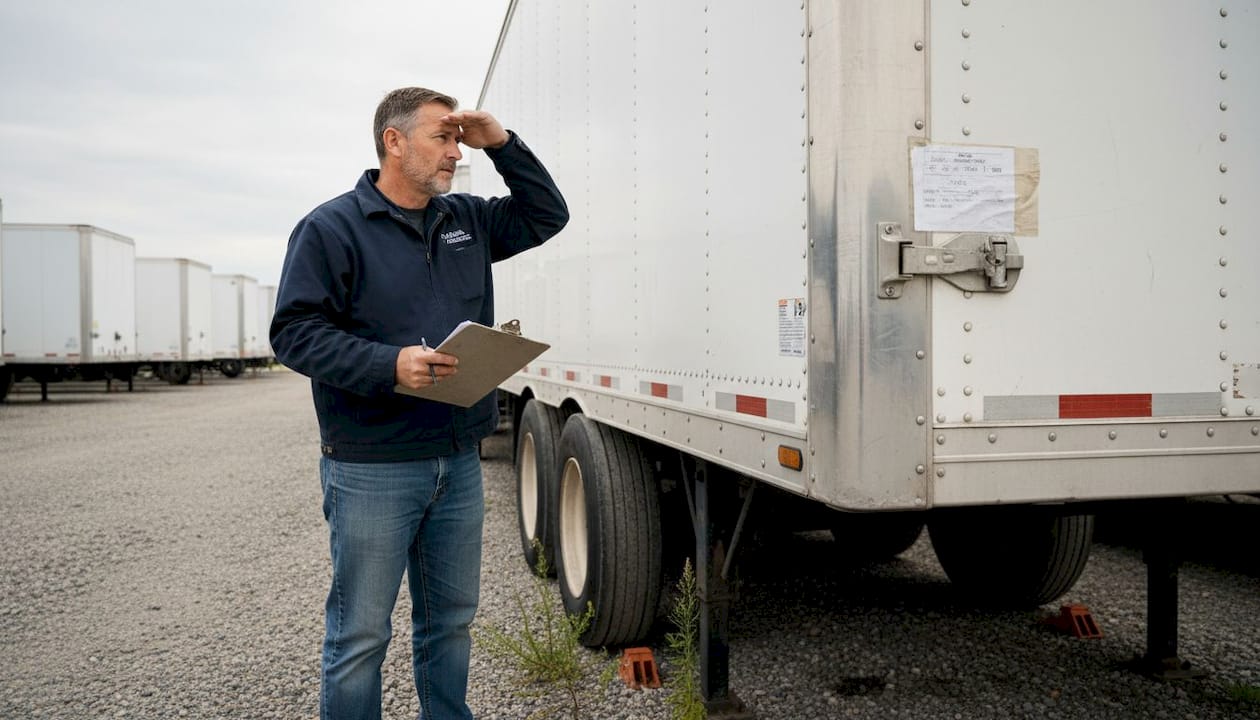
Pro Tip: Always open rear doors from the side, not directly behind the trailer. Freight shifts in transit, and door pressure can cause unsecured cargo to fall immediately upon opening. This simple habit prevents serious injuries at the dock.
Making smart equipment choices: Operational and financial considerations
Knowing the ins and outs of handling freight, let’s turn to strategic decisions around choosing, using, and getting the most out of dry van equipment. Numbers matter here, and so does context.
The dry van market is growing approximately 5% annually, with spot rates currently ranging from $2.03 to $2.60 per mile in 2025 and 2026. That rate stability makes dry van capacity relatively predictable for budget planning compared to specialized equipment.
| Metric | Dry van benchmark |
|---|---|
| Spot rate (2025–2026) | $2.03–$2.60/mile |
| Annual market growth | ~5% |
| US freight market share | ~70% |
| Typical payload utilization | 80–90% of max capacity |
For Massachusetts fleet managers, several financial decisions hinge on understanding these benchmarks:
- Cubing out vs. weighing out: Some loads fill the trailer’s cubic volume before hitting the weight limit. If you frequently cube out, a trailer with a higher interior height might improve payload efficiency.
- Partial loads: Less-than-truckload (LTL) freight is common in New England regional distribution. Understanding your average load factor helps you decide between owning, leasing, or brokering capacity.
- Fragile freight: High-value goods like electronics need additional padding and securement, which adds time and cost. Factor that into your rate calculations.
When evaluating equipment, comparing a flatbed vs dry van helps you quantify which trailer type actually fits your load mix. Edge cases like cubing out and partial loads deserve specific policy decisions, not ad hoc choices at the dock. Working with trucking brokers can also smooth out capacity gaps when your dry van fleet runs short during peak demand.
Our expert perspective: Why dry vans are the unsung heroes of logistics
After decades of working with fleet operators across Massachusetts and New England, we’ve seen a consistent pattern: fleets that maintain a strong dry van base outperform those that over-specialize. The temptation to invest heavily in reefers or flatbeds for specific lanes is understandable, but specialization creates fragility.
Massachusetts weather is notoriously unpredictable. A load you might consider moving on a flatbed in July becomes a risk in October when rain, wind, and early frost arrive without warning. The enclosed protection of a dry van eliminates that variable entirely.
We’ve also seen fleets leave money on the table by rejecting dry van loads as “too simple.” The reality is that expert dry van tips often reveal ways to increase revenue per mile on these loads through better load planning, reduced dwell time, and improved securement practices. A well-managed dry van fleet is a crisis-ready fleet. When a specialty trailer breaks down or a reefer unit fails, the operation grinds to a halt. When a dry van is unavailable, you often have three more ready to go.
Upgrade your fleet: Find dry van solutions in Massachusetts
If this guide helped you think more strategically about dry van equipment, the next step is putting that thinking into action with the right trailer for your operation.
At Apple Truck and Trailer, we’ve been helping Massachusetts fleet operators source, finance, and maintain commercial equipment since 1986. Whether you’re looking to expand your capacity with dry van trailers for sale or need guidance on trailer specs for purchasing the right unit for your freight profile, our team is ready to help. We offer trade-in options, flexible financing, and personalized consultations for fleets of every size across Massachusetts, Rhode Island, Connecticut, and New Hampshire. Reach out today and let’s find the right equipment for your next move.
Frequently asked questions
What makes a dry van different from a reefer trailer?
A dry van is an enclosed trailer designed for non-perishable freight with no temperature control, while a reefer trailer uses a refrigeration unit to maintain specific temperatures for perishable or pharmaceutical goods.
What are the typical dimensions and capacity of a dry van trailer?
A standard 53-foot dry van measures approximately 52.5 to 53 feet long, 8.2 to 8.4 feet wide, and carries up to 48,000 lbs or 26 to 30 standard pallets.
Can dry van trailers be used for oversized or temperature-sensitive freight?
No. Dry vans are unsuitable for oversized loads, perishables, or hazmat requiring specialized containment; use flatbeds for oversized cargo and reefers for temperature-sensitive goods.
What is the current market rate for dry van freight?
In 2025 and 2026, dry van spot rates average $2.03 to $2.60 per mile across the US, offering relatively stable pricing compared to other trailer segments.
What safety tips should be followed when working with dry van doors?
Always stand to the side and check door pressure before pulling the rear doors open, since freight that has shifted in transit can fall immediately and cause serious injury.