
More than half of American trucking companies now explore vehicle leasing to keep costs predictable while staying competitive. As trucking overheads climb across Massachusetts, owners and fleet managers must decide if leasing actually delivers lasting value. This clear-eyed guide exposes both the benefits and risks of truck leasing, helping you judge if it aligns with your company’s financial goals and day-to-day realities.
Table of Contents
- What Truck Leasing Means for Fleets
- Types of Truck Leases and Key Differences
- How Truck Leasing Works Day to Day
- Financial Impact: Costs, Taxes, and Savings
- Hidden Pitfalls and When to Consider Buying
Key Takeaways
| Point | Details |
|---|---|
| Financial Flexibility | Truck leasing reduces upfront costs and helps manage predictable monthly expenses. |
| Upgrade Efficiency | Leasing enables frequent upgrades to modern vehicles without long-term investments. |
| Lease Type Considerations | Understand different lease types to align with specific operational and financial needs. |
| Evaluate Long-Term Costs | Consider potential hidden costs and project total ownership costs when choosing between leasing and buying. |
What Truck Leasing Means for Fleets
Truck leasing represents a strategic financial approach for fleet operators seeking operational flexibility and cost management. Unlike traditional vehicle ownership, vehicle leasing involves a contractual arrangement where businesses pay to use commercial trucks for predetermined periods without purchasing them outright.
For fleet managers, truck leasing provides significant financial advantages. By leasing instead of buying, companies can reduce upfront capital expenditures, manage predictable monthly expenses, and maintain a modern, efficient vehicle inventory. Fleet vehicles are managed specifically for operational efficiency, and leasing enables organizations to upgrade trucks more frequently without substantial long-term investments.
The core benefits of truck leasing include lower initial costs, potential tax advantages, and reduced maintenance responsibilities. Leasing contracts typically include warranty coverage, which shifts major repair risks away from fleet operators. This financial model allows trucking businesses to allocate resources more strategically, focusing capital on core operational needs rather than tying up funds in vehicle ownership.
Pro tip: Calculate your total cost of ownership comparing leasing versus purchasing to determine the most financially prudent strategy for your specific fleet requirements.
Types of Truck Leases and Key Differences
Truck leasing involves multiple complex arrangements, with each lease type offering unique financial and operational implications for fleet managers. Leasing structures range from operating to capital leases, providing businesses flexible options for acquiring commercial vehicles without substantial upfront investments.
The primary lease categories include Operating Leases and Capital Leases. Operating Leases function as short-term rental arrangements where the lessor maintains ownership and typically handles maintenance responsibilities. These leases allow businesses to use trucks for specified periods without assuming full ownership risks. In contrast, Capital Leases closely resemble purchase transactions, transferring most ownership benefits and risks to the lessee, with longer contract durations and higher monthly payments.
Additional specialized lease types include Leveraged Leases and Sale and Leaseback arrangements. Leveraged Leases involve multiple investors financing substantial assets, while Sale and Leaseback options enable companies to sell existing trucks and immediately lease them back, generating immediate capital while retaining operational use. Each lease structure presents unique advantages depending on a fleet’s specific financial strategy and operational requirements.
Here is a comparison of common truck lease types and their business impact:
| Lease Type | Contract Length | Financial Responsibility | Business Impact |
|---|---|---|---|
| Operating Lease | Short to Medium | Lessor covers major maintenance | Easy upgrades, lower risk |
| Capital Lease | Long Term | Lessee owns most risks | Asset control, higher costs |
| Leveraged Lease | Long Term | Shared by investors | Access to high-value trucks |
| Sale and Leaseback | Variable | Seller gains liquidity | Immediate cash, retain use |
Pro tip: Carefully analyze your fleet’s long-term financial goals and operational needs before selecting a specific lease type to maximize cost-effectiveness and flexibility.
How Truck Leasing Works Day to Day
Truck leasing operations involve systematic financial arrangements that transform how fleet managers handle vehicle acquisition and maintenance. Each lease agreement establishes a structured framework for using commercial trucks without the complexities of full ownership, creating predictable monthly expenses and operational flexibility.
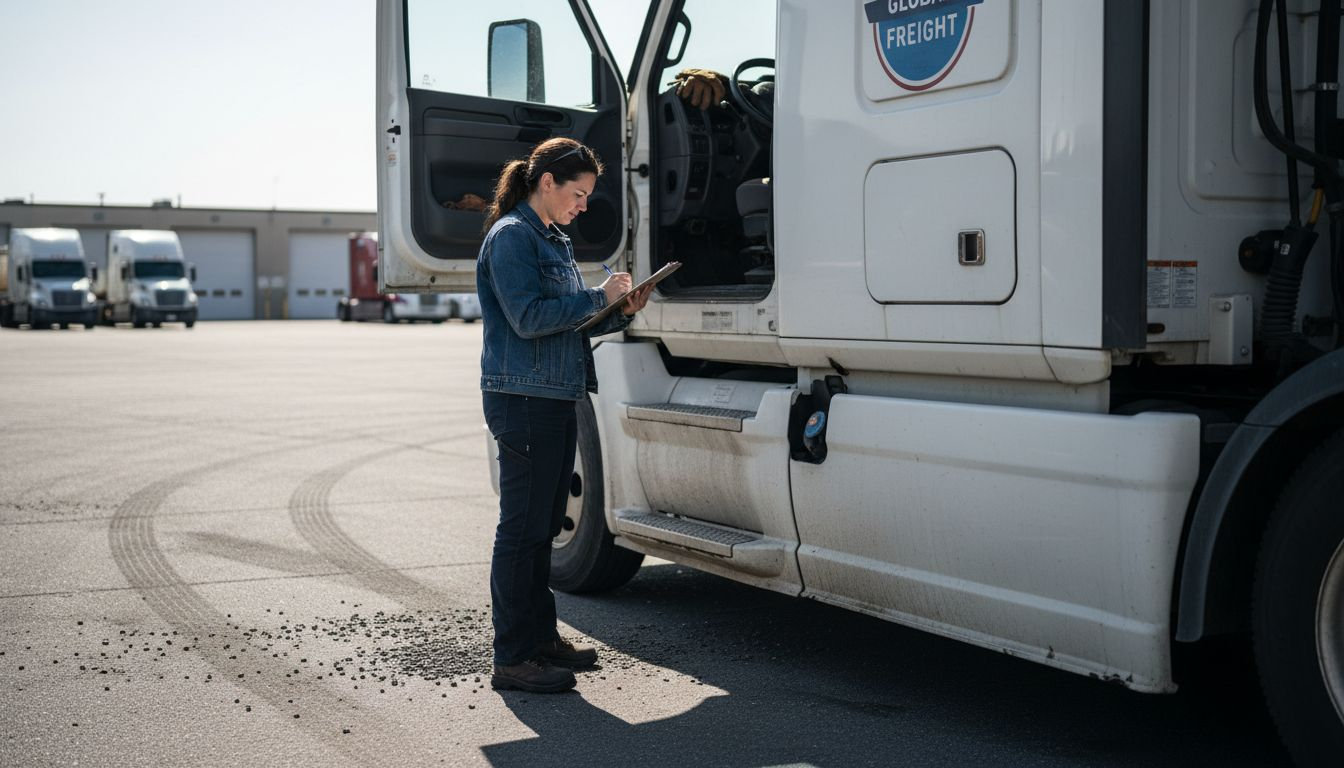
On a daily basis, leasing requires fleet managers to adhere to specific contractual obligations. These typically include making scheduled monthly payments, maintaining the vehicle according to manufacturer specifications, and tracking usage parameters. The lease agreement defines critical operational boundaries, such as annual mileage limits, maintenance responsibilities, and acceptable wear-and-tear conditions. Lessees must comply with detailed usage restrictions while enjoying the benefits of using modern, well-maintained equipment without substantial capital investment.
The practical mechanics of truck leasing involve ongoing communication between the fleet operator and leasing company. Regular maintenance reports, timely payments, and adherence to inspection schedules become routine activities. Most lease arrangements include built-in support mechanisms like warranty coverage and scheduled maintenance programs, which help fleet managers minimize unexpected mechanical issues and control long-term operational costs.
Pro tip: Develop a comprehensive tracking system to monitor lease vehicle mileage, maintenance schedules, and payment deadlines to ensure strict compliance with lease agreement terms.
Financial Impact: Costs, Taxes, and Savings
Trucking operational costs encompass complex financial considerations that dramatically influence fleet management strategies. Leasing introduces a financial model that transforms traditional vehicle acquisition, offering fleet managers a nuanced approach to managing expenses, cash flow, and tax implications.
The financial landscape of truck leasing involves multiple layers of cost management. Lease payments replace large upfront capital expenditures, spreading vehicle costs across predictable monthly installments. Business vehicle lease expenses offer strategic tax deductions that can significantly reduce overall tax liability. Fleet managers can potentially deduct lease payments proportionate to business usage, creating a financially advantageous approach to vehicle procurement and operational expense management.
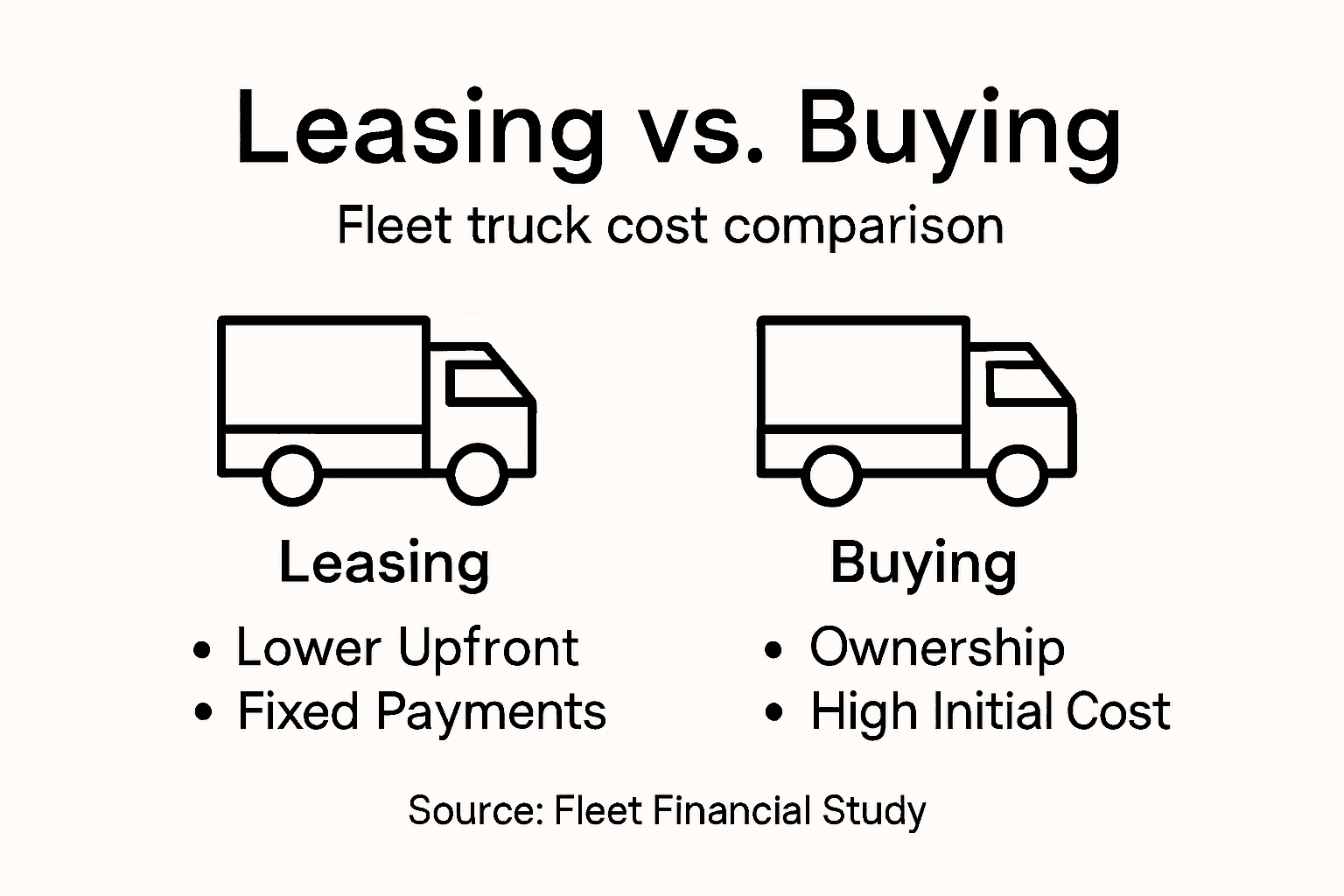
Beyond direct costs, truck leasing impacts broader financial strategies. Operating expenses like maintenance, fuel, and driver wages interact with lease structures to create comprehensive cost profiles. Leasing can potentially lower total ownership costs by providing newer vehicles with reduced maintenance requirements, warranty coverage, and more predictable financial planning. The ability to upgrade vehicles more frequently without substantial capital investment represents a significant financial flexibility for growing trucking operations.
Here is an overview of key costs and savings when leasing versus buying trucks:
| Factor | Leasing Trucks | Purchasing Trucks |
|---|---|---|
| Upfront Costs | Low initial outlay | High upfront capital required |
| Monthly Payments | Predictable installments | Loan or finance payments |
| Tax Benefits | Lease payments deductible | Depreciation and interest write-off |
| Asset Ownership | No ownership at term end | Retain asset or resale value |
Pro tip: Consult a tax professional to maximize lease payment deductions and understand the precise tax implications specific to your fleet’s operational configuration.
Hidden Pitfalls and When to Consider Buying
Truck leasing presents complex financial considerations that extend far beyond simple monthly payment comparisons. While leasing offers initial financial flexibility, fleet managers must carefully evaluate potential long-term limitations and unexpected expenses that could undermine apparent cost savings.
The most significant hidden pitfalls of truck leasing involve restrictive contract terms. Lease agreements often include punitive mileage limitations that can generate substantial penalty fees for trucking operations with high-volume routes. Comprehensive insurance requirements, mandatory gap coverage, and strict wear-and-tear standards can dramatically increase total operational costs. These constraints transform seemingly affordable lease arrangements into financially burdensome commitments.
Deciding between leasing and purchasing requires a strategic evaluation of your fleet’s specific operational needs. Buying becomes more attractive when long-term asset ownership, unlimited mileage, and complete vehicle customization are priorities. Fleet managers should consider purchasing when projected total ownership costs are lower than cumulative lease expenses, when vehicles will be utilized extensively beyond standard mileage limits, or when maintaining consistent equipment represents a core operational strategy.
Pro tip: Develop a comprehensive five-year financial projection comparing lease versus purchase scenarios, factoring in potential penalty costs, maintenance expenses, and potential resale value.
Unlock Smart Truck Leasing Solutions for Your Fleet Today
Managing the delicate balance between cost savings and operational flexibility can feel overwhelming when deciding whether to lease or buy trucks for your fleet. This article highlights critical challenges such as restrictive mileage limits, maintenance responsibilities, and understanding various lease types. It speaks directly to fleet owners determined to maximize efficiency while controlling expenses through strategic truck leasing choices.
At Apple Truck & Trailer, we help you navigate these complexities with expert guidance and a wide selection of high-quality options. Whether you want to explore leasing benefits or assess cost implications, our comprehensive resources like Truck Leasing – Apple Truck & Trailer and Is Leasing a Semi-Truck a Good Idea? – Apple Truck & Trailer provide clear insights tailored for your unique fleet needs.
Don’t let uncertain costs or hidden lease pitfalls slow down your business growth. Visit https://appletruckandtrailer.com now to explore trusted leasing options and request a personalized quote. Act now to gain financial clarity and drive your fleet forward with confidence.
Frequently Asked Questions
What are the financial advantages of truck leasing for fleets?
Truck leasing reduces upfront capital expenditures, allows for predictable monthly payments, and provides potential tax benefits. It also enables fleets to maintain a modern inventory of trucks without the long-term financial commitment of ownership.
How do operating leases differ from capital leases in truck leasing?
Operating leases are short-term rent-like arrangements where the lessor maintains ownership and handles maintenance responsibilities. Capital leases resemble a purchase, transferring most ownership benefits and risks to the lessee, typically involving longer contract durations and higher payments.
What are the potential hidden costs when leasing trucks?
Hidden costs can include punitive mileage penalties, comprehensive insurance requirements, and strict maintenance standards, which may lead to increased operational expenses if not properly managed.
When should a fleet consider purchasing trucks instead of leasing?
Fleet managers should consider purchasing trucks if long-term ownership, unlimited mileage, and complete vehicle customization are priorities, or if the projected total ownership costs are lower than cumulative leasing expenses.
Recommended
- Benefits of Truck Leasing for Fleet Operators – Apple Truck & Trailer
- Short-Term Truck Rental: Smarter Logistics Choices – Apple Truck & Trailer
- Practical Guide to Leasing a Semi Truck: Is Leasing a Semi-Truck a Good Idea? – Apple Truck & Trailer
- Beginner’s Guide to Leasing Costs for Tractor Trailers: How Much Does it Cost to Lease a Tractor Trailer? – Apple Truck & Trailer