
American businesses lose millions yearly from delayed shipments due to rigid fleet limitations. For fleet managers and logistics coordinators across Massachusetts, rapid access to reliable trucks can mean the difference between meeting critical deadlines and missing opportunities. This guide breaks down how short-term truck rentals deliver cost-effective flexibility, keep goods moving, and help you respond quickly to shifts in demand without permanent investment.
Table of Contents
- Defining Short-Term Truck Rental Services
- Types of Trucks Available for Rent
- How the Short-Term Rental Process Works
- Key Benefits for Fleet Operators
- Cost Factors, Legalities, and Risk Management
Key Takeaways
| Point | Details |
|---|---|
| Flexibility of Short-Term Rentals | Short-term truck rental services offer businesses the ability to adapt transportation resources to fluctuating operational needs without long-term commitments. |
| Diverse Truck Options | A variety of truck types and sizes are available, allowing fleet managers to select the right vehicle based on specific cargo requirements. |
| Streamlined Rental Process | The rental process is facilitated through online platforms, enabling quick access and efficient vehicle selection for logistics professionals. |
| Cost and Risk Management | Careful analysis of rental costs and adherence to regulatory requirements is essential to minimize financial risks and ensure compliance. |
Defining Short-Term Truck Rental Services
Short-term truck rental represents a flexible logistics solution enabling businesses and fleet managers to access commercial vehicles without long-term ownership commitments. These services provide temporary transportation capabilities designed to meet fluctuating operational needs across Massachusetts and surrounding regions. Short-term rental services have dramatically transformed how organizations manage vehicle requirements, offering unprecedented adaptability in modern logistics planning.
Commercial truck rentals typically involve furnishing businesses with trucks for periods ranging from a few days to several weeks, supporting diverse operational scenarios. Fleet managers can strategically leverage these services to address seasonal demand spikes, cover unexpected equipment failures, or manage temporary workforce expansions. The core advantage lies in eliminating substantial capital investments while maintaining operational agility. By accessing regulated truck rental frameworks, organizations can scale transportation resources precisely when and where they are needed.
The rental process involves several key considerations for logistics professionals. Rental options generally include various truck sizes and configurations to match specific cargo requirements, from small delivery vans to substantial semi-trucks. Pricing structures are typically calculated based on daily or weekly rates, with additional mileage fees and potential insurance costs. Commercial clients should carefully evaluate rental terms, including maintenance responsibilities, insurance coverage, and potential penalties for extended use or equipment damage.
Pro tip: Always request a comprehensive written breakdown of rental terms and potential additional fees before finalizing your truck rental agreement to prevent unexpected financial surprises.
Types of Trucks Available for Rent
Truck rental services offer a diverse range of vehicle types designed to meet specific logistical requirements for businesses and independent operators. Truck classifications range from lightweight pickup trucks to substantial semi-trailers, ensuring that every transportation need can be accommodated with precision. The spectrum of available trucks allows fleet managers and logistics professionals to select exactly the right vehicle for their unique operational demands.
The primary truck categories are typically organized by weight class and intended use. Light-duty trucks, such as cargo vans and small pickups, are ideal for local deliveries and urban logistics, supporting payloads up to 8,500 pounds. Medium-duty trucks like box trucks and stake beds handle more substantial cargo requirements, bridging the gap between light and heavy-duty transportation. Truck rental classifications in the United States systematically divide vehicles from Class 1 to Class 8, providing a standardized framework for understanding vehicle capabilities and matching them to specific business needs.
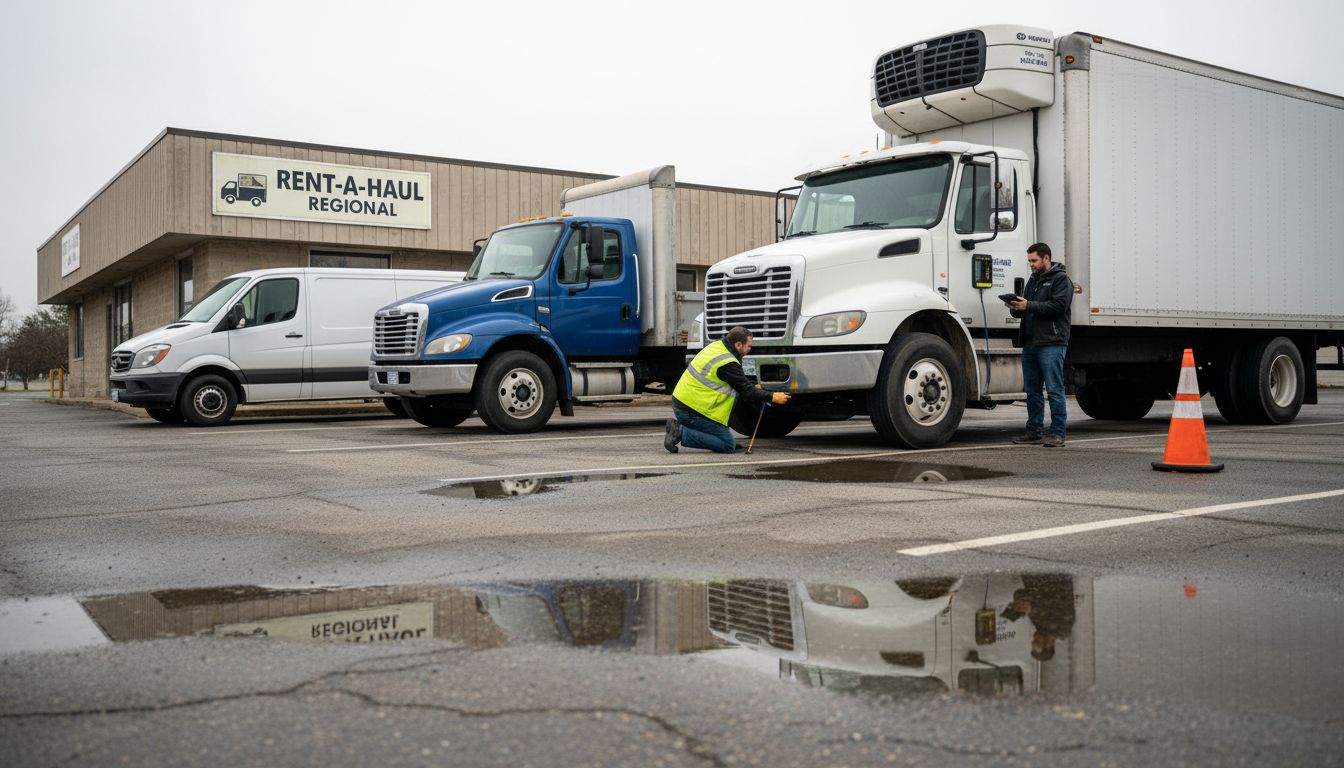
Specialized truck rentals extend beyond standard configurations, offering refrigerated trucks for temperature-sensitive cargo, flatbed trucks for oversized equipment, and semi-trucks for long-haul freight transportation. Each vehicle type comes with unique features tailored to specific industry requirements. Commercial clients can select trucks with varying cargo capacities, cabin configurations, and specialized equipment attachments to precisely match their operational objectives.
Pro tip: Before selecting a truck rental, carefully assess your specific cargo dimensions, weight requirements, and transportation distance to ensure you choose the most cost-effective and appropriate vehicle type.
Here’s a summary of the main truck rental categories and their ideal business uses:
| Truck Category | Weight/Class Range | Typical Use Case | Example Payload |
|---|---|---|---|
| Light-Duty Trucks | Up to 8,500 pounds | Local deliveries, urban jobs | Small furniture |
| Medium-Duty Trucks | 8,501–26,000 pounds | Regional transport, moving jobs | Pallets, equipment |
| Heavy-Duty Trucks | Over 26,000 pounds | Long-haul, large cargo | Machinery, freight |
| Specialized Trucks | Varies by build | Refrigerated, flatbed, etc. | Perishables, oversized loads |
How the Short-Term Rental Process Works
The short-term truck rental process has been streamlined to provide businesses with quick and efficient vehicle access. Online reservation systems have transformed traditional rental approaches, enabling logistics professionals to secure trucks with unprecedented speed and convenience. Typically, the process begins with digital platforms that allow immediate vehicle selection, availability checking, and preliminary reservation submission.
Rental workflows involve several critical verification steps designed to ensure accountability and operational safety. Rental procedures require potential renters to provide comprehensive documentation, including valid commercial driver’s licenses, proof of insurance, and sometimes additional professional credentials. Eligibility requirements vary depending on the specific truck class and rental duration, with most providers implementing thorough screening processes to validate the renter’s capability to operate commercial vehicles safely.
The actual rental transaction encompasses multiple components beyond simple vehicle selection. Renters must typically choose between various insurance options, select additional equipment or accessories, and confirm specific pickup and return locations. Payment structures are usually based on daily or weekly rates, with mileage limitations and potential penalties for late returns or excessive wear. Some advanced rental services now offer real-time tracking, digital contract management, and flexible extension options to accommodate dynamic business needs.
Pro tip: Always photograph the truck’s condition before and after rental, documenting any pre-existing damage to protect yourself from potential unexpected charges.
Key Benefits for Fleet Operators
Short-term truck rentals offer fleet operators a strategic approach to managing transportation resources with unprecedented flexibility. Rental models provide critical advantages that transform traditional fleet management strategies, enabling businesses to optimize their operational capabilities without substantial long-term investments. By leveraging short-term rentals, companies can maintain agile transportation infrastructures that adapt quickly to changing market demands and seasonal fluctuations.
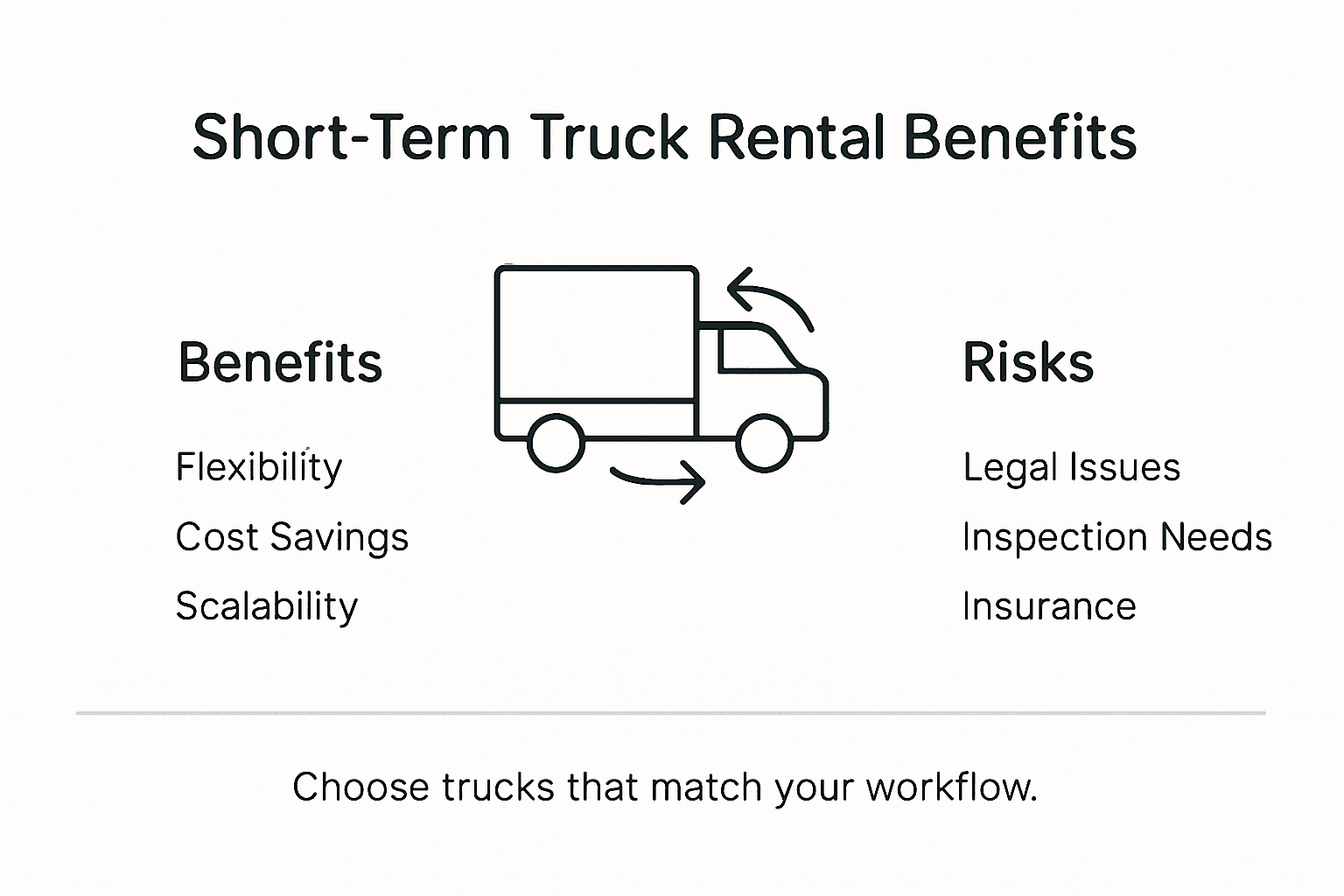
The financial benefits of short-term truck rentals extend far beyond simple cost reduction. Capital expenditure minimization becomes a key strategic advantage, allowing fleet managers to allocate resources more efficiently. Instead of committing significant capital to vehicle purchases, organizations can distribute expenses across rental periods, maintaining financial flexibility. This approach eliminates substantial upfront investments, reduces maintenance costs, and provides access to modern vehicles with advanced safety technologies and improved fuel efficiency.
Operational advantages of short-term rentals include enhanced risk management and scalability. Fleet operators can rapidly adjust their vehicle inventory to match current business requirements, scaling up or down without the complexities of long-term ownership. This dynamic approach supports businesses experiencing seasonal demand changes, supporting temporary project requirements, or managing unexpected operational shifts. Additional benefits include reduced administrative overhead, simplified maintenance responsibilities, and the ability to access specialized vehicle types without permanent infrastructure investments.
Pro tip: Develop a comprehensive rental strategy that aligns with your organization’s projected workload, considering peak seasons and potential project expansions to maximize rental cost-effectiveness.
Cost Factors, Legalities, and Risk Management
Navigating the complex landscape of short-term truck rental requires comprehensive understanding of multiple financial and legal dimensions. Cost calculation frameworks involve intricate considerations beyond simple daily rates, encompassing variables like mileage, fuel consumption, additional equipment fees, and specialized insurance requirements. Fleet operators must meticulously analyze these multifaceted expense components to develop accurate budgeting strategies that prevent unexpected financial burdens.
Legal compliance represents a critical aspect of short-term truck rentals that demands proactive management. Regulatory requirements extend far beyond basic vehicle operation, involving intricate documentation, driver qualification verification, and adherence to state and federal transportation regulations. Companies must maintain rigorous documentation processes, ensuring all rental agreements explicitly define liability parameters, maintenance responsibilities, and potential financial consequences for equipment damage or operational violations.
Risk management in truck rentals requires a holistic approach that integrates insurance strategies, driver screening, and comprehensive safety protocols. Emerging regulatory landscapes increasingly emphasize preventative measures, compelling fleet operators to implement sophisticated risk mitigation techniques. This includes thorough driver background checks, mandatory safety training, real-time vehicle tracking, and robust insurance coverage that protects against potential financial and legal vulnerabilities. Proactive risk assessment becomes a strategic imperative, transforming potential liabilities into manageable operational parameters.
Pro tip: Develop a comprehensive risk management checklist that includes driver qualifications, vehicle inspection protocols, and insurance coverage verification to minimize potential legal and financial exposure.
Below is a comparison of key cost and risk factors in short-term truck rentals:
| Cost/Risk Factor | Description | Business Impact |
|---|---|---|
| Rental Rate Structure | Daily/weekly pricing, mileage, equipment fees | Affects total budget planning |
| Insurance Requirements | Liability, collision coverage, damage waivers | Protects against unexpected losses |
| Regulatory Compliance | Documentation, licensing, federal/state rules | Reduces legal and operational risk |
| Maintenance Responsibility | Upkeep duties during rental period | Minimizes downtime, avoids penalties |
Unlock Smarter Logistics with Flexible Truck Rentals
Managing fluctuating transportation needs can challenge even the most experienced fleet operators. The article highlights common pain points like unpredictable demand, risk management, and cost control. If flexibility and operational agility are your goals short-term truck rentals provide the perfect solution. By choosing the right vehicle type for your cargo and scaling your fleet without heavy investments you gain control and reduce financial strain.
At Apple Truck & Trailer we understand these challenges and offer tailored solutions that fit your dynamic business needs. Explore our Truck and Trailer Rental – Apple Truck & Trailer services that deliver reliable, well-maintained trucks on flexible terms.

Take advantage of our decades of expertise serving Massachusetts and surrounding states. Whether you need light, medium, or heavy-duty trucks you can count on our extensive inventory and professional support to keep your operations running smoothly. Act now to optimize your fleet and control costs by visiting https://appletruckandtrailer.com. Learn more about strategic options like leasing through our insight-packed Is Leasing a Semi-Truck a Good Idea? – Apple Truck & Trailer. Your smarter logistics choice starts today.
Frequently Asked Questions
What is short-term truck rental?
Short-term truck rental is a flexible logistics solution that allows businesses to access commercial vehicles for a temporary duration, typically ranging from a few days to several weeks. This service is useful for adapting to fluctuating operational needs without long-term ownership commitments.
What types of trucks are available for short-term rental?
Truck rental services offer a variety of vehicle types including light-duty trucks (like cargo vans and small pickups), medium-duty trucks (such as box trucks), heavy-duty trucks (over 26,000 pounds), and specialized trucks (like refrigerated or flatbed trucks) to meet various transportation needs.
How does the short-term truck rental process work?
The rental process usually begins with online reservation systems that allow users to select a vehicle, check availability, and submit a reservation. Renters must provide necessary documentation, choose insurance options, and confirm pick-up and return locations before completing the transaction.
What are the key benefits of short-term truck rentals for fleet operators?
Short-term truck rentals provide several advantages, including enhanced financial flexibility by minimizing capital expenditure, operational agility to quickly scale vehicle inventory according to business needs, and reduced administrative overhead. They also help fleet operators manage risk and access specialized vehicles without permanent investments.