
When your semi truck breaks down on Interstate 90 or Route 495, every minute of downtime costs your fleet money and disrupts delivery schedules. Finding dependable roadside semi repair services in Massachusetts quickly can mean the difference between a minor delay and a major operational crisis. This guide equips fleet operators with practical strategies to locate, prepare for, and effectively use local roadside repair providers to keep trucks moving and cargo on schedule.
Table of Contents
- Why 24/7 Roadside Semi Repair Is Critical For Fleets In Massachusetts
- How To Prepare Your Fleet To Utilize Roadside Semi Repair Effectively
- Step-By-Step Process To Access And Manage Roadside Semi Repair Near You
- Verifying Repair Quality And Minimizing Future Breakdowns
- Explore Roadside Repair And Fleet Solutions With Apple Truck & Trailer
- Frequently Asked Questions
Key takeaways
| Point | Details |
|---|---|
| 24/7 availability matters | Round-the-clock roadside repair drastically cuts downtime and prevents cargo delays |
| Local providers respond faster | Choosing repair services near your operation zones improves response times significantly |
| Preparation streamlines repairs | Proper planning and driver training help execute roadside repairs efficiently |
| Quality verification prevents repeat issues | Post-repair checks and tracking patterns reduce future breakdown frequency |
| Preventive maintenance complements repairs | Regular maintenance combined with timely roadside service boosts fleet profitability |
Why 24/7 roadside semi repair is critical for fleets in Massachusetts
Breakdowns don’t respect business hours. 60% of roadside breakdowns happen outside normal hours according to FMCSA data, making around-the-clock service availability essential for fleet operations. When a truck goes down at 2 AM on the Massachusetts Turnpike, waiting until morning means lost delivery windows, unhappy customers, and wasted driver hours.
Immediate repair access protects more than schedules. Cargo sitting in a disabled truck faces temperature control failures, security risks, and potential damage from weather exposure. Quick response from around-the-clock roadside repair services keeps shipments safe and maintains your reputation for reliability.
Local providers deliver faster response times because their crews travel shorter distances to reach stranded trucks. A Worcester-based repair service reaches a breakdown on I-290 much faster than a provider dispatching from Boston or Springfield. Geographic proximity translates directly into reduced downtime and faster return to service.
Consider these critical advantages of 24/7 roadside repair availability:
- Eliminates waiting periods that compound operational losses
- Reduces cargo damage risk from extended exposure
- Maintains delivery commitments regardless of breakdown timing
- Provides driver safety support during nighttime emergencies
Pro Tip: Verify that roadside service providers guarantee specific response times within your key route corridors before signing contracts.
“The difference between a two-hour repair and an eight-hour wait often determines whether a fleet meets its weekly revenue targets or falls short.”
How to prepare your fleet to utilize roadside semi repair effectively
Effective roadside repair starts long before a breakdown occurs. Fleet managers who prepare thoroughly reduce confusion, speed service delivery, and minimize driver stress during emergencies. Dr. Emily Carter, logistics expert, notes that fleet managers should view roadside assistance as an investment in operational efficiency, reducing downtime and improving profitability.
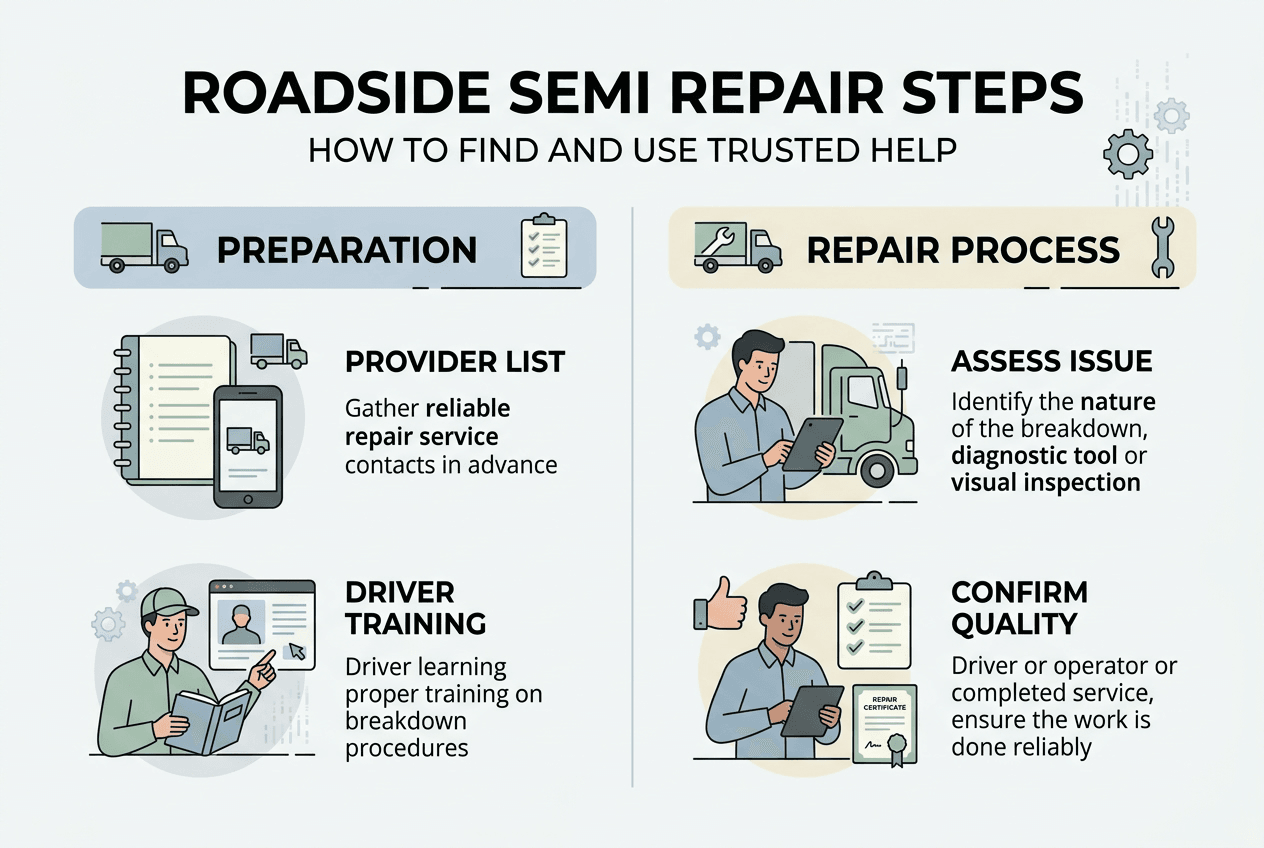
Start by compiling a master list of trusted roadside semi repair providers covering your primary routes through Massachusetts, Rhode Island, Connecticut, and New Hampshire. Include provider contact information, service areas, specialties, and average response times. Distribute this list digitally to all drivers and integrate it into dispatch systems.
Equip drivers with the tools and information they need to request service efficiently. Modern fleet apps enable one-touch service requests with automatic location sharing and truck identification. Ensure every driver has current login credentials and knows how to use these systems before emergencies strike.
Maintain comprehensive truck information logs accessible to both drivers and dispatchers:
- Vehicle identification numbers and registration details
- Complete maintenance and repair history
- Active service contracts and warranty coverage
- Cargo type and special handling requirements
- Insurance information and claim procedures
Driver training makes a measurable difference in roadside repair outcomes. Teach drivers to accurately assess breakdown symptoms, communicate technical details to repair crews, and perform basic safety procedures while waiting for service. A driver who can clearly describe whether the issue involves the engine, transmission, or electrical system helps technicians arrive with appropriate tools and parts.
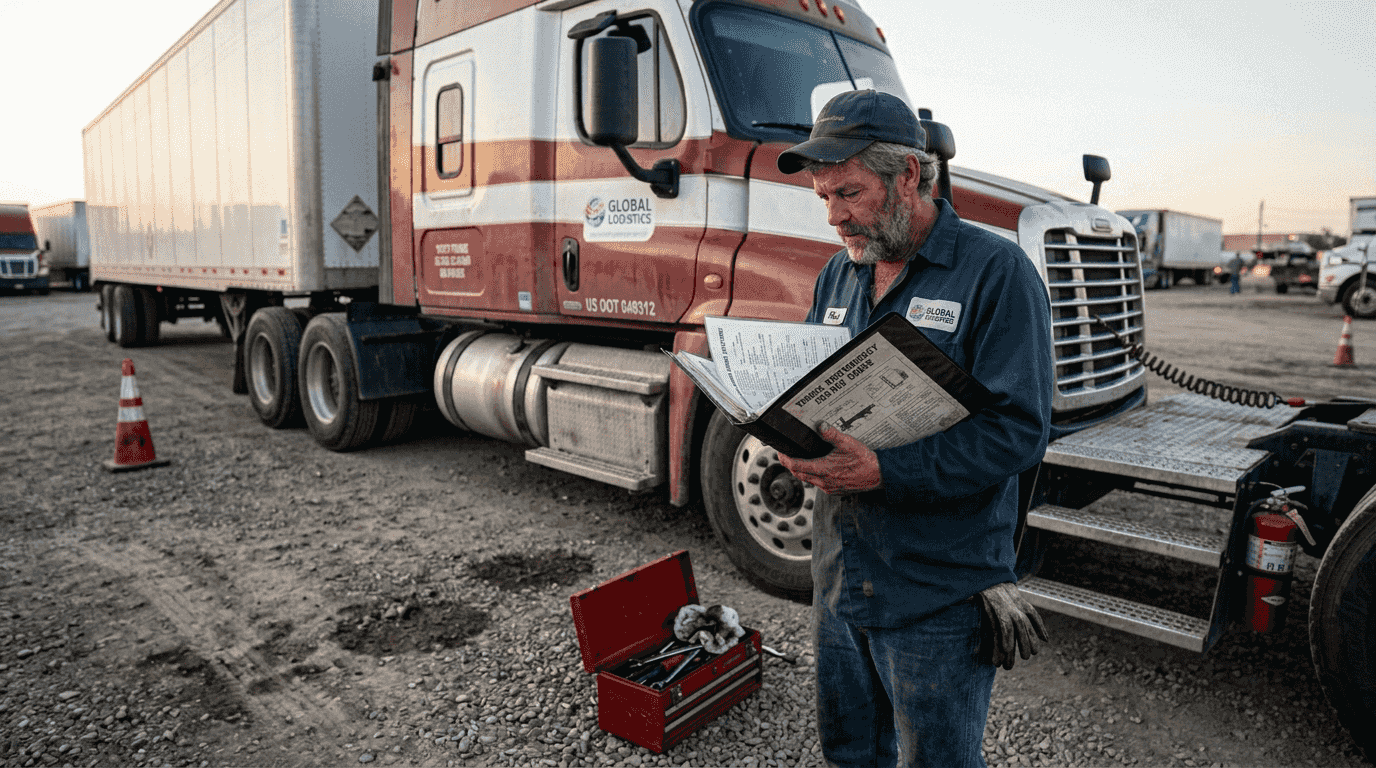
Pro Tip: Create standardized roadside emergency kits containing basic tools, safety equipment, and minor repair supplies that drivers can use for simple fixes.
Review this comparison of typical roadside repair services and expected response benchmarks:
| Service Type | Average Response Time | Common Applications |
|---|---|---|
| Tire change/repair | 45-90 minutes | Blowouts, punctures, pressure issues |
| Battery jump/replacement | 30-60 minutes | Dead batteries, charging failures |
| Fuel delivery | 60-120 minutes | Empty tanks, fuel system problems |
| Mobile mechanical repair | 90-180 minutes | Engine issues, brake problems |
| Towing to shop | 120-240 minutes | Major failures requiring facility repairs |
Regularly audit your truck maintenance checklist to identify patterns that might predict breakdowns. Tracking which trucks require frequent roadside repairs reveals systemic issues needing deeper investigation. Consider establishing relationships with providers who offer both roadside repair and comprehensive semi truck repairs at their facilities.
Step-by-step process to access and manage roadside semi repair near you
When a breakdown occurs, following a structured response process minimizes confusion and accelerates repair completion. Timely roadside repair significantly cuts operational downtime and associated costs for trucking fleets.
Execute these steps immediately when a breakdown happens:
- Secure the vehicle and ensure driver safety by moving to the shoulder, activating hazard lights, and deploying warning triangles
- Document the exact location using GPS coordinates or mile markers for accurate service dispatch
- Assess symptoms and gather initial diagnostic information about what the driver observed before the failure
- Contact your primary roadside repair provider using pre-loaded contact information or fleet app
- Provide detailed truck specifications, cargo details, and symptom description to the dispatcher
- Confirm estimated arrival time and technician specialization for your specific issue
- Notify fleet dispatch to update delivery schedules and coordinate customer communications
While waiting for repair crews, drivers can perform basic troubleshooting that may resolve minor issues or provide valuable diagnostic information:
- Check for obvious loose connections or visible damage
- Verify fuel levels and inspect for leaks
- Test basic electrical functions and gauge readings
- Review recent maintenance records for related work
- Document any unusual sounds, smells, or performance changes
Choosing the right service provider during an emergency requires quick evaluation. Use this framework to compare available options:
| Provider Factor | Priority Level | Evaluation Criteria |
|---|---|---|
| Response time | Critical | Guaranteed arrival within service area |
| Technical expertise | High | Specialization in your truck make/model |
| Parts availability | High | Mobile inventory for common repairs |
| Cost transparency | Medium | Clear pricing before work begins |
| Towing capability | Medium | Backup plan if roadside fix impossible |
Communicate continuously with your dispatch team throughout the repair process. Real-time updates enable proactive customer notifications, route adjustments for other drivers, and contingency planning if delays extend beyond initial estimates. Effective coordination transforms a breakdown from a crisis into a managed operational adjustment.
Understand when roadside repair makes sense versus towing to a full-service facility. Minor issues like tire changes, battery replacements, and simple mechanical adjustments work well roadside. Complex engine repairs, transmission problems, or issues requiring specialized diagnostic equipment typically need shop facilities. Experienced repair providers help make this determination quickly based on initial assessment.
Implementing strategies to reduce downtime across your fleet creates resilience beyond individual repair events. Consider providers offering integrated services connecting roadside emergency response with scheduled maintenance at their truck service facilities in Massachusetts.
Verifying repair quality and minimizing future breakdowns
Roadside repairs get trucks moving, but verification ensures they stay operational. Post-repair quality checks protect against recurring failures and identify systemic issues requiring deeper attention. Regular preventive maintenance combined with timely roadside repair boosts overall fleet profitability.
Conduct immediate post-repair inspections before returning trucks to full service. Have certified technicians review repair work, test affected systems under load, and confirm all safety-critical components function properly. A thorough inspection catches incomplete repairs or secondary issues that might cause another breakdown within hours or days.
Request and review detailed repair reports documenting work performed, parts replaced, diagnostic findings, and technician recommendations. Complete documentation serves multiple purposes including warranty claims, maintenance history tracking, and pattern analysis for fleet-wide issues. Insist on reports that meet industry standards and include part numbers, labor hours, and specific procedures followed.
Track repair history systematically to reveal patterns indicating deeper problems. When the same truck requires repeated roadside repairs for similar issues, the root cause likely extends beyond what roadside technicians can address. Similarly, multiple trucks experiencing identical failures suggest fleet-wide vulnerabilities from maintenance gaps, operational stress, or parts quality issues.
Schedule preventive maintenance proactively based on repair data and manufacturer recommendations. Trucks requiring frequent emergency repairs often need comprehensive inspections addressing wear patterns, fluid conditions, and component lifecycles. Preventive work costs less than emergency repairs and prevents the operational disruption of roadside breakdowns.
Watch for these warning signs that a repair may need re-evaluation:
- Same system fails again within 30 days
- New unusual sounds or vibrations appear after repair
- Performance doesn’t fully return to pre-breakdown levels
- Warning lights illuminate related to repaired systems
- Fluid leaks develop near repair locations
Pro Tip: Integrate telematics data monitoring to track performance trends that predict potential failures before they cause roadside breakdowns.
Build relationships with repair providers who offer both emergency roadside service and comprehensive facility-based maintenance. Continuity between emergency repairs and scheduled service creates better diagnostic insights and more effective long-term fleet health management. Providers familiar with your fleet’s history deliver more accurate troubleshooting and targeted preventive recommendations.
Explore the preventive maintenance benefits that complement roadside repair services. The most reliable fleets balance responsive emergency repair capabilities with proactive maintenance programs that reduce breakdown frequency. This dual approach optimizes uptime while controlling total maintenance costs.
Explore roadside repair and fleet solutions with Apple Truck & Trailer
Apple Truck & Trailer brings over 35 years of commercial truck expertise to Massachusetts fleet operators seeking reliable local support. Our comprehensive truck service in Massachusetts connects emergency roadside repair with preventive maintenance and fleet optimization strategies.
Whether you need immediate roadside assistance or want to expand your fleet with dependable equipment, we provide integrated solutions that keep your operation moving. Explore buying a used commercial truck with built-in service support that reduces total ownership costs and maximizes uptime.
Our team understands that every hour of downtime impacts your bottom line. Discover proven approaches for reducing downtime for fleets through strategic maintenance planning, quality equipment selection, and responsive repair partnerships. Contact us to discuss how our services support your fleet’s specific operational needs.
Frequently asked questions
What does roadside semi repair near me typically include?
Roadside semi repair encompasses mobile mechanical fixes, tire changes, fuel delivery, battery services, and minor electrical repairs performed at the breakdown location. Services vary by provider but focus on restoring vehicle functionality onsite when possible. If repairs can’t be completed roadside, providers typically offer towing to equipped facilities. Response times depend on provider location and time of day, with 24/7 services ensuring access regardless of when breakdowns occur.
How can fleet managers ensure fast response times from roadside repair providers?
Establish service contracts or preferred provider agreements with local 24/7 repair companies operating along your key routes. Maintain updated contact lists and digital dispatch tools that drivers can access instantly during emergencies. Regularly review provider performance metrics including actual response times, first-time fix rates, and customer satisfaction scores, adjusting partnerships as needed to optimize service quality.
What are common causes of semi truck breakdowns requiring roadside repair?
Tire blowouts and failures lead breakdown causes, followed closely by battery issues and starter motor problems. Fuel system glitches including contaminated fuel or pump failures frequently trigger roadside interventions. Electrical faults affecting sensors, wiring, or control modules also commonly strand trucks. Understanding these patterns helps fleet managers target preventive maintenance to reduce emergency repair frequency.
Can roadside repair services help reduce overall fleet maintenance costs?
Prompt roadside repairs prevent minor issues from escalating into expensive major failures requiring extensive shop work. Coordination between emergency repairs and scheduled preventive maintenance optimizes fleet reliability and extends component lifecycles. Regular preventive maintenance plus timely roadside repairs boost profitability by reducing costly emergency towing, lengthy downtime, and the cascading operational disruptions that breakdowns create. Strategic use of roadside services as part of comprehensive fleet management delivers measurable cost advantages.
Recommended
- Semi Truck Repair Near Me: How to Quickly Find Reliable Services in Your Area – Apple Truck & Trailer
- Big Truck Road Service Near Me: Cut Downtime by 25% in MA – Apple Truck & Trailer
- Truck Service Massachusetts – Apple Truck & Trailer
- How to Reduce Downtime for Commercial Truck Fleets – Apple Truck & Trailer