
Sorting through the array of trailer options in Massachusetts can quickly become confusing for busy fleet managers. Utility trailers are not just scaled-down motorhomes or recreational units—they are built for efficient cargo transport, and knowing their real capabilities has direct implications for both safety and cost. By clearing up common misconceptions and highlighting the differences between utility trailer types, you can make informed decisions that directly impact your fleet’s performance and bottom line.
Table of Contents
- Defining Utility Trailers And Common Misconceptions
- Major Utility Trailer Types For Commercial Fleets
- Key Features And Applications By Trailer Type
- Impact On Costs, Compliance, And Operational Efficiency
Key Takeaways
| Point | Details |
|---|---|
| Understanding Utility Trailers | Utility trailers are unpowered, towed vehicles designed primarily for transporting goods and equipment, differing significantly from recreational trailers. |
| Choosing the Right Type | Selecting the appropriate trailer type based on your operational needs can enhance efficiency and reduce costs significantly. |
| Compliance and Safety | It’s crucial to adhere to regulatory requirements regarding braking systems and weight limits to avoid costly penalties and ensure safety. |
| Operational Efficiency | Tailoring your fleet composition to actual customer demands improves turnaround times and customer satisfaction, ultimately driving profitability. |
Defining Utility Trailers and Common Misconceptions
Utility trailers serve a specific purpose in fleet operations, yet many managers misunderstand what they actually are. Let’s clarify the basics so you can make informed decisions for your Massachusetts logistics company.
A utility trailer is an unpowered vehicle towed) by a powered truck or vehicle, designed specifically for hauling goods and equipment. These trailers have no engine of their own—they rely entirely on your towing vehicle for propulsion and control.
Unlike recreational trailers or motorhomes, utility trailers prioritize function over comfort. They’re built to move cargo efficiently, not to serve as mobile living spaces. This distinction matters because it shapes their design, maintenance needs, and how they affect your fleet’s performance.
What Makes a Utility Trailer
Utility trailers come in several configurations suited to different operations:
- Single-axle models: Lighter duty, lower capacity, easier to maneuver in tight Boston warehouse areas
- Multi-axle configurations: Handle heavier loads, distribute weight more evenly for highway efficiency
- Flatbed trailers: Open design for loading flexibility, perfect for construction materials or equipment
- Enclosed trailers: Weatherproof protection for sensitive cargo, prevents theft during stops
Real utility trailers attach via standard hitches like the two-inch ball hitch, making them compatible with most commercial trucks in your existing fleet.
Size and capacity vary dramatically. A small utility trailer might handle 1,500 pounds, while heavy-duty models exceed 10,000 pounds. Your fleet’s needs determine which configuration works best.
Common Misconceptions Fleet Managers Make
Misunderstanding utility trailers leads to poor purchasing decisions. Here’s what you need to know:
Misconception 1: All trailers brake automatically. Smaller utility trailers often lack independent braking systems—your towing vehicle handles all speed control. Larger trailers must have integrated braking systems by law, but not all models do. Check specifications before assuming braking capability.
Misconception 2: Utility trailers are just smaller versions of specialty trailers. They’re not. Utility trailers haul general cargo efficiently. Refrigerated trailers, flatbeds for oversized loads, and tankers serve different purposes entirely. Confusing these increases operational costs.
Misconception 3: They don’t affect your vehicle’s handling. Wrong. Trailer weight significantly impacts stopping distance, acceleration, and tire wear on your towing vehicle. Added weight requires safe operation and driver training.
Misconception 4: Any truck can tow any utility trailer. Your truck has a specific towing capacity rating. Exceeding it damages your vehicle, voids warranties, and creates liability issues. Verify towing specs before matching trailers to trucks.
Why This Matters for Your Fleet
Getting these fundamentals right prevents costly mistakes. A fleet manager who confuses utility trailers with enclosed trailers might purchase the wrong equipment for cargo protection. Another who ignores braking requirements could face regulatory violations from Massachusetts transportation authorities.
Understanding utility trailer basics—their design, limitations, and capabilities—helps you select equipment that genuinely matches your operation. This drives efficiency gains and reduces unexpected maintenance costs.
Pro tip: When evaluating utility trailers, always verify your towing vehicle’s capacity rating and confirm whether the trailer includes independent braking before making a purchase commitment.
Major Utility Trailer Types for Commercial Fleets
Your fleet needs the right trailer for the right job. Picking the wrong type wastes money, delays deliveries, and frustrates drivers. Let’s break down the main utility trailer types used by logistics companies across Massachusetts.
Commercial fleets rely on several proven trailer configurations. Each solves specific transportation challenges, from temperature-sensitive loads to oversized cargo. Understanding the differences helps you build a versatile fleet that handles diverse customer demands efficiently.
Core Trailer Types
These four categories cover most commercial hauling needs:
- Dry freight vans: Enclosed trailers for general goods, protection from weather and theft, standard choice for most shipments
- Refrigerated trailers (reefers): Insulated units with cooling systems for perishables, pharmaceuticals, and temperature-controlled cargo
- Flatbed trailers: Open platforms with no sides or roof, ideal for construction materials, machinery, and irregular loads
- Curtain-sided trailers: Flexible fabric sides that open fully, combining flatbed versatility with partial weather protection
The backbone of efficient fleets includes at least two trailer types—one for general cargo and one for specialized loads like temperature-sensitive goods.
Each type addresses real operational demands. A logistics company handling frozen food needs reefers. A construction materials distributor depends on flatbeds. Most successful Massachusetts fleets maintain multiple types to serve different customer needs without turning down business.
Dry Freight Vans
Dry freight vans are your workhorse trailers. They’re the most common type in commercial fleets because they handle nearly everything that doesn’t require temperature control or open-air loading.

These enclosed trailers protect cargo from weather, dust, and theft during transit and storage. Drivers appreciate them because they don’t require special loading equipment or procedures. For general merchandise, consumer goods, or mixed shipments, dry vans are the most economical choice.
Common sizes include 53-foot trailers, which maximize highway efficiency. Smaller 40-foot or 48-foot models work better in tight urban areas like Boston warehouses with space constraints.
Refrigerated Trailers (Reefers)
If your fleet touches food, pharmaceuticals, or biologics, reefers are non-negotiable. These trailer types with integrated cooling units maintain precise temperatures during transport and storage.
Reefers require more maintenance than dry vans because of their mechanical systems. They also consume fuel running their cooling units. But losing a truckload of temperature-sensitive cargo costs far more than the extra operating expenses.
Many fleets in Massachusetts serve grocery chains, restaurants, and pharmaceutical distributors. One reefer trailer in your fleet opens revenue from these high-value customers.
Here is a high-level comparison of major commercial trailer types and their primary business uses:
| Trailer Type | Main Strength | Best For | Example Limitation |
|---|---|---|---|
| Dry Freight Van | Versatile cargo protection | Consumer goods, retail | Not for oversized items |
| Refrigerated Trailer | Maintains cold temperatures | Perishable and pharma loads | Higher operating costs |
| Flatbed | Easy load and unload | Construction, large items | Exposes cargo to weather |
| Container Carrier | Intermodal efficiency | Shipping containers | Limited to container cargo |
Flatbed Trailers
Flatbeds handle what enclosed trailers cannot. Construction equipment, building materials, steel, machinery—anything oversized or requiring open-air loading fits on flatbeds.
They’re more versatile than most managers realize. A flatbed carries lumber, then heavy equipment, then steel coils. Loading is faster because you don’t need specialized dock equipment. Unloading at construction sites happens quickly without warehouse infrastructure.
The tradeoff: cargo exposure to weather and tarping requirements for protection. But the loading flexibility and customer access to equipment often justify the extra work.
Choosing Your Mix
Start with what your customers actually ship. One Massachusetts logistics company discovered 60% of their volume was general freight, 25% refrigerated, and 15% oversized loads.
That analysis directed their investment: five dry vans, two reefers, one flatbed. As demand grew, they adjusted ratios accordingly. Your fleet composition should match real customer demand, not guesses.
Pro tip: Audit your last 12 months of shipments to determine which trailer types generated the most revenue and repeat business, then build your fleet around those high-value loads.
Key Features and Applications by Trailer Type
Each trailer type has specific features built for different cargo demands. Understanding these differences prevents you from loading the wrong trailer and saves money on operating costs.
Trailer design directly impacts what you can haul safely and efficiently. A dry van protects boxed goods but won’t work for frozen food. A flatbed handles steel beams but exposes cargo to weather. Matching trailers to loads isn’t just practical—it’s a requirement for fleet safety and customer satisfaction.
Standard Freight Trailers (Dry Vans)
Dry freight trailers are your most versatile workhorses. They’re fully enclosed structures designed to protect boxed goods, pallets, and general cargo from weather and theft.
These trailers typically range from 28 to 53 feet in length. The larger 53-foot models maximize payload on highway routes, while shorter versions fit urban delivery runs in Boston and Providence. Interior dimensions stay consistent, making load planning straightforward.
Key features include:
- Fully sealed roof and sides preventing weather damage
- Smooth interior walls for easy loading and unloading
- Multiple door options: swing doors, roll-up doors, or rear lift gates
- Load capacity typically 40,000 to 45,000 pounds
Dry vans generate consistent revenue because they handle the most common cargo types—general merchandise, consumer goods, and retail inventory.
Refrigerated Trailers (Reefers)
Reefers are specialized units for temperature-sensitive shipments. These refrigerated trailers maintain precise temperatures throughout transit, protecting perishables, pharmaceuticals, and dairy products.
A reefer’s built-in cooling system actively controls temperature and humidity. Backup power systems prevent spoilage if the main unit fails during stops. Thermal insulation throughout the trailer minimizes temperature fluctuations.
Reefer features set them apart:
- Integrated refrigeration units with dual-temperature capability
- Thermal insulation walls reducing energy consumption
- Backup power systems for emergency cooling
- Typically 53 feet long, matching standard dry van dimensions
- Higher operating costs due to fuel consumption for cooling
Massachusetts logistics companies serving pharmaceutical distributors or food service customers rely heavily on reefers. One reefer in your fleet opens access to high-margin perishable contracts.
Flatbed Trailers
Flatbeds are open platforms with no roof or sides. They handle oversized cargo, machinery, construction materials, and anything requiring top or side loading.
Loading flexibility is their main advantage. Forklifts, cranes, or manual labor can access cargo from multiple directions. Unloading at job sites happens without warehouse infrastructure.
Flatbed specifics:
- Open deck design accommodating irregular shapes
- Requires tarping for weather protection
- Typically 48 to 53 feet long
- Lower curb weight enabling higher payload capacity
- Fastest loading times among all trailer types
Container Carriers (Skeletal Trailers)
Skeletal trailers haul intermodal shipping containers. They feature a minimal frame supporting 20-foot or 40-foot containers used in port operations and international shipping.
These trailers reduce weight dramatically compared to enclosed models. The savings pass to customers through lower shipping rates. Port terminals and logistics hubs near Boston frequently use skeletal trailers.
Matching Trailers to Operations
Your fleet’s success depends on choosing the right trailer for each load type. A company moving office furniture needs dry vans. A produce distributor needs reefers. A steel supplier needs flatbeds.
Many thriving fleets maintain variety. This flexibility attracts customers across industries and prevents revenue loss when turning down mismatched loads.
Pro tip: Record your last 50 shipments noting cargo type, weight, and equipment used—you’ll identify patterns showing which trailer types should be your priority investments.
Impact on Costs, Compliance, and Operational Efficiency
Trailer selection directly affects your bottom line. The wrong choice increases fuel costs, triggers compliance violations, and creates operational headaches that ripple through your entire fleet.
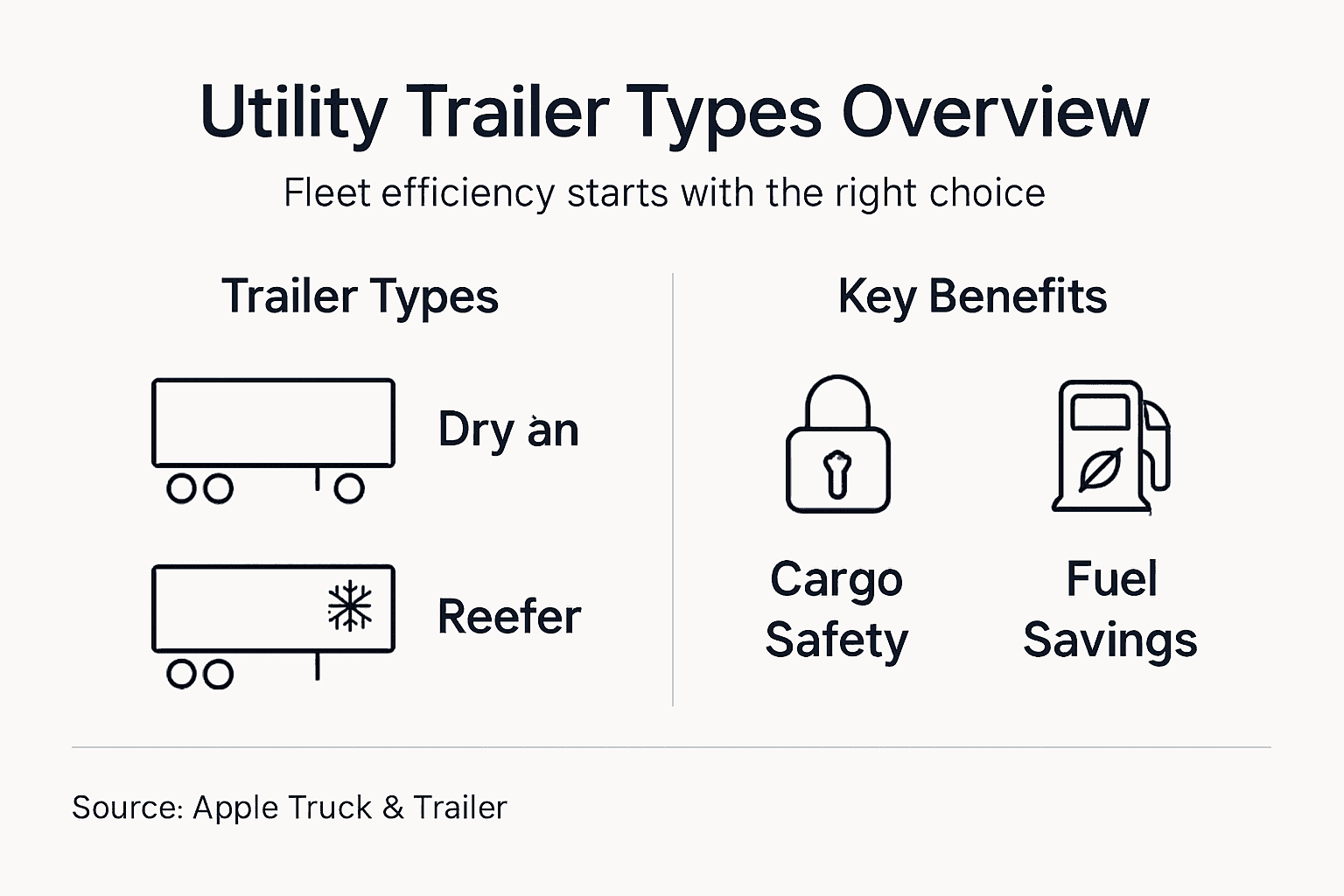
Every decision about which trailers to buy or lease carries financial consequences. Choosing efficiently means lower maintenance expenses, faster delivery times, and happier customers. Getting it wrong costs thousands monthly.
Cost Implications
Trailer types vary dramatically in operating costs. A dry van costs less to maintain than a refrigerated unit. A flatbed requires tarping materials and labor. Understanding these differences prevents budget surprises.
Operating cost factors include:
- Fuel efficiency: Lighter trailers consume less fuel; refrigerated units run cooling systems consuming extra diesel
- Maintenance: Mechanical reefers require specialized technicians; flatbeds need tarp replacement
- Driver wages: Specialized loads like hazmat or temperature-controlled may require certified drivers
- Depreciation: Newer technology in reefers depreciates faster initially but holds value longer
- Insurance: Higher-value cargo in reefers costs more to insure
Choosing the wrong trailer type for your primary business can waste $50,000 annually in unnecessary operating costs.
A Massachusetts logistics company hauling general retail goods doesn’t need expensive reefers. Buying them anyway wastes money on cooling units they’ll never use. Conversely, a produce distributor without reefers loses high-margin contracts.
This table summarizes cost, compliance, and efficiency impacts by trailer type so you can quickly align choices with operational priorities:
| Trailer Type | Operating Cost Impact | Compliance Focus | Efficiency Advantage |
|---|---|---|---|
| Dry Freight Van | Moderate, predictable | Annual inspections | Easy loading, wide usage |
| Refrigerated Trailer | High (fuel/maintenance) | Cooling unit certifications | Access to premium contracts |
| Flatbed | Lower, some labor costs | Special placarding for hazmat | Fast turnaround, flexible |
| Container Carrier | Low, minimal moving parts | Weight compliance at ports | Reduces transfer time |
Regulatory Compliance Requirements
Proper regulation and governance of utility services within commercial fleets ensures safe operations and reduces downtime. Massachusetts and federal regulations dictate specific requirements for different trailer types.
Compliance issues you’ll face:
- Braking systems: Trailers over 10,000 pounds require integrated air brakes; violations mean roadside failures and fines
- Weight limits: Each trailer has a gross vehicle weight rating; exceeding it creates liability and regulatory penalties
- Safety inspections: Annual inspections catch brake issues, lighting problems, and structural damage before they cause accidents
- Hazmat transport: Flatbeds carrying certain materials need specialized placarding and driver certifications
Ignoring these requirements courts regulatory violations from Massachusetts transportation authorities. One failed inspection shuts down operations until repairs complete.
Operational Efficiency Gains
Matching trailers to your actual business creates measurable efficiency improvements. Your fleet moves more cargo with fewer empty miles. Drivers spend less time loading and unloading. Customers get faster service.
Efficiency drivers include:
- Load utilization: Right-sized trailers maximize payload without wasted space
- Turnaround time: Flatbeds load faster than enclosed vans; reefers require temperature checks
- Route planning: Lighter trailers access weight-restricted routes in urban areas
- Customer satisfaction: Meeting specific cargo needs builds loyalty and repeat contracts
Making the Numbers Work
Trailer selection requires data, not guesses. Calculate the true cost per mile for each trailer type in your operation. Account for fuel, maintenance, insurance, and driver expertise.
Compare this against revenue generated. If a reefer generates 30% more revenue through premium perishable contracts but costs only 20% more to operate, the investment makes sense. If you’re buying flatbeds but move 90% boxed goods, you’re losing efficiency.
Pro tip: Calculate your cost-per-mile for each existing trailer type by dividing annual operating expenses by annual miles driven, then compare against revenue generated to identify which trailers create the best profit margins.
Optimize Your Fleet with the Right Utility Trailers from Apple Truck & Trailer
Choosing the right utility trailer is a critical step toward improving your fleet’s efficiency and cutting unexpected costs. Whether you manage dry freight vans, reefers, or flatbeds, understanding your cargo demands and vehicle capabilities leads to smarter trailer investments. Avoid common pitfalls like mismatched trailer types or overlooked braking requirements by partnering with a provider who knows the Massachusetts market inside out.
Explore our wide selection of quality used trailers tailored for various commercial needs and seasons. From versatile storage trailers on wheels to specialized fleet equipment, we help you find trailers that fit your operations perfectly while staying budget-conscious.
Ready to upgrade your fleet’s performance and compliance with dependable trailers? Visit Apple Truck & Trailer today. Browse options in our Storage Trailers on Wheels – Apple Truck & Trailer category or explore a broader range in Storage Trailers – Apple Truck & Trailer. Contact us now for personalized guidance and see why fleets across Massachusetts trust us since 1986.
Frequently Asked Questions
What are the main types of utility trailers?
Utility trailers typically include dry freight vans, refrigerated trailers (reefers), flatbed trailers, and curtain-sided trailers. Each type is designed to meet specific transportation needs based on the cargo being hauled.
How do I choose the right utility trailer for my fleet?
To choose the right utility trailer, assess your specific cargo requirements, including weight, temperature control, and loading methods. Analyzing customer shipping patterns can also guide your investment in trailer types that will maximize efficiency and profitability.
What factors affect the operating costs of utility trailers?
Operating costs of utility trailers can include fuel efficiency, maintenance needs, driver wages for specialized loads, and insurance costs. Refrigerated trailers tend to have higher operating costs due to the cooling systems, while dry vans have more predictable costs.
How can selecting the right trailer improve fleet efficiency?
Selecting the right trailer enhances fleet efficiency by ensuring optimal load utilization, reducing turnaround times, and minimizing empty miles. Proper trailer selection aligns with actual business demands, leading to improved service and customer satisfaction.
Recommended
- Trailer Rental FAQs: Solving Common Fleet Challenges – Apple Truck & Trailer
- Semi Trailer Basics: Key Facts for Fleet Owners – Apple Truck & Trailer
- 7 Key Tips for Choosing the Right 40 ft Trailer – Apple Truck & Trailer
- Ultimate Guide to Storage Trailers on Wheels: Discovering the Types and Benefits for Business Use – Apple Truck & Trailer