
TL;DR:
- A semi truck day cab is a Class 8 tractor without a sleeper berth designed for short regional routes that drivers return home from daily. It is smaller, lighter, and costs less than a sleeper cab, offering operational savings and increased payload capacity for local freight industries. Regulations restrict day cab drivers from using split sleeper provisions, influencing route planning within a 200-300 mile radius.
A semi truck day cab is defined as a Class 8 tractor without a sleeper berth, built specifically for short-haul and regional routes where drivers return home at the end of each shift. The industry term is “day cab,” and it describes the most common tractor configuration in local and regional freight. Day cabs are 3–5 feet shorter and 2,000–4,000 pounds lighter than sleeper cabs, and they cost $15,000–$40,000 less at purchase. Those differences add up fast for fleet operators and owner-operators managing tight margins in New England markets.
What is a semi truck day cab, exactly?
A day cab is a Class 8 tractor that contains only a driver’s cab with no sleeping compartment behind the seat. The Federal Motor Carrier Safety Administration classifies these as standard tractors under its commercial vehicle regulations. Without the sleeper berth, the cab ends directly behind the driver and passenger seats. That single design choice drives nearly every performance and cost difference between day cabs and their sleeper counterparts.
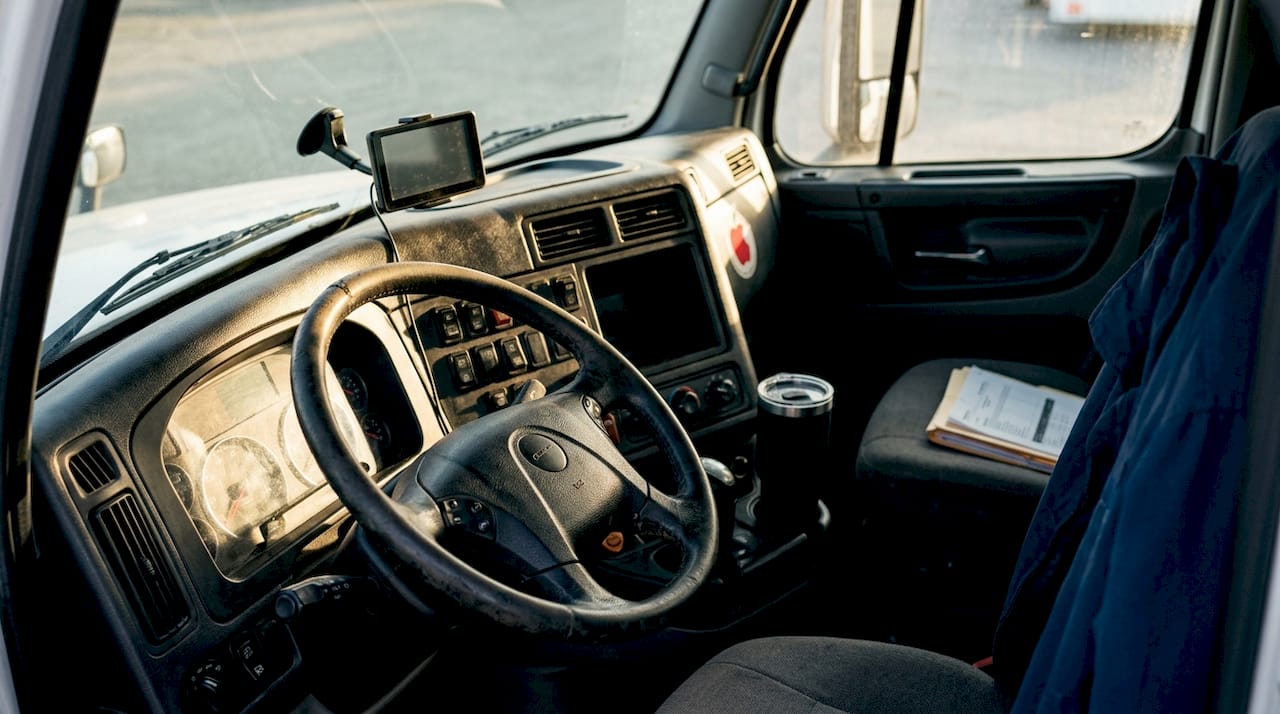
The operational radius for day cabs sits at 200–300 miles. That range covers most regional freight lanes in the Northeast, including Massachusetts, Rhode Island, Connecticut, and New Hampshire. Drivers complete their routes and return to a home terminal or their own residence each night. This is the defining characteristic of the day cab lifestyle, and it shapes everything from driver recruitment to route planning.
Key features and design differences between day cabs and sleeper cabs
Day cabs and sleeper cabs share the same powertrain options and fifth-wheel configurations, but their cab structures differ in ways that affect daily operations. The table below captures the most relevant differences for buyers evaluating both types.
| Feature | Day cab | Sleeper cab |
|---|---|---|
| Sleeper berth | None | Standard or large berth |
| Cab length | Shorter by 3–5 feet | Longer |
| Dry weight | 2,000–4,000 lbs lighter | Heavier |
| Purchase price | $15,000–$40,000 less | Higher upfront cost |
| Fuel efficiency | 0.5–1.0 MPG better | Lower MPG |
| Split sleeper HOS provision | Not eligible | Eligible |
Modern day cabs are not bare-bones trucks. Extended and high-roof day cab designs add overhead storage, improved seating, and better HVAC systems without adding a berth. These configurations suit drivers who work long shifts but do not need to sleep in the truck. The added comfort reduces fatigue on demanding regional routes without the weight penalty of a full sleeper.
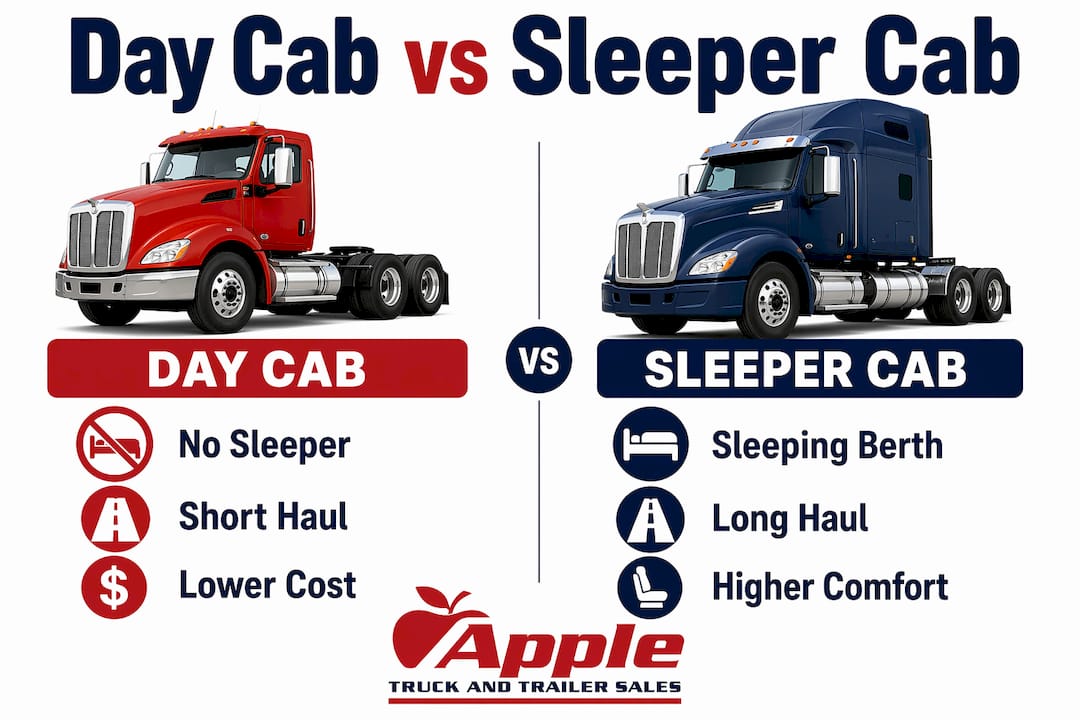
Storage in a day cab is built into the cab walls, under the seat, and in the bunk area behind the seats where a berth would otherwise sit. Drivers carry gear, paperwork, and personal items in these compartments. The layout is more compact than a sleeper, but well-designed day cabs use every cubic inch efficiently. For drivers running local routes, this storage is more than adequate.
Operational and economic advantages of using a day cab
Day cabs cost less to buy, less to fuel, and less to insure than sleeper cabs. Those three savings compound over a fleet’s operating life. Lower upfront purchase price and lighter weight reduce total cost of ownership, which gives new operators financial room to grow before committing to more expensive equipment.
The weight advantage has a direct revenue impact. Day cabs weigh 2,000–4,000 pounds less than sleepers, and the federal gross vehicle weight limit is 80,000 pounds. Every pound saved on the tractor is a pound that can be added to the payload. In industries like dump trucking or liquid hauling, that difference translates directly into more revenue per load.
Key operational and economic benefits of day cabs include:
- Lower purchase price: $15,000–$40,000 less than a comparable sleeper cab
- Better fuel economy: 0.5–1.0 MPG improvement from reduced weight and shorter aerodynamic profile
- Higher payload capacity: 2,000–4,000 pounds of additional legal cargo per trip
- Lower insurance premiums: Shorter, lighter trucks carry lower liability profiles
- Reduced maintenance costs: Fewer components mean fewer service intervals and lower repair bills
- Strong resale value: Day cabs hold higher resale value in local markets where regional fleets dominate
Pro Tip: When spec’ing a new day cab, choose aluminum wheels and lightweight fifth-wheel options. Those choices alone can recover 300–500 pounds of payload capacity without any change to the powertrain.
New operators benefit most from starting with a day cab. Starting with a day cab minimizes risk and costs before a business grows into long-haul operations. The lower capital commitment and strong resale value create a clear upgrade path if routes eventually demand a sleeper.
Legal and logistical considerations when operating day cab trucks
Day cabs carry a specific regulatory constraint that every operator must understand before planning routes. Day cabs cannot use split sleeper berth provisions under federal Hours of Service regulations. That rule requires drivers to take their mandatory off-duty rest at a fixed location, not in the truck. A sleeper cab driver can split rest periods between the berth and a rest stop. A day cab driver cannot.
This distinction shapes route planning in a concrete way. A driver operating a day cab must complete their shift, park the truck, and rest at a fixed location before resuming. Routes that push beyond a single shift’s driving window require either a relay system, a team driver arrangement, or a different truck type entirely. Operators who ignore this constraint face Hours of Service violations and potential fines from the Federal Motor Carrier Safety Administration.
The 200–300 mile operational radius aligns naturally with HOS limits for most regional routes. A driver leaving a Boston terminal at 6 a.m. can reach Providence, Hartford, or Manchester, complete deliveries, and return within a standard 11-hour driving window. Routes that stretch beyond that radius consistently create compliance pressure.
Pro Tip: Map your top five routes against the 11-hour driving limit before purchasing a day cab. If more than two routes regularly exceed 250 miles one-way, a sleeper cab or relay system will serve your operation better.
Understanding how semi-trucks and tractor-trailers differ in classification also helps operators choose the right vehicle category for their permits and insurance filings.
Best use cases and industry applications for semi truck day cabs
Day cabs dominate specific freight sectors because their design matches the operational demands of those industries. Port drayage, local delivery, construction hauling, and short-distance towing all rely on day cabs for their maneuverability and frequent-stop capability. The 3–5 foot shorter length gives day cabs a tighter turning radius, which matters in urban loading docks, construction sites, and port terminals.
The top application scenarios for day cabs, ranked by frequency of use in regional markets:
- Port drayage: Moving containers between port terminals and nearby warehouses or rail yards, often requiring multiple short trips per shift
- Local LTL freight: Less-than-truckload deliveries across a metro area or regional distribution network
- Construction hauling: Transporting materials, equipment, or dump loads to and from active job sites with tight access
- Dump trucking: Maximizing payload per trip on aggregate, soil, or debris hauls where weight savings directly increase revenue
- Regional distribution: Serving warehouse-to-store or hub-to-spoke networks within a 200-mile radius
Driver lifestyle is a real factor in these applications. Drivers who run day cab routes return home nightly, which improves retention and reduces the burnout associated with over-the-road trucking. Fleet managers in the Northeast report that day cab positions fill faster and hold drivers longer than long-haul sleeper routes. That retention advantage has a measurable impact on recruiting costs and training overhead.
For local delivery operations across New England, day cabs also simplify compliance. Drivers stay within familiar territory, routes are predictable, and dispatchers can plan loads with confidence.
Key takeaways
A semi truck day cab is the most cost-effective and operationally practical choice for any business running routes within a 200–300 mile radius.
| Point | Details |
|---|---|
| Core definition | A day cab is a Class 8 tractor with no sleeper berth, built for regional routes under 300 miles. |
| Cost advantage | Day cabs cost $15,000–$40,000 less than sleepers and deliver 0.5–1.0 MPG better fuel economy. |
| Payload benefit | The 2,000–4,000 pound weight savings translates directly into more legal cargo per trip. |
| HOS restriction | Day cab drivers cannot use split sleeper berth provisions and must rest at fixed locations. |
| Best fit | Port drayage, local LTL, dump trucking, and construction hauling are the strongest use cases. |
What I’ve learned from watching buyers choose between day cabs and sleepers
Most buyers overthink this decision. The data is clear: if your routes stay within 250 miles and your drivers go home each night, a day cab is the right truck. The purchase price savings alone fund a meaningful portion of your first year’s operating costs.
What I’ve seen trip up new operators is the lifestyle question. Drivers who want to be home every night will not stay in a sleeper-equipped truck, regardless of the pay premium. Choosing a day cab for a regional fleet is not just a financial decision. It’s a retention strategy.
The resale value argument also holds up in practice. Day cabs move faster in the used truck market because regional fleets always need them. If your business grows and you need to shift to long-haul operations, a well-maintained day cab sells quickly and funds the upgrade to a sleeper. That exit path matters for owner-operators who are still figuring out their niche.
One thing I’d push back on: the assumption that day cabs are “starter trucks.” The best regional fleets run nothing but day cabs by choice, not necessity. For the right operation, a day cab is not a stepping stone. It’s the destination.
Apple Truck & Trailer’s inventory for day cab buyers
Apple Truck & Trailer has been helping fleet operators and owner-operators across Massachusetts, Rhode Island, Connecticut, and New Hampshire find the right commercial trucks since 1986. The inventory includes quality used day cab tractors inspected and ready for regional work.
Whether you’re buying your first truck or rotating aging equipment out of a fleet, the team at Apple Truck & Trailer provides hands-on guidance at every step. The used commercial truck buying guide walks buyers through inspection points, financing options, and spec decisions specific to day cab purchases. Fleet managers can also use the fleet manager’s selection guide to match truck specs to route requirements before committing to a purchase.
FAQ
What is the main difference between a day cab and a sleeper cab?
A day cab has no sleeping berth and is built for routes under 300 miles where drivers return home daily. A sleeper cab includes a berth behind the seats for drivers who stay on the road overnight.
How much does a day cab cost compared to a sleeper cab?
Day cabs cost $15,000–$40,000 less than comparable sleeper cabs at purchase. They also carry lower fuel, insurance, and maintenance costs over their operating life.
Can a day cab driver use split sleeper berth HOS provisions?
No. Federal Hours of Service regulations prohibit day cab drivers from using split sleeper berth provisions. Off-duty rest must be taken at a fixed location, not in the truck.
What industries use day cab trucks most often?
Port drayage, local LTL freight, dump trucking, and construction hauling rely most heavily on day cabs. Their shorter length and lighter weight improve performance in urban and congested environments.
Are day cabs a good choice for new owner-operators?
Yes. The lower purchase price, strong resale value, and simpler compliance requirements make day cabs the lowest-risk entry point for new operators starting regional trucking businesses.