
More than 80 percent of American logistics companies report that delivery truck selection directly shapes their daily operations. For businesses throughout New England, choosing the right truck means the difference between streamlined service and costly delays. This guide cuts through the confusion, breaking down local delivery truck options and revealing what truly matters when updating or expanding your fleet.
Table of Contents
- Local Delivery Truck Options Explained
- Types of Delivery Trucks Available Locally
- Key Features and Customization Choices
- Cost Factors and Leasing Versus Buying
- Compliance, Safety, and Maintenance Needs
Key Takeaways
| Point | Details |
|---|---|
| Delivery Truck Categories | Understanding light-duty, medium-duty, and heavy-duty trucks helps businesses choose the right vehicle for their delivery needs. |
| Customization Importance | Strategic customization of delivery trucks can enhance operational efficiency and safety. |
| Leasing vs. Buying | Evaluate financial benefits of leasing versus purchasing trucks to align with business cash flow and operational goals. |
| Compliance and Maintenance | Rigorous attention to safety protocols and maintenance is essential for regulatory adherence and operational excellence. |
Local Delivery Truck Options Explained
New England businesses require strategic truck selection for efficient local delivery operations. The right vehicle can dramatically impact logistics performance, transportation costs, and overall operational effectiveness. Understanding the nuanced landscape of local delivery truck options helps businesses make informed procurement decisions.
Local delivery trucks generally fall into three primary categories: box trucks, cargo vans, and medium-duty trucks. Each category offers distinct advantages depending on cargo volume, weight requirements, and urban navigability. Truck operational strategies highlight the critical importance of matching vehicle capabilities to specific business needs.
Delivery truck selection involves evaluating several key parameters:
- Cargo capacity and weight limitations
- Fuel efficiency
- Maneuverability in urban environments
- Maintenance and operational costs
- Potential for customization
Commercial considerations such as payload requirements, route complexity, and budget constraints further influence truck selection. Some businesses might prefer compact cargo vans for tight city streets, while others require larger box trucks capable of handling substantial freight volumes.
Pro Delivery Fleet Planning Tip: Research potential truck configurations thoroughly and conduct pilot tests with different vehicle types before making large-scale fleet investments to ensure optimal performance and cost-effectiveness.
Pro Driver Selection Tip: Train drivers specifically for the chosen truck type, focusing on vehicle-specific handling characteristics and urban navigation skills to maximize operational efficiency.
Types of Delivery Trucks Available Locally
New England businesses have several local delivery truck options tailored to specific operational requirements. Understanding these vehicle categories helps fleet managers make strategic procurement decisions that optimize logistics efficiency and transportation costs.
Comprehensive truck management strategies reveal three primary delivery truck classifications that dominate local commercial transportation:
- Light-Duty Trucks
- Cargo vans
- Pickup trucks with cargo shells
- Ideal for small package deliveries
- Excellent urban maneuverability
- Medium-Duty Trucks
- Box trucks
- Refrigerated delivery trucks
- Commercial step vans
- Higher payload capacity
- Suitable for regional distribution
- Heavy-Duty Trucks
- Semitractor trailers
- Large box trucks
- Commercial freight vehicles
- Maximum payload capabilities
- Long-distance transportation
Each truck classification offers unique advantages depending on specific business needs. Commercial truck configurations can significantly impact operational efficiency, making careful selection crucial for logistics success.
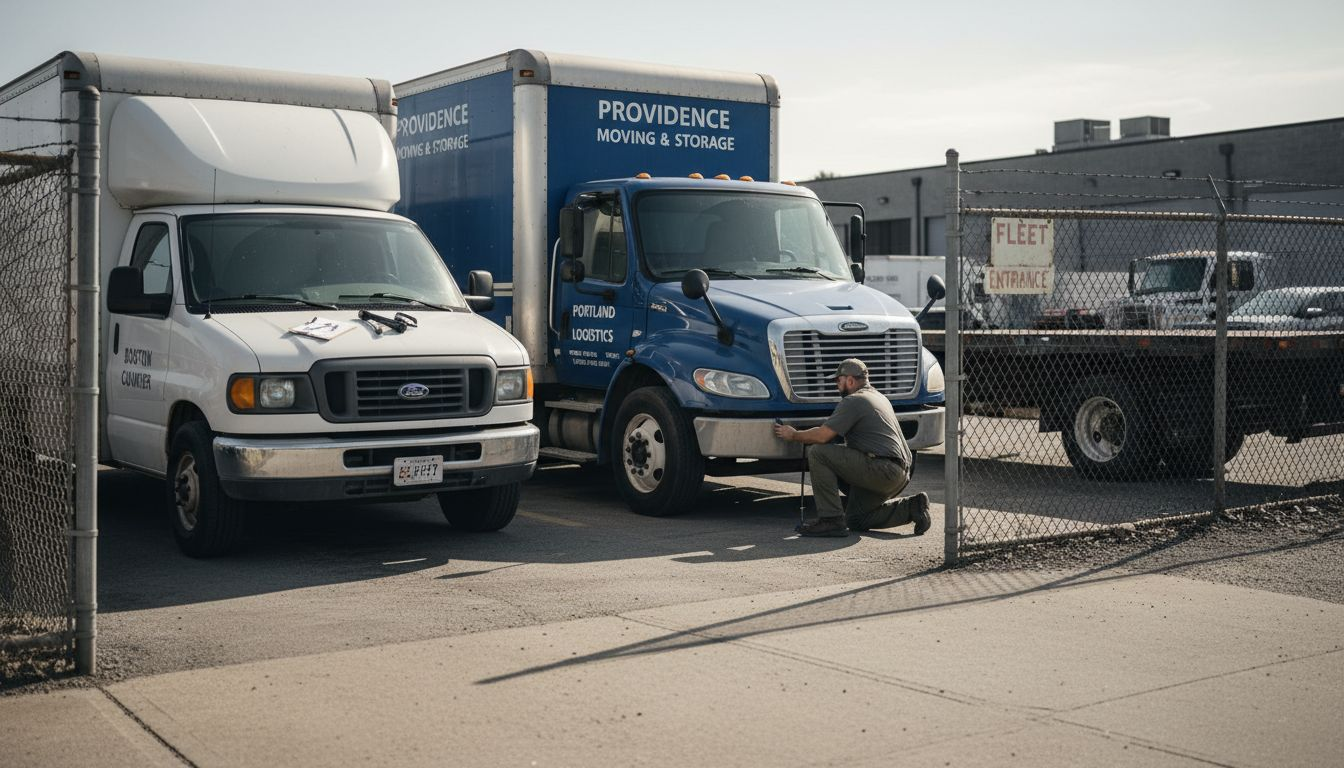
The following table summarizes how different delivery truck types best fit specific operational needs in New England:
| Truck Type | Best For | Typical Cargo Load | Urban Compatibility |
|---|---|---|---|
| Cargo Van | Small package deliveries | Up to 3,000 lbs | Excellent for tight streets |
| Box Truck | Medium freight volume | 7,000–12,000 lbs | Moderate maneuverability |
| Semitractor Trailer | Large, long-distance shipments | Over 20,000 lbs | Poor—suited for highways |
Pro Vehicle Selection Tip: Always conduct comprehensive route analysis and payload assessment before selecting delivery trucks to ensure optimal match between vehicle capabilities and business requirements.
Pro Fleet Management Tip: Develop a diversified truck fleet with multiple vehicle types to provide maximum operational flexibility and adaptability to changing delivery demands.
Key Features and Customization Choices
Delivery truck customization represents a critical strategic decision for New England businesses seeking optimized logistics performance. Modern delivery vehicles offer an unprecedented range of configuration options that can dramatically enhance operational efficiency and workplace safety.
Comprehensive safety and design features highlight several key customization categories businesses should consider:
Exterior Customization Options
- Custom paint and branding
- Aerodynamic side skirts
- Specialized cargo tie-downs
- Enhanced visibility lighting systems
- Reinforced bumpers and side panels
Interior Functionality Enhancements
- Ergonomic driver seating
- Advanced climate control systems
- Integrated digital tracking displays
- Modular cargo management systems
- Noise reduction technologies
Safety Technology Integrations
- Advanced driver visibility systems including surround cameras
- Collision avoidance sensors
- Electronic stability control
- Blind spot monitoring
- Automated emergency braking
Customization goes beyond aesthetic preferences. Strategic modifications can reduce fuel consumption, improve driver comfort, and enhance overall fleet performance. Businesses should view truck customization as an investment in operational efficiency and employee safety.
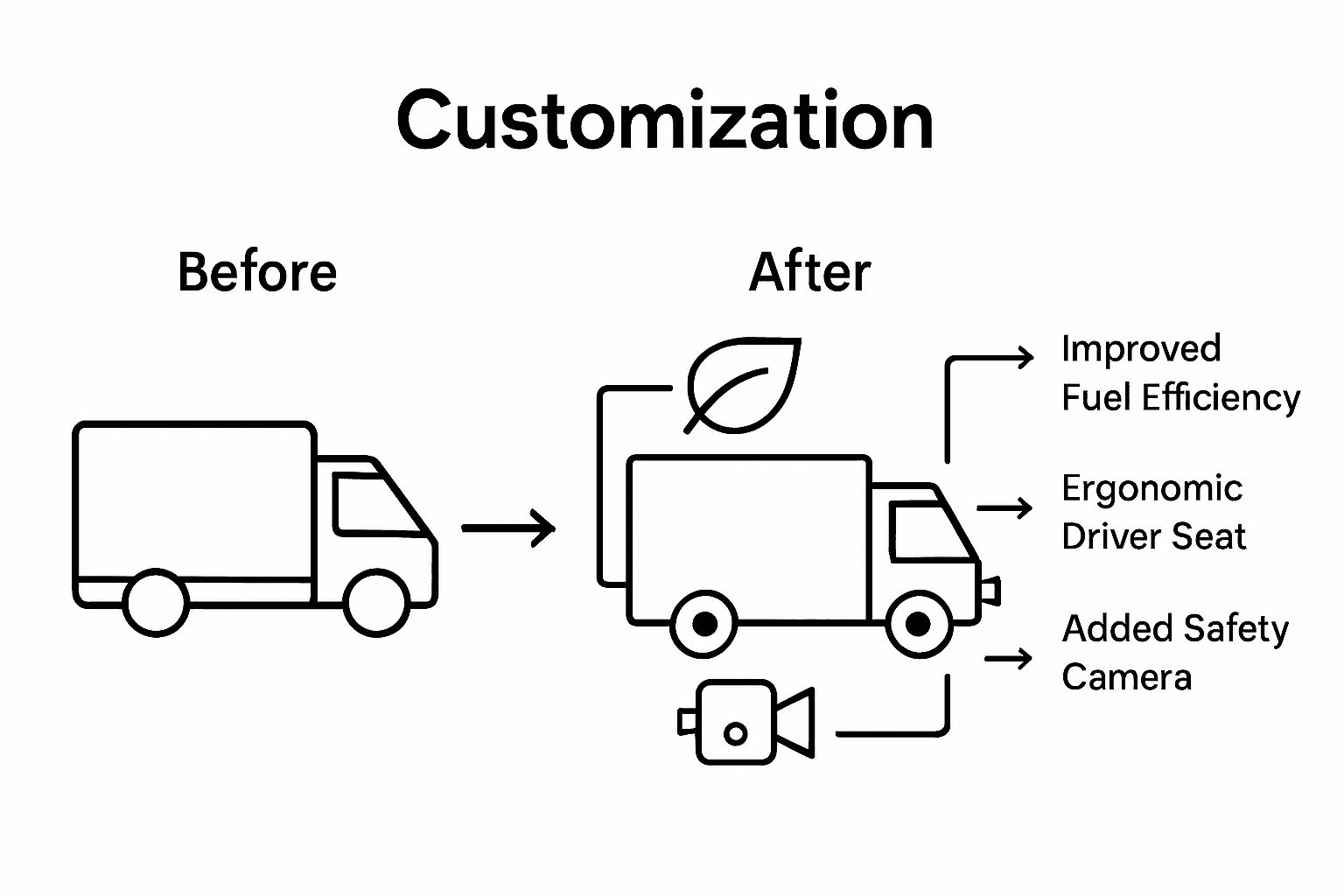
Here’s a quick reference showing how key customization features can impact business efficiency:
| Customization Area | Business Benefit | Example Enhancement |
|---|---|---|
| Exterior | Enhanced branding and safety | Custom paint, LED lighting |
| Interior | Improved driver comfort/productivity | Ergonomic seating, climate controls |
| Technology | Greater safety and compliance | Collision sensors, onboard diagnostics |
Pro Customization Strategy Tip: Prioritize safety and functionality modifications that directly translate to measurable performance improvements, such as fuel efficiency upgrades and advanced driver assistance technologies.
Pro Fleet Optimization Tip: Develop a standardized customization template for your delivery trucks to ensure consistency in safety features, branding, and operational capabilities across your entire fleet.
Cost Factors and Leasing Versus Buying
New England businesses face complex financial decisions when acquiring delivery trucks, with leasing and purchasing representing two distinct strategic approaches. Comprehensive truck management analysis reveals nuanced economic considerations that impact long-term financial planning.
Purchasing Advantages
- Full ownership of vehicle assets
- Potential tax depreciation benefits
- No recurring monthly lease payments
- Unlimited mileage and customization options
- Long-term cost savings potential
Leasing Advantages
- Lower upfront capital investment
- Predictable monthly expenses
- Easier fleet upgrades
- Reduced maintenance responsibilities
- Potential tax deduction for lease payments
Key Cost Comparison Factors
- Initial acquisition expenses
- Monthly financial commitments
- Maintenance and repair costs
- Vehicle depreciation rates
- Operational flexibility requirements
Truck leasing strategies demonstrate that businesses must carefully analyze their specific operational needs, cash flow, and long-term growth projections when making vehicle procurement decisions. Smaller businesses might benefit from leasing’s lower upfront costs, while established companies with stable revenue streams could find purchasing more economically advantageous.
Pro Financial Planning Tip: Conduct a comprehensive five-year total cost of ownership analysis comparing leasing and purchasing before making your final truck acquisition decision.
Pro Budget Management Tip: Develop a flexible financing strategy that allows periodic reassessment of your fleet’s economic performance and potential vehicle replacement strategies.
Compliance, Safety, and Maintenance Needs
Delivery truck operations in New England require rigorous attention to compliance, safety protocols, and systematic maintenance to ensure operational excellence and regulatory adherence. Comprehensive safety guidelines establish critical standards that businesses must implement across their commercial vehicle fleets.
Regulatory Compliance Requirements
- Federal Motor Carrier Safety Regulations (FMCSR)
- Commercial Driver’s License (CDL) standards
- Department of Transportation (DOT) inspection protocols
- Vehicle weight and dimension restrictions
- Emissions and environmental regulations
Safety Technology Mandates
- Electronic logging devices
- Onboard diagnostic systems
- Advanced driver assistance technologies
- Comprehensive fleet safety monitoring with digital tracking
- Mandatory driver training programs
Critical Maintenance Protocols
- Quarterly vehicle inspections
- Regular brake system evaluations
- Tire pressure and tread depth monitoring
- Electrical and hydraulic system checks
- Engine performance diagnostics
Successful fleet management demands a holistic approach that integrates safety technologies, rigorous maintenance schedules, and continuous driver education. Fleet maintenance strategies demonstrate that proactive management significantly reduces operational risks and enhances overall business efficiency.
Pro Safety Management Tip: Develop a comprehensive digital tracking system that logs vehicle maintenance, driver performance, and compliance metrics in real time.
Pro Compliance Tip: Establish a quarterly review process that systematically updates safety protocols and ensures all fleet vehicles meet the latest regulatory standards.
Find the Perfect Local Delivery Truck Solution Today
Selecting the ideal truck for your New England business means balancing cargo capacity, maneuverability, and cost effectiveness. If you are facing challenges such as choosing between cargo vans, box trucks, or semitractor trailers or deciding whether to lease or buy your next delivery vehicle, expert support can make all the difference. At Apple Truck & Trailer, we understand how critical these decisions are to your fleet efficiency and budget planning.
Our team offers a wide inventory of high quality used trucks and trailers tailored for local delivery needs across Massachusetts and the surrounding region. Whether you want to explore flexible Truck Leasing – Apple Truck & Trailer options or are considering the pros and cons explained in Is Leasing a Semi-Truck a Good Idea? – Apple Truck & Trailer, we deliver professional guidance based on decades of expertise.
Take control of your fleet’s efficiency and cost with solutions built specifically for New England’s unique logistics demands. Visit Apple Truck & Trailer now to browse our inventory, request a quote, or speak with one of our specialists today. Your next ideal delivery truck is ready when you are.
Frequently Asked Questions
What are the main types of local delivery trucks?
The primary categories of local delivery trucks include light-duty trucks (like cargo vans and pickup trucks), medium-duty trucks (such as box trucks and refrigerated delivery trucks), and heavy-duty trucks (like semitractor trailers). Each type serves different cargo needs and operational requirements.
How do I choose the right delivery truck for my business needs?
When selecting a delivery truck, consider key parameters like cargo capacity, weight limitations, fuel efficiency, maneuverability in urban areas, maintenance costs, and potential for customization to align with your specific business operations.
What are the benefits of customizing delivery trucks?
Customizing delivery trucks can enhance operational efficiency and safety. Key benefits include improved driver comfort, enhanced brand visibility, and the integration of advanced safety features that can lead to reduced fuel consumption and better overall fleet performance.
Is it better to lease or buy delivery trucks for my business?
Leasing generally has lower upfront costs and predictable monthly payments, making it attractive for smaller businesses. Purchasing offers full ownership without recurring lease payments and potential long-term cost savings, making it favorable for established companies with stable finances.