
TL;DR:
- Renting refrigerated trucks offers a flexible, cost-effective way for businesses to meet cold-chain compliance requirements. It enables rapid capacity adjustments, predictable operating costs, and access to up-to-date equipment, reducing risks from obsolescence and equipment failure. Proper documentation, timely booking, and regional expertise are essential for effective rental use and maintaining product safety.
Refrigerated truck rental is the practice of leasing temperature-controlled vehicles on a short or medium-term basis to transport perishable goods without owning the equipment outright. Businesses across food service, pharmaceuticals, floral distribution, and grocery supply chains rent these vehicles to maintain product integrity, meet FDA Food Safety Modernization Act (FSMA) requirements, and control costs. The reasons to rent refrigerated trucks go well beyond convenience. Rental gives businesses the ability to scale cold-chain capacity fast, convert large capital expenses into predictable operating costs, and stay compliant without the burden of owning and maintaining specialized equipment.
Why businesses rent refrigerated trucks: safety, compliance, and risk control
The FDA’s FSMA Sanitary Transportation rule is the single biggest regulatory driver behind refrigerated truck rentals. FSMA compliance requires documented temperature monitoring, pre-cooling before loading, and vehicle sanitation records. That requirement means businesses cannot simply load perishables into any available truck. They need equipment that actively controls and logs temperature throughout the entire journey.
Pre-cooling is not optional under FSMA. A truck that has been sitting in a summer parking lot reaches interior temperatures well above safe thresholds for dairy, meat, or pharmaceuticals. Pre-cooling and continuous monitoring during transit dramatically reduce load rejection, insurance claims, and regulatory penalties. Rental providers that specialize in refrigerated transport typically supply trucks already configured for this workflow, saving businesses the setup time they would face with a general-purpose vehicle.
Documentation is where many businesses get caught off guard. Temperature records serve as the primary legal defense after a disputed shipment. FSMA requires those records to be kept for at least 12 months. A rental unit equipped with a calibrated data logger gives businesses a ready-made audit trail that holds up during FDA inspections and carrier liability disputes.
- Confirm the rental unit has a functioning temperature data logger before signing any agreement.
- Request pre-trip sanitation documentation from the rental provider.
- Pre-cool the trailer to the target temperature before loading, not after.
- Log temperature at every stop during multi-drop routes, since defrost cycles can cause brief spikes.
- Store all records for at least 12 months to satisfy FSMA’s minimum retention requirement.
Pro Tip: Ask your rental provider whether the data logger exports records in a format compatible with your existing compliance software. Incompatible file formats create manual re-entry work that defeats the purpose of automated monitoring.
Rental providers typically maintain their fleets to commercial standards, which means the monitoring equipment on a rented unit is more likely to be calibrated and current than aging owned equipment. That matters because compliance under FSMA is operational, not just contractual. Having the right paperwork means nothing if the refrigeration unit fails mid-route.
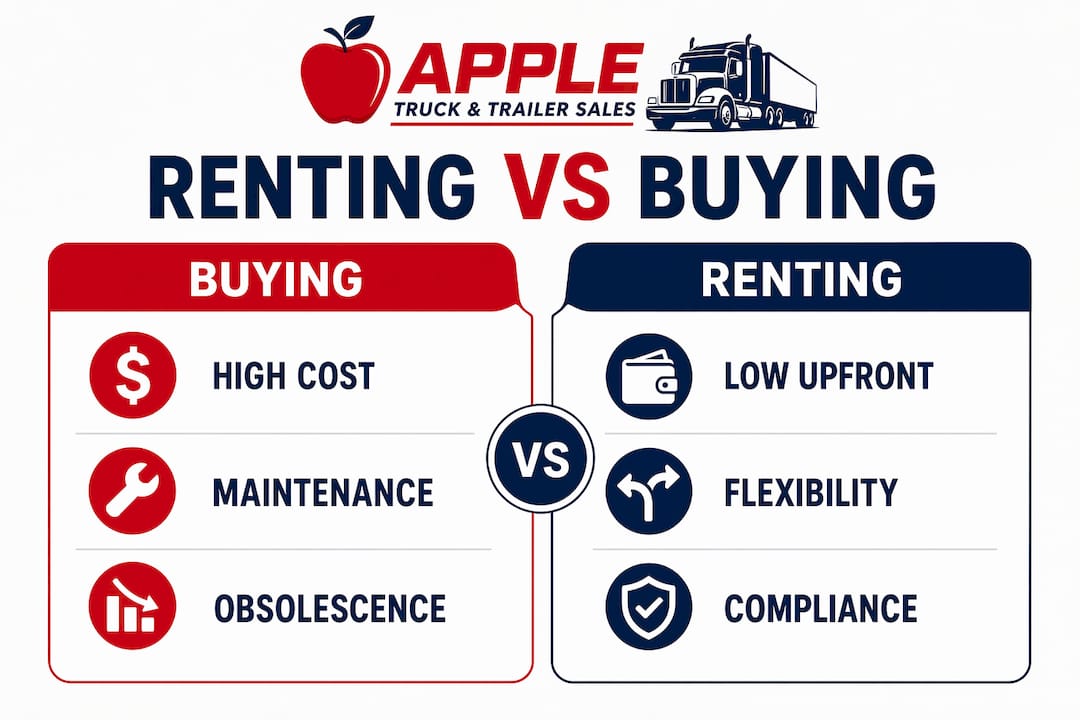
Is renting refrigerated trucks cheaper than buying?
Buying a refrigerated truck requires a capital investment of $60,000 to $80,000 or more, and that figure does not include ongoing maintenance, refrigeration unit servicing, or depreciation. For businesses with seasonal or unpredictable cold-chain demand, that capital outlay creates a poor return on investment during off-peak months.
| Factor | Buying | Renting |
|---|---|---|
| Upfront cost | $60,000–$80,000+ | Low or no down payment |
| Maintenance responsibility | Owner bears full cost | Provider typically covers it |
| Flexibility | Fixed asset, hard to scale | Add or reduce units as needed |
| Depreciation risk | Owner absorbs it | No depreciation exposure |
| Budget predictability | Variable repair costs | Fixed rental contract rate |
Rental converts a capital expenditure into a manageable operating cost. That shift matters for cash flow planning, especially for small and mid-size businesses that cannot absorb a large equipment purchase without affecting working capital. A food distributor running extra routes in november and december, for example, pays only for the trucks it actually uses during those months.
Leasing refrigerated trucks is increasingly preferred because it reduces financial risk, preserves cash flow, and provides access to newer equipment. Newer units also tend to carry more fuel-efficient refrigeration systems, which lowers operating costs further compared to older owned fleets.
Pro Tip: When comparing rental quotes, ask for an all-in rate that includes maintenance callouts and refrigeration unit repairs. A low base rate with expensive repair clauses can cost more than a slightly higher flat-rate contract.
Rental also eliminates the risk of owning equipment that becomes obsolete. Refrigeration technology and FSMA documentation requirements both evolve. A rental agreement lets businesses access updated equipment without the sunk cost of selling off outdated owned units.
How does rental flexibility help businesses manage demand swings?
Operational flexibility is the most underrated benefit of refrigerated truck rental for businesses. Demand for cold-chain transport rarely stays flat. Grocery chains see volume spikes around major holidays. Pharmaceutical distributors face sudden surges when new products launch or recalls require rapid redistribution. Floral businesses need extra capacity for Valentine’s Day and Mother’s Day, then almost nothing for weeks afterward.

Rental approvals can be completed within 24–72 hours, which means businesses can respond to a demand spike without waiting weeks for a purchase order to clear. That speed is impossible to replicate with owned fleet procurement, which involves financing, registration, and insurance setup.
The benefits of renting refrigerated trucks for variable demand include:
- Rapid capacity addition. Businesses can add temperature-controlled units within days, not weeks.
- No long-term commitment. Short-term contracts match the duration of the actual need, whether that is two weeks or three months.
- Risk buffering. Rentals hedge against unpredictable demand and lane capacity constraints that strain owned fleets.
- New route testing. Businesses can test a new delivery route with a rented unit before committing to a permanent asset.
- Equipment failure backup. When an owned reefer unit breaks down, a rental provides immediate coverage without halting cold-chain operations.
Reefer leasing reduces timing risk amid route instability, bottlenecks, and seasonal pressure by allowing flexible, temporary cold capacity. The surge in reefer leasing reflects the logistics industry’s broader need for agility to handle disruptions, seasonal changes, and evolving customer demands.
What should businesses check before renting a refrigerated truck?
Choosing the right rental unit requires more than picking the largest available truck. Getting this wrong creates compliance gaps and operational headaches that cost more than the rental itself.
- Match the temperature range to your product. Fresh produce typically requires 34°F to 40°F. Frozen goods need 0°F or below. Pharmaceuticals often require tighter tolerances. Confirm the rental unit can hold your specific range before signing.
- Verify the truck size against your load volume. An oversized truck wastes fuel and makes temperature maintenance harder. An undersized truck forces multiple trips or overloading.
- Understand the maintenance terms. Rental providers typically cover maintenance to commercial standards, but the contract should specify who pays for refrigeration unit repairs, tire replacements, and roadside assistance.
- Confirm documentation support. Ask whether the rental unit includes a data logger, and whether the provider can supply pre-rental sanitation records.
- Plan your rental timing. Refrigerated trucks are in high demand during summer and the holiday season. Book early, especially in regions like Massachusetts and New England where seasonal demand peaks are sharp.
- Build a relationship with your provider. Repeat customers often get priority access during equipment shortages. A provider like Apple Truck & Trailer, serving Massachusetts, Rhode Island, Connecticut, and New Hampshire since 1986, offers the kind of regional knowledge that helps businesses navigate local demand patterns.
Understanding how to reduce fleet downtime is also relevant here. Even with a rental, operational downtime from a refrigeration failure mid-route can trigger spoilage claims. Knowing your provider’s response time for breakdowns is a practical question worth asking upfront.
Key Takeaways
Renting refrigerated trucks is the most cost-effective and flexible way for businesses to maintain cold-chain compliance without locking capital into depreciating owned assets.
| Point | Details |
|---|---|
| Compliance drives demand | FSMA requires documented temperature control and 12-month record retention, making reliable rental units a compliance tool. |
| Rental beats buying for variable demand | Avoiding a $60,000–$80,000+ purchase preserves working capital and converts fixed costs into flexible operating expenses. |
| Speed of access matters | Rental approvals in 24–72 hours let businesses respond to demand spikes faster than any owned fleet procurement process. |
| Maintenance stays with the provider | Reputable rental providers cover commercial-standard maintenance, reducing renter liability and repair exposure. |
| Book early in peak seasons | Refrigerated truck availability tightens in summer and around major holidays, especially across New England. |
What I’ve learned from watching businesses get cold-chain logistics wrong
Most businesses that struggle with refrigerated transport make the same mistake. They treat the rental as a last resort rather than a planned tool. They call a provider two days before a major shipment, discover nothing is available, and scramble. The businesses that handle cold-chain logistics well treat rental capacity the way they treat insurance. They build provider relationships before they need them urgently.
The compliance piece is where I see the most avoidable damage. A business can rent a perfectly functional refrigerated truck and still fail an FDA inspection because nobody logged temperatures at the intermediate stops. Maintaining temperature through multiple stops and defrost cycles requires operational attention, not just the right equipment. The truck is the tool. The driver’s discipline and the documentation workflow are what actually protect the business.
My honest advice: choose a rental partner with regional expertise, not just the lowest rate. A provider that knows New England’s seasonal demand patterns, road conditions, and local compliance expectations adds real value beyond the truck itself. And if your cold-chain needs are growing consistently year over year, look at whether a reefer trailer rental arrangement makes more sense than repeated short-term contracts. The math often shifts faster than businesses expect.
Apple Truck and Trailer’s refrigerated transport solutions for your business
Businesses across Massachusetts and New England trust Apple Truck & Trailer for refrigerated truck and trailer rentals that cover the full range of cold-chain needs. Whether you need a single unit for a seasonal surge or ongoing rental capacity for a growing distribution operation, Apple Truck & Trailer has maintained and compliance-ready equipment available.
Apple Truck & Trailer has served commercial fleet operators since 1986, with deep knowledge of the regional demand patterns that affect refrigerated transport in Massachusetts, Rhode Island, Connecticut, and New Hampshire. Their short-term truck rental options give businesses fast access to temperature-controlled vehicles without long-term commitments. For businesses weighing rental against ownership, the team can also walk you through truck leasing in Massachusetts to find the arrangement that fits your budget and operational needs. Contact Apple Truck & Trailer directly to get a quote tailored to your cold-chain requirements.
FAQ
Why do businesses rent refrigerated trucks instead of buying?
Renting avoids a $60,000–$80,000+ capital investment and converts equipment costs into predictable operating expenses. It also gives businesses the flexibility to scale capacity up or down based on actual demand.
What is FSMA and how does it affect refrigerated truck rentals?
FSMA’s Sanitary Transportation rule requires businesses to document temperature monitoring, pre-cooling, and vehicle sanitation for perishable shipments. Rental units equipped with data loggers and sanitation records help businesses meet these requirements directly.
How quickly can a business get a refrigerated rental truck?
Rental approvals can be completed within 24–72 hours in many cases, making rentals the fastest way to add cold-chain capacity during demand spikes or equipment failures.
What temperature ranges do rental refrigerated trucks cover?
Most commercial refrigerated rental trucks cover a range from fresh produce temperatures (34°F to 40°F) down to frozen cargo requirements (0°F or below). Always confirm the specific range with your provider before booking.
Who handles maintenance on a rented refrigerated truck?
Rental providers typically maintain their fleets to commercial standards and cover major repairs under the rental agreement. Confirm the specific maintenance terms in your contract, including who covers refrigeration unit repairs and roadside assistance.