
Shipping container storage for sale in the U.S. comes in two broad categories: new (One-Trip) units and used containers graded by condition. Standard sizes run 20ft and 40ft, with High Cube variants adding a foot of interior height. Prices shift based on size, grade, and how far the unit needs to travel to your site. Here’s what you need to know before you buy:
- New (One-Trip) containers: Near-factory condition, minimal wear, best for conversions or long-term use
- Used Cargo Worthy: Meets export standards, structurally sound, suitable for active shipping or storage
- Used Wind & Watertight (W&T): Cosmetic defects but weather-sealed, the go-to for affordable static storage
- Standard sizes: 20ft, 40ft, and High Cube (9.5ft interior height) versions of each
- Common uses: Job site tool storage, inventory overflow, farm supply, workshops, retail backstock
- Reliable sellers: Dealers like Appletruckandtrailer with verified inventories and delivery support
Table of Contents
- What types of shipping container storage are for sale?
- Which container size is right for your site?
- What can you actually use a storage container for?
- How does container delivery actually work?
- What does shipping container storage cost?
- Expert tips for choosing the right container
- What certifications and safety standards apply?
- Appletruckandtrailer has the inventory and expertise you need
- Key Takeaways
What types of shipping container storage are for sale?
The single biggest decision you’ll make is new versus used, and within used, which grade actually fits your needs.
One-Trip containers have completed exactly one factory-to-market voyage. They arrive with minimal rust, tight door seals, and floors that haven’t taken years of forklift abuse. If you’re converting a container into a workshop, office, or retail space, One-Trip is worth the premium. For straight storage where appearance doesn’t matter, it’s often overkill.
Used containers split into two grades that matter:
- Cargo Worthy (CW): Structurally certified for continued international shipping. These units have passed inspection for load-bearing integrity and watertight seals. They cost more than W&T but give you flexibility if your storage needs evolve.
- Wind & Watertight (W&T): Retired from active shipping but still sealed against weather. Surface rust, dents, and faded paint are normal. For a construction site or farm, none of that matters.
One thing buyers often miss: a container can look rough on the outside and still be perfectly functional. Dents don’t compromise structural integrity. What you’re actually checking for is floor rot, door seal failure, and roof integrity, not paint condition.
Customization options vary by grade. One-Trip units are the easiest to modify cleanly. W&T containers can still take shelving, lighting, and ventilation upgrades, but surface prep adds cost. Most reputable dealers offer standard modifications at point of sale, which saves you the hassle of sourcing a separate contractor.
Which container size is right for your site?
Size choice comes down to two things: how much you need to store and how much room your site actually has for delivery and placement.
The 20ft and 40ft are the workhorses of the industry. A 20ft unit gives you roughly 1,170 cubic feet of interior space and fits on most residential driveways with room to spare. A 40ft unit nearly doubles that volume but requires significantly more clearance for the delivery truck to swing in and drop it.
- 20ft standard: Best for residential storage, small business inventory, tight urban lots
- 40ft standard: Construction staging, large equipment, retail overflow, farm operations
- 20ft High Cube: Same footprint as a 20ft, but the extra height suits tall equipment or shelving systems
- 40ft High Cube: The choice for workshop conversions, cold storage builds, or any project where vertical space matters
High Cube containers have a taller interior height than the standard versions. That foot of clearance sounds minor until you’re stacking pallets or installing overhead shelving. For anyone planning a conversion, it’s usually worth the modest price difference.
For tips on making a 40ft unit work on a constrained site, the 40ft container placement guide from Appletruckandtrailer covers the access and positioning specifics in detail.
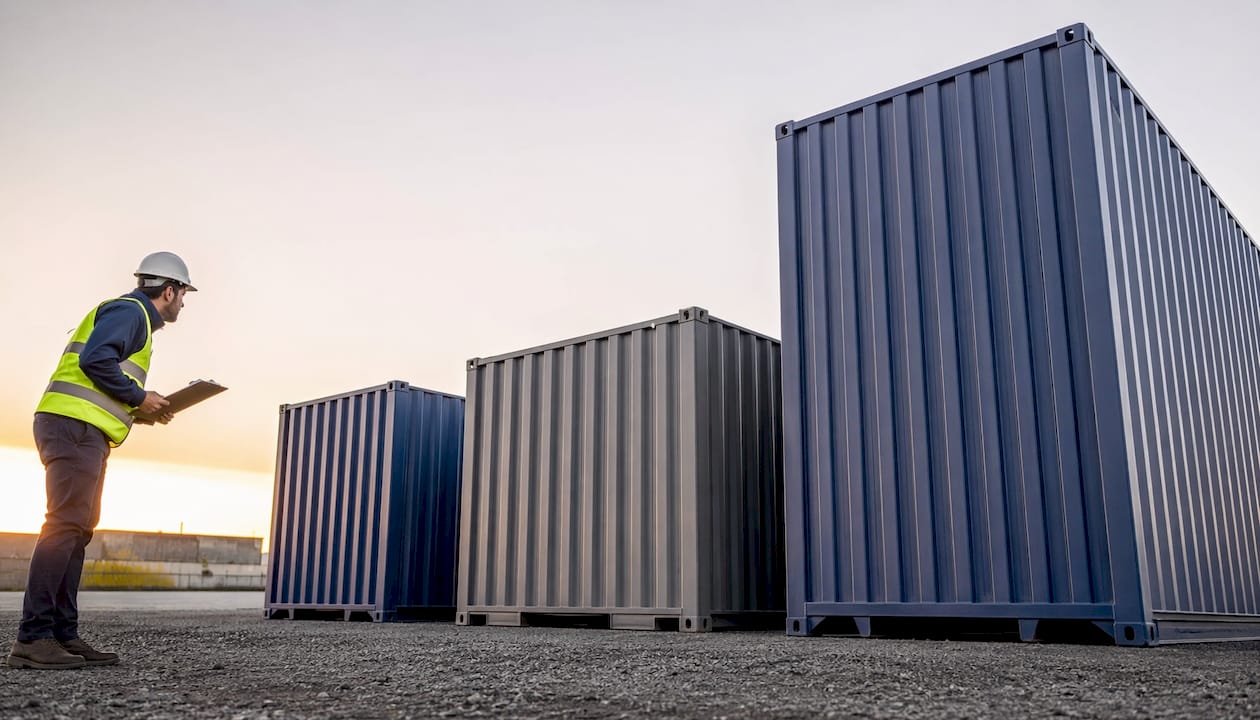
What can you actually use a storage container for?
The short answer: more than most buyers initially consider.
Construction crews use 20ft containers as lockable tool cribs on job sites, keeping expensive equipment secure overnight without renting a separate facility. Retailers use 40ft units for seasonal inventory overflow when warehouse space runs tight. Farmers store feed, seed, and equipment in W&T containers that handle weather without complaint.
- Workshops: Add power, insulation, and ventilation to a High Cube unit and you have a functional workspace for under what a permanent outbuilding costs
- Cold storage: Refrigerated containers (reefers) maintain precise temperature ranges for food service, pharmaceuticals, or floral operations
- Moving and relocation: A container on your property during a home renovation beats paying monthly fees at an off-site facility; for more on that angle, storage options during relocations covers the logistics well
- Retail pop-ups: Modified containers with roll-up doors and exterior signage have become a legitimate retail format in urban markets
- Document and archive storage: Climate-controlled units protect records better than most basement storage rooms
Appletruckandtrailer has supported buyers across all of these use cases since 1986, covering Massachusetts, Rhode Island, Connecticut, and New Hampshire. Their mobile storage container uses resource breaks down fleet and logistics applications specifically.
How does container delivery actually work?
Delivery is where a lot of buyers get surprised, and not pleasantly.
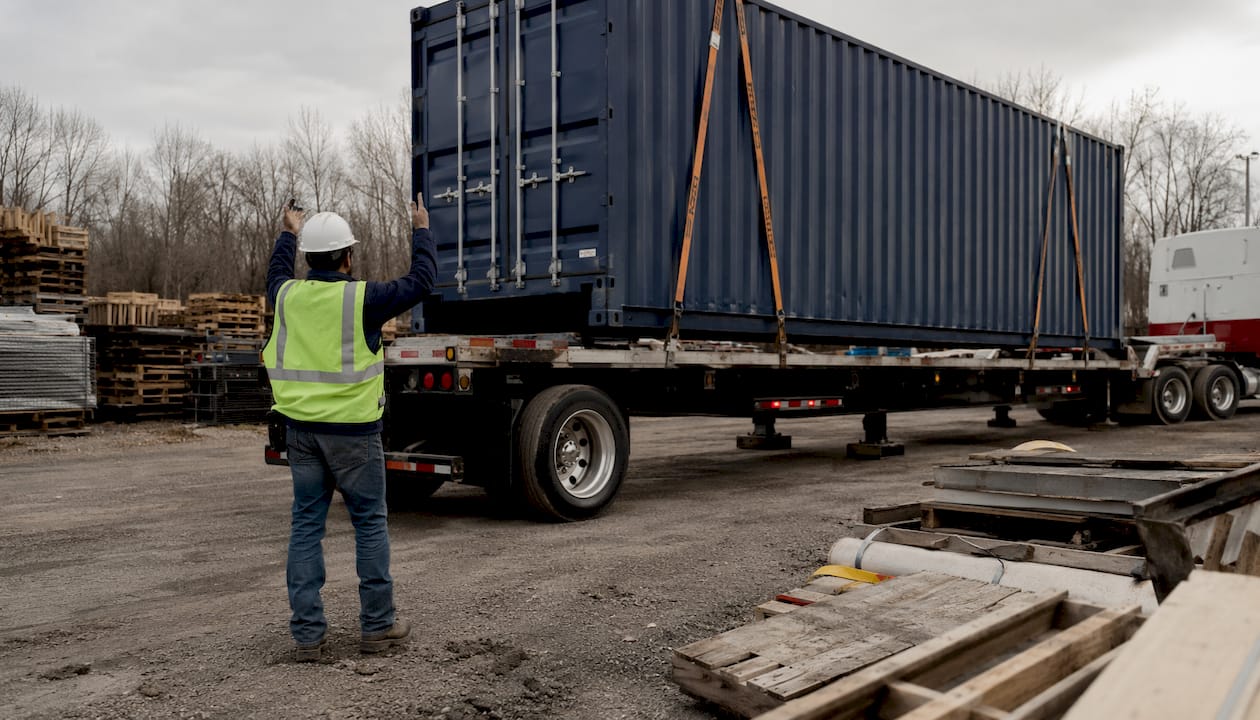
Containers arrive on a tilt-bed or roll-off truck. The driver needs a clear, relatively level path to the drop point, enough overhead clearance for power lines and tree branches, and firm ground that won’t sink under the truck’s weight. Ignoring site conditions leads to delivery failures, door misalignment from uneven placement, and in worst cases, structural damage.
Before your delivery date, confirm these:
- Access width: The delivery truck needs at least 14 feet of clearance, more for a 40ft container swing
- Overhead clearance: 14 feet minimum; more if the truck tilts the container during placement
- Ground condition: Gravel, compacted soil, or concrete pads all work; soft ground after rain does not
- Foundation readiness: Even a temporary placement benefits from corner blocks or railroad ties to keep the container level and off direct soil contact
Local zoning codes also matter. Some municipalities require a permit for any container left on a property longer than 30 days. A few restrict them in residential zones entirely. Check with your local building department before you buy, not after the container is sitting in your driveway.
Appletruckandtrailer coordinates container delivery in Massachusetts and surrounding states, handling the logistics planning that catches these issues before they become your problem.
What does shipping container storage cost?
Prices vary more than most buyers expect, and the sticker price is rarely the full number.
Used Wind & Watertight containers costs vary by size and condition, with One-Trip containers generally priced higher due to their near-new condition; actual prices depend on market conditions and location.
Cost drivers beyond the base price:
- Delivery fees: Distance is the main variable; local drops under 50 miles run $300–$600, longer hauls climb from there
- Modifications: Basic shelving and a personnel door add $500–$1,500; electrical and insulation packages run $2,000–$5,000+
- Site preparation: A gravel pad or concrete foundation adds cost but protects your investment long-term
- Permits: Vary by municipality; budget $100–$500 if your jurisdiction requires them
Warranty and return policies differ by seller. Most used container sales are final once delivered, which makes pre-delivery inspection non-negotiable. New One-Trip containers from reputable dealers typically carry a short structural warranty. Ask specifically what’s covered before you commit.
Expert tips for choosing the right container
The most expensive mistake buyers make is prioritizing appearance over structure. A container with surface rust and faded paint can be perfectly sound. One with soft spots in the floor or a bowed roof is a problem regardless of how clean it looks.
Pro Tip: Request photos of the floor, roof corners, and door seals specifically, not just the exterior walls. Those three areas reveal the defects that cost real money to fix after delivery.
A solid inspection covers these points before purchase:
- CSC certification plate: Confirms the container was built to ISO standards; missing or expired plates are a red flag on any unit marketed as Cargo Worthy
- Roof condition: Walk it if possible, or ask for overhead photos; soft spots indicate rust-through that leads to leaks
- Floor integrity: Hardwood floors should be firm with no give; probe suspicious areas with a screwdriver
- Door seals: Compressed rubber seals should make full contact around the entire frame; gaps mean water infiltration
- Structural corners: Corner castings take the most stress during transport; cracks or heavy deformation affect stacking and anchoring
A thorough inspection can prevent costly hidden defects that may require expensive repairs after delivery. For a deeper walkthrough of what to look for, Appletruckandtrailer’s used container buying tips covers the physical evaluation process step by step.
For permanent placements, foundation engineering matters more than most buyers realize. All permanent container structures in the U.S. require foundations designed for local frost depth and soil bearing capacity under International Building Code standards. Concrete blocks and wooden posts fail this test. Helical piles are a faster, often 20–40% less expensive alternative to poured concrete footings for many sites.
What certifications and safety standards apply?
Containers built for international shipping are manufactured to ISO 668 and ISO 1496 standards, which govern external dimensions, corner casting placement, and structural load ratings. The CSC (Container Safety Convention) plate affixed to compliant units certifies that the container meets the structural requirements for stacking and transport under international maritime law.
For storage-only use, the CSC plate matters less than it does for active shipping. What matters more is whether the unit meets your local building code requirements for a permanent or semi-permanent structure. The International Building Code (IBC) and International Residential Code (IRC) govern most jurisdictions in the U.S., and both require engineered foundations and, in many cases, structural calculations for any container used as a habitable or semi-permanent structure.
Steel containers are non-combustible, which gives them a natural advantage in fire-resistance ratings compared to wood-frame storage buildings. That said, interior modifications using combustible materials (wood shelving, foam insulation) change the fire classification of the finished structure. If you’re building a workshop or office conversion, check with your local fire marshal on finish material requirements before you start.
Appletruckandtrailer has the inventory and expertise you need
Forty years of experience in commercial equipment and storage solutions is a real differentiator when you’re making a purchase this size. Appletruckandtrailer has been selling and supporting container storage solutions across Massachusetts, Rhode Island, Connecticut, and New Hampshire since 1986, with a verified inventory of new and used units, transparent condition grading, and full delivery coordination built into the process.
Where most buyers run into trouble is the gap between finding a container online and actually getting it delivered, placed, and ready to use. Appletruckandtrailer closes that gap. Their team handles logistics planning, site assessment questions, and modification options before you commit, so the unit that shows up is the unit you expected. Whether you need a single 20ft W&T unit for a job site or a fleet of 40ft High Cubes for a distribution operation, the inventory and support structure are there. Get a quote directly at appletruckandtrailer.com and have a real conversation about what fits your site and budget.
Key Takeaways
Buying the right shipping container storage comes down to matching grade, size, and site readiness before the delivery truck shows up.
| Point | Details |
|---|---|
| Grade determines value | One-Trip suits conversions; W&T containers offer affordable static storage with cosmetic trade-offs. |
| Size affects delivery as much as storage | 40ft containers need significantly more site clearance than 20ft units for drop-off. |
| Inspect before you commit | Check the CSC plate, floor, roof, and door seals; skipping this risks costly post-delivery repairs. |
| Foundations must meet code | Permanent placements require engineered foundations per IBC standards; concrete blocks and wood posts don’t qualify. |
| Appletruckandtrailer | Serving the Northeast since 1986 with transparent inventory, condition grading, and full delivery coordination. |