
TL;DR:
- Used 40ft shipping containers offer cost-effective, weather-resistant storage solutions ranging from standard units to custom-modified spaces. Proper evaluation of condition, type, and site requirements ensures optimal long-term value for businesses and residential users alike. Purchasing or renting depends on duration, intended use, and future expansion plans, with local zoning and delivery considerations vital for Massachusetts customers.
If you’re running a business in Massachusetts and your storage situation has become a problem you keep putting off solving, a 40ft used shipping container might be the most practical decision you make this year. These steel boxes offer 2,400 cubic feet of lockable, weather-resistant space at a fraction of what you’d pay for a brick-and-mortar storage build-out. But not every used container is the right container, and buying the wrong one costs you more than just money. This guide walks you through what to evaluate, what’s available, and how to match a container to your actual needs.
Table of Contents
- Key criteria for choosing a 40ft used shipping container
- Popular types of 40ft used shipping containers
- 40ft used shipping container comparison: features and pricing
- How to choose the best 40ft used shipping container for your business needs
- Unique perspectives on maximizing value from 40ft used shipping containers
- Explore used 40ft shipping container offerings with Apple Truck & Trailer
- Frequently asked questions
Key Takeaways
| Point | Details |
|---|---|
| Versatile storage option | 40ft used shipping containers provide durable, flexible storage solutions for diverse business needs. |
| Evaluate key criteria | Assess size, condition, and security features before selecting the right container type. |
| Compare container types | Standard, high-cube, insulated, and modified containers serve different purposes and budgets. |
| Consider rental vs. purchase | Choose renting for short-term use and buying for long-term investment and customization. |
| Check local regulations | Ensure compliance with Massachusetts zoning and placement rules before installation. |
Key criteria for choosing a 40ft used shipping container
Before you even look at listings for a used 40ft shipping container for sale, you need to know what you’re evaluating. The market is full of containers in wildly different conditions, and the price alone won’t tell you what you’re getting.
Container condition grades matter more than most buyers realize. The industry typically sorts used containers into three broad categories:
- IICL grade (cargo-worthy): Structurally sound, wind and water tight, cleared for international shipping. These are the cleanest used units you’ll find.
- Wind and water tight (WWT): Still functional for storage but may have cosmetic damage, dents, or surface rust. A solid choice for most business storage needs.
- As-is: Sold with no guarantees. Fine for parts or projects, risky for critical storage.
Beyond grade, here’s what else to check before committing:
- Weight capacity: Standard 40ft containers hold up to 59,000 lbs. gross weight, but the payload depends on the tare weight of the specific unit. Know your cargo before you sign.
- Floor condition: Hardwood floors in shipping containers can rot or warp. Inspect for soft spots, especially if the container held chemicals in a prior life.
- Door seals and locking mechanisms: A container with a compromised door is not a secure container. Test both cargo doors, check the rubber gaskets, and verify the lockbox is in place.
- Delivery clearance: In Massachusetts, many commercial and residential properties have overhead lines, tight driveways, or soft ground that complicates container delivery. Measure your access before placing an order.
- Zoning and permits: Several Massachusetts municipalities treat containers as permanent structures if left on a property beyond 30 to 90 days. Check with your local planning or building department before the unit arrives.
As one industry source notes, a 40-foot container is not just for shipping goods — it’s a practical option for extra storage or building a structure on your property.
Pro Tip: Before delivery, use spray paint or ground flags to mark your intended container footprint. This helps the driver position it accurately and prevents costly repositioning fees.
For more on making the most of your space once the container is on-site, see our 40ft container storage tips. If you’re not ready to buy, our renting 40ft containers advice covers the rental side in depth.
Popular types of 40ft used shipping containers
Once you understand what to look for in terms of condition and specs, the next step is choosing the right container type. The phrase “used 40 foot shipping container” covers a wider range of products than most people expect.
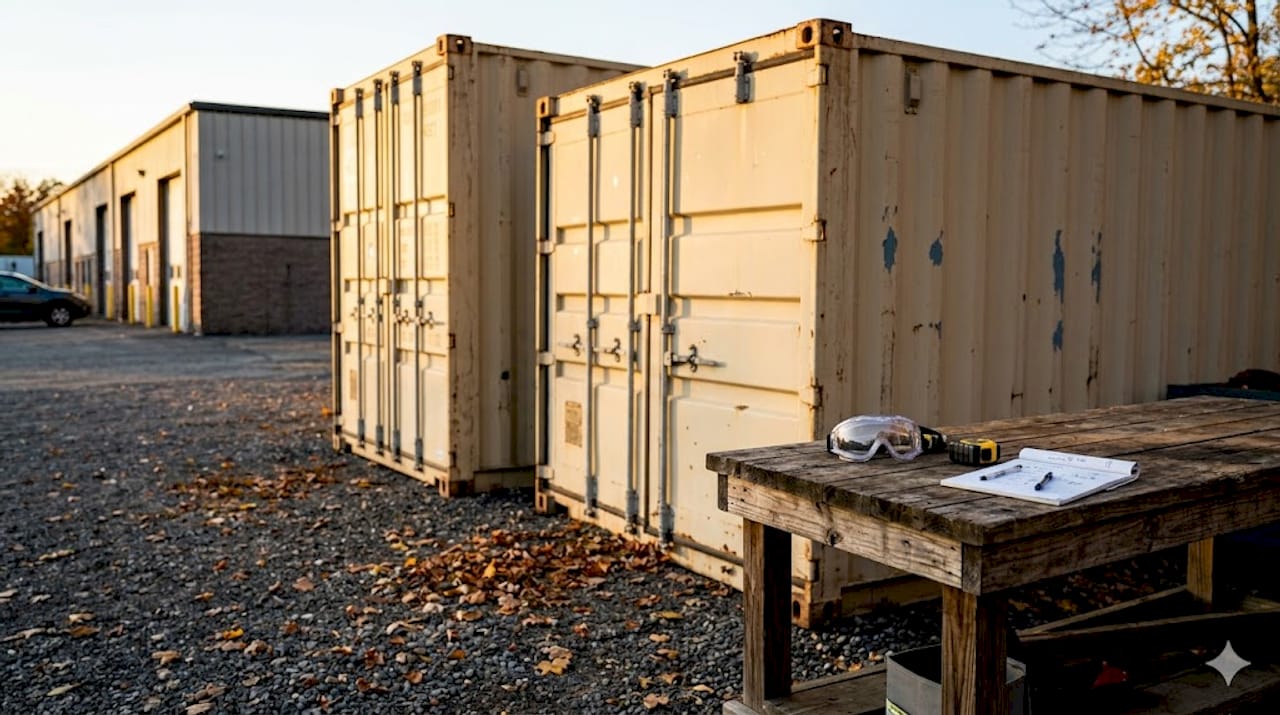
Standard dry containers are the workhorse of the industry. They’re 40 feet long, 8 feet wide, and 8.5 feet tall, with corrugated steel walls and a wooden floor. These handle the vast majority of commercial storage needs: inventory overflow, equipment, construction materials, and general business supplies. They’re also the most readily available and the most affordable option when you’re searching for shipping containers for sale near me used.
High-cube containers add an extra foot of interior height, bringing the ceiling to 9.5 feet. That extra space sounds minor, but it’s significant if you’re storing tall equipment, racking systems, or bulky palletized goods. For businesses running e-commerce operations or light manufacturing, a high-cube is often worth the modest price premium.
Insulated and refrigerated containers are critical for any business storing temperature-sensitive inventory. Food distributors, pharmaceutical suppliers, and floral wholesalers in New England rely on these units, especially during the extreme temperature swings Massachusetts sees from January to July.
Modified containers are the fastest-growing category. These units are converted into storage container uses well beyond traditional storage, including pop-up retail spaces, on-site offices, secure tool rooms, and even mobile workshops. A 40ft unit gives a contractor or retailer nearly 320 square feet of usable floor space, which is enough room to run a functional worksite office.
The key point, backed by multiple use cases across industries, is that a 40-foot container is a genuinely smart investment for extra storage and building projects alike.
- Standard dry: best for general inventory, equipment, and materials
- High-cube: ideal for tall goods, shelving systems, and e-commerce fulfillment
- Insulated/refrigerated: required for temperature-sensitive products
- Modified: suited for offices, retail, or custom workspaces
Pro Tip: If you’re considering a modified container, buy a unit in better cosmetic condition even if it costs a bit more. The resale value and appearance matter more when the container becomes a customer-facing space.
40ft used shipping container comparison: features and pricing
Here’s a side-by-side look at the main container types to make your evaluation easier.
| Container type | Interior height | Best use | Estimated price (used, MA) | Ventilation |
|---|---|---|---|---|
| Standard dry | 7’10″ | General storage | $2,500 to $4,500 | Passive vents |
| High-cube | 8’10″ | Tall goods, shelving | $3,000 to $5,500 | Passive vents |
| Insulated | 7’6″ | Temperature-sensitive | $4,000 to $7,000 | None (sealed) |
| Refrigerated (reefer) | 7’8″ | Cold chain goods | $5,500 to $10,000+ | Active/refrigerated |
| Modified/converted | Varies | Office, retail, workshop | $5,000 to $15,000+ | Custom |
Prices reflect typical 40 ft shipping container cost ranges in the Massachusetts market and vary by condition, age, and supplier.
Buying vs. renting: the honest breakdown
- Buying makes sense when you need the container for more than 12 to 18 months. You build equity, can resell, and can modify the unit freely.
- Renting is smarter for seasonal businesses, short-term construction projects, or one-time moves and cleanouts. Monthly rental costs in Massachusetts typically run $150 to $250 for a standard 40ft unit.
“Used 40ft containers provide durable, cost-effective storage for small businesses and startups looking to manage overhead without sacrificing space.”
Durability and maintenance are where many buyers underestimate long-term costs. Corten steel, the material used in most shipping containers, is designed to form a stable rust layer that protects the underlying steel. But surface rust left unchecked in New England’s coastal salt air will eventually compromise structural integrity. Plan on an annual inspection and touch-up paint cycle, especially on the roof and floor edges.
For more guidance on the purchase process, our buying used container trailers tips covers what to look for when inspecting a unit. And if you’re managing a move or cleanout alongside your storage needs, this overview of storage solutions simplifying moves is worth a read.
Pro Tip: Always ask the seller for the CSC plate (Container Safety Convention plate) number. It tells you the container’s manufacturing date and last inspection. Older units without current certification may fail inspection if you ever need to transport them.
How to choose the best 40ft used shipping container for your business needs
With pricing and types mapped out, the real work is matching a container to your actual situation. Here’s a decision framework that works for both commercial buyers and residential customers looking to buy used shipping containers for a cleanout or move.
- Calculate your volume first. Don’t guess. Measure what you’re storing and convert it to cubic feet. A standard 40ft container holds about 2,400 cubic feet of space. If you’re only filling 800 cubic feet, a used 20 containers for sale option may be more cost-effective and easier to place.
- Decide how long you need it. Under six months: rent. Six months to a year: rent with an option to buy. Over a year: buy outright.
- Map your site. Know your ground conditions (soft soil needs supports), overhead clearances, and whether a tilt-bed or crane delivery is required. Massachusetts winters can also freeze soft ground, which complicates delivery in January or February.
- Think two years ahead. If your business is growing, can you add a second container later? Can the containers be joined? Buying a modifiable unit now saves you the cost of replacing it when your needs change.
According to industry analysis, container selection based on needs is vital because 40ft containers serve a broad range of uses from storage to full business setup.
Key questions to ask before finalizing your purchase:
- Does the seller offer delivery in your area (Massachusetts, Rhode Island, Connecticut, New Hampshire)?
- Is there a warranty or return window if the container has undisclosed damage?
- Can you inspect the container in person before it ships?
- What is the lead time, especially for modified or insulated units?
Our guide on choosing 40 ft trailer tips applies many of the same evaluation principles, and if you’re ready to move forward, 40ft container rentals in Massachusetts shows you what’s available locally.
Pro Tip: Request photos of the container’s interior floor, not just the exterior. Sellers often show the outside because the inside tells the harder story.
Unique perspectives on maximizing value from 40ft used shipping containers
Here’s something most articles on this topic won’t tell you: the businesses getting the most out of their containers aren’t using them just for storage. They’re using them as infrastructure.
A landscaping company in central Massachusetts doesn’t just store equipment in their container. They converted it into a lockable staging area with a workbench, charging stations for battery-powered tools, and a small break room. Their total conversion cost was under $3,000, and it eliminated the need for a $1,200-per-month tool trailer rental. That’s a payback period under three months.
Two containers placed side by side and joined with a covered connector create over 640 square feet of ground-level space. For a contractor, that’s an on-site office plus a materials store. For a retailer doing seasonal pop-ups, it’s a fully functional temporary shop. The modular nature of these units is a genuine operational advantage that most buyers overlook when they’re focused on just finding affordable shipping containers at the lowest price.
Security is also underestimated. Modern lockbox systems (the external steel shroud that covers the padlock) are resistant to bolt cutters. Combined with a ground anchor and a quality disk lock, a container becomes significantly more secure than most standard storage units, which often use basic padlocks on hollow-core roll doors.
And finally, refurbishment extends lifespan dramatically. A container in WWT condition that gets a full exterior paint job, new floor panels, and new door seals will perform like a much newer unit for a fraction of the cost. Don’t write off a container because of cosmetic damage. Creative business applications for 40ft containers, from flexible workspaces to pop-up shops, can generate ROI that pure storage never would. For inspiration on what’s possible, our page on innovative container uses shows real-world examples worth reviewing.
Explore used 40ft shipping container offerings with Apple Truck & Trailer
Apple Truck & Trailer has been serving businesses across Massachusetts, Rhode Island, Connecticut, and New Hampshire since 1986. We know what local businesses need from their storage equipment because we’ve been delivering it for nearly four decades.
Our inventory includes a wide selection of used 40ft containers for sale, from standard dry units to high-cube and modified options suited for commercial and residential use. Whether you’re looking to rent for a seasonal project or buy outright for long-term storage, we’ll help you find the right unit without the guesswork. Explore 40ft container rentals in Massachusetts to get started, or browse our full range of truck and trailer sales in Massachusetts if you need to pair your container with transportation capacity. Our team also supports fleet operators with buying used commercial trucks to complete your logistics setup.
Frequently asked questions
What factors determine the price of a 40ft used shipping container?
Price depends on container condition, type, location, and whether any customization is included, with used containers costing less than new units by a wide margin. In Massachusetts, used 40ft containers typically run $2,500 to $5,500 for standard units before delivery.
Is it better to rent or buy a 40ft used shipping container?
Renting is the better choice for short-term or seasonal needs, while buying pays off over 12 months or more when you factor in monthly rental costs. Rental versus purchase decisions should always account for your storage duration and whether you need the flexibility to return the unit.
Can 40ft used shipping containers be modified for special uses?
Yes, and the range of modifications is broader than most buyers expect. 40-foot containers are versatile enough to be converted into offices, workshops, insulated cold storage, or customer-facing retail spaces with proper build-out.
Are there zoning restrictions for placing shipping containers in Massachusetts?
Local zoning laws vary significantly by town and city in Massachusetts. Always check with your municipal planning or building department before placing a container, especially if it will stay on the property longer than a few weeks.
How durable are used 40ft shipping containers in harsh weather?
Very durable. They’re built from Corten steel and designed to handle ocean conditions, which means New England winters are well within their tolerance. Container weather resistance is one of their strongest selling points for year-round commercial storage in the Northeast.
Recommended
- Rent to own shipping containers near me Massachusetts 2026 – Apple Truck & Trailer
- Streamline storage container delivery in Massachusetts 2026 – Apple Truck & Trailer
- 40’ Storage Container Rental Massachusetts – Apple Truck & Trailer
- 20’ Storage Container Rental Massachusetts – Apple Truck & Trailer