
TL;DR:
- Choosing the right trailer requires ensuring both your trailer’s GVWR and your vehicle’s tow rating exceed your actual loaded weight. Properly matching trailer type, weight ratings, and inspecting critical safety features prevent accidents and costly repairs. Verifying load calculations and conducting thorough pre-purchase inspections are essential steps to safe and effective hauling.
Choosing the right trailer is defined by one rule: your trailer’s rated capacity and your vehicle’s tow rating must both exceed your real-world loaded weight. Get that wrong, and every other decision — size, style, price — becomes irrelevant. This guide walks you through trailer types, weight ratings, safety features, and the step-by-step process for making a data-driven purchase, whether you’re hauling construction materials across Massachusetts or moving a car across state lines.
How to choose the right trailer for your hauling needs
The first step in any trailer selection is understanding exactly what you’re moving. Cargo characteristics drive everything: a landscaper hauling mulch needs a dump trailer rated for loose material and repeated tipping cycles, while a contractor moving an excavator needs a lowboy or equipment trailer with a low deck height and high GVWR. Getting this wrong doesn’t just mean inconvenience. It means unsafe loads, equipment damage, and potential DOT violations.
Here’s a breakdown of the most common trailer types and their best-fit applications:
| Trailer type | Best for | Typical GVWR range |
|---|---|---|
| Utility/open | Landscaping, light equipment, ATVs | 3,500–7,000 lb |
| Dump trailer | Mulch, gravel, demolition debris | 7,000–14,000 lb |
| Enclosed cargo | Tools, merchandise, sensitive freight | 3,500–10,000 lb |
| Flatbed | Lumber, steel, palletized goods | 10,000–48,000 lb |
| Equipment/lowboy | Excavators, skid steers, oversized loads | 20,000–80,000 lb |
| Car hauler | Vehicles, motorsports equipment | 7,000–14,000 lb |
| Stock/livestock | Animals, agricultural use | 7,000–24,000 lb |
For fleet operators, trailer type selection directly affects loading efficiency, fuel costs, and driver safety. Flatbeds suit construction materials and palletized freight; lowbeds fit oversized loads with low-clearance requirements. Matching the trailer type to the cargo type is the first filter, not the last.
Pro Tip: If your cargo varies week to week, prioritize a flatbed or open utility trailer with a higher GVWR over a specialized trailer. Versatility reduces your per-haul cost and keeps one trailer working harder.
What do GVWR, payload, and tongue weight actually mean?
GVWR (Gross Vehicle Weight Rating) is the maximum legal weight of a fully loaded trailer, including the trailer’s own weight. Payload is what’s left after you subtract the trailer’s empty weight from the GVWR. These two numbers define the physical and legal limits of every load you haul.
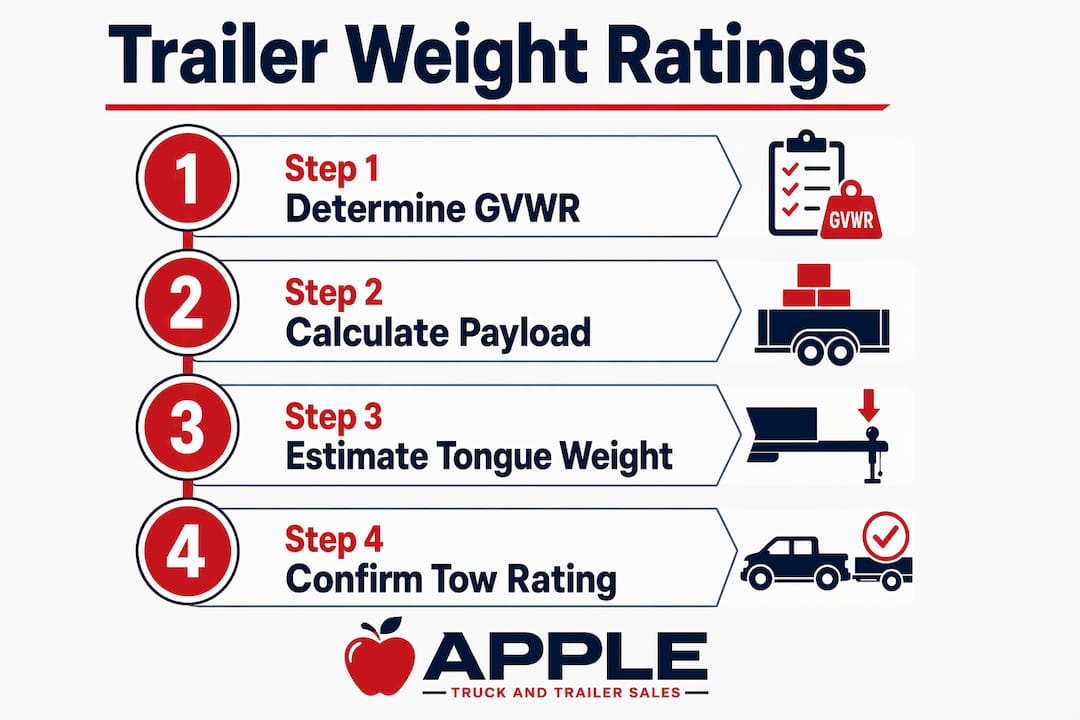
Here’s where most buyers make a costly mistake: they select a trailer by size and assume the truck can handle it. The math must work in two directions. Your loaded weight must stay at or below the trailer’s GVWR and at or below your tow vehicle’s maximum tow rating. A 7-by-14-foot dump trailer with a 14,000 lb GVWR and 3,500 lb empty weight gives you roughly 10,500 lb of usable cargo capacity, but only if your truck is rated to tow 14,000 lb.
Tongue weight adds another layer. Tongue weight runs 10 to 15% of the loaded trailer weight and transfers directly to your hitch and rear axle. A 10,000 lb loaded trailer puts approximately 1,000 to 1,500 lb on the hitch ball. Too little tongue weight causes trailer sway and fishtailing. Too much causes rear-end squat, reduced steering control, and front-axle lift. Both are dangerous.
| Truck tow rating | Max trailer GVWR | Est. tongue weight at 12% |
|---|---|---|
| 8,500 lb | 8,500 lb | 1,020 lb |
| 14,000 lb | 14,000 lb | 1,680 lb |
| 20,000 lb | 20,000 lb | 2,400 lb |
| 35,000 lb | 35,000 lb | 4,200 lb |
Safety experts confirm that overlooking GVWR, payload, and tongue weight leads to unsafe towing setups even when the trailer appears to move fine. The trailer moving is not the same as the trailer moving safely.
Pro Tip: Always start calculations from GVWR, then work backward to estimate tongue weight. Never use the trailer’s empty weight as your planning baseline. A trailer that looks manageable empty can exceed your truck’s payload limit when fully loaded.
What trailer features matter most for safety and longevity?
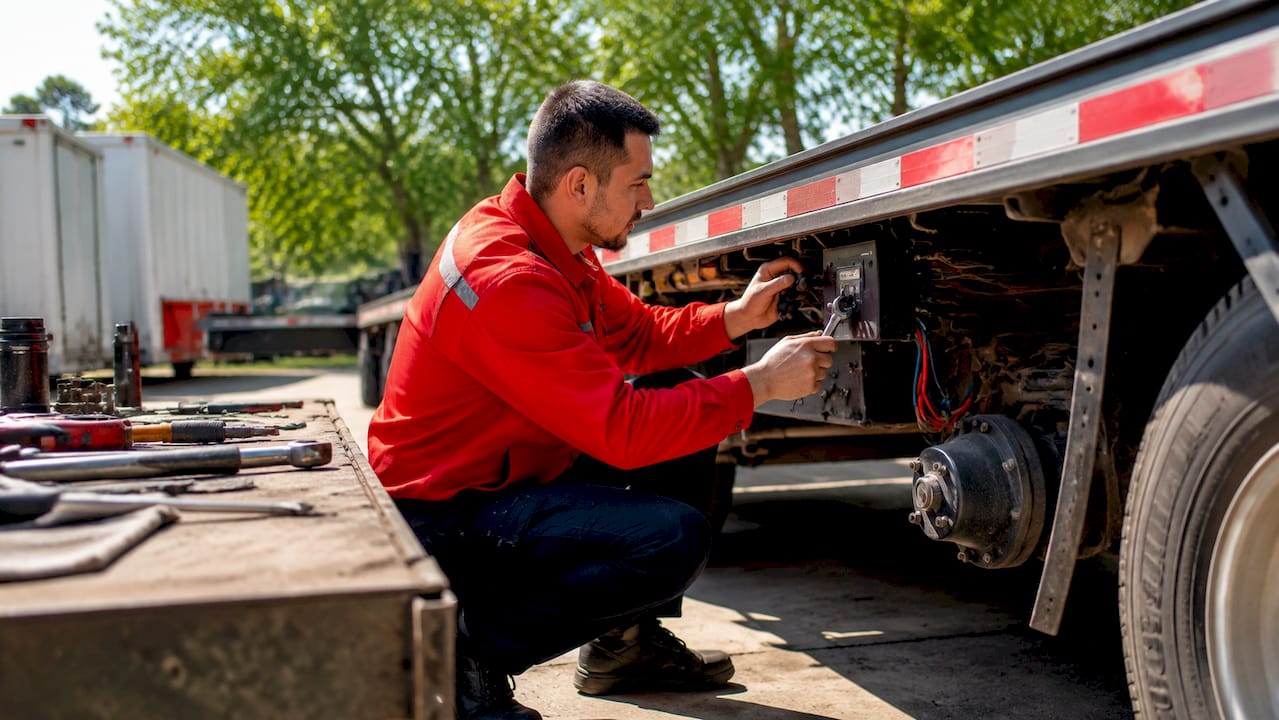
Build quality separates a trailer that performs for 15 years from one that costs you in repairs and downtime within three. The materials, brake system, and suspension type all affect how a trailer handles real loads in real conditions.
Construction materials
Steel trailers offer higher strength and are easier to weld and repair, making them the standard choice for heavy-duty and commercial applications. Aluminum trailers weigh 10 to 15% less, resist corrosion better, and carry a higher resale value, making them a strong fit for enclosed cargo and car haulers where weight savings translate directly to payload gains.
Brake systems
Electric trailer brakes require a brake controller installed in the tow vehicle. Without a functioning controller, trailer brakes won’t engage regardless of how hard you press the pedal. A correctly calibrated brake controller reduces stopping distance by 30 to 50% compared to relying on the tow vehicle’s brakes alone. For trailers over 3,000 lb loaded, electric brakes are not optional. They’re the difference between a controlled stop and a rear-end collision.
Suspension and lighting
Leaf spring suspension handles heavy static loads well and is the most common setup on utility and dump trailers. Torsion axle suspension provides a smoother ride and better ground clearance, making it the preferred choice for car haulers and enclosed trailers carrying sensitive cargo. On the safety side, every trailer must have functioning brake lights, turn signals, and side markers. Keeping trailers roadworthy means checking wiring connections at every pre-trip inspection, not just at purchase.
Pro Tip: On used trailers, inspect the 7-pin connector’s blue wire specifically. Wiring issues cause brake failure more often than brake controller failure. A $15 circuit tester can save you from a $15,000 accident.
How to pick a trailer: a step-by-step buying process
A structured approach to trailer selection removes guesswork and protects you from expensive mistakes. Follow this sequence before you sign anything.
- Pull your vehicle’s tow rating and payload capacity. Check the door jamb sticker or owner’s manual. Do not rely on online estimates or dealer verbal quotes.
- Define your maximum loaded cargo weight. Weigh your typical load if possible. Add 15% as a buffer for variable loads.
- Calculate the minimum GVWR you need. Add cargo weight to the trailer’s estimated empty weight. That total must stay under both the trailer GVWR and your truck’s tow rating.
- Estimate tongue weight. Multiply your loaded trailer weight by 0.12 to get a 12% tongue weight estimate. Confirm your truck’s payload rating can absorb that number.
- Select the trailer type that fits your cargo. Use the comparison table above as your starting filter.
- Visit a dealership or inspect the private seller’s unit in person. Never buy a trailer based on photos alone.
- Inspect these components before purchase:
- Frame welds and structural integrity
- Tire condition, age, and pressure rating
- Brake function and 7-pin wiring
- Lighting (brake lights, turn signals, markers)
- Coupler, safety chains, and breakaway switch
- Title, registration, and maintenance records
For used trailer purchases, professional inspections lower the risk of hidden safety defects and unexpected repair costs. A pre-purchase inspection from a qualified technician typically costs $100 to $300 and can identify issues that would cost thousands to fix post-sale. Appletruckandtrailer’s guide on inspecting used trailers covers the full checklist for buyers in Massachusetts and the surrounding region.
Pro Tip: Request maintenance records on any used trailer. A trailer with no service history is a liability, not a bargain. Brake wear, bearing condition, and wiring integrity are invisible to the eye but critical to safety.
Common mistakes when selecting and using a trailer
Even experienced buyers make predictable errors. Knowing them in advance is the fastest way to avoid them.
- Selecting by size, not by GVWR. A 20-foot trailer with a 7,000 lb GVWR cannot safely carry what a 16-foot trailer with a 14,000 lb GVWR can. Length is not capacity.
- Ignoring tongue weight until it’s too late. Tongue weight at 10 to 15% of loaded trailer weight is the standard. Buyers who skip this calculation often discover the problem at highway speed when the trailer begins to sway.
- Installing a brake controller but not testing it. A controller that isn’t calibrated to the trailer’s loaded weight provides inconsistent braking. Test the gain setting with a loaded trailer on a quiet road before highway use.
- Skipping the wiring check on used trailers. The blue wire on the 7-pin connector activates the brake magnets. Verify power at the 7-pin plug before every trip, especially after purchasing a used unit.
- Overloading the front or rear of the trailer. Load distribution matters as much as total weight. Place 60% of cargo weight forward of the trailer’s axle centerline to maintain proper tongue weight and trailer stability.
The most dangerous trailer setup isn’t an overloaded one. It’s an improperly balanced one that feels fine at 35 mph and becomes uncontrollable at 65 mph. Know your numbers before you leave the lot.
Key takeaways
Choosing the right trailer requires matching your real-world loaded weight to both the trailer’s GVWR and your vehicle’s tow rating, then verifying brake systems, tongue weight, and trailer type before purchase.
| Point | Details |
|---|---|
| GVWR is the primary filter | Your loaded trailer weight must stay at or below the trailer’s GVWR and your truck’s tow rating. |
| Tongue weight drives stability | Target 10 to 15% of loaded trailer weight on the hitch to prevent sway and rear-axle overload. |
| Brake controllers are non-negotiable | Electric brakes require a calibrated controller; without one, stopping distance increases by 30 to 50%. |
| Trailer type must match cargo | Flatbeds, dump trailers, enclosed units, and lowboys each serve distinct cargo profiles. |
| Used trailers need professional inspection | Wiring, brakes, tires, and frame integrity require hands-on verification, not visual assessment alone. |
What I’ve learned from watching buyers get this wrong
I’ve seen the same mistake repeated more times than I can count: a buyer walks onto a lot, looks at a trailer, and decides it’s the right size. They don’t ask about GVWR. They don’t check their truck’s payload rating. They don’t test the brake controller. They drive off confident, and three months later they’re dealing with a sway incident on I-95 or a blown axle bearing from chronic overloading.
The shift that changes everything is moving from visual assessment to numeric verification. When you know your truck’s tow rating, your cargo’s real weight, and the trailer’s GVWR before you start shopping, the decision becomes straightforward. You’re not guessing. You’re matching numbers.
I’d also push back on the idea that buying used is inherently riskier than buying new. A well-maintained used trailer with documented service history is a better buy than a new trailer from an unknown manufacturer with no support network. The risk isn’t in the age of the trailer. It’s in skipping the inspection. Every used trailer I’d recommend comes with a full brake, wiring, and structural check first. That’s not optional. It’s the baseline.
The buyers who get this right consistently are the ones who treat trailer selection like a fleet decision, not a retail purchase. They gather specs first, inspect second, and negotiate third. That sequence protects them legally, financially, and physically.
— Andrew
Find the right trailer with Appletruckandtrailer
Appletruckandtrailer has been helping fleet operators, contractors, and individuals across Massachusetts, Rhode Island, Connecticut, and New Hampshire find the right equipment since 1986.
Whether you need a flatbed for construction materials, an enclosed trailer for cargo, or a dump trailer for site work, Appletruckandtrailer’s inventory covers the full range of commercial and utility trailers. Every used unit goes through a thorough inspection process before it reaches the lot. If you’re ready to match your hauling needs to a specific trailer, explore the truck and trailer sales inventory or contact the team directly for personalized guidance. For buyers also evaluating tow vehicles, the used commercial truck resources cover the full purchase process from specs to final inspection.
FAQ
What is GVWR and why does it matter when buying a trailer?
GVWR (Gross Vehicle Weight Rating) is the maximum legal weight of a fully loaded trailer, including the trailer itself. Your loaded cargo plus the trailer’s empty weight must never exceed this number, and your tow vehicle’s rated capacity must meet or exceed it.
How do I know what size trailer I need?
Start with your maximum cargo weight, add the trailer’s empty weight, and confirm that total stays under both the trailer’s GVWR and your truck’s tow rating. A 7-by-14-foot dump trailer with a 14,000 lb GVWR, for example, provides roughly 10,500 lb of usable payload if the trailer weighs 3,500 lb empty.
What is tongue weight and how much is safe?
Tongue weight is the downward force the trailer exerts on the hitch ball, and it should run between 10 and 15% of the loaded trailer weight. Too little causes trailer sway; too much causes rear-axle overload and reduced front-wheel steering control.
Do I need a brake controller for my trailer?
Any trailer with electric brakes requires a brake controller installed in the tow vehicle. Without one, the trailer brakes will not engage at all, which significantly increases stopping distance and creates a serious safety hazard at highway speeds.
What should I inspect on a used trailer before buying?
Focus on frame welds, tire condition and age, brake function, 7-pin wiring (especially the blue brake wire), coupler integrity, lighting, and the breakaway switch. Request maintenance records and consider a professional pre-purchase inspection to identify hidden defects before they become your problem.
Recommended
- Inspecting Used Trailers: Essential Tips for Buyers – Apple Truck & Trailer
- Trailer Specifications Explained: Key Insights for Buyers – Apple Truck & Trailer
- How to buy used trailers: a practical guide for fleets – Apple Truck & Trailer
- 7 Key Tips for Buying Storage Trailers for Sale – Apple Truck & Trailer