
TL;DR:
- Proper preparation and inspection are essential for a safe and cost-effective used trailer purchase.
- Local dealerships with transparent history and support offer the best balance of value and security.
- Prioritizing trailer ROI involves assessing service history, parts availability, and dealer support.
Rising freight costs and ongoing supply chain pressure have made used trailers one of the smartest investments a Massachusetts fleet owner can make. But a bargain that breaks down on Route 128 or sits out of compliance at a weigh station is no bargain at all. The difference between a smart buy and a costly mistake comes down to preparation, a disciplined inspection process, and understanding the paperwork before you sign anything. This guide walks you through every stage, from defining your needs and finding a trustworthy source, to completing the purchase and getting your new trailer road-legal and working for your operation.
Table of Contents
- Assessing needs and setting a budget
- Where to find quality used trailers in Massachusetts
- Inspecting and qualifying a used trailer
- Completing the purchase and ensuring compliance
- Why focusing on ROI, not just price, changes the buying game
- Get expert help buying or upgrading your fleet
- Frequently asked questions
Key Takeaways
| Point | Details |
|---|---|
| Clarify use and budget | Always start by defining trailer needs and total cost to avoid costly mismatches. |
| Source from reputable dealers | Choose well-reviewed local vendors with inspection transparency and after-sale support. |
| Never skip inspection | Thorough trailer checks safeguard your investment and ensure safety on the road. |
| Complete all legal paperwork | Proper documentation and state compliance are essential for operating in Massachusetts. |
Assessing needs and setting a budget
Before you browse a single listing, get specific about what your fleet actually needs. Vague requirements lead to vague purchases, and vague purchases lead to trailers sitting idle because they don’t fit your freight or your dock. Start by writing down the primary job this trailer will perform.
Common use cases for Massachusetts fleets include:
- Dry van freight hauling on regional or long-haul routes
- Temperature-controlled transport requiring refrigeration units
- On-site storage at a job site, warehouse, or distribution center
- Seasonal overflow capacity during peak shipping periods
- Last-mile delivery requiring a liftgate or side-door access
As storage trailer buying tips from experienced dealers confirm, determining intended use helps narrow choices and avoids overpaying for features you’ll never use. Once you know the job, list the must-have specs: door configuration, payload capacity, interior height, and any special equipment like liftgates or refrigeration.
Next, build a realistic budget using Total Cost of Ownership (TCO), not just the sticker price. TCO covers the purchase price, expected annual maintenance, registration fees, insurance, and any immediate repairs the trailer needs before it’s road-ready. A trailer priced $4,000 lower than the market average might need $6,000 in brake and floor repairs within the first year.
For fleets considering larger equipment, choosing a 40 ft trailer involves additional considerations around turning radius, dock compatibility, and state weight limits that affect your TCO calculation. Resources like finding the best used trailer also offer useful frameworks for comparing options before committing.
Pro Tip: Build a one-page checklist before every trailer purchase. Include your required specs, your maximum TCO threshold, and a column for each trailer you evaluate. Consistent comparisons prevent emotional buying.
| Use case | Trailer type | Estimated used price range |
|---|---|---|
| Regional dry freight | 48 ft or 53 ft dry van | $8,000 to $20,000 |
| On-site storage | 20 ft or 40 ft storage trailer | $3,500 to $10,000 |
| Temperature-sensitive freight | Refrigerated van (reefer) | $15,000 to $35,000 |
| Last-mile delivery | Flatbed with liftgate | $7,000 to $18,000 |
These ranges shift based on age, mileage, and condition. Use them as a starting point, not a ceiling.
Where to find quality used trailers in Massachusetts
Once your needs and budget are clear, you’re ready to begin your search. The source you choose matters as much as the trailer itself.
Massachusetts fleet owners have several options: local dealerships, private sellers, regional auctions, and national online listings. Each has tradeoffs worth understanding.
| Source | Advantages | Disadvantages |
|---|---|---|
| Local dealership | Inspection transparency, after-sale support, financing | Higher upfront price |
| Private sale | Lower price, direct negotiation | No warranty, limited history |
| Auction | Competitive pricing, large selection | As-is condition, fast decisions required |
| National listing | Wide inventory, price comparison | Shipping costs, harder to inspect in person |
For most Massachusetts fleet operators, a local dealership offers the best balance of risk and value. Working with reputable dealers improves access to warranties and reliable service history checks, which can save thousands in unexpected repairs. You can also explore Massachusetts trailer sales from regional specialists who understand local compliance requirements and fleet operating conditions.
When evaluating a dealer, look for these signs of trustworthiness:
- Certified inspection records available on request
- Transparent maintenance history with no gaps
- Clear title documentation with no liens
- After-sale service support or referrals to qualified repair shops
- Willingness to allow third-party inspection before purchase
For buyers considering storage-specific equipment, used shipping container trailer tips cover additional factors like floor integrity and door seal condition that general trailer guides often miss. If you want to compare options outside the local market, alternative trailer vendors can give you a pricing benchmark.
Watch for these red flags regardless of source:
- Title in a name other than the seller’s
- No maintenance records or vague service history
- Price drops significantly with no explanation
- Seller resists a professional inspection
- VIN that doesn’t match the title
A few minutes of due diligence on the source protects you from weeks of legal headaches.
Inspecting and qualifying a used trailer
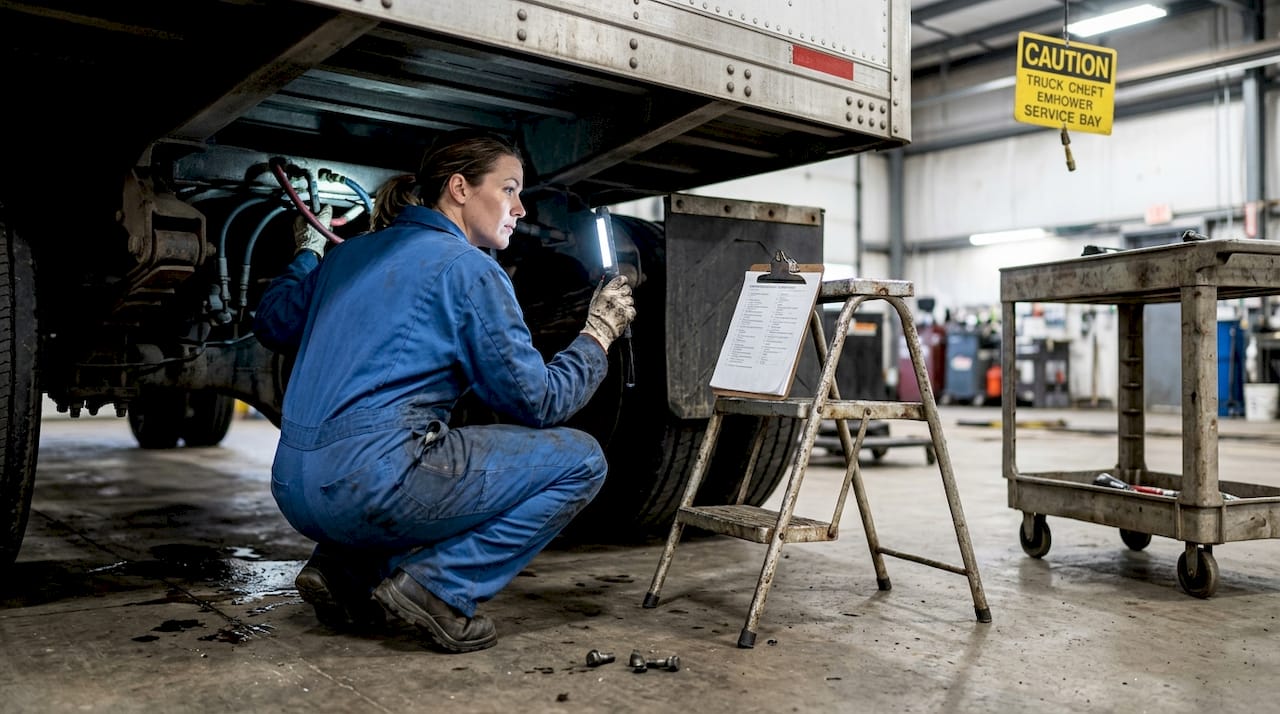
With trailer options identified, don’t put money down until a thorough inspection has been done. This is where most buyers cut corners, and it’s exactly where costly surprises hide.
Follow this step-by-step inspection sequence:
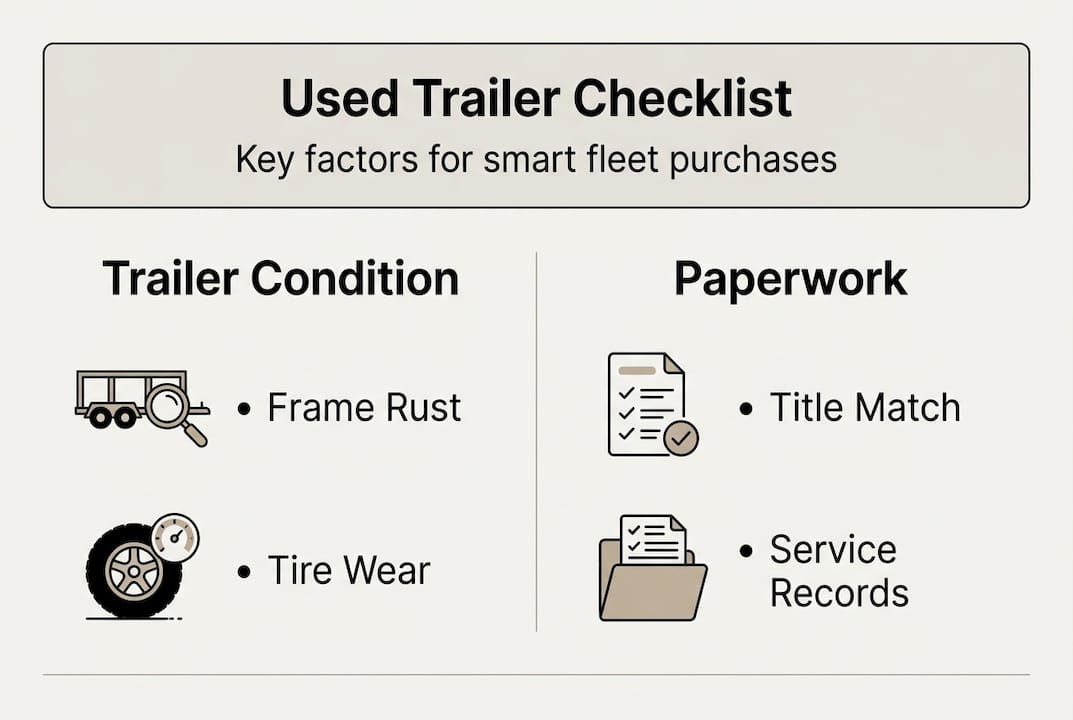
- VIN and title check — Confirm the VIN on the trailer matches the title. Run a lien search before proceeding.
- Frame and structural integrity — Look for cracks, bends, or weld repairs along the main rails and crossmembers. Hidden frame damage is expensive to fix and dangerous to ignore.
- Flooring condition — Check for soft spots, rot, or broken boards. Floor replacement on a 53 ft trailer can run $3,000 or more.
- Electrical systems — Test all running lights, brake lights, and marker lights. Faulty wiring is a common DOT violation.
- Tires and wheels — Check tread depth, sidewall condition, and look for uneven wear that signals alignment or brake issues.
- Brakes — Inspect brake shoes, drums, and air lines. Ask for the most recent brake adjustment date.
- Lighting and reflectors — Confirm all required reflectors are in place and undamaged.
- Door function — Roll-up or swing doors should open and close smoothly with no binding, broken seals, or damaged latches.
As trailer safety and maintenance experts note, a thorough inspection is the best way to avoid expensive surprises with used trailers. For storage-focused buyers, the shipping container trailer checklist adds detail on seal integrity and container locking systems. External resources like inspection steps for used trailers provide additional technical guidance from industry professionals.
Never skip a professional assessment for frame damage or advanced rust. Surface rust is cosmetic. Structural rust compromises safety and can disqualify a trailer from passing a DOT inspection. A $300 professional inspection can save you from a $15,000 mistake.
Pro Tip: Bring a printed inspection form to every evaluation. Rate each item on a simple 1 to 3 scale: pass, marginal, or fail. This gives you a consistent record and a negotiating tool if repairs are needed.
Common issues that signal higher long-term costs include worn air lines, cracked mud flaps, damaged kingpins, and corroded landing gear. None are dealbreakers on their own, but each adds to your real cost of ownership.
Completing the purchase and ensuring compliance
Inspection done and ready to buy? Here’s how to complete the transaction right and set up your trailer for legal, safe, long-term use.
Massachusetts has specific title, registration, and inspection requirements for used commercial trailers. Missing even one document can delay your registration or trigger a compliance violation on your first run.
Here’s the document checklist you need before signing:
- Signed title — Must be free of liens and in the seller’s name
- Bill of sale — Includes purchase price, VIN, date, and both parties’ signatures
- Maintenance records — At least the most recent service history
- MassDOT registration forms — Required for any commercial trailer operating in Massachusetts
After the paperwork is in order, follow this compliance sequence:
- Pay applicable sales tax as part of the registration process in Massachusetts
- Secure commercial trailer insurance before the trailer moves under your authority
- Schedule a Massachusetts DOT inspection if the trailer hasn’t had one recently
- Complete MassDOT registration through the Massachusetts trailer registration portal
- Add the trailer to your FMCSA operating authority records if applicable
Once registered, onboard the trailer properly into your fleet. Assign it a maintenance schedule, add it to your tracking system, and conduct a driver orientation covering any features specific to this unit. Skipping onboarding is a common mistake that leads to deferred maintenance and compliance gaps down the road.
For a deeper look at what trailer compliance Massachusetts requires, including axle weight limits and annual inspection timelines, review the state-specific requirements before your first dispatch.
Why focusing on ROI, not just price, changes the buying game
Here’s a perspective that most used trailer guides won’t give you: the cheapest trailer in the lot is rarely the best investment for a working fleet. We’ve seen this play out repeatedly with Massachusetts operators who chase the lowest sticker price and end up with a unit that’s out of service within six months.
The real cost of a trailer isn’t what you paid. It’s what you paid, plus every repair hour, every missed delivery, every compliance fine, and every driver complaint. When you factor in downtime, a trailer that costs $5,000 less upfront but generates $8,000 in annual repair costs is a net loss.
Experienced fleet managers we’ve worked with consistently prioritize three things over price: documented service history, available parts, and dealer support after the sale. A trailer with a clean paper trail from a dealer who stands behind their inventory is worth more than a mystery unit at a bargain price. Resources on avoiding hidden costs reinforce this point with real examples from commercial truck buyers.
Pro Tip: Before finalizing any purchase, calculate your real annual cost: purchase price divided by expected years of service, plus projected annual maintenance. Compare that number across every trailer you’re considering. The winner is rarely the cheapest option.
Get expert help buying or upgrading your fleet
Ready to put this into action, or need help with your next move?
At Apple Truck & Trailer, we’ve been helping Massachusetts fleet owners find the right used trailers since 1986. We know the local compliance landscape, the seasonal demand patterns, and what separates a reliable unit from a money pit.
Explore our find local trailers for sale inventory, matched to your fleet’s specific profile. Need storage solutions for a job site or seasonal overflow? Our secure storage solutions page covers container options built for commercial and residential needs. For buyers who want to go deeper before committing, our used commercial truck buying resources walk you through every stage of the process with Massachusetts-specific guidance.
Frequently asked questions
What paperwork is needed to buy a used trailer in Massachusetts?
You need the signed title, bill of sale, and past maintenance records, plus MassDOT registration and compliance documents. Massachusetts has specific registration requirements for used commercial trailers that must be completed before the trailer operates legally.
How do I verify a used trailer is safe and roadworthy?
Check the VIN, frame, tires, brakes, lighting, and require a certified inspection before purchasing. Following a structured inspection process is the most reliable way to catch hidden issues before they become your problem.
Are dealer warranties available for used trailers?
Some reputable dealers offer limited warranties or certified inspections, so always ask about warranty availability before finalizing the sale. Reputable dealer partnerships also improve access to service history records that private sales rarely provide.
What are the most common mistakes when buying used trailers?
Missing frame rust, skipping title checks, and ignoring hidden maintenance issues are top pitfalls. Always use a detailed inspection checklist and never skip a professional trailer assessment before committing funds.
Do I need to pay sales tax on a used trailer purchase?
Yes, in Massachusetts sales tax applies to used trailer purchases and is part of the registration process. Review Massachusetts trailer compliance rules to understand all fees and registration steps required before your trailer hits the road.