
Guide to tires for commercial trailers: top picks 2026
Selecting the right tires for your commercial trailer fleet directly impacts safety, operating costs, and delivery efficiency. Massachusetts fleet managers face unique challenges balancing FMCSA compliance requirements, winter weather performance, and budget constraints across regional routes. This guide walks you through essential tire selection criteria, compares new versus retread options, evaluates leading brands available locally, and provides expert buying strategies to optimize your 2026 procurement decisions. You’ll learn how proper tire management can reduce fleet costs by up to 5% annually while maintaining the safety and reliability your logistics operations demand.
Table of Contents
- How To Evaluate Tires For Commercial Trailers: Key Criteria
- Top Commercial Trailer Tire Options: New, Retreads, And Brands
- Comparing Commercial Trailer Tires: Performance, Cost, And Suitability
- Choosing The Right Trailer Tires For Your Massachusetts Fleet: Expert Tips
- Explore Commercial Trailer Tires And Fleet Solutions In Massachusetts
- Frequently Asked Questions
Key takeaways
| Point | Details |
|---|---|
| Tire design priorities | Commercial trailer tires emphasize mileage and load stability over traction, with straight rib treads and reinforced sidewalls. |
| Pressure management impact | Maintaining proper tire pressure can increase mileage by up to 22% and reduce fuel consumption. |
| Retread cost savings | Retread tires offer 30 to 50% cost savings versus new tires when used on trailer positions. |
| Local supplier access | Massachusetts dealers stock Michelin, Firestone, and Bridgestone with quick turnaround for fleet service needs. |
| Structured program benefits | Tire management programs reduce annual fleet operating costs by 3 to 5% through optimized maintenance. |
How to evaluate tires for commercial trailers: key criteria
Understanding what separates commercial trailer tires from passenger or drive axle tires helps you make informed procurement decisions. Trailer tires prioritize mileage and load stability with specific design features including straight rib tread patterns that promote even wear, reinforced sidewalls engineered for lateral stability under heavy loads, and low rolling resistance compounds that reduce heat buildup. These design elements directly address the unique demands trailers face: extended highway miles, minimal acceleration or braking forces, and consistent heavy loads.
Regulatory compliance forms the foundation of safe tire selection. FMCSA regulations mandate minimum tread depths of 4/32 inch for steer axles and 2/32 inch for trailer positions, with additional requirements for tire age limits typically ranging from 6 to 10 years regardless of remaining tread. Massachusetts fleets must also consider state-specific commercial trailer requirements that govern equipment standards and inspection protocols.
Pressure management deserves special attention because even minor deviations create cascading problems. Underinflated tires generate excessive heat, accelerate shoulder wear, and reduce fuel economy. Overinflation causes center tread wear and harsh ride quality that can damage cargo. Monitoring tire pressure precisely prevents these issues and extends tire life significantly.
Key evaluation criteria include:
- Load capacity ratings that match your typical cargo weights with safety margin
- Heat resistance specifications for sustained highway speeds
- Tread design optimized for your primary route conditions
- Sidewall construction suitable for your loading dock operations
- Manufacturer warranty terms and local service availability
Pro Tip: Check tire pressure when tires are cold, before the first trip of the day. Heat from operation increases pressure readings by 10 to 15 PSI, giving false high readings that mask underinflation.
Frequent inspections catch problems early. Walk around checks before each trip identify visible damage, embedded objects, or abnormal wear patterns. Scheduled maintenance inspections every 30 days provide deeper assessment of tread depth, pressure accuracy, and valve condition. This proactive approach maintains fleet safety and minimizes unexpected downtime from tire failures.
Top commercial trailer tire options: new, retreads, and brands
New tires deliver peak performance and longest service life, making them the preferred choice for steer axles where safety is paramount and for fleets operating in extreme conditions. Modern radial construction provides lower rolling resistance, better fuel economy, and superior mileage compared to older bias ply designs. Premium new tires also offer the most predictable performance characteristics and comprehensive manufacturer warranties.
Retreads save 30 to 50% versus new tires and represent smart economics for trailer positions where loads are stable and speeds consistent. Quality casings can be retreaded multiple times if properly maintained, multiplying the value of your initial tire investment. DOT approval ensures retreads meet federal safety standards when produced by certified facilities using approved processes.
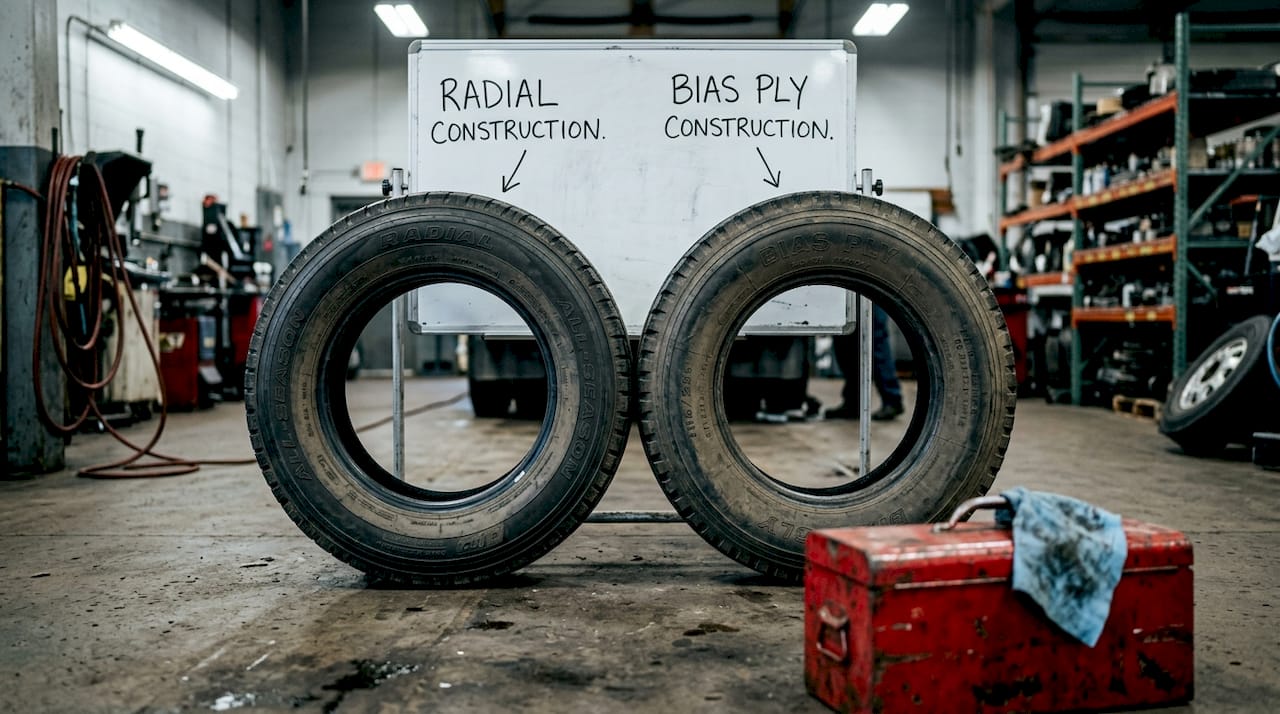
Construction type significantly affects performance and application suitability. Radial tires are preferred for efficiency on highway routes, offering flexible sidewalls that reduce rolling resistance and heat buildup while providing stable footprints under load. Bias ply construction features crisscrossed cord layers that create stiffer sidewalls, making them more puncture resistant for operations in rugged yards or storage facilities where sharp objects pose risks.
Massachusetts dealers stock major brands including Michelin, Firestone, Bridgestone, Goodyear, and Continental. Local availability matters because it ensures quick replacement when failures occur, provides access to regional technical support, and often includes mobile service for roadside emergencies. Working with established dealers also gives you leverage for volume pricing and structured tire programs.
Popular brand considerations:
- Michelin offers premium longevity and fuel efficiency but commands higher upfront costs
- Firestone provides balanced performance and value with strong regional dealer networks
- Bridgestone delivers reliable mileage with competitive pricing for fleet buyers
- Goodyear specializes in heavy duty applications with robust construction
- Continental focuses on low rolling resistance for maximum fuel savings
Pro Tip: Request detailed mileage data and warranty terms specific to your route profile when comparing brands. Marketing claims use ideal conditions; actual performance varies based on load, speed, and road surfaces your fleet encounters.
Consider your fleet’s operational profile when choosing between tire types. Long haul operations running consistent interstate routes benefit most from premium radial new tires on all positions. Regional delivery fleets with mixed highway and local streets can use new tires on steer axles with quality retreads on trailers. Yard spotters and storage operations may prefer bias ply construction for puncture resistance over mileage optimization. Your truck service provider can analyze your specific needs and recommend the optimal tire strategy.
Comparing commercial trailer tires: performance, cost, and suitability
Direct comparison helps quantify the tradeoffs between tire options. This table summarizes key performance and cost factors:
| Tire Type | Expected Mileage | Heat Resistance | Cost per Tire | Best Application |
|---|---|---|---|---|
| Premium New Radial | 150,000 to 200,000 miles | Excellent (under 140°F) | $400 to $600 | Steer axles, long haul routes |
| Standard New Radial | 100,000 to 150,000 miles | Good (145°F to 155°F) | $250 to $400 | General trailer positions |
| Quality Retread | 80,000 to 120,000 miles | Good (140°F to 150°F) | $150 to $250 | Trailer axles, regional routes |
| Bias Ply New | 60,000 to 100,000 miles | Fair (150°F to 165°F) | $200 to $350 | Yard operations, storage |
| Budget Radial | 70,000 to 100,000 miles | Fair (155°F to 165°F) | $180 to $280 | Light duty, infrequent use |
Proper tire pressure management delivers measurable financial returns. Maintaining pressure within 5 PSI of specification can boost mileage by up to 22% and reduce fuel consumption by approximately 2%. For a 50 trailer fleet, this translates to $15,000 to $25,000 in annual savings from extended tire life and improved fuel economy combined. Automated tire pressure monitoring systems pay for themselves within 18 to 24 months through these benefits.
Heat buildup represents the primary safety concern in tire selection. Premium tires run cooler than budget options, typically operating under 140°F during sustained highway speeds versus 155°F to 165°F for economy models. This 15 to 25 degree difference dramatically reduces blowout risk because rubber degradation accelerates exponentially above 150°F. The higher upfront cost of premium tires often justifies itself through reduced roadside failures and associated downtime costs.
Winter performance varies significantly by tire design. Massachusetts fleets face snow, ice, and freezing temperatures that affect traction and braking. Specialized winter testing evaluates stopping distances on ice and snow, measuring differences of 20% to 40% between tire types. All season commercial tires with deeper tread and siping provide adequate performance for most regional operations, while dedicated winter tires may benefit fleets operating in mountainous areas or during severe weather events. Your winter emergency preparedness strategy should account for tire performance limitations in cold weather.
Cost per mile calculation provides the most accurate comparison metric:
- Premium tire at $500 lasting 175,000 miles = $0.00286 per mile
- Standard tire at $325 lasting 125,000 miles = $0.00260 per mile
- Quality retread at $200 lasting 100,000 miles = $0.00200 per mile
These calculations show retreads offer the lowest cost per mile for trailer positions, while premium tires justify their price on steer axles where safety and reliability matter most. Factor in your fleet’s annual mileage, typical tire life based on route conditions, and replacement labor costs to build accurate total cost of ownership models.
Choosing the right trailer tires for your Massachusetts fleet: expert tips
Implementing a structured approach to tire selection and management maximizes your return on investment. Follow these expert recommendations:
- Establish baseline tire pressure specifications for each trailer type and load configuration, then train drivers to check pressure weekly using calibrated gauges.
- Schedule tire rotations every 25,000 to 30,000 miles to equalize wear patterns across all positions, extending overall tire life by 15% to 20%.
- Partner with local Massachusetts dealers who stock your preferred brands and offer mobile service for roadside emergencies and routine maintenance.
- Calculate total cost of ownership including purchase price, expected mileage, fuel impact, and replacement labor rather than focusing solely on upfront tire cost.
- Plan seasonal tire assessments before winter to verify tread depth and condition meet the demands of snow and ice operation.
Structured tire programs reduce fleet costs by 3% to 5% annually through optimized pressure management, timely rotations, and data driven replacement decisions. These programs also extend average tire life by 20% to 30% compared to reactive maintenance approaches. The investment in tire pressure monitoring systems, regular inspections, and driver training delivers measurable returns within the first year.
Massachusetts fleets benefit from local partnerships with dealers who understand regional weather patterns, road conditions, and compliance requirements. Local suppliers provide faster response times for emergency replacements, often within 2 to 4 hours versus next day service from distant providers. They also offer insights into tire performance specific to Northeast operating conditions that national programs may overlook.
Budget optimization requires balancing multiple factors. Use premium new tires on steer axles where safety is critical and failures are most dangerous. Deploy quality retreads on trailer positions where loads are stable and speeds consistent. Reserve bias ply tires for specialized applications like yard spotters or storage operations where puncture resistance outweighs mileage concerns. This tiered approach maximizes safety while controlling costs.
Pro Tip: Replace trailer tires every 6 to 10 years regardless of remaining tread depth. Rubber compounds degrade over time from UV exposure, ozone, and heat cycles even when tread appears adequate. Annual inspections should check manufacturing date codes and retire tires approaching age limits.
Leverage truck leasing programs that include tire management as part of the package. These programs shift tire costs from capital expenditures to predictable monthly operating expenses while ensuring professional maintenance and timely replacements. Combined with fleet fuel management strategies, comprehensive leasing arrangements reduce administrative burden and optimize total fleet operating costs.
Explore commercial trailer tires and fleet solutions in Massachusetts
Finding the right tires represents just one piece of effective fleet management. Apple Truck & Trailer brings over 35 years of experience serving Massachusetts logistics operations with quality equipment, expert service, and tailored fleet solutions. Our team understands the specific challenges Northeast fleets face, from winter weather demands to regional compliance requirements, and we stock the tire brands and sizes your operations need.
Whether you’re expanding your fleet, replacing aging equipment, or optimizing maintenance programs, our truck and trailer sales inventory and leasing options provide flexible solutions. Our service capabilities include tire installation, pressure monitoring system setup, and ongoing maintenance programs designed to maximize uptime and reduce operating costs. Partner with local experts who prioritize your fleet’s success.
Frequently asked questions
What is the best tire pressure for commercial trailer tires?
Optimal pressure depends on your specific tire size, load rating, and typical cargo weight. Consult the tire manufacturer’s load and inflation tables, typically found on their website or printed on tire sidewalls. Most trailer tires operate between 95 and 110 PSI, but verify specifications for your exact model.
What is the recommended tire replacement interval for commercial trailer tires?
Replace trailer tires when tread depth reaches 2/32 inch minimum or when tires reach 6 to 10 years of age, whichever comes first. Age limits apply even if tread appears adequate because rubber compounds degrade over time from environmental exposure. Check manufacturing date codes during annual inspections.
Can retread tires be used safely on commercial trailers?
Yes, DOT approved retreads are safe and cost effective for trailer positions when produced by certified facilities using quality casings. Retreads save 30% to 50% versus new tires and can be applied multiple times to the same casing if properly maintained. Avoid retreads on steer axles where new tires provide optimal safety.
How does winter weather affect trailer tire selection and maintenance?
Cold temperatures reduce tire pressure by approximately 1 PSI per 10 degree drop, requiring more frequent pressure checks. Snow and ice reduce traction significantly, making tread depth and pattern critical for safe operation. Inspect tires monthly during winter and maintain pressure within manufacturer specifications to ensure adequate performance.
Where can Massachusetts fleets find reliable commercial trailer tire suppliers?
Local dealers including Sonny Johnson Tire, Britton Tire, New England Tire, and Woody’s Tire Service stock major brands with quick turnaround. These suppliers offer mobile service, volume pricing, and regional expertise. Building relationships with local providers ensures faster emergency response and access to tire management programs that reduce long term costs.
Recommended
- Buyer’s Guide: Best Semi Trailer Storage Solutions for 2024 – Apple Truck & Trailer
- Keeping Trailers Roadworthy: Safety and Compliance Essentials – Apple Truck & Trailer
- Trailer Specifications Explained: Key Insights for Buyers – Apple Truck & Trailer
- Commercial Trailer Requirements: Ensuring Compliance in Massachusetts – Apple Truck & Trailer