
TL;DR:
- Massachusetts homeowners should match trailer type and size to specific project needs for legal and practical reasons.
- Local zoning, registration, and safety regulations greatly influence trailer parking, storage, and habitation legality.
- Short-term trailers are practical, but long-term use often requires safer, legal alternatives like storage containers.
Your contractor just wrapped a kitchen renovation, and suddenly you’re staring at a driveway full of debris, old appliances, and furniture with nowhere to go. Maybe you’re moving across town and need flexible storage for a week. Whatever the situation, Massachusetts homeowners often turn to trailers as a fast, affordable fix. But between state registration requirements, town zoning rules, and safety equipment mandates, choosing the wrong trailer or parking it in the wrong spot can cost you real money in fines. This guide walks you through exactly what you need to know, from picking the right trailer to keeping it parked legally.
Table of Contents
- Assessing your residential trailer needs
- Understanding trailer regulations and restrictions in Massachusetts
- Preparing your trailer: Essential equipment and setup
- Parking, storage, and habitation: Navigating zoning, local rules, and limits
- The uncomfortable truth about residential trailers: Practicality vs. legality
- Find quality trailers and storage solutions in Massachusetts
- Frequently asked questions
Key Takeaways
| Point | Details |
|---|---|
| Know your trailer type | Choose a utility trailer for short-term use or a storage container for long-term needs to avoid legal hassles. |
| Understand local laws | Massachusetts registration, safety, and zoning rules vary by town for trailers and RVs. |
| Prep and park safely | Always check equipment and parking rules before using or storing a trailer at home. |
| Legal risks for long-term use | Extended trailer or RV storage and habitation face strict regulations and enforcement across New England. |
Assessing your residential trailer needs
Before you rent or buy, it helps to match the trailer type to your actual project. Using the wrong trailer wastes money and creates headaches you could have avoided entirely.
The three main options for residential use:
- Utility trailers: Open flatbeds, ideal for debris hauling, yard cleanouts, and short moves. Low cost, easy to find, and simple to load.
- Enclosed cargo trailers: Weatherproof and lockable, great for moving furniture or storing tools during a renovation.
- Storage containers (intermodal): Delivered and placed on your property, no tow vehicle needed. Best for long-term storage lasting weeks or months.
Matching the right unit to the job matters more than most people realize. Utility trailers excel for short-term moving and cleanouts because of their low cost and simple mechanics. For a weekend cleanout, a 5×8 open trailer towed by a standard pickup does the job without overpaying. For a two-month home renovation where you need secure overnight storage, a delivered container beats renting a trailer every single time.
| Project type | Best trailer option | Approximate size needed |
|---|---|---|
| Weekend yard cleanout | Utility trailer | 5×8 to 6×12 ft |
| Local furniture move | Enclosed cargo trailer | 12 to 16 ft |
| Renovation storage (weeks) | Storage container | 20 ft |
| Long-term storage (months) | Storage container | 20 to 40 ft |
Review trailer specifications carefully before committing. Payload ratings, tongue weight limits, and floor material all affect whether a trailer suits your tow vehicle and cargo type. A trailer rated for 3,500 lbs gross weight sounds like plenty until you load it with wet mulch or roofing shingles.
Also factor in what you’re towing with. A standard half-ton pickup can handle most utility and small cargo trailers. A crossover SUV may struggle with anything over 1,500 lbs. Confirm your vehicle’s tow rating before booking trailer rental options to avoid surprises at pickup.
Pro Tip: If you’re unsure whether to rent or buy, calculate cost over time. Renting twice a year for three years often costs more than buying a used utility trailer outright, especially in New England where property projects are constant.
Understanding trailer regulations and restrictions in Massachusetts
Legal requirements catch a lot of first-time trailer users off guard. Massachusetts has specific rules that apply the moment a trailer rolls onto a public road, and zoning codes add another layer of complexity once it’s parked.
Registration and safety equipment: Any trailer towed on public roads in Massachusetts requires registration and must meet state safety standards, including functioning lights, brakes on heavier units, and reflectors. The state enforces maximum width limits of 8.5 feet and height limits of 13.5 feet for trailers on public roads. Exceeding those dimensions requires special permits.
Our internal trailer compliance guide breaks down exactly which safety items are mandatory by trailer weight class, which is worth reviewing before your first trip.
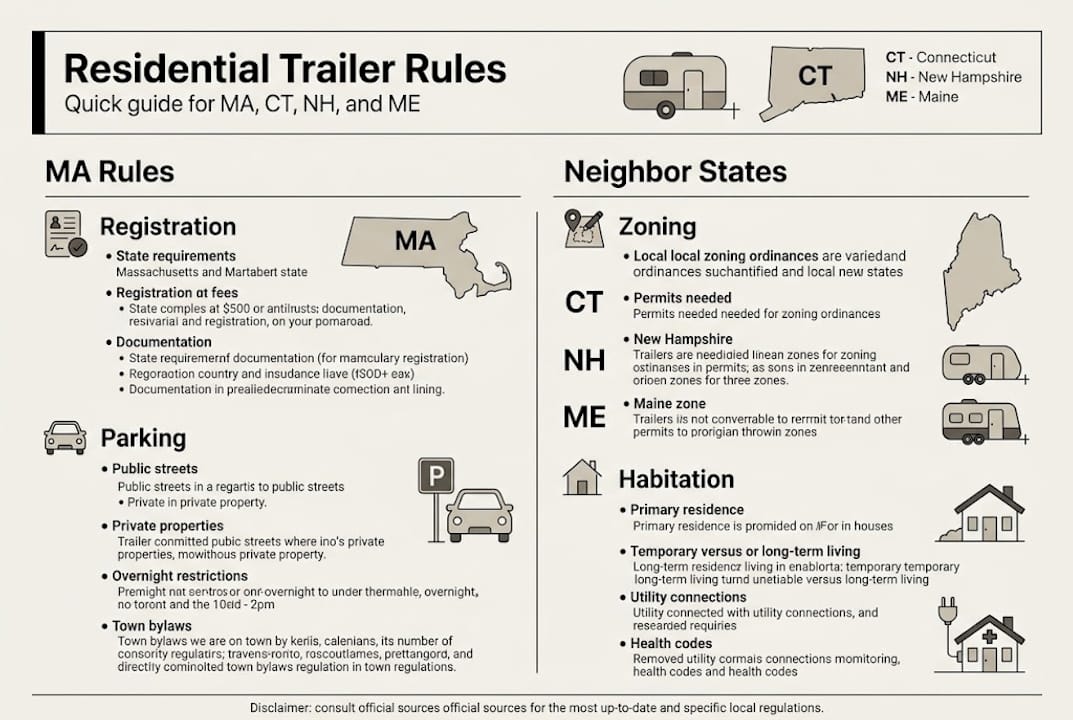
Zoning and parking rules: This is where things get very local. Massachusetts does not have a single statewide trailer parking ordinance. Instead, each town sets its own rules. Zoning for trailer storage is town-specific, with common restrictions including:
- Front yard parking bans for trailers and RVs
- Requirements for visual screening (fences or hedges) in side and rear yards
- Rules that trailers must be registered and operable to be stored on residential property
- Limits on how many trailers or recreational vehicles can be stored on a single lot
For homeowners in Middlesex County, local zoning rules often include strict front yard prohibitions and screening requirements. Your town’s zoning office can confirm the specifics before you commit.
Neighboring states have their own twists. Connecticut and New Hampshire both enforce trailer registration requirements similar to Massachusetts, but individual town ordinances vary widely. Maine tends to be more permissive in rural areas but stricter in coastal and resort communities. If you regularly cross state lines with a trailer, review roadworthy trailers requirements for each state.
Violations carry real consequences. Unregistered trailer fines, zoning citations, and required removal orders are all documented outcomes for Massachusetts homeowners who skipped the research. Getting a quick answer from your town clerk takes 15 minutes. A zoning violation can take months and hundreds of dollars to resolve.
Consult parking rules guidance specific to Massachusetts before finalizing where you plan to park long-term.
Preparing your trailer: Essential equipment and setup
Once you know what you need legally, the next step is making sure the trailer itself is ready. A trailer that fails an equipment check on the road creates both a safety risk and a legal problem.
Pre-use inspection checklist:
- Check all running lights, brake lights, and turn signals. Burned-out bulbs are the most common citation during roadside checks.
- Inspect tires for tread depth and proper inflation. Trailer tires degrade from UV exposure even when the trailer sits unused.
- Test the trailer brakes if the unit is over 10,000 lbs gross vehicle weight.
- Verify the hitch ball size matches the trailer coupler. A 1-7/8 inch ball on a 2-inch coupler coupling is a dangerous mismatch.
- Confirm safety chains are attached with proper slack, crossing under the coupler.
- Check that all required safety equipment, including lights, brakes for heavier trailers, and reflectors, is present and functional for Massachusetts road use.
Load distribution matters more than most people know. Overloading the rear of a trailer causes trailer sway at highway speeds, which is one of the leading causes of trailer-related accidents. The general rule is 60% of cargo weight in the front half of the trailer, with heavier items sitting low and centered.

Review load capacity guidelines before packing for a move or cleanout. Overloading even a short-distance move creates legal exposure if you’re stopped, and more importantly, it creates a real risk of loss of control.
Pro Tip: Buy a small tongue weight scale (about $30) and check your loaded trailer before every tow. Tongue weight should be 10 to 15 percent of the total loaded trailer weight. Too little tongue weight causes sway; too much strains your hitch and rear suspension.
For longer-term on-site storage, consider whether a trailer is even the right tool. Our storage container guide covers options that eliminate the towing and setup requirements entirely. A delivered container sits level on your property without the hitch, lights, or brake concerns.
Use a roadworthy checklist before every trip to stay compliant and safe on Massachusetts roads.
Parking, storage, and habitation: Navigating zoning, local rules, and limits
Getting the trailer home is only half the challenge. Knowing where it can legally sit is equally important, especially in dense Massachusetts suburbs where neighbors and code enforcement officers pay close attention.
Where trailers can be parked and stored:
- Rear and side yards are typically permitted with visual screening in most Massachusetts towns.
- Front yard storage is almost universally prohibited in residential zones.
- Trailers stored on your property generally must be registered and in operable condition.
- Most towns limit the number of trailers or oversized vehicles to one or two per residential lot.
- Some municipalities require permits for storage exceeding 30 to 90 days.
For Massachusetts truck parking rules and how they apply to trailers on residential lots, check town-specific ordinances before your delivery or pickup date.
Habitation is an entirely separate and stricter issue. Full-time residential living in trailers or RVs on private property is generally restricted across Massachusetts. This surprises many homeowners who assume owning the land means they can use it however they choose.
Connecticut and Maine follow similar patterns. Many CT and ME towns ban or significantly restrict trailer and RV parking and habitation on residential property, with some local variances for hardship cases. If you’re considering a trailer as temporary housing during a renovation in any New England state, consult your town zoning board first.
For Connecticut trailer parking specifics, regulations vary significantly by municipality.
Pro Tip: Take dated photos of your trailer’s placement, screening, and registration sticker from the day you set it up. If a neighbor files a complaint, clear documentation showing compliance from day one protects you from retroactive zoning enforcement.
The uncomfortable truth about residential trailers: Practicality vs. legality
Here’s what we’ve learned after decades of working with Massachusetts homeowners on storage and moving solutions. Trailers are genuinely useful tools for short, defined projects. A weekend cleanout, a local move, a one-week furniture shuffle during renovations. For those jobs, a utility trailer is fast, affordable, and practical.
But the moment the project extends beyond a few weeks, the legal math changes. Zoning rules, registration requirements, and neighbor complaints all escalate with time. The homeowners who end up with fines or mandatory removal orders almost always started with a short-term plan that quietly became long-term.
For anything longer than 30 days, a storage container is almost always the smarter call. It requires no tow vehicle, no registration, no lighting compliance, and sits in one spot without moving. Our MA trailer compliance resources can help clarify the line between what’s practical and what’s legally defensible.
One more thing worth knowing: Massachusetts allows temporary manufactured housing on a property after a fire or disaster, but this is a narrow legal exception, not a general workaround for residential trailer living. If you’ve experienced a disaster, that exception may apply. Otherwise, it doesn’t.
Find quality trailers and storage solutions in Massachusetts
If this guide has made one thing clear, it’s that matching the right equipment to your project from the start saves time, money, and legal headaches.
At Apple Truck & Trailer, we’ve been helping Massachusetts homeowners and businesses find the right trailers and storage equipment since 1986. Whether you need a short-term rental or a long-term solution, our inventory covers utility trailers, enclosed cargo trailers, and secure storage containers for every residential project. Browse Massachusetts trailer sales options or use our trailer buying insights to make a confident decision before you commit. We serve Massachusetts, Connecticut, Rhode Island, and New Hampshire.
Frequently asked questions
Do I need to register my trailer for residential use in Massachusetts?
Yes, if you tow your trailer on public roads, Massachusetts requires registration and compliance with safety equipment standards including lights, brakes, and reflectors.
Where can I legally park a trailer or RV on my property in Massachusetts?
Most towns prohibit front yard parking but allow screened storage in side or rear yards. Zoning rules also typically require the trailer to be registered and operable.
Is it legal to live in a trailer or RV on my own property?
Permanent habitation is restricted across Massachusetts. Full-time RV living is generally prohibited without special permits, though a narrow disaster relief exception applies after fires or other qualifying events.
How do neighboring states’ regulations differ for residential trailers?
Connecticut and Maine frequently ban or restrict trailer and RV parking or habitation on residential property, though local zoning variances can apply in some towns.