
Most fleet operators in Massachusetts assume that leasing a big rig always costs more over time than buying outright. That assumption stops a lot of smart logistics decisions before they even start. The reality is more nuanced: leasing reduces upfront costs and can include maintenance, but it comes with its own cost structures and regulatory requirements you need to understand before signing anything. This guide breaks down the real numbers, the lease types, the compliance requirements, and the step-by-step process so you can make a confident, informed decision for your fleet.
Table of Contents
- Why lease a big rig? Key benefits for Massachusetts fleets
- Types of big rig leases explained
- Big rig leasing costs: 2026 numbers and what drives them
- Regulatory and compliance essentials for leasing in Massachusetts
- How to lease a big rig: Step-by-step for fleet operators
- Next steps: Expert leasing support for your fleet
- Frequently asked questions
Key Takeaways
| Point | Details |
|---|---|
| Leasing reduces upfront risk | Fleet operators can scale quickly without tying up capital or facing major cash flow constraints. |
| Full-service leases simplify compliance | Maintenance and regulatory checks are often included, easing the burden on operations. |
| Understand the true cost equation | Monthly lease fees, operating costs, and mileage limits all factor into the real cost of leasing a big rig. |
| Regulations are critical | Operators must comply with FMCSA leasing rules and Massachusetts-specific standards to avoid penalties. |
| Smart process yields best outcomes | Careful evaluation and provider selection help avoid pitfalls and maximize lease value for your fleet. |
Why lease a big rig? Key benefits for Massachusetts fleets
For regional fleet operators running routes across Massachusetts, Rhode Island, Connecticut, and New Hampshire, capital preservation is not a luxury. It is a survival strategy. Leasing a big rig instead of buying one outright means you are not tying up $150,000 or more in a single asset. That cash stays available for fuel, payroll, insurance, and the unexpected costs that hit every fleet eventually.
The truck leasing benefits go beyond cash flow. Full-service leases, in particular, bundle in preventive maintenance, DOT compliance support, and sometimes even driver assistance programs. That matters enormously in Massachusetts, where commercial vehicle inspections are strict and non-compliance penalties are real. You are not just leasing a truck. You are leasing a managed asset.
Flexibility is another underrated advantage. Demand shifts fast in logistics. A lease lets you scale your fleet up or down without the burden of selling depreciating assets in a soft market. In 2026, with 51% of regional fleets reporting concern about inflation and demand volatility, that flexibility has real dollar value.
- Lower capital outlay: No massive down payment required, preserving working capital
- Maintenance included: Full-service leases cover scheduled and unscheduled repairs
- Compliance support: Lessors handle DOT and MA inspection coordination
- Fleet flexibility: Scale up or down without asset disposal headaches
- Predictable costs: Fixed monthly payments simplify budgeting and forecasting
Statistic callout: Full-service leasing offers maintenance and compliance advantages that are especially valuable in tight regional markets where downtime directly cuts into revenue.
Pro Tip: When evaluating lessors, prioritize established national providers like Penske, Ryder, or Miller Industries alongside regional specialists. Their compliance infrastructure and parts networks reduce your exposure to costly regulatory violations.
Types of big rig leases explained
Not all leases work the same way, and choosing the wrong structure can cost you significantly. There are three primary lease types you will encounter as a fleet operator.
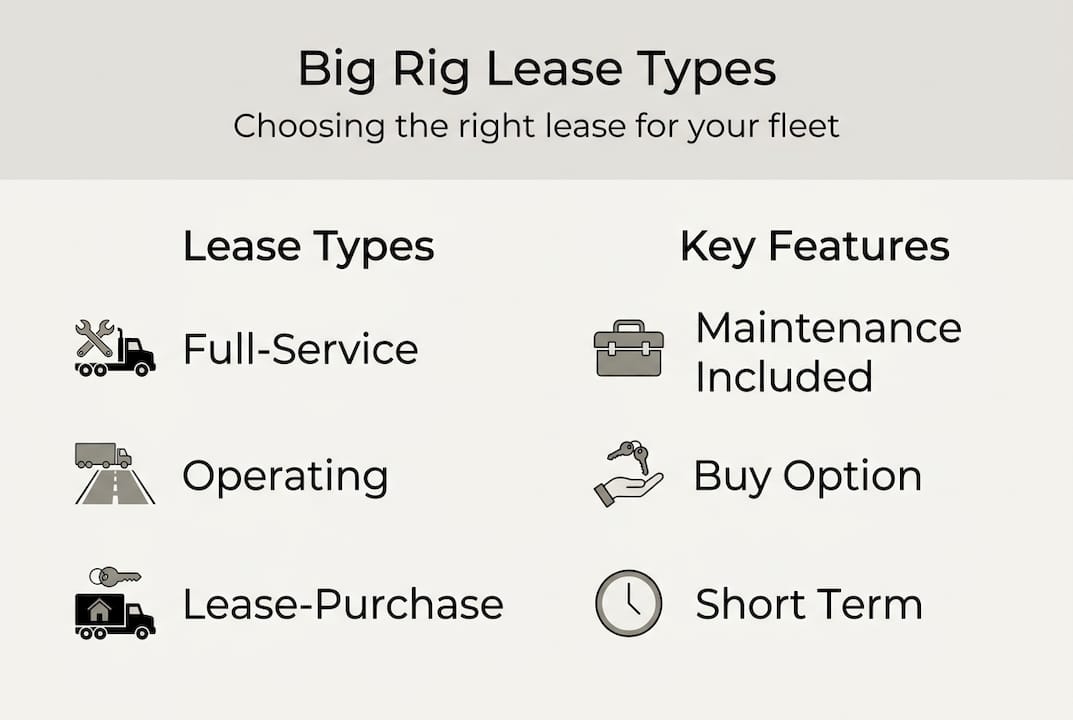
Full-service lease: The lessor handles maintenance, tires, licensing, and compliance. You pay a higher monthly rate, but your administrative burden drops sharply. This is the right fit if your team does not have dedicated fleet maintenance staff or if you want predictable all-in costs.
Operating lease: A shorter-term arrangement, often used for seasonal capacity or project-based needs. You get the truck, but maintenance and compliance are typically your responsibility. Lower monthly cost, higher operational involvement.
Lease-purchase: You make payments toward eventual ownership. Sounds appealing, but the advantages of lease types need to be weighed carefully here. Only about 5% of lease-purchase agreements are completed successfully. Hidden fees, balloon payments, and unfavorable buyout terms trap many operators.
| Lease type | Maintenance included | Term length | Best for | Key risk |
|---|---|---|---|---|
| Full-service | Yes | 36 to 60 months | Fleets wanting managed assets | Higher monthly cost |
| Operating | No | 12 to 36 months | Short-term or seasonal needs | Maintenance exposure |
| Lease-purchase | Varies | 24 to 48 months | Equity seekers | Low completion rate, hidden fees |
- Full-service suits fleets with limited maintenance staff
- Operating leases work for temporary capacity expansion
- Lease-purchase requires extremely careful contract review
- Always compare total cost of ownership, not just monthly payments
Big rig leasing costs: 2026 numbers and what drives them
Let’s talk real numbers. In 2026, monthly lease payments for a new big rig run between $2,800 and $3,400. Used rigs come in lower, between $1,800 and $2,500 per month. But the lease payment is only part of your total operating cost. When you factor in fuel, insurance, and maintenance, total monthly operating costs land between $11,500 and $13,100 depending on your routes and load profile.
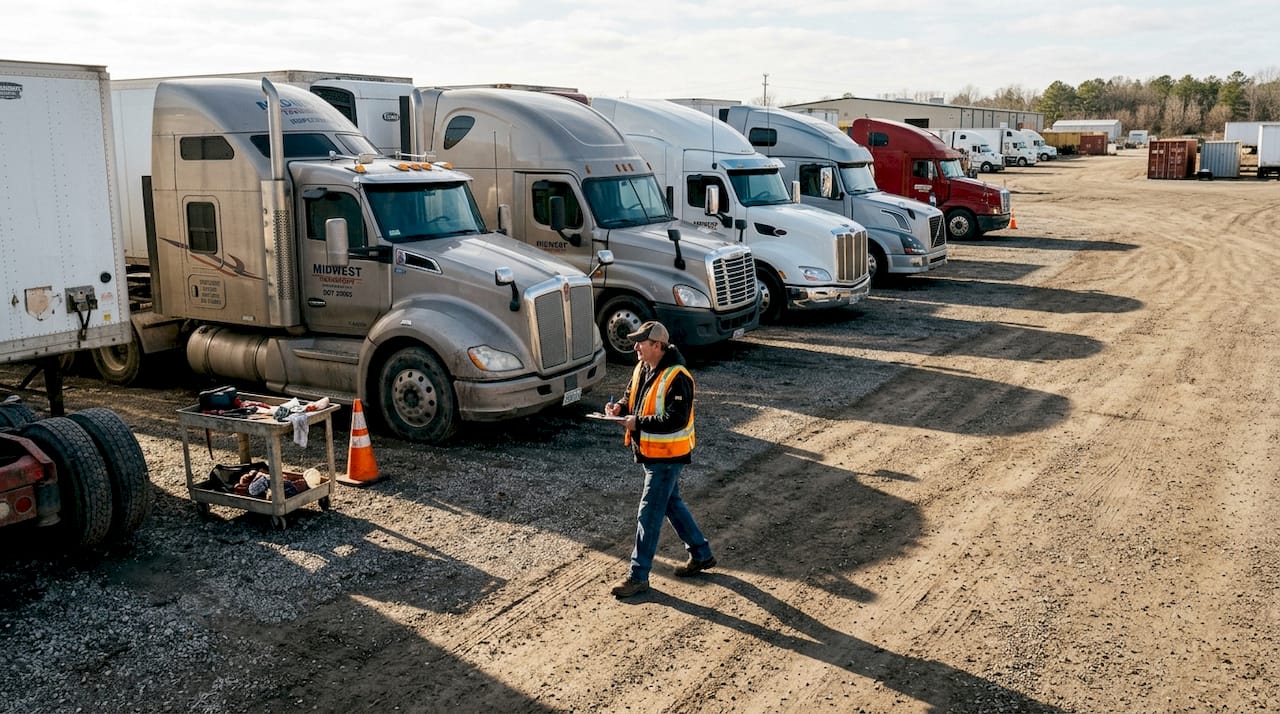
For truck leasing in Massachusetts, regional fuel costs and insurance premiums tend to run slightly above national averages. That is worth building into your projections from day one.
| Cost category | Monthly range (2026) |
|---|---|
| New rig lease payment | $2,800 to $3,400 |
| Used rig lease payment | $1,800 to $2,500 |
| Fuel (regional average) | $4,200 to $5,100 |
| Insurance | $1,500 to $2,200 |
| Maintenance (if not included) | $800 to $1,400 |
| Total operating cost | $11,500 to $13,100 |
Understanding the tractor trailer lease cost breakdown helps you negotiate smarter and avoid surprises. Here are the three biggest drivers of your total cost:
- Vehicle type and age: Newer trucks cost more to lease but typically have lower maintenance costs and better fuel efficiency. Older used rigs lower your payment but increase your repair exposure.
- Mileage allowance: Most leases cap annual mileage. Exceeding that cap triggers per-mile overage charges that add up fast on regional routes.
- Maintenance plan: Whether maintenance is bundled or separate changes your monthly exposure dramatically. A full-service lease at $3,200 per month may actually be cheaper than an operating lease at $2,100 once you add repair costs.
If you are comparing leasing to short-term options, reviewing the semi truck rental cost for weekly rates gives you a useful baseline for understanding when a longer lease commitment makes more financial sense.
Regulatory and compliance essentials for leasing in Massachusetts
Compliance is not optional, and it is not simple. Massachusetts fleet operators leasing big rigs must navigate both federal and state requirements simultaneously.
At the federal level, the FMCSA’s Truth in Leasing regulations govern what must be disclosed in any commercial truck lease agreement. These rules require clear disclosure of all charges, maintenance responsibilities, and insurance obligations. The FMCSA Truth in Leasing framework also addresses predatory lease-purchase agreements, which have historically trapped owner-operators with terms that were nearly impossible to complete.
“Massachusetts follows federal CMV standards, requires annual inspections under 49 CFR 396.17, and mandates UCR registration for any fleet operating in interstate commerce.”
Key compliance requirements for Massachusetts lessees:
- FMCSA Truth in Leasing: All charges and responsibilities must be explicitly disclosed in writing
- Annual inspections: Required under federal and state law; inspection compliance is non-negotiable
- UCR registration: Unified Carrier Registration is mandatory for interstate operations
- Chapter 90F: Massachusetts state law governing commercial vehicle operation and registration
- Insurance minimums: Federal minimums apply; Massachusetts may require additional coverage
Building a solid preventive maintenance program into your lease plan is not just good practice. It is a compliance requirement that protects your operating authority.
Pro Tip: Before signing any lease, run the contract against an FMCSA Truth in Leasing checklist and confirm Chapter 90F compliance with your legal or compliance advisor. A 30-minute review can prevent months of regulatory headaches.
How to lease a big rig: Step-by-step for fleet operators
Knowing the theory is one thing. Executing a lease that actually works for your operation is another. Here is a practical process that matches lease structure to operational needs and avoids the most common pitfalls.
- Assess your operational needs: Define your route profiles, load requirements, and how many miles per year each truck will run. This determines whether a new or used rig, and which lease type, fits best.
- Compare providers: Get quotes from at least three lessors. Include national providers and regional specialists. Compare total cost, not just monthly payment. Ask specifically about compliance support and what happens if a truck breaks down.
- Review lease terms carefully: Look for mileage caps, maintenance responsibilities, early termination penalties, and buyout options. If anything is vague, ask for written clarification before signing.
- Verify compliance requirements: Confirm the lease agreement addresses FMCSA Truth in Leasing disclosures. Check that the lessor’s maintenance program meets Massachusetts annual inspection standards.
- Plan for total cost: Build a 12-month operating budget that includes the lease payment, fuel, insurance, and any maintenance costs not covered by the lease. Factor in potential downtime costs.
For leasing in Massachusetts, regional providers who understand local compliance requirements and have established relationships with inspection stations add real operational value. Understanding the full truck leasing pros and cons before you commit saves you from costly mid-term surprises.
Pro Tip: Run a total cost of ownership analysis that includes downtime costs. A truck sitting in a repair shop for three days costs you far more than the repair bill alone. Factor lost revenue into every lease comparison.
Next steps: Expert leasing support for your fleet
Leasing a big rig is a significant operational decision, and having the right regional partner makes the process far less complicated. Apple Truck & Trailer has been serving fleet operators across Massachusetts, Rhode Island, Connecticut, and New Hampshire since 1986, with deep expertise in commercial truck leasing, sales, and service.
Whether you are exploring truck leasing in Massachusetts for the first time or expanding an existing fleet, Apple Truck & Trailer offers inventory, leasing options, and full-service maintenance support under one roof. Browse truck and trailer sales to see current inventory, or explore used commercial trucks if purchasing makes more sense for your situation. Our team understands Massachusetts compliance requirements and can help you structure a lease that fits your routes, your budget, and your growth plans.
Frequently asked questions
What is the typical lease term for a big rig in Massachusetts?
Most big rig leases run from 36 to 60 months, though lease durations vary depending on whether you choose a full-service, operating, or lease-purchase structure. Shorter terms are available for seasonal or project-based needs.
Are maintenance costs included in all big rig leases?
No. Maintenance is included only in full-service leases. Operating and lease-purchase agreements typically leave maintenance responsibility with the operator, so always confirm what is covered before signing.
Do I need to comply with federal or state-specific regulations when leasing?
Both apply. Massachusetts requires compliance with FMCSA Truth in Leasing rules at the federal level and state commercial vehicle standards including annual inspections under 49 CFR 396.17 and Chapter 90F.
What’s the difference between leasing and lease-purchase for a big rig?
A standard lease gives you use of the truck without building equity. A lease-purchase lets you buy the rig at the end of the term, but these agreements carry risk and are rarely completed successfully due to hidden fees and unfavorable buyout terms.
How do I evaluate the best lease option for my fleet?
Start with your operational profile: routes, mileage, and maintenance capacity. Then match lease structure to your financial goals and compliance requirements. Total cost of ownership, not monthly payment alone, should drive the decision.
Recommended
- Truck Leasing – Cost Savings and Limitations for Fleets – Apple Truck & Trailer
- Benefits of Truck Leasing for Fleet Operators – Apple Truck & Trailer
- Short-Term Truck Rental: Smarter Logistics Choices – Apple Truck & Trailer
- How to Lease a Box Truck: Your Powerful Guide with Tips and Tricks – Apple Truck & Trailer