
TL;DR:
- Cargo containers offer a scalable, weather-resistant storage solution for Massachusetts fleets.
- Choosing between on-site and depot storage depends on access needs, cost, and maintenance services.
- Proper site placement, security, and efficient loading practices are key to optimal container utilization.
Many Massachusetts fleet owners are paying premium rates for warehouse space they don’t fully use, while a more flexible and cost-effective solution sits right in front of them. Inefficient storage choices drive up operational costs and slow down inventory access across the supply chain. Cargo containers offer a smarter path: standardized, scalable, and built to handle New England’s unpredictable weather. This guide walks you through container sizes, on-site versus depot decisions, security best practices, loading efficiency, and cost frameworks, so you can make a confident storage decision for your Massachusetts operation.
Table of Contents
- Understanding cargo container storage: Basics and benefits
- Choosing between on-site and depot storage in Massachusetts
- Key considerations: Security, placement, and loading best practices
- Cost, sustainability, and technology trends for Massachusetts fleets
- What most fleet managers overlook about container storage
- Find the right container storage partner for your Massachusetts fleet
- Frequently asked questions
Key Takeaways
| Point | Details |
|---|---|
| Standardized container options | 20ft and 40ft containers suit most Massachusetts fleet storage needs for security and flexibility. |
| On-site vs depot trade-offs | On-site storage is flexible and cost-efficient long-term, while depots offer scale and service for growing fleets. |
| Security and loading essentials | Secure placement, robust locks, and correct loading practices maximize asset protection and efficiency. |
| Modern trends shape value | Sustainability features and digital tools are transforming storage ROI for leading logistics firms. |
Understanding cargo container storage: Basics and benefits
Cargo containers started as intermodal shipping boxes, but they’ve become one of the most practical storage tools available to fleet operators and logistics managers. Their standardized dimensions make them easy to transport, stack, and integrate into almost any yard or facility layout. Understanding what you’re working with is the first step toward using them well.
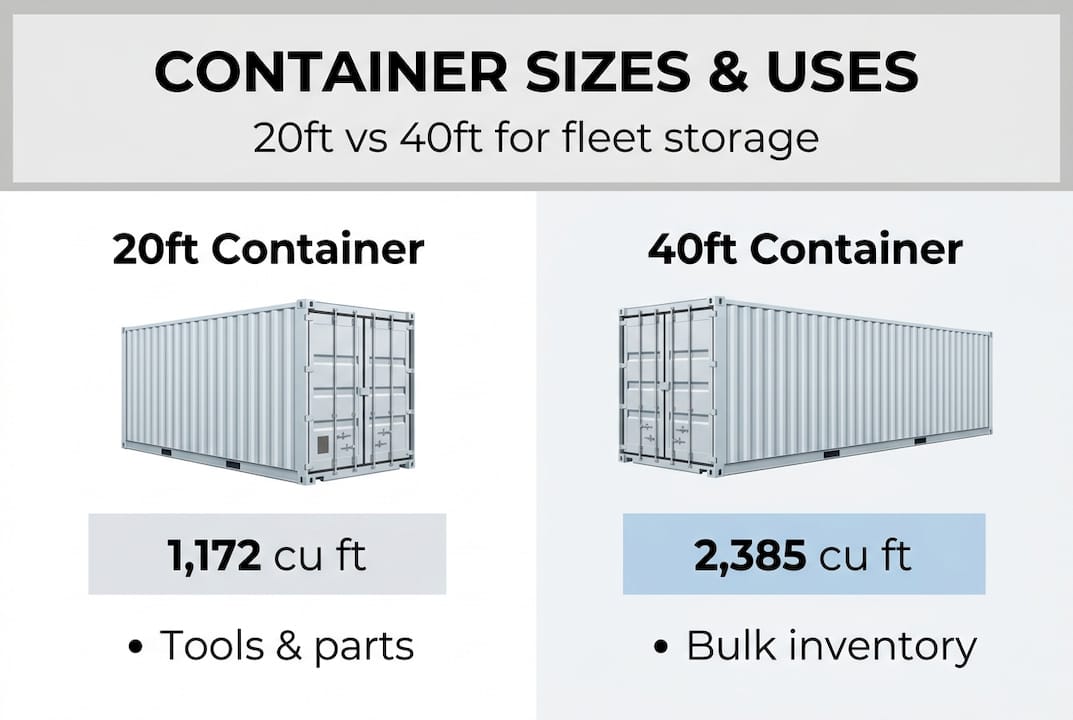
The two most common sizes are the 20ft and 40ft containers. A 20ft container holds 1,172 cu ft of usable space, while a 40ft container provides 2,385 cu ft, nearly double the capacity. Both are built from Corten steel, which resists rust and handles moisture, a critical feature for Massachusetts winters and coastal humidity.
| Container size | Internal volume | Best use case |
|---|---|---|
| 20ft | 1,172 cu ft | Smaller inventory, tools, parts |
| 40ft | 2,385 cu ft | Large equipment, bulk stock, trailers |
| High-cube 40ft | 2,694 cu ft | Oversized freight, palletized goods |
For fleet operators, the choice between on-site storage and depot or yard storage comes down to how often you need access and how much space you control. On-site containers sit at your facility, giving your team immediate access without drayage fees or scheduling delays. Depot storage, by contrast, is managed at a centralized container yard, which often includes maintenance and repair services, better security infrastructure, and the ability to scale volume up or down quickly.
Key benefits that make containers attractive for Massachusetts fleets include:
- Weather resistance: Corten steel construction handles rain, snow, and temperature swings without degrading stored goods
- Security: Lockbox-compatible doors and heavy steel walls provide far better protection than most open yard storage
- Modularity: You can add or remove units as your inventory grows or contracts across seasons
- Portability: Containers can be relocated with a flatbed or crane truck when your operational footprint changes
Common uses for fleet operators include storing spare parts, seasonal equipment, overflow inventory, and even staging areas for active job sites. Whether you’re managing a regional trucking fleet or a construction logistics operation, 20ft container rentals and 40ft container rentals give you flexibility without locking you into a long-term lease on a fixed building.
Choosing between on-site and depot storage in Massachusetts
Now that you’re familiar with container storage options, the next step is deciding exactly where and how to store them for best results. This decision has real financial consequences, and getting it wrong can cost your operation thousands of dollars annually.
On-site storage means placing containers directly at your facility or job site. You control access 24/7, there are no drayage costs for moving goods in and out, and it works well for urban Massachusetts locations where warehouse space is scarce and expensive. Depot storage, on the other hand, centralizes your containers at a managed yard. Providers like Apple Truck & Trailer and Tighe Logistics offer a 1 million sq ft facility with rail access in Mansfield, MA, which is a significant advantage for high-volume operations that need maintenance, repair, and bulk throughput.
| Factor | On-site storage | Depot storage |
|---|---|---|
| Access speed | Immediate | Scheduled or on-demand |
| Monthly cost | Lower long-term | Higher, but includes M&R |
| Scalability | Limited by your space | Easily scalable |
| Maintenance | Your responsibility | Managed by provider |
| Rail/intermodal access | Rarely available | Often available |
Fleet owners often prefer on-site 40ft containers for fixed inventory, while logistics managers lean toward depot solutions when managing and repairing multiple units across a network. Depots can reduce drayage costs when containers are repositioned frequently, which matters for high-turnover operations.
Here’s a practical checklist to help you decide:
- Estimate how many times per week you need container access
- Calculate your available yard space and surface quality
- Determine whether you need maintenance and repair services included
- Assess whether rail or intermodal connections add value to your workflow
- Compare total monthly cost including any drayage fees for depot use
Understanding the delivery process in Massachusetts is also important before committing to on-site placement. Site preparation, ground conditions, and local zoning can all affect where and how a container can be legally and safely placed. Reviewing your container rental options with a provider who knows the Massachusetts market saves time and prevents costly surprises.
Pro Tip: If you plan to use a container for more than 12 months in one location, on-site ownership or a rent-to-own arrangement almost always beats monthly depot fees on a pure cost basis.
Key considerations: Security, placement, and loading best practices
Once you’ve selected your ideal storage setup, it’s critical to protect assets and optimize usage with best practices. Even the most secure container becomes a liability if it’s poorly placed or improperly loaded.
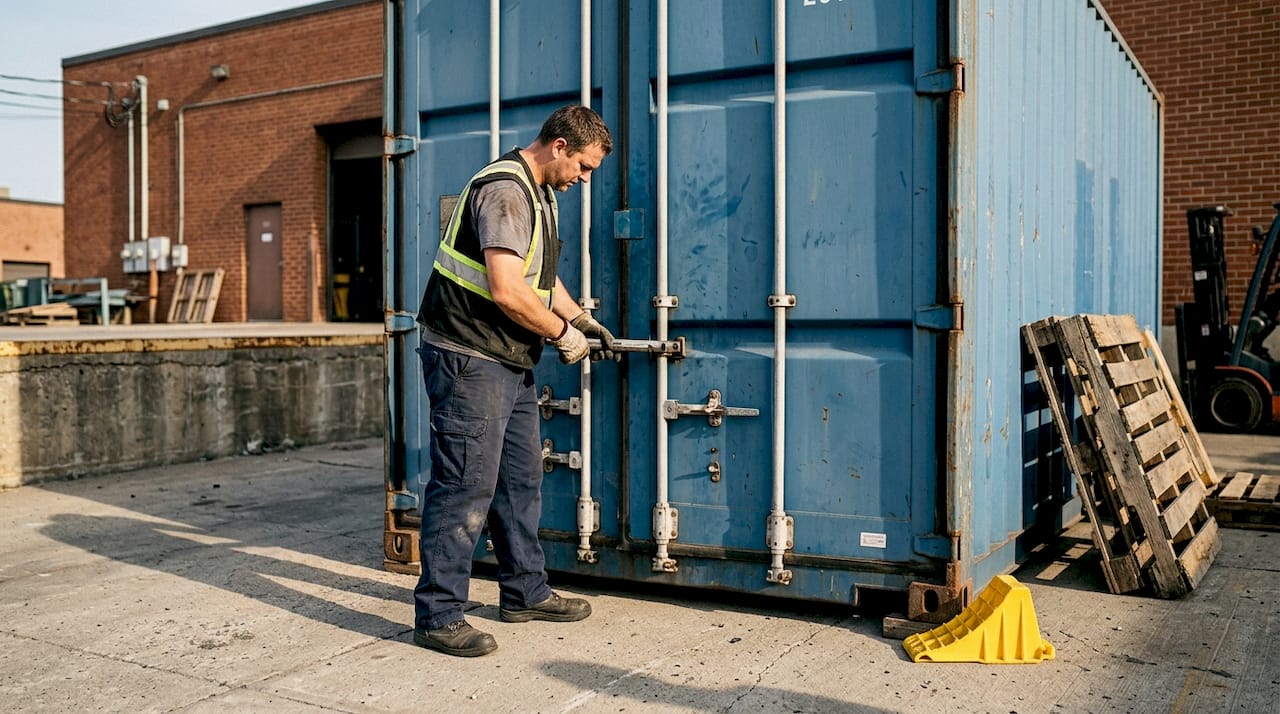
Start with site selection. Level, well-drained ground near your operations is the baseline requirement. Containers placed on uneven or soft ground can shift, warp their door frames, and become difficult to open, which is a serious problem when you need fast access to equipment or inventory. Gravel pads or concrete slabs are the preferred base in Massachusetts, especially given freeze-thaw cycles that can heave and settle ground surfaces over winter.
Security should be layered, not single-point. Effective protection includes:
- Heavy-duty locks: Use a shrouded padlock or a lockbox system that covers the hasp entirely, making bolt cutters ineffective
- Perimeter fencing: A chain-link or welded wire fence around your container area adds a deterrent layer
- Surveillance cameras: Motion-activated cameras with remote monitoring are now affordable and easy to install
- Lighting: Well-lit container areas significantly reduce opportunistic theft, especially during overnight hours
For additional context on warehousing security standards, reviewing industry benchmarks helps you set the right baseline for your site.
Loading efficiency is where many operations quietly lose money. Poor loading wastes 5 to 20% of container space, which directly increases your per-unit storage cost. The fix is straightforward but requires discipline.
Load heavy items first, position them near the doors for weight balance, and stack lighter goods on top. Work from floor to ceiling and wall to wall before leaving open gaps.
Following Cargo Transport Unit (CTU) Code basics, which is the international standard for safe container loading, also protects your team and your cargo. Uneven weight distribution can cause containers to tip during transport or make doors difficult to operate safely. Reviewing safe storage tips before your first load-in prevents the most common and costly mistakes.
Pro Tip: Use load planning software or even a simple spreadsheet to map out container contents before loading. Teams that plan their loads in advance consistently use 15 to 20% more of their available container volume.
Cost, sustainability, and technology trends for Massachusetts fleets
Finally, let’s look at the bottom line: how to make smart financial and operational decisions while preparing for the future. The rental versus purchase decision is where most fleet managers spend the least time but stand to gain the most.
| Decision factor | Rental | Purchase |
|---|---|---|
| Upfront cost | Low (OPEX) | Higher (CAPEX) |
| Flexibility | High | Lower |
| Best for | Short projects, seasonal needs | Fixed inventory, long-term use |
| Maintenance | Provider handles it | Your responsibility |
| Resale value | None | Moderate to good |
For Massachusetts fleets, rental makes sense for project-based storage, seasonal overflow, or when your volume fluctuates significantly. Buying makes more sense when you have a consistent, year-round storage need at a fixed location. Rental is ideal for short-term needs, while purchasing suits long-term solutions, and the math usually becomes clear within the first six months of use.
Sustainability is becoming a real factor in Massachusetts fleet decisions, not just a marketing talking point. Container yards are increasingly adopting LED lighting, hybrid yard equipment, and programs that recycle or repurpose retired containers into offices, workshops, or modular structures. Choosing a provider that prioritizes these practices can support your company’s environmental goals and sometimes qualifies for state-level green business incentives.
On the technology side, three trends are reshaping how fleets manage container storage:
- AI-powered inventory tracking: Sensors and software that monitor container contents in real time, reducing manual audits
- Digital twins: Virtual models of your storage yard that let you simulate layout changes before moving physical containers
- Remote monitoring: Camera and sensor systems that send alerts directly to your phone when access events or environmental changes occur
If you’re evaluating long-term value, consider rent-to-own shipping containers as a middle path that builds equity while keeping monthly payments manageable. For operations undergoing facility upgrades, cost-efficient storage for renovations is another angle worth exploring to keep inventory accessible during transitions.
What most fleet managers overlook about container storage
Here’s something most vendors won’t tell you: the biggest inefficiencies in fleet container storage rarely come from choosing the wrong size or the wrong provider. They come from underusing what you already have.
We’ve seen Massachusetts fleets running 40ft containers at 50% capacity because no one mapped out a loading plan. We’ve seen depot arrangements that made sense on paper but added $800 a month in drayage costs that never showed up in the original budget. And we’ve seen on-site containers placed on soft ground that shifted enough to jam the doors by spring.
The modularity of containers is their greatest strength, but only if you plan for scale-up from the start. Fleets that add a second or third container without adjusting their site layout often create access bottlenecks that slow down operations. Technology like remote monitoring and digital layout tools makes this easier to manage, but the discipline to use them consistently is what separates efficient operations from expensive ones.
For deeper guidance on fleet management insights specific to Massachusetts, the details matter more than the headline decisions.
Find the right container storage partner for your Massachusetts fleet
Putting these strategies into practice is easier when you work with a provider who understands the Massachusetts market from the ground up.
At Apple Truck & Trailer, we’ve been supporting fleet owners and logistics managers across Massachusetts, Rhode Island, Connecticut, and New Hampshire since 1986. Whether you need secure storage containers for an active job site, are evaluating truck and trailer sales to expand your fleet, or want guidance on buying a used commercial truck to complement your storage setup, our team is ready to help. Contact us today for a quote or to explore your options.
Frequently asked questions
What size cargo container is best for fleet storage needs?
For most fleets, 40ft containers are ideal for large equipment and bulk inventory, while 20ft containers work well for smaller loads or sites with limited space.
Is on-site or depot container storage more cost-effective in Massachusetts?
On-site storage is cheaper for longer-term, fixed-location needs, while depot solutions offer better scalability and built-in maintenance for larger or more dynamic operations.
What security features should I prioritize for cargo storage?
Heavy-duty shrouded locks, perimeter fencing, surveillance cameras, and proper site placement are the top priorities for protecting high-value fleet assets.
How can fleets increase loading efficiency and reduce costs?
Load heavy items near the doors first, fill from floor to ceiling, and plan your load layout in advance. Poor loading wastes 5 to 20% of usable container space, which adds up quickly across a fleet.